Practice inference skills Math Worksheets for Ages 5-9
3 filtered results
-
From - To
Unlock your child's potential with our Practice Inference Skills Math Worksheets designed for ages 5-9! These engaging and age-appropriate worksheets help young learners develop critical thinking and problem-solving skills by enhancing their ability to make inferences from mathematical problems. Children will enjoy a variety of fun activities that challenge them to interpret information, analyze patterns, and draw conclusions, all while building their confidence in math. Our interactive format ensures that learning is enjoyable and effective. Whether in the classroom or at home, these worksheets are the perfect resource to support your child's mathematical journey and strengthen their analytical abilities today!
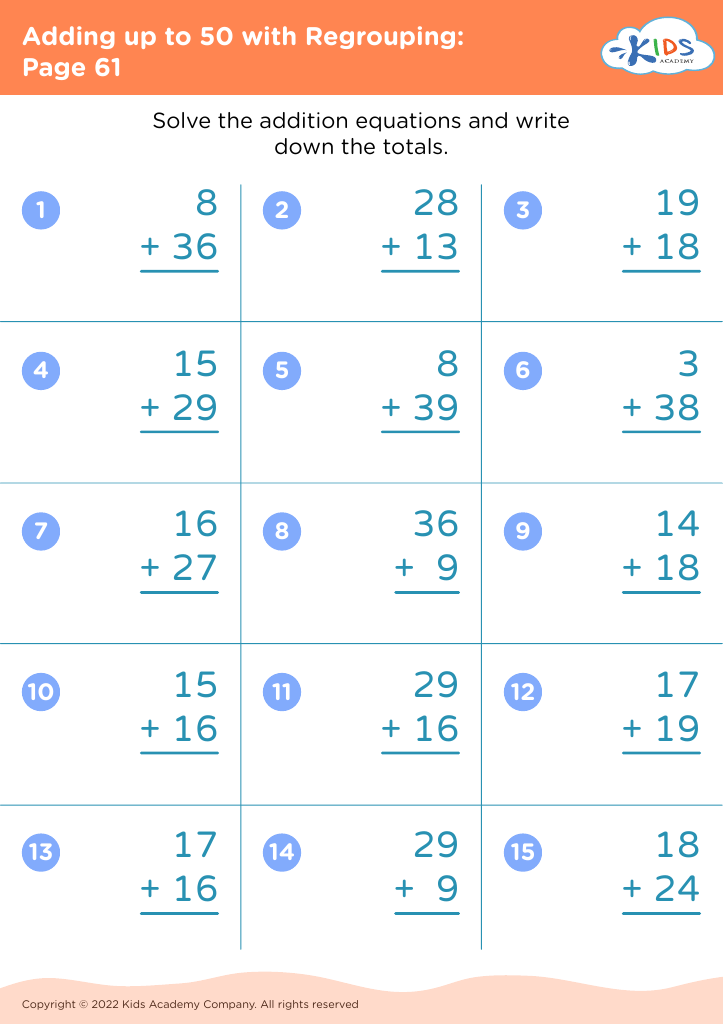
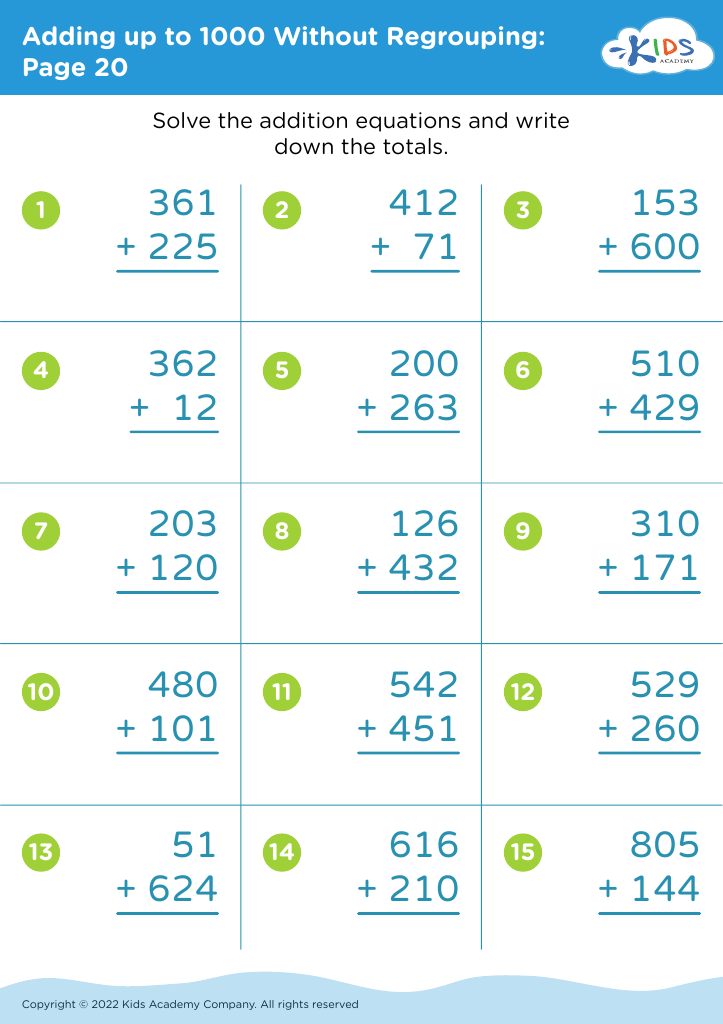
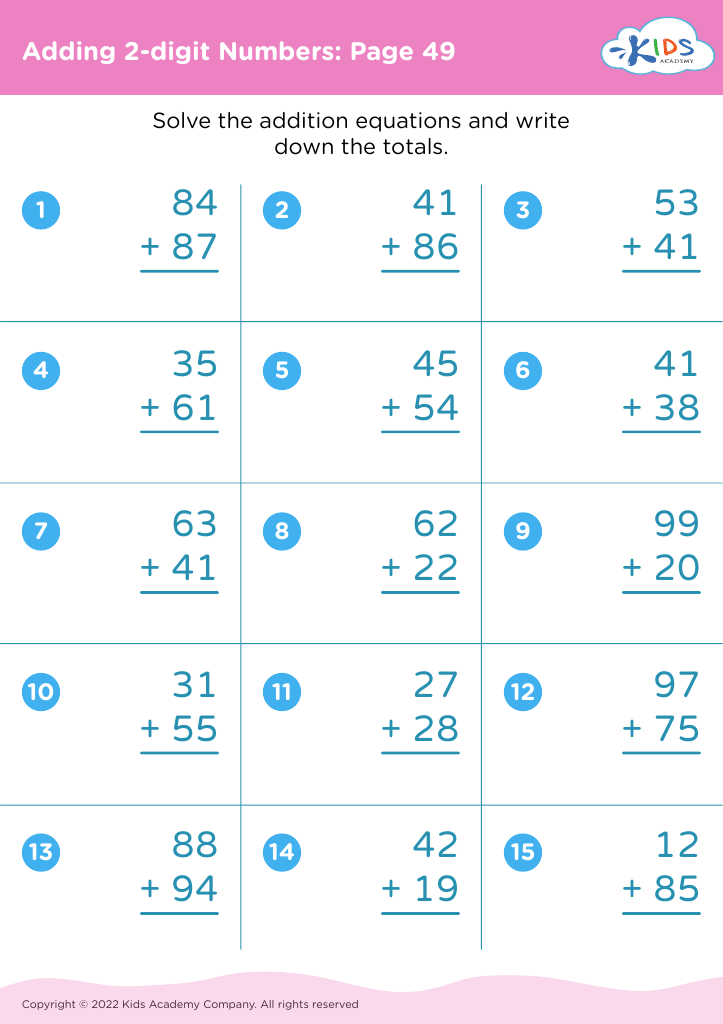








Practicing inference skills in math for ages 5-9 is crucial for both parents and teachers, as these foundational skills play a vital role in a child's cognitive development and future learning. Inference skills involve the ability to draw conclusions and make predictions based on given information, which enhances critical thinking and problem-solving abilities.
At this early age, children are beginning to develop their understanding of numbers, patterns, and relationships. Encouraging inference in math helps them to look beyond simply finding the answer; it promotes deeper comprehension of concepts, enabling them to connect various mathematical ideas. For instance, when students infer the next number in a pattern, they are not just performing operations; they are engaging with the concept of abstraction, which is integral in higher-level mathematics.
Moreover, fostering these skills can enhance a child's confidence, as they learn to rely on logic and reasoning rather than rote memorization. Parents and teachers who prioritize inference skills are equipping children with essential tools for lifelong learning and adaptability. Ultimately, these early experiences with mathematical inference are a gateway to academic success, setting the stage for future achievements across all subject areas.








