Understanding more/less concept Math Worksheets for Ages 5-9
3 filtered results
-
From - To
Introduce your young learners to the foundational concept of comparing quantities with our engaging "Understanding More/Less Concept Math Worksheets" for ages 5-9. Designed to enhance critical thinking, these printable worksheets guide children through recognizing and comparing numbers, helping them determine which values are greater or smaller. Our fun, age-appropriate activities use visual aids and practical scenarios, making abstract math concepts relatable and enjoyable. Perfect for both classroom and at-home learning, these worksheets promote numerical literacy and sharpen problem-solving skills. Start building a strong math foundation today by exploring our expertly crafted resources for your young math enthusiasts.
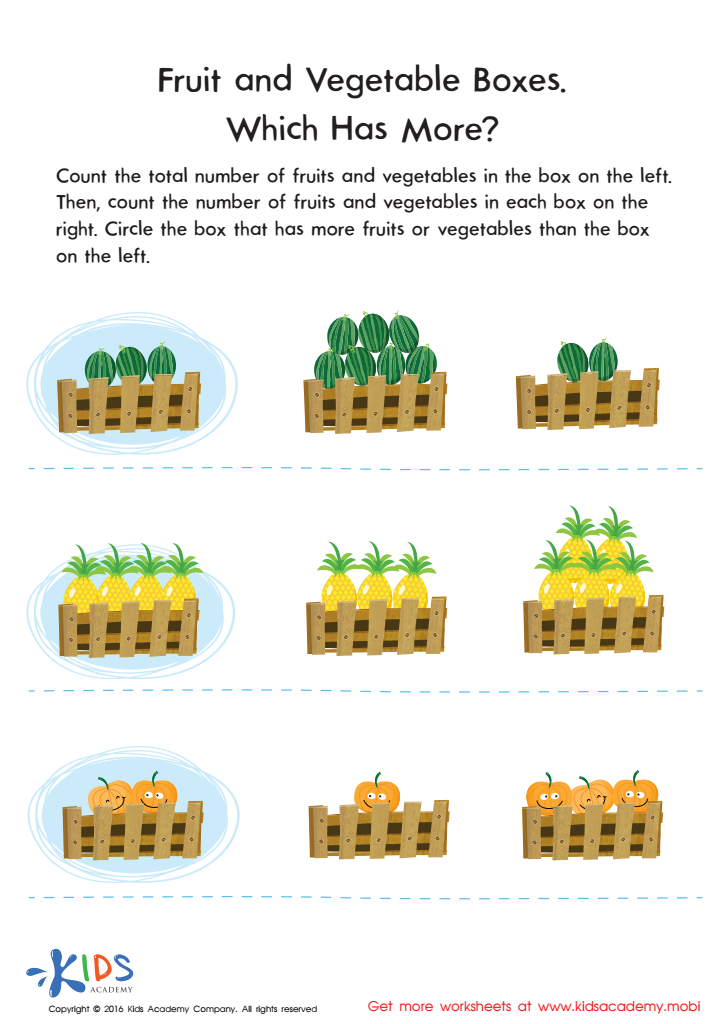
Which Has More? Size Worksheet
 Assign to My Students
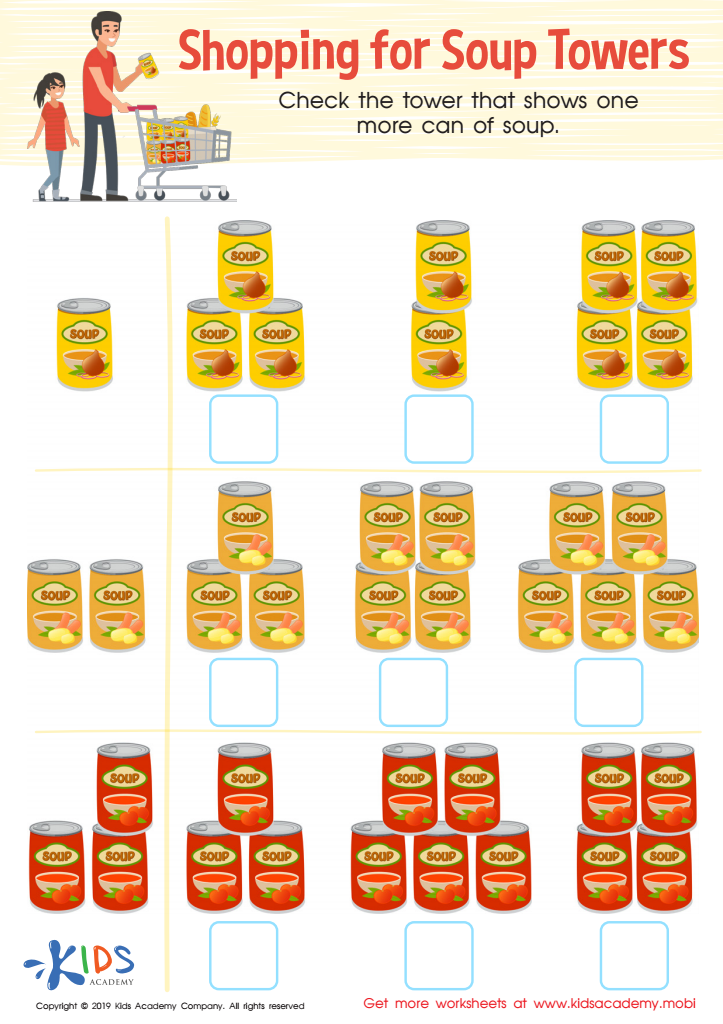
Soup Towers Worksheet
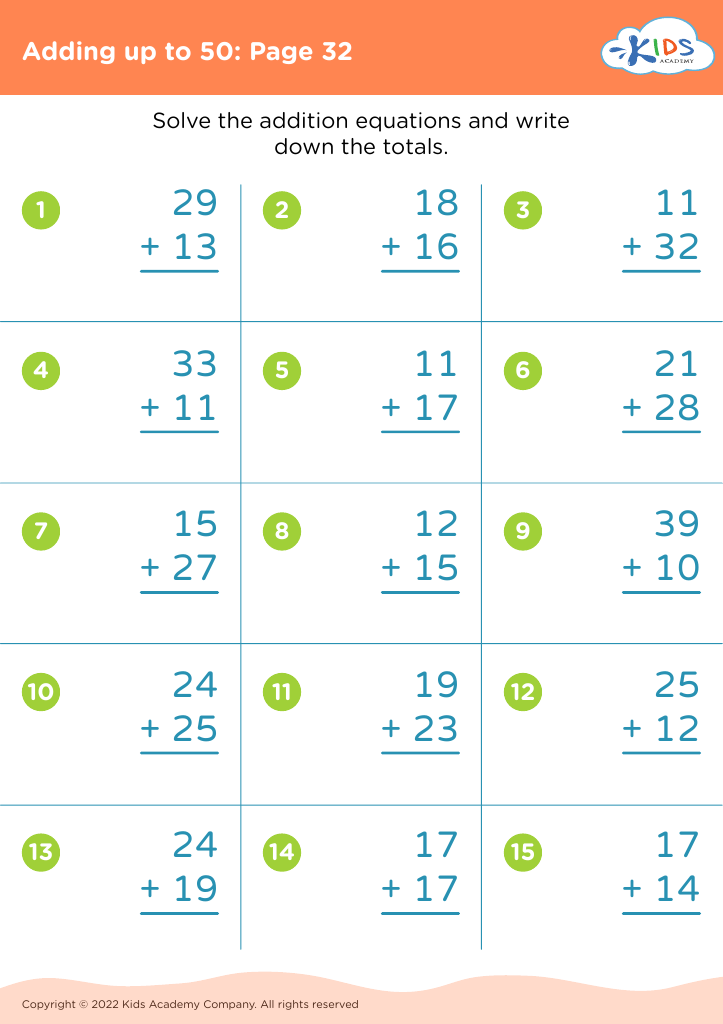








Understanding the concept of more/less in math is fundamental for children aged 5-9 and critical for their overall cognitive development. Parents and teachers should emphasize this concept because it serves as the cornerstone for number sense, a key building block in mathematics learning. Recognizing and comparing quantities enables children to grasp basic arithmetic, including addition and subtraction, which are essential skills for mastering more advanced math concepts in later grades.
Promoting skills in sequence recognition (which quantity is greater or lesser) enriches a child’s logical thinking and problem-solving abilities. These concepts integrate seamlessly into everyday life, assisting children in making sense of the world around them—such as determining if they have more cookies than their sibling or if they need fewer markers to match a set number.
Moreover, early comprehension of more/less fosters confidence. Children feel more competent and enthusiastic about math when they recognize that they can evaluate and manipulate quantities. This positive mathematical foundation diminishes anxiety and builds a resilient math mindset, setting a foundation for further academic endeavors. Thus, parents and teachers must prioritize this learning to ensure that children develop strong, practical math skills, contributing to their lifelong educational journey and everyday decision-making abilities.








