Understanding word problems Math Worksheets for Ages 5-9
3 filtered results
-
From - To
Unlock the secrets of word problems with our engaging Math Worksheets, specially designed for children aged 5-9. These worksheets help young learners develop crucial analytical skills and enhance their problem-solving abilities through fun and interactive exercises. Each worksheet presents relatable scenarios that prompt students to interpret and solve real-life math challenges, making mathematics accessible and enjoyable. With a variety of difficulty levels, children will gain confidence as they practice identifying keywords, drawing representations, and formulating strategies. Perfect for classroom activities or home learning, our Understanding Word Problems worksheets are the key to building a strong math foundation for your child!
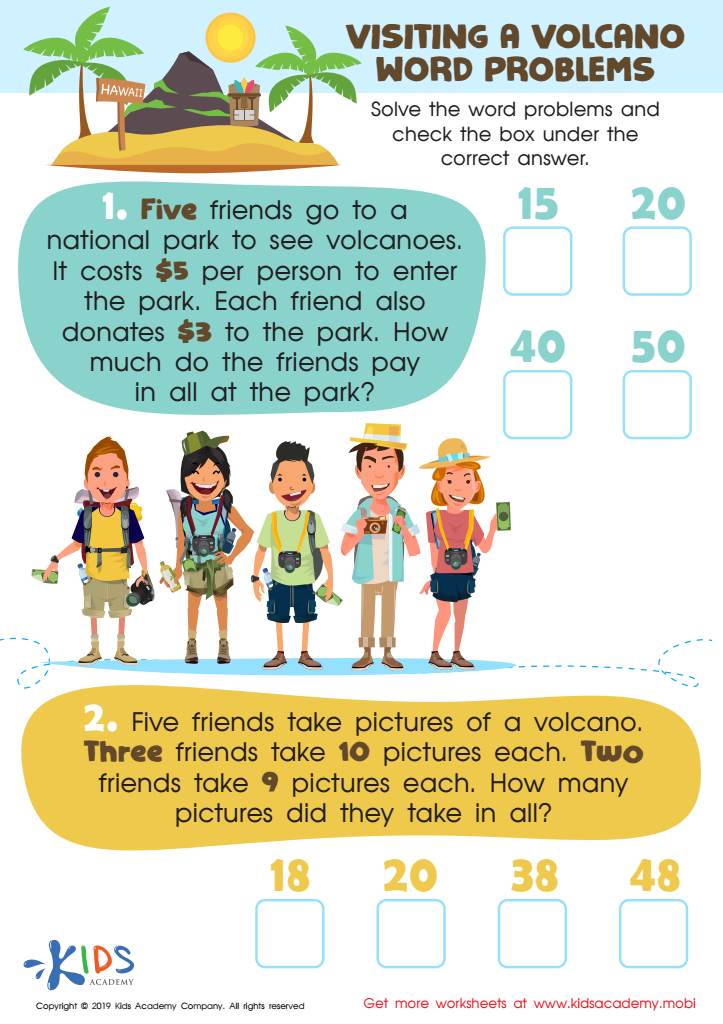
Visiting a Volcano Word Problems Worksheet
 Assign to My Students
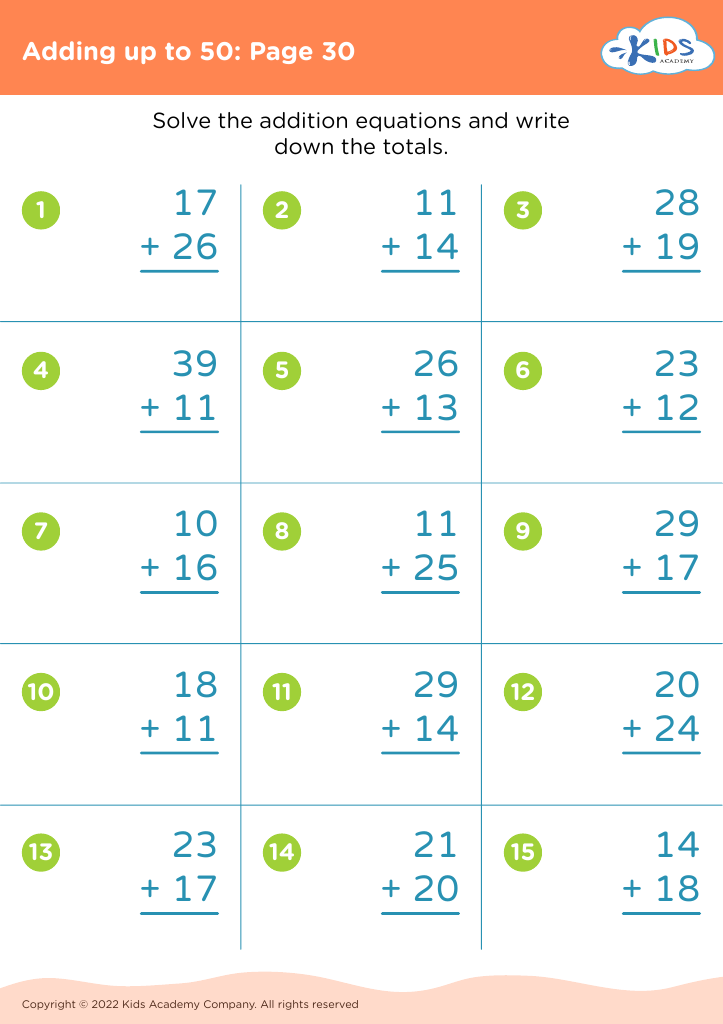
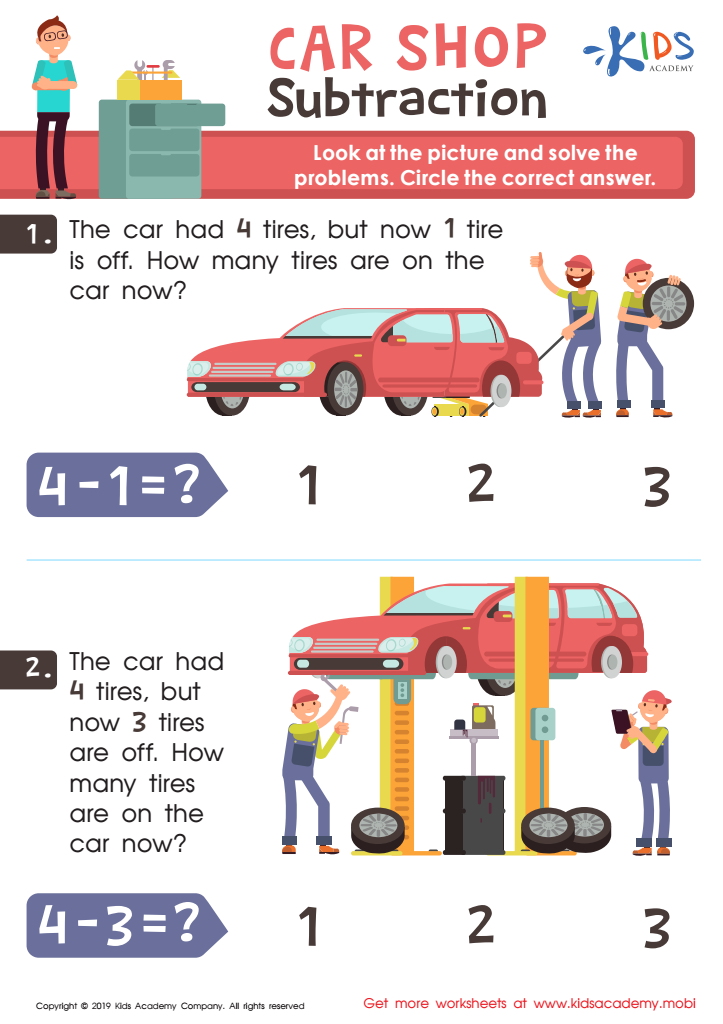
Car Shop Subtraction Worksheet







Understanding word problems is crucial for young learners aged 5-9 because it integrates literacy and mathematics, essential skills in today’s world. Parents and teachers should care about this developmental aspect for several reasons.
Firstly, word problems help children relate math to real-life scenarios, promoting critical thinking and problem-solving skills. By struggling with word problems, children learn to analyze situations, extract relevant information, and think abstractly about numbers. This fosters a deeper understanding of mathematical concepts beyond rote memorization.
Furthermore, word problems teach children to read carefully and comprehend context, skills that are valuable not only in math but across all subjects. Handling word problems enhances vocabulary and syntax, enriching their overall literacy development. Practicing these skills can significantly boost students' confidence, as they see math as a fun challenge rather than a daunting task.
Additionally, word problems encourage collaboration when discussed in classroom settings, allowing students to communicate their thought processes, enhancing communication skills, and encouraging teamwork.
In conclusion, engaging with word problems equips children with foundational skills necessary for academic success and real-life applications. By prioritizing this practice, parents and teachers empower the next generation to become proficient thinkers and problem solvers.








