
Underwater animal identification Math Worksheets for Ages 5-9
3 filtered results
Difficulty Level
Grade
Age
-
From - To
Subject
Activity
Standards
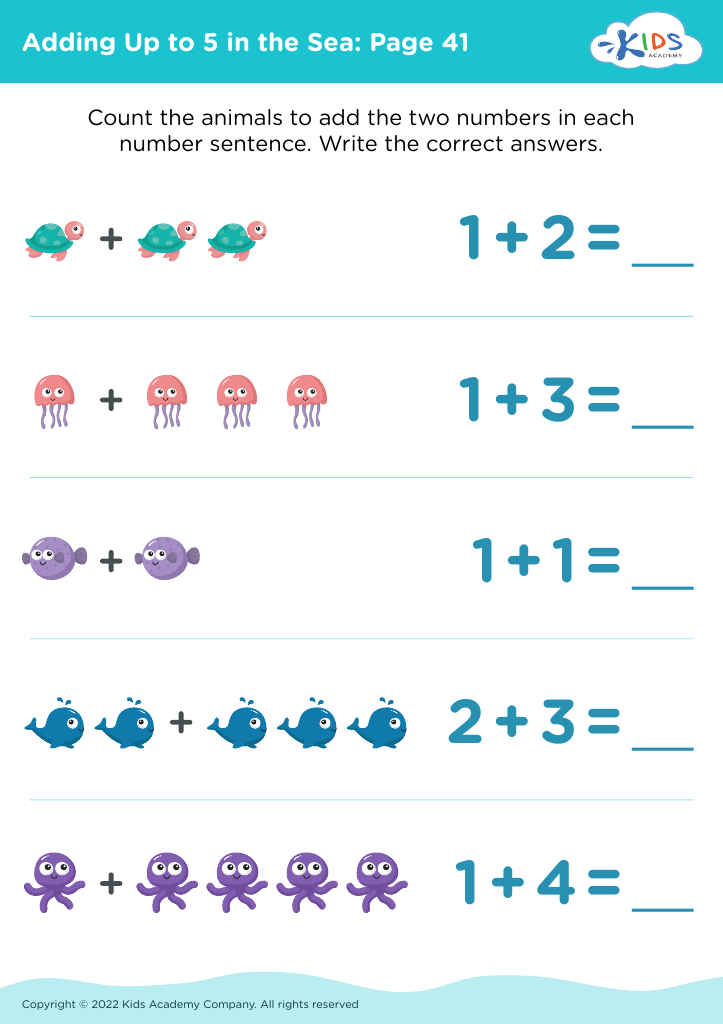
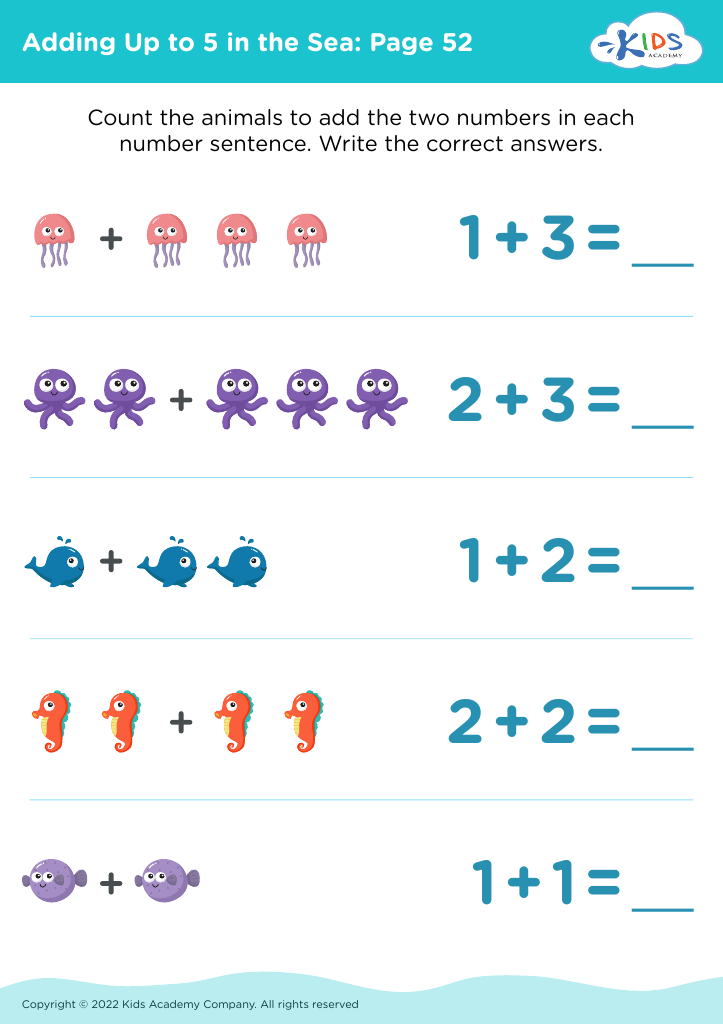
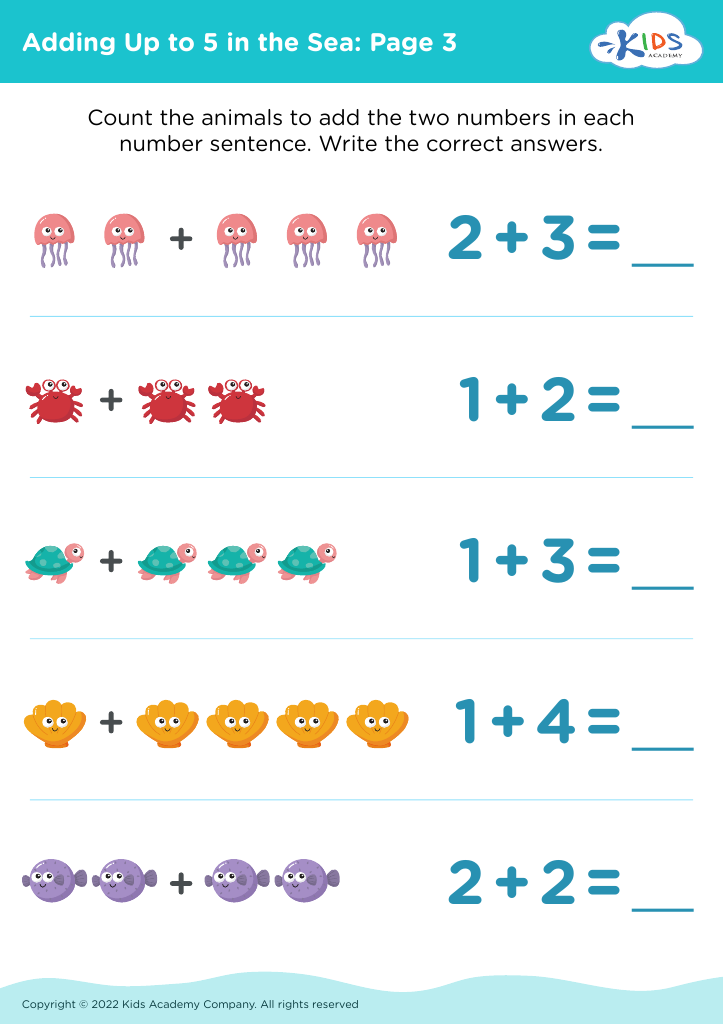
Dive into fun learning with our Underwater Animal Identification Math Worksheets for ages 5-9! These engaging worksheets combine the excitement of marine life with essential math skills, helping young learners practice counting, addition, and subtraction while identifying various underwater creatures. Perfect for enhancing critical thinking and boosting math confidence, these resources feature vibrant illustrations and age-appropriate exercises. Ideal for classrooms and home education, our worksheets encourage creativity and curiosity about the ocean world. Foster a love for both math and marine biology while your child explores, learns, and creates unforgettable educational experiences. Start your underwater adventure today!
Favorites
With answer key
Interactive
Join Kids Academy for Free
Who is primarily going to use this learning content?








Parents and teachers should care about underwater animal identification math for ages 5-9 because it intertwines fundamental math skills with environmental awareness and engagement with nature. By introducing children to underwater animals, educators can create a vibrant learning experience that captures young imaginations while promoting critical thinking and problem-solving abilities. Activities involving counting, sorting, and classifying various underwater species help solidify basic math concepts and foster a love for learning.
Additionally, this approach enhances children's observational skills as they learn to identify and differentiate between marine animals, building their knowledge of biodiversity and ecosystems. Such rich, interdisciplinary learning fosters curiosity about the natural world, encourages questions, and nurtures a sense of responsibility toward environmental stewardship.
Engaging with underwater animal identification at a young age also supports cognitive development; children exercise memory and recognition skills while performing mathematical operations linked to classification and categorization. This foundational understanding helps them better grasp more complex subjects later on.
Ultimately, by caring about underwater animal identification math, parents and teachers contribute to a well-rounded education that blends scientific literacy, environmental consciousness, and essential math skills, empowering children to become informed and active participants in their world.








