Times table familiarity Times Tables Worksheets for Ages 5-9
3 filtered results
-
From - To
Help your child master multiplication with our "Times Table Familiarity" Worksheets designed for ages 5-9! Our engaging and interactive resources make learning times tables fun and effective, fostering essential math skills early on. These worksheets progressively introduce your little learner to various multiplication concepts, ensuring they build confidence and fluency. With colorful visuals and straightforward instructions, children will enjoy practicing their times tables in an enjoyable way. Perfect for classroom or home use, these worksheets enhance your child's mathematical foundation, preparing them for future skills. Start this exciting journey towards multiplication mastery today with our comprehensive, kid-friendly worksheets!
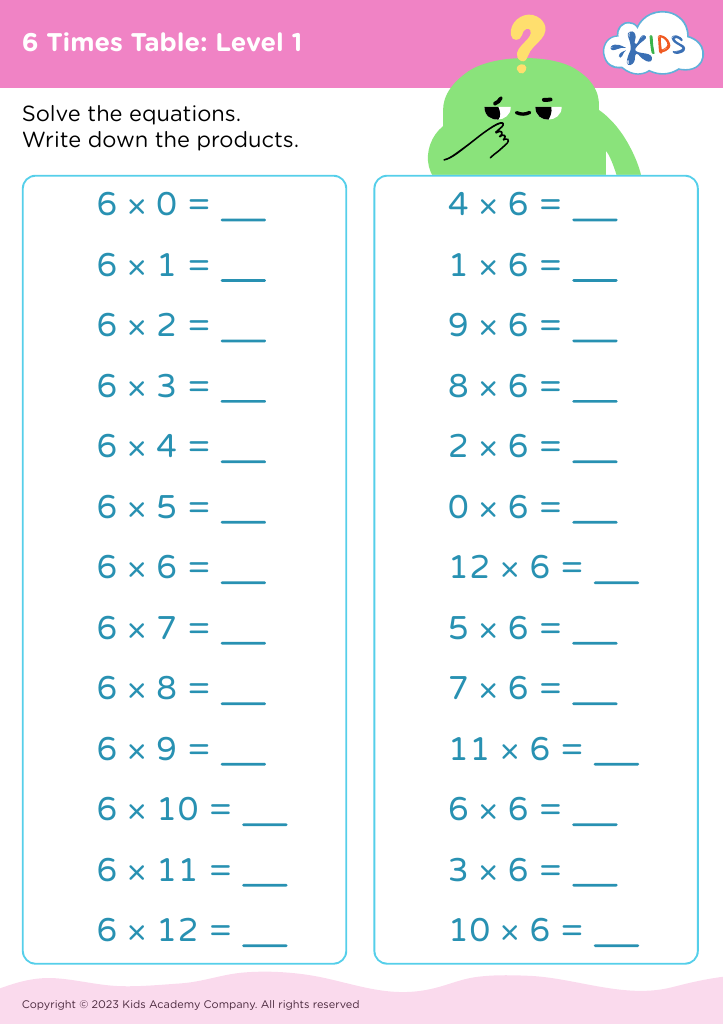
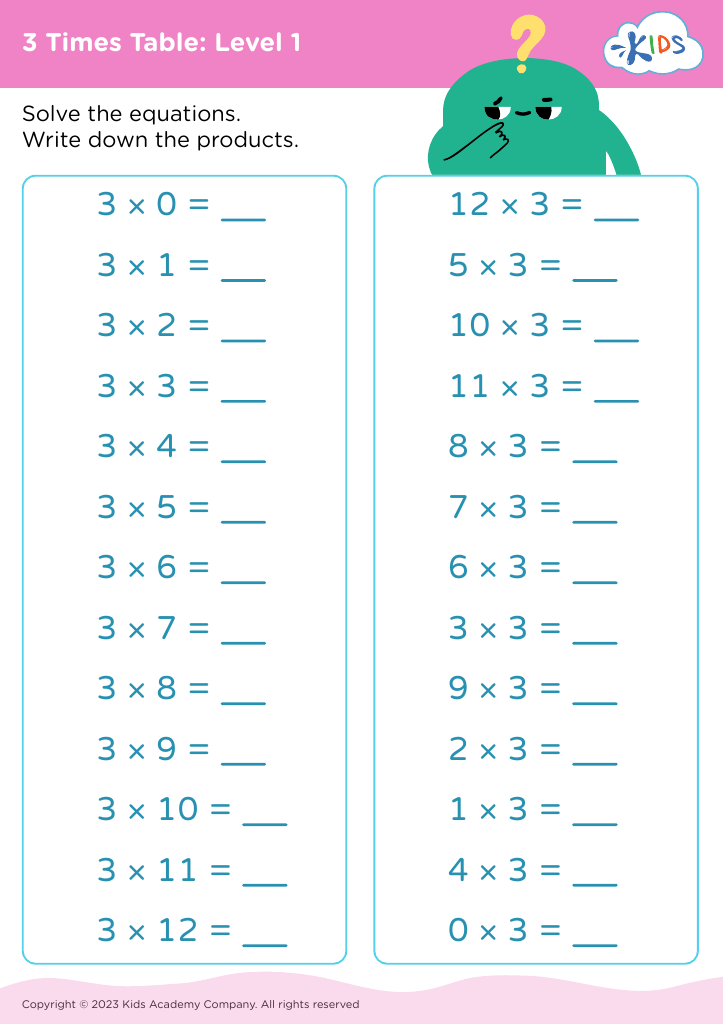
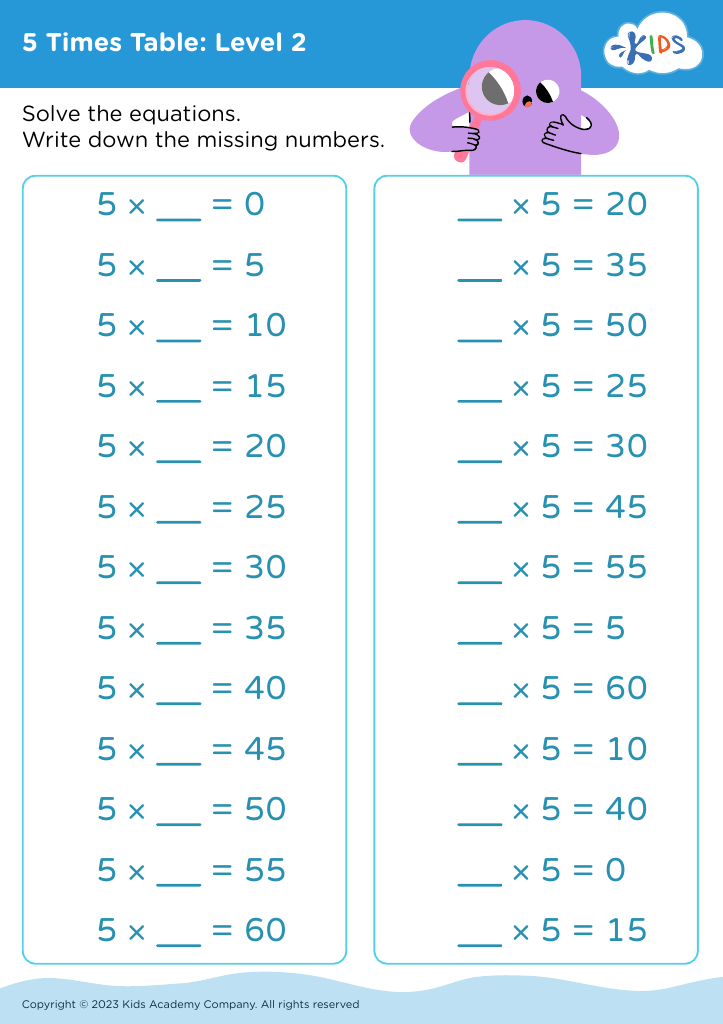





Times table familiarity is crucial for children aged 5-9 as it lays the foundation for their mathematical understanding. Mastery of multiplication contributes significantly to a child's overall academic success. When children are confident in their times tables, they can tackle more advanced concepts, such as fractions, division, and later algebra, with ease.
Furthermore, times tables enhance problem-solving skills and critical thinking. Children who know their multiplication facts can approach word problems more effectively, developing analytical abilities that extend beyond math classes. Learning this essential skill also cultivates persistence and discipline, as students must practice consistently to achieve mastery.
For parents and teachers, prioritizing times table familiarity means fostering students’ confidence and encouraging a positive attitude towards math. As children gain proficiency, they are more likely to participate enthusiastically in math-related activities and discussions, leading to a lifelong love for learning.
Moreover, familiarity with times tables supports academic performance across various subjects. Understanding multiplication also facilitates progress in science, economics, and other fields that require quantitative reasoning. Ultimately, investing time and effort into helping children learn their times tables can yield significant benefits: empowered learners equipped to face future challenges with confidence.








