Counting practice Word Problems Worksheets for Ages 5-9
5 filtered results
-
From - To
Enhance your child's math skills with our Counting Practice Word Problems Worksheets, designed for ages 5 to 9! These engaging worksheets focus on developing essential counting and problem-solving abilities through interactive and relatable scenarios. Children will enjoy solving fun word problems that involve everyday situations, encouraging them to apply their counting skills in practical contexts. Our resources foster critical thinking and boost confidence in mathematics. Perfect for classroom use or at-home learning, these worksheets are tailored to align with early education standards, ensuring a solid foundation in math. Download now and watch your child thrive in their counting journey!
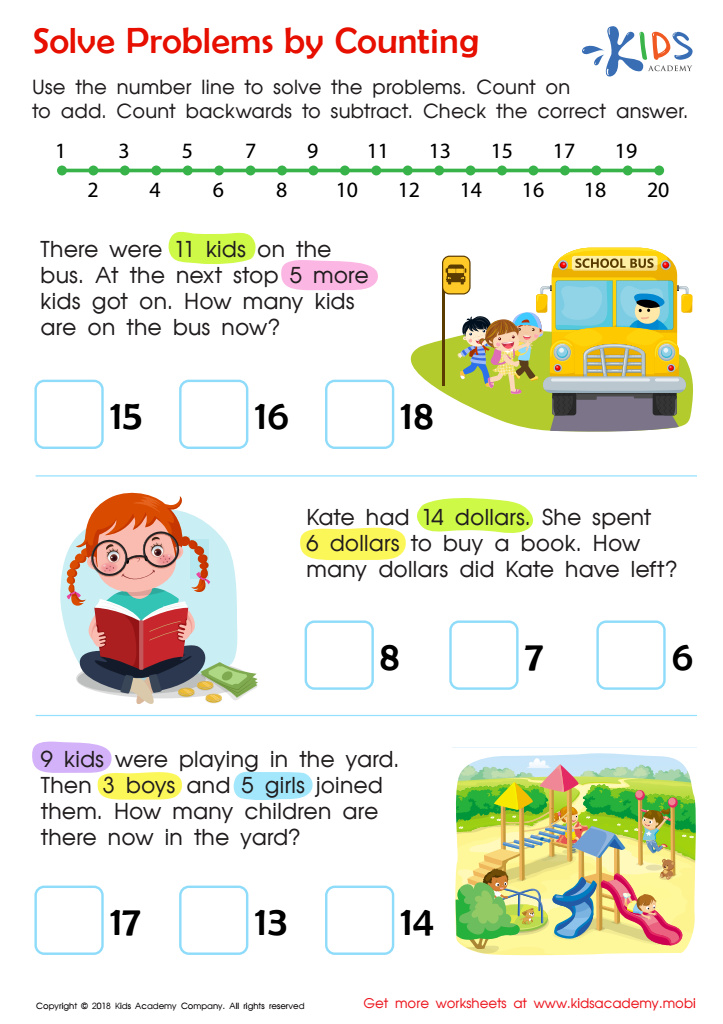
Solve Problems by Counting Worksheet
 Assign to My Students
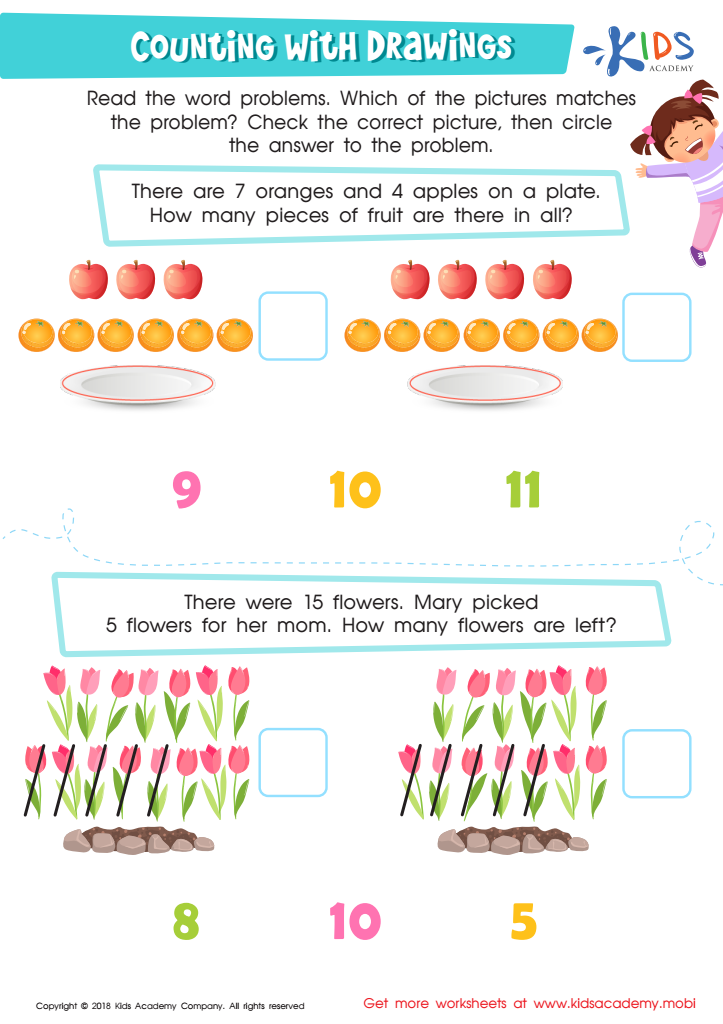
Counting with Drawings: Fruits & Chocolates Worksheet
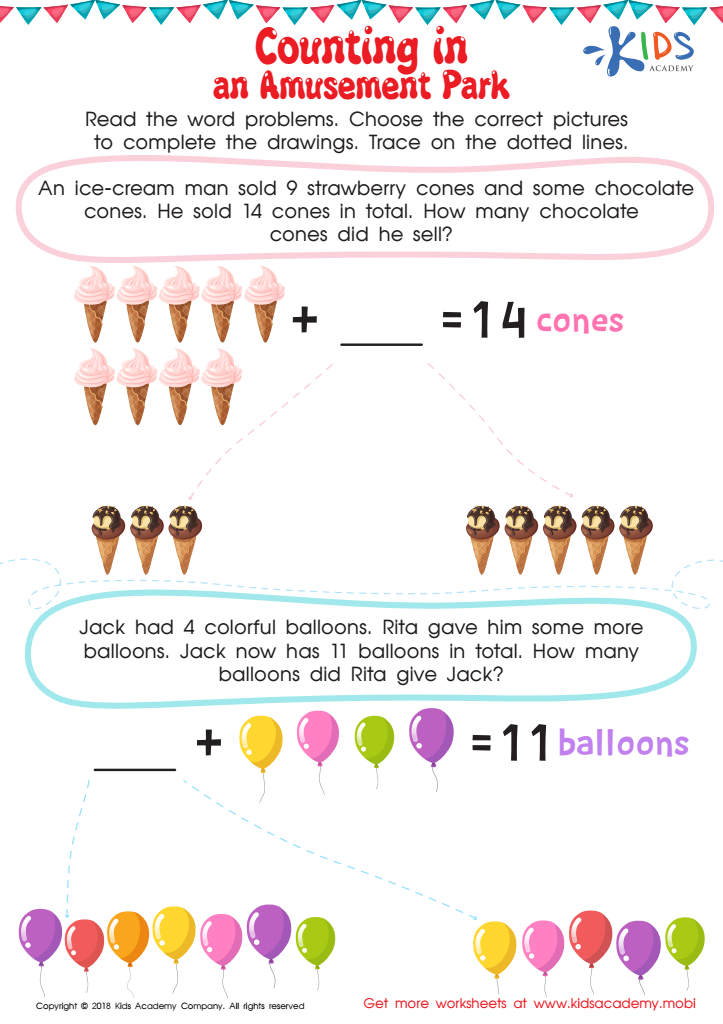
Counting in an Amusement Park Worksheet
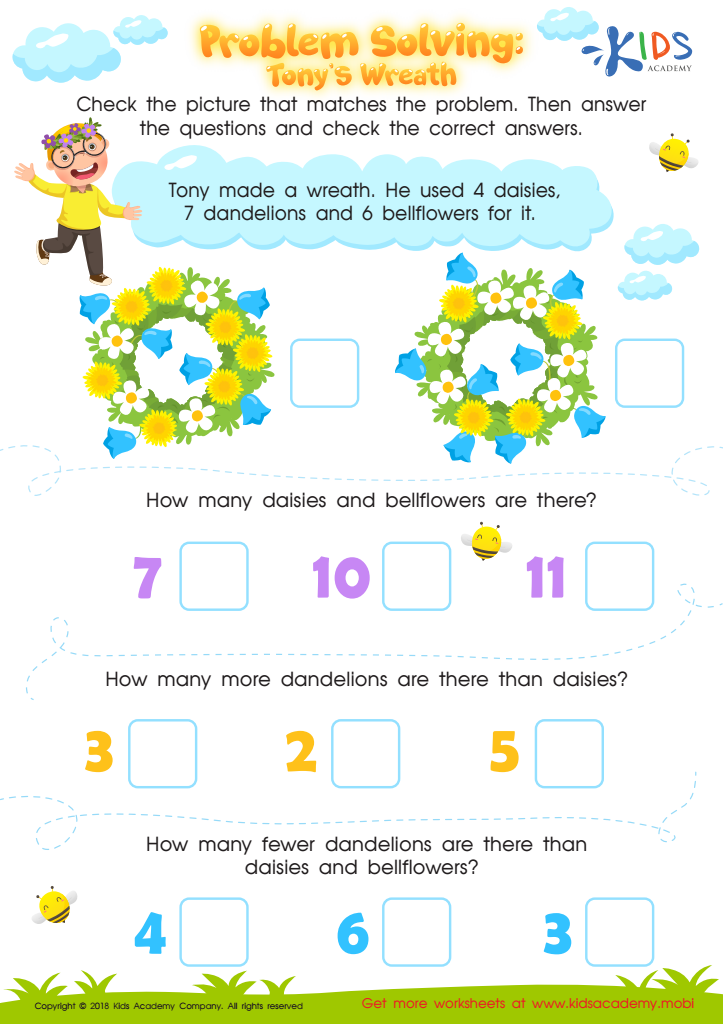
Problem Solving: Tony's Wreath Worksheet
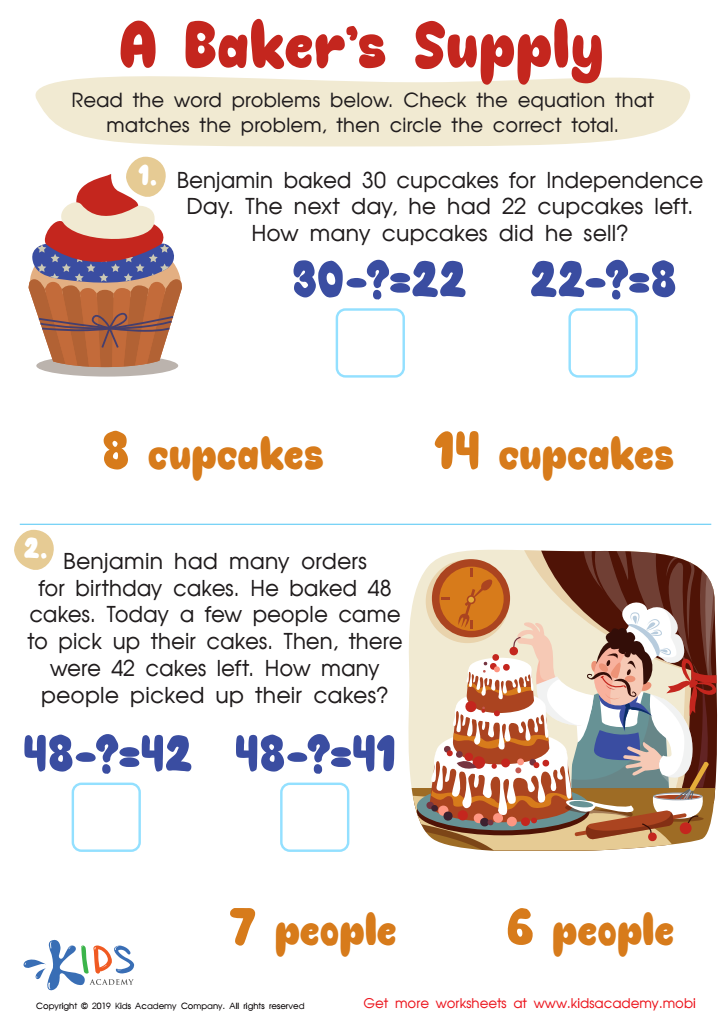
A Baker's Supply Worksheet








Counting practice word problems are essential for children aged 5-9 as they build foundational math skills and enhance critical thinking. At this developmental stage, children are learning to articulate ideas and understand relationships between numbers in a meaningful context. Engaging with word problems fosters their ability to translate real-life situations into mathematical concepts, promoting both comprehension and application.
Additionally, tackling these problems encourages problem-solving skills, as children learn to analyze information, identify key details, and devise strategies to find solutions. This not only aids in the development of mathematical reasoning but also enhances literacy skills, as they must read and interpret the problems effectively.
Moreover, exposure to counting word problems at an early age instills confidence and a positive attitude towards math. When parents and teachers actively encourage practice, it helps children develop perseverance and resilience when confronted with challenges. This early mastery is crucial in building a solid mathematics foundation, which is integral for future learning.
In essence, counting word problems equip children with vital cognitive skills, foster a love for math, and prepare them for more complex mathematical concepts, all crucial for their overall academic success. Thus, parents and teachers should prioritize these activities to support their children’s development.








