Logical Reasoning Reading Non-Fiction Worksheets for Ages 5-9
4 filtered results
-
From - To
Boost your child's logical reasoning skills with our engaging Non-Fiction Reading Worksheets, designed specifically for ages 5-9. These interactive resources introduce young learners to important concepts using entertaining stories and real-world scenarios. Each worksheet encourages critical thinking, inference, and comprehension while fostering a love of reading. Perfect for home or classroom use, our materials align with educational standards and promote cognitive development. Enhance your child’s ability to connect ideas and draw conclusions with fun exercises that make learning enjoyable. Explore our collection today and watch your child thrive in their reading and logical reasoning abilities!
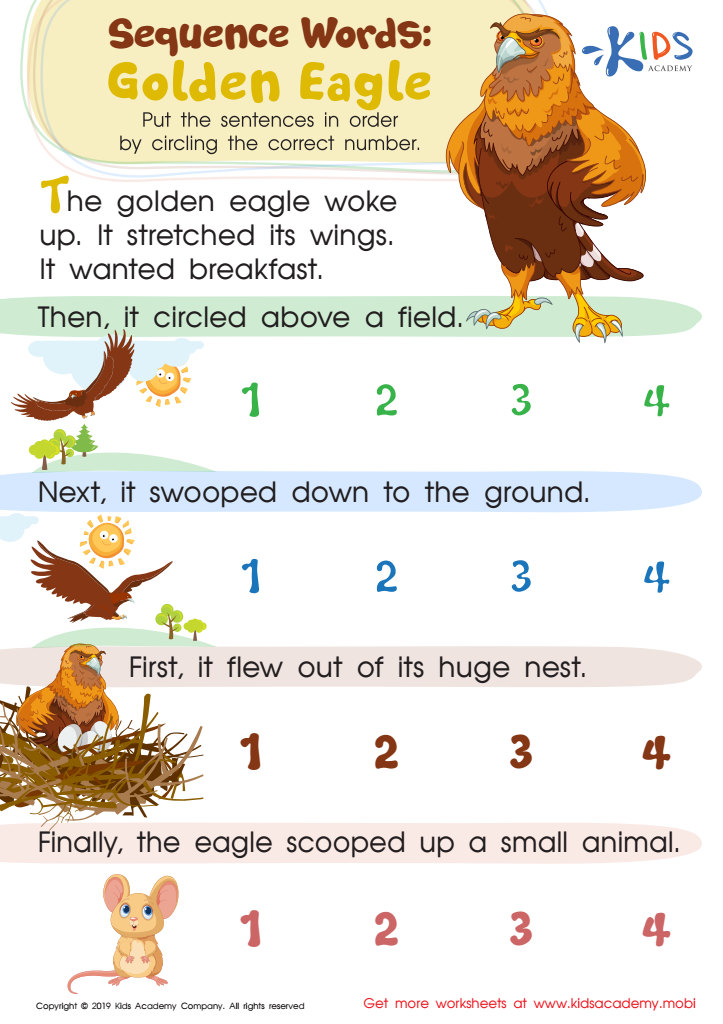
Sequence Word Eagle Worksheet
 Assign to My Students
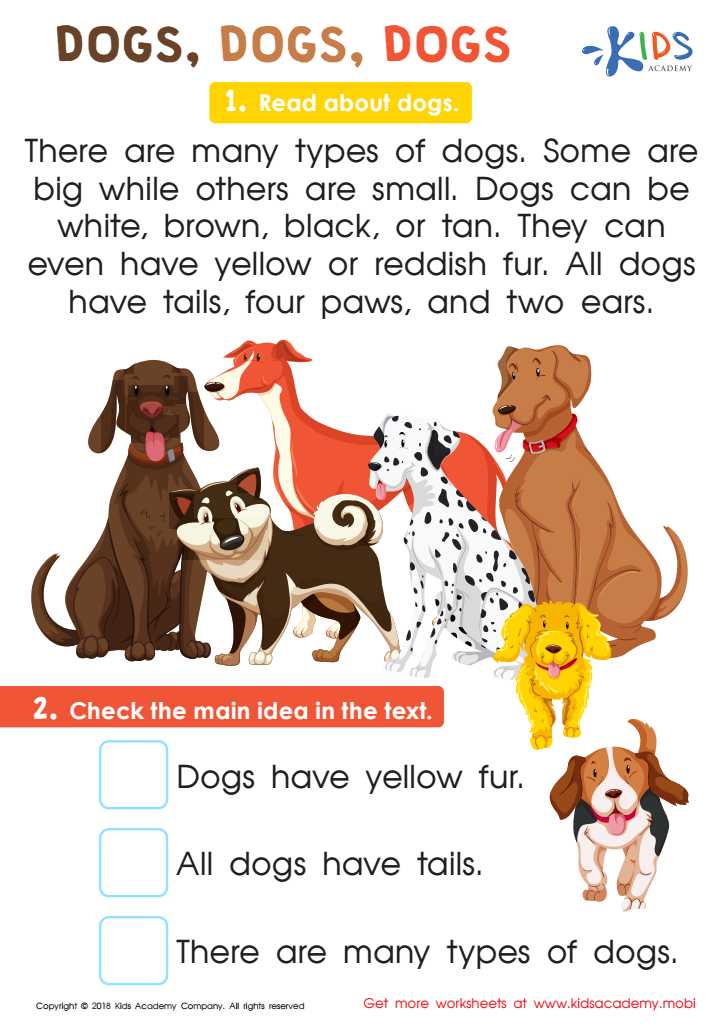
Dogs, Dogs Worksheet
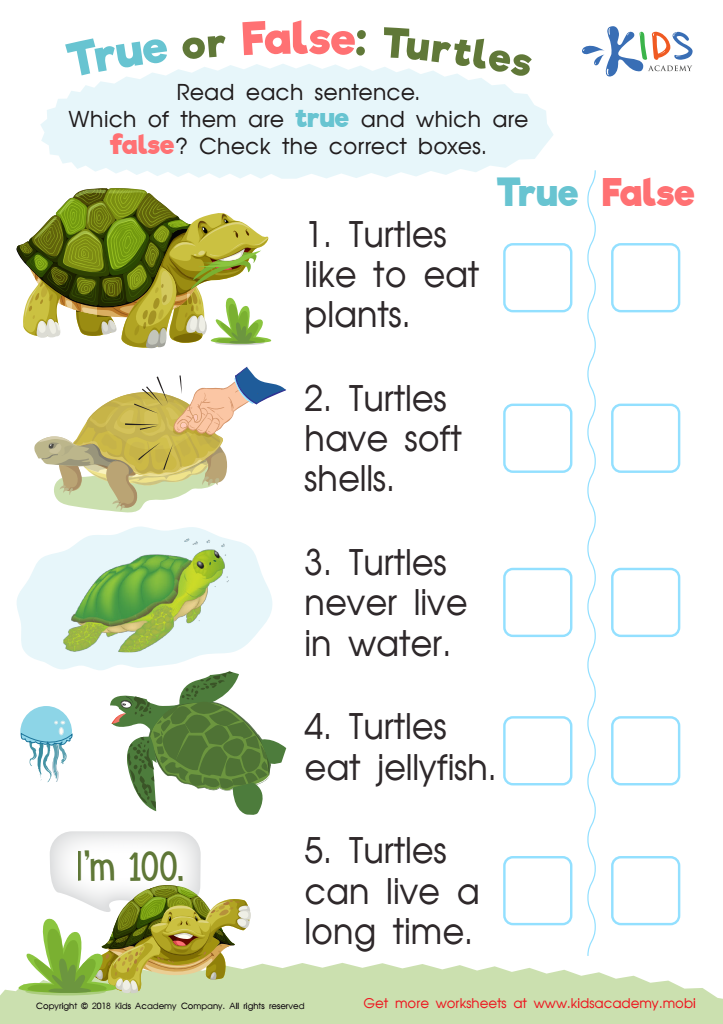
True or False: Turtles Worksheet
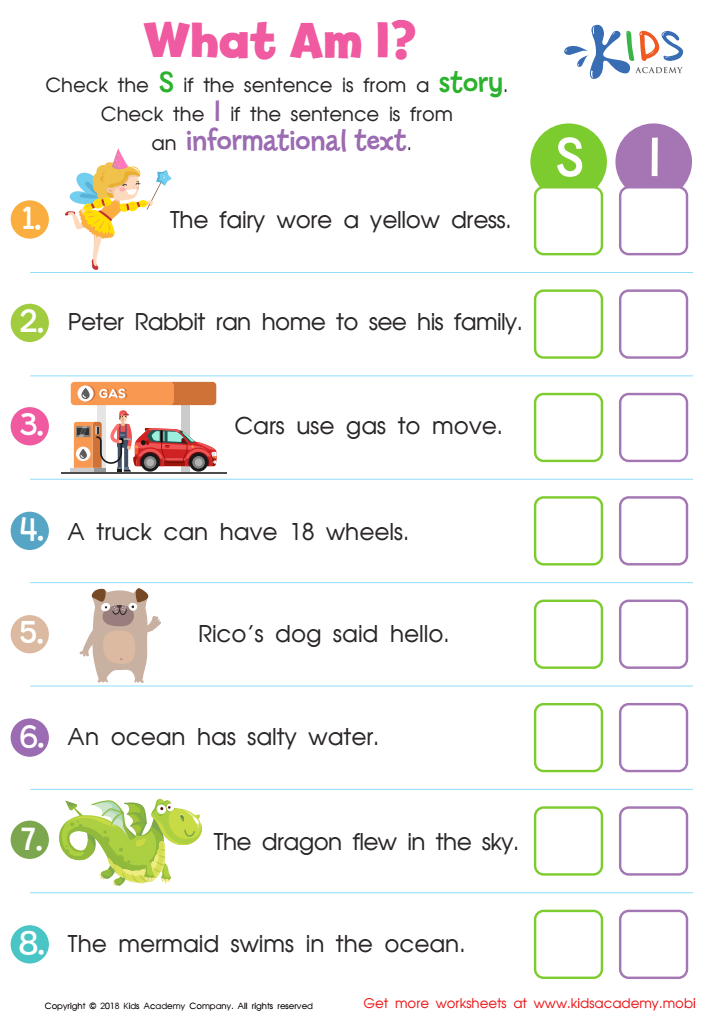
What Am I? Worksheet








Logical reasoning skills are crucial for children aged 5-9 as they form the foundation for critical thinking and problem-solving abilities that will serve them throughout their academic and personal lives. Engaging with non-fiction texts helps young learners make connections to the real world, allowing them to analyze facts, compare information, and draw conclusions based on evidence.
For parents and teachers, fostering logical reasoning through non-fiction reading cultivates curiosity and encourages children to ask questions about their environment. This enhances comprehension skills, as children learn to identify the main idea, summarize content, and infer meanings, which are essential components of literacy development. Non-fiction texts often present information in a structured format, allowing children to engage with the content systematically, developing their ability to process and organize thoughts.
Moreover, strengthening logical reasoning through non-fiction reading lays the groundwork for future academic success across all subjects, including math and science, where reasoning and analysis are key. Ultimately, investing time in developing these skills nurtures well-rounded individuals who can think critically, make informed decisions, and contribute positively to society. Thus, parents and teachers should prioritize logical reasoning in young learners' reading experiences.








