Reading Skills Reading Non-Fiction Worksheets for Ages 5-9
4 filtered results
-
From - To
Enhance your child's reading skills with our engaging non-fiction worksheets designed for ages 5-9. These worksheets from Kids Academy provide an excellent way for young learners to expand their vocabulary, comprehension, and critical thinking. Each activity focuses on real-world concepts, making learning both relevant and fun. Tailored to cater to various learning levels, our printable resources are perfect for home or classroom use. Help your child excel in reading and gain confidence with interactive exercises that build foundational skills in understanding non-fiction texts. Explore our collection today and unlock a world of knowledge!
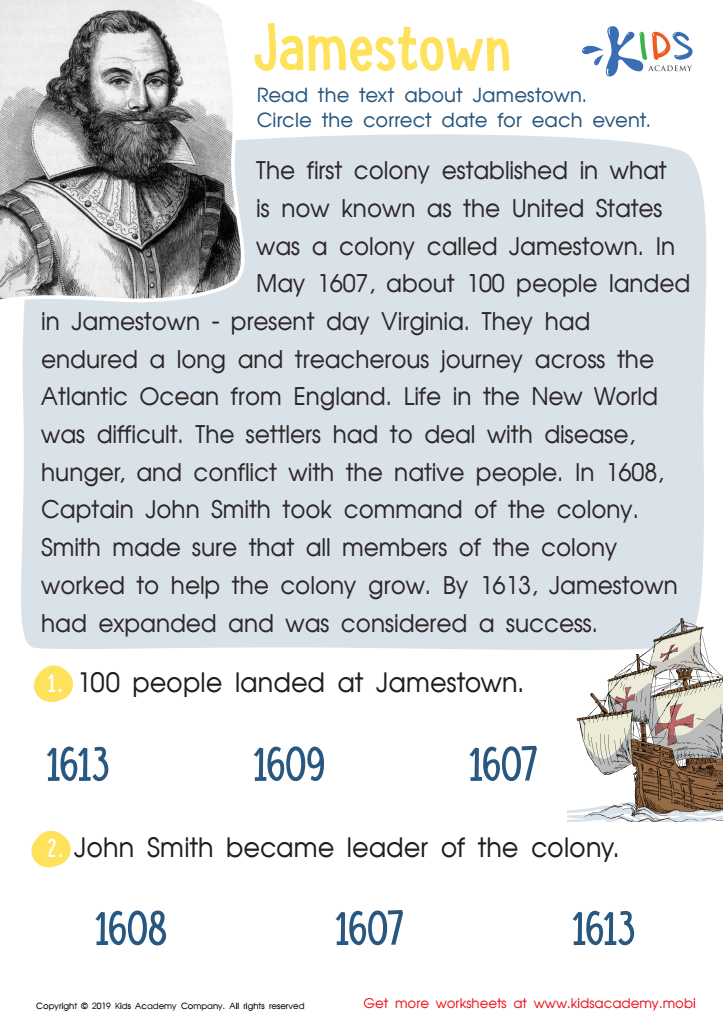
Jamestown Worksheet
 Assign to My Students
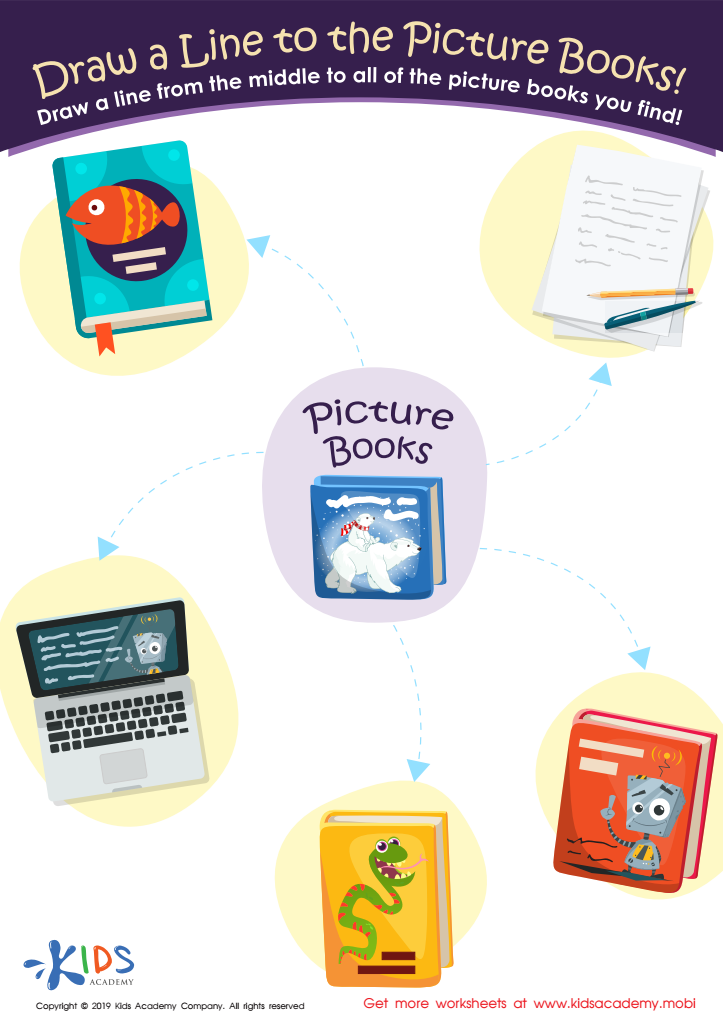
Draw a Line to the Picture Books Worksheet
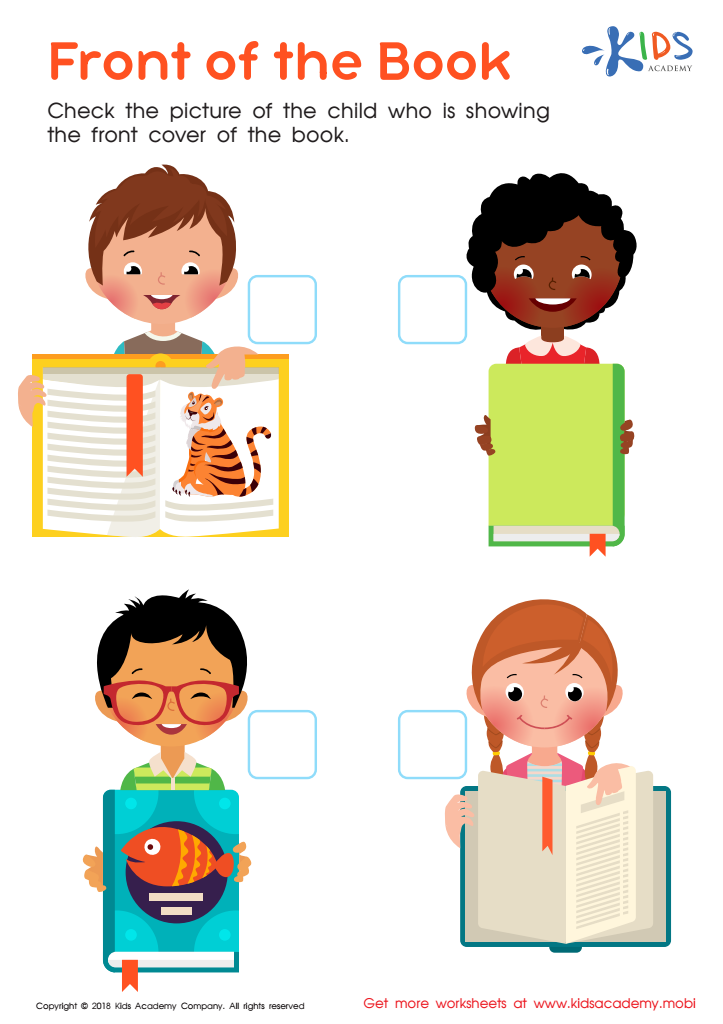
Front of the Book Worksheet
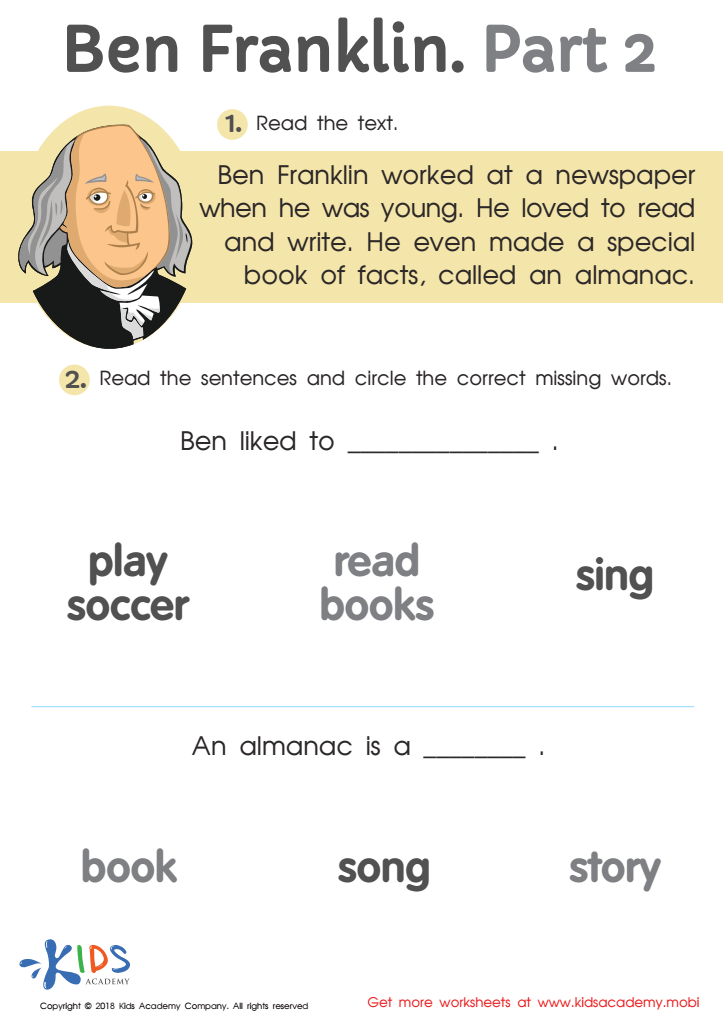
Ben Franklin Part 2 Worksheet








Reading skills are fundamental building blocks for all areas of learning, and focusing on non-fiction from ages 5-9 has many benefits. During these formative years, children are natural explorers, eager to understand the world around them. Non-fiction materials can significantly boost their curiosity and knowledge about diverse topics, from animals and environment to simple scientific principles and historical events.
Developing reading skills through non-fiction helps improve comprehension abilities. As children encounter real-world terminology and facts, they learn to decode, interpret, and retain information better. This lays a strong foundation for effective study habits and clear thinking in later years. Additionally, non-fiction encourages critical thinking and analytical skills. Young readers learn to question, compare, and differentiate between fact and opinion—key skills for informed decision-making.
Moreover, engagement with non-fiction can build vocabulary and general knowledge, which play important roles in cognitive development. Children exposed to a rich array of subjects can connect different areas of learning, fostering interdisciplinary understanding.
Finally, early exposure to non-fiction texts nurtures a sense of curiosity and motivation. When children find intriguing topics, they often develop a love for reading. Therefore, embracing non-fiction during the early grades can profoundly enrich a child's educational journey and lifelong learning trajectory.








