Critical thinking skills Sight Words Worksheets for Ages 5-9
3 filtered results
Difficulty Level
Grade
Age
-
From - To
Subject
Activity
Standards
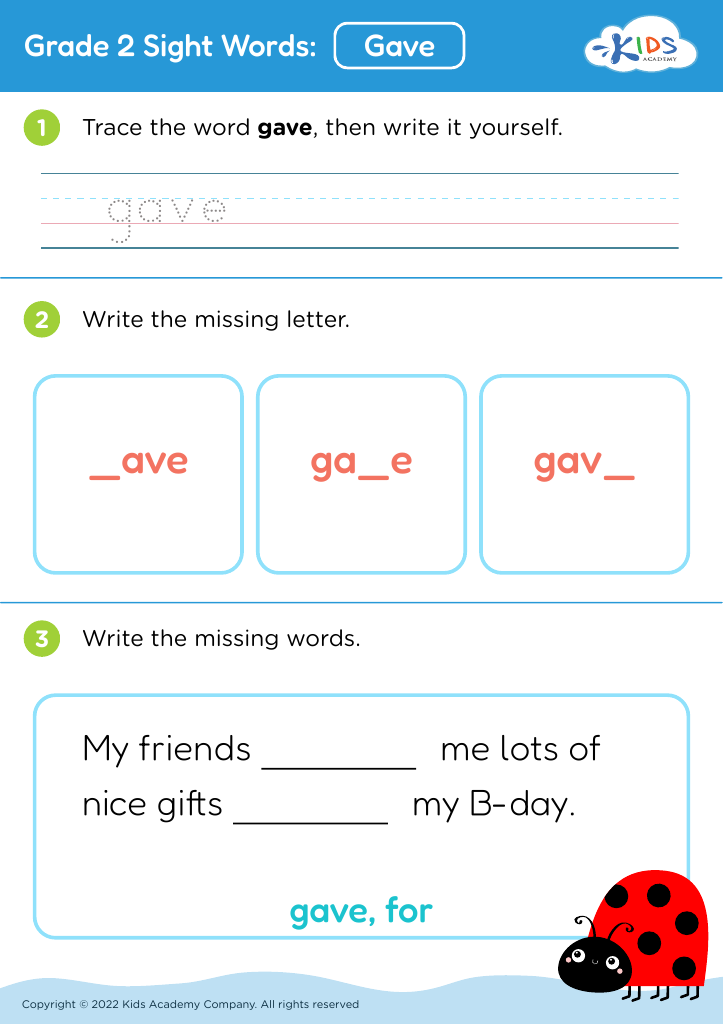
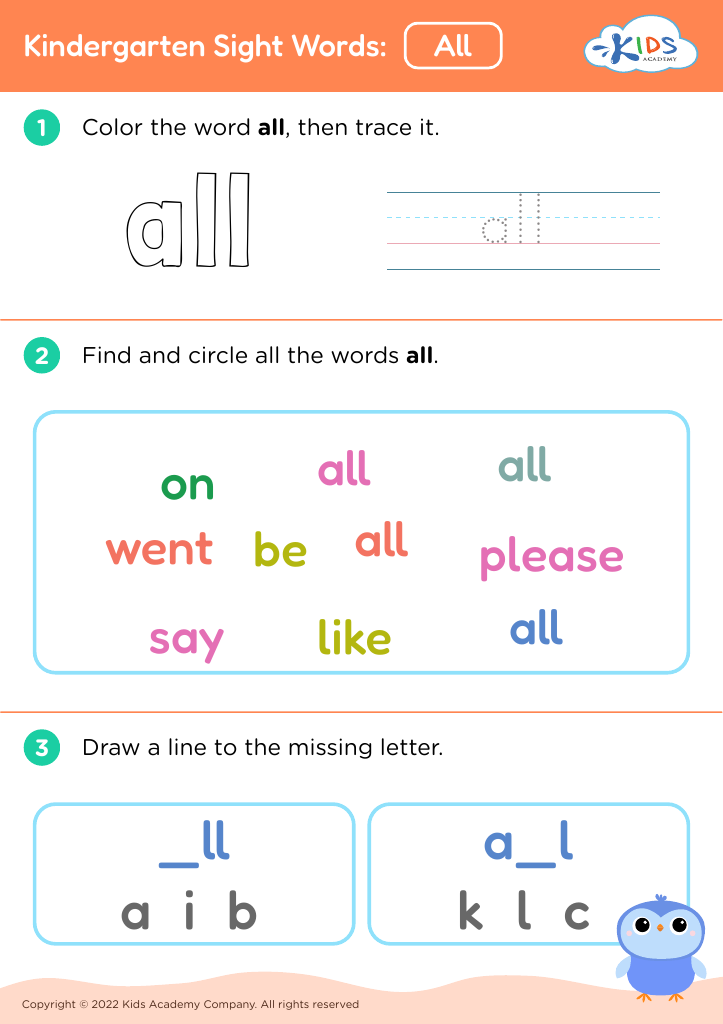
Unlock your child's potential with our "Critical Thinking Skills Sight Words Worksheets" designed for ages 5-9. These engaging worksheets combine essential sight word recognition with critical thinking exercises, promoting deeper comprehension and cognitive skills. Each activity encourages children to analyze, evaluate, and create connections between words and their meanings while making learning fun. Ideal for parents and educators seeking to enrich reading abilities, these resources foster independent thinking and problem-solving skills. Empower your young learners by giving them the tools they need to excel in both literacy and critical reasoning. Start your child’s journey towards confident reading today!
Favorites
With answer key
Interactive





Join Kids Academy for Free
Who is primarily going to use this learning content?






.jpg)

Critical thinking skills are essential for children aged 5-9, particularly when it comes to learning sight words. Sight words are those frequently used words that children should recognize instantly to improve their reading fluency and comprehension. Encouraging critical thinking while learning these words helps children dissect language use, understand context, and develop a deeper understanding of what they read.
Parents and teachers should prioritize critical thinking skills because these abilities foster independence in young learners. By guiding children to question, analyze, and draw conclusions about text, they not only master sight words but also develop skills that support overall academic success. Critical thinking encourages creativity, enabling children to come up with new ideas and solutions when faced with challenges.
Moreover, integrating sight word learning with critical thinking allows children to connect reading with real-world situations. For instance, they can discuss and apply these words in storytelling or relate them to their surroundings, enhancing both their vocabulary and their cognitive skills.
Investing in these skills prepares children for future learning and equips them to navigate complex situations both academically and socially, paving the way for lifelong learning and problem-solving abilities. Thus, fostering critical thinking alongside sight words is vital for holistic child development.