
Vocabulary enhancement Consonants Worksheets for 5-Year-Olds
4 filtered results
Difficulty Level
Grade
Age
-
From - To
Subject
Activity
Standards
Enhance your child’s language skills with our engaging "Vocabulary Enhancement Consonants Worksheets" designed for 5-year-olds. At Kids Academy, our worksheets focus on strengthening phonics and letter recognition, helping young learners understand consonant sounds in a fun, interactive way. Perfectly tailored for early readers, these activities aid in vocabulary building through colorful exercises and creative tasks. Each worksheet is thoughtfully crafted to support the development of reading proficiency, ensuring a strong language foundation. Encourage a love for learning and boost your child’s confidence with our expertly designed consonant worksheets today!
Favorites
With answer key
Interactive
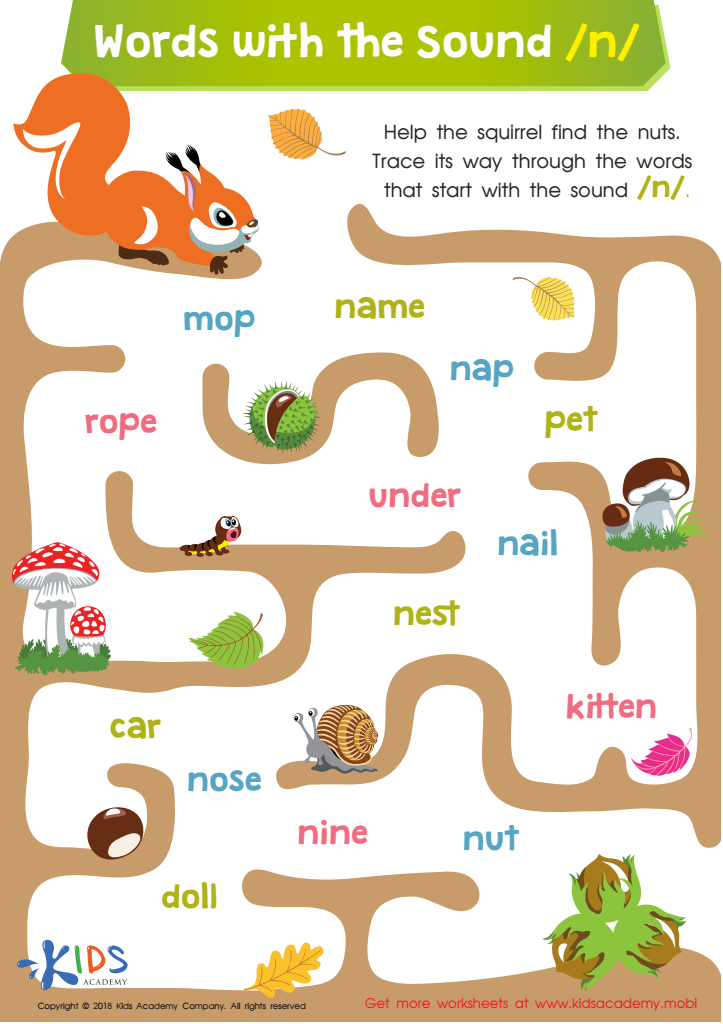
Words with Sound N Reading Worksheet
Young readers will love the colourful pictures and simple sight words on this download worksheet. They can trace their way through the maze as they help the cute squirrel reach his acorns, finding words with the sound "n" as they go. It's a fun way to work on reading skills - they won't even realise they're learning!
 Assign to My Students
Words with Sound N Reading Worksheet
Worksheet
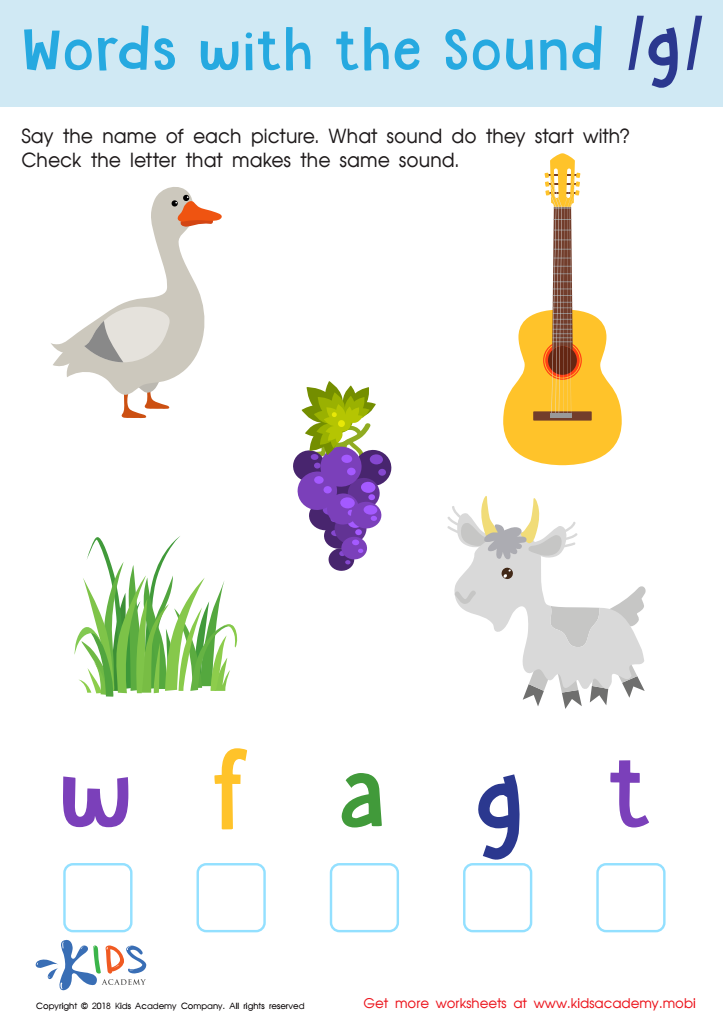
Words with sound g Reading Worksheet
Help your child learn the soft "g" sound with this phonics worksheet. Ask them to name each picture, then identify the letter sound it begins with. If it's "g", they can check the box. Have them repeat each word, listening for the soft "g" sound before moving on to the next page.
Words with sound g Reading Worksheet
Worksheet
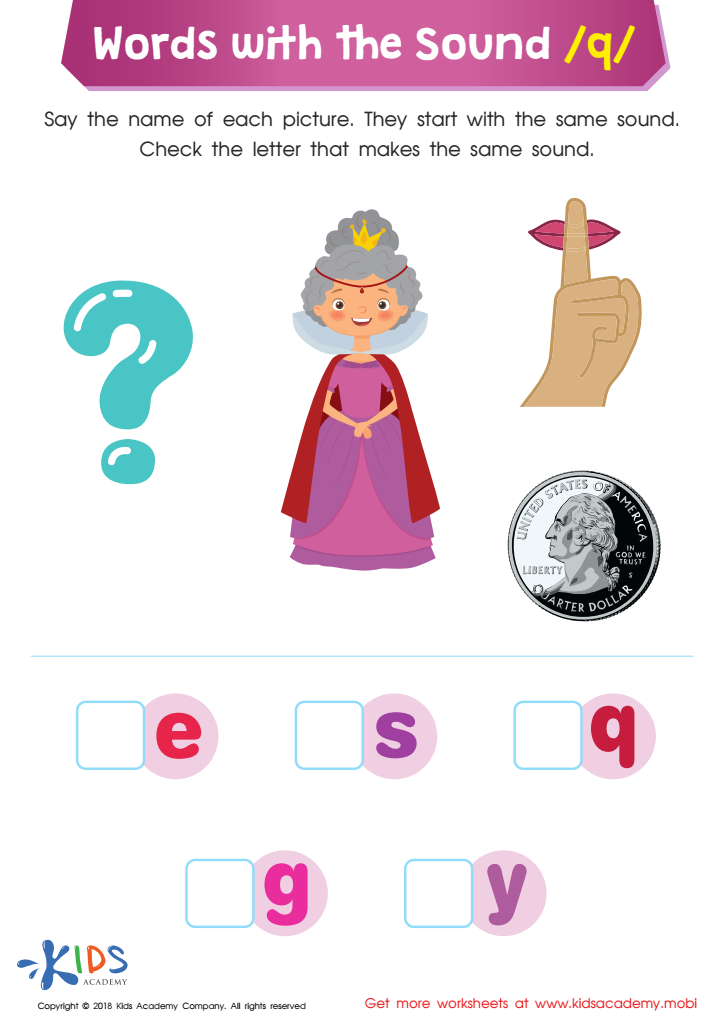
Words with Sound Q Reading Worksheet
Beginning readers will love this free PDF worksheet! Bright colors and familiar pictures make it fun, as they say the name of each image and work on fine motor skills. Letters “q” is featured among others, helping to recognize and isolate its sound, which is often seen with a “u” behind it.
Words with Sound Q Reading Worksheet
Worksheet
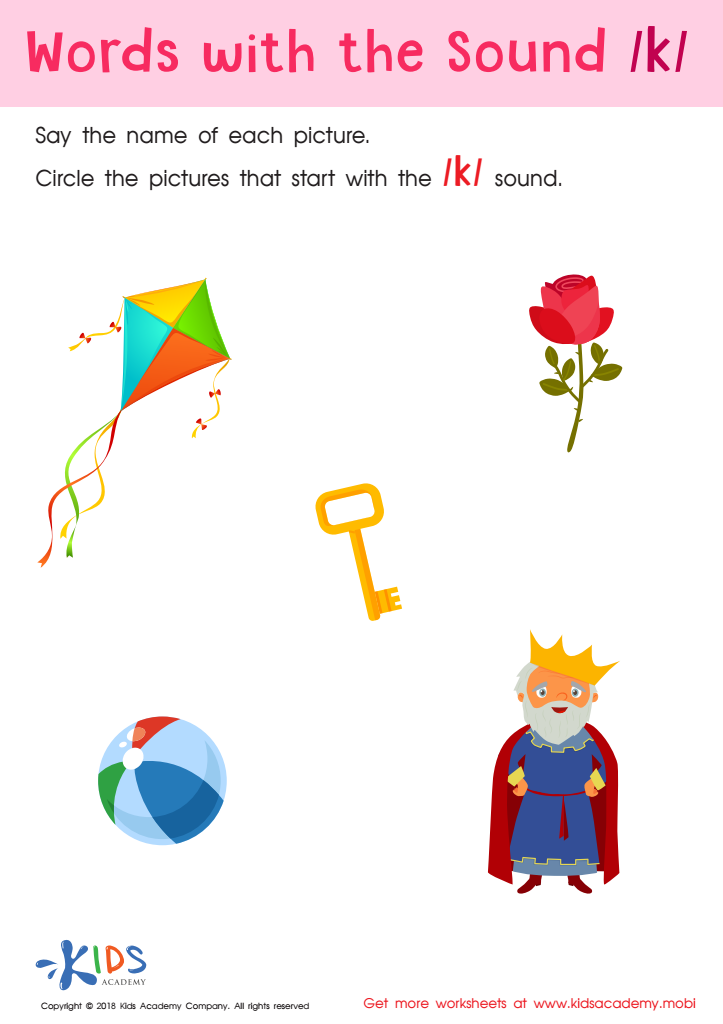
Words with sound k Reading Worksheet
Help your preschooler master the hard "k" sound with this fun worksheet from Kids Academy! Ask your child to say each picture aloud and circle only the pictures that start with "k". This early reading exercise will boost phonics skills and is sure to be loved by your little learner!
Words with sound k Reading Worksheet
Worksheet
Join Kids Academy for Free
Who is primarily going to use this learning content?



Vocabulary enhancement and an early grasp of consonants are crucial for 5-year-olds because they lay the foundation for future language development, reading proficiency, and effective communication. At this age, children's brains are highly receptive to new information, and a rich vocabulary allows them to express themselves more clearly and understand others better.
Knowing consonants is integral to decoding and pronouncing words correctly. When children recognize and practice consonant sounds, they gain the essential building blocks for phonemic awareness, which is the ability to hear, identify, and manipulate individual sounds in words. This skill is directly linked to their ability to read and spell later on.
Parents and teachers can support this development through engaging, age-appropriate activities such as reading books, playing word games, and singing songs that emphasize different consonant sounds. Incorporating a variety of words in daily conversations can also enrich a child's vocabulary.
Moreover, a robust vocabulary supports social skills, enhancing a child's ability to interact and form relationships with peers. It also fosters cognitive skills like memory and critical thinking, contributing to overall academic success. Prioritizing vocabulary enhancement and consonant recognition gives children a vital early start, setting them up for successful lifelong learning.







