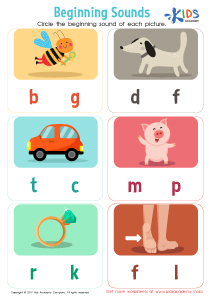
Rhyming skills development Rhyming Worksheets for 5-Year-Olds
3 filtered results
-
From - To
Boost your child’s rhyming skills with our specially designed Rhyming Worksheets for 5-Year-Olds! Packed with engaging activities, these worksheets help young learners recognize and produce rhymes, building a strong foundation for reading and phonics. Perfectly tailored for playful learning, each worksheet captures kids’ interests while enhancing their auditory discrimination and phonological awareness. Whether it’s finding matching rhymes or crafting simple poems, our fun and educational exercises ensure your child enjoys every step. Perfect for classroom or at-home practice, these printable resources from Kids Academy will make rhyming an exciting and effective learning adventure!
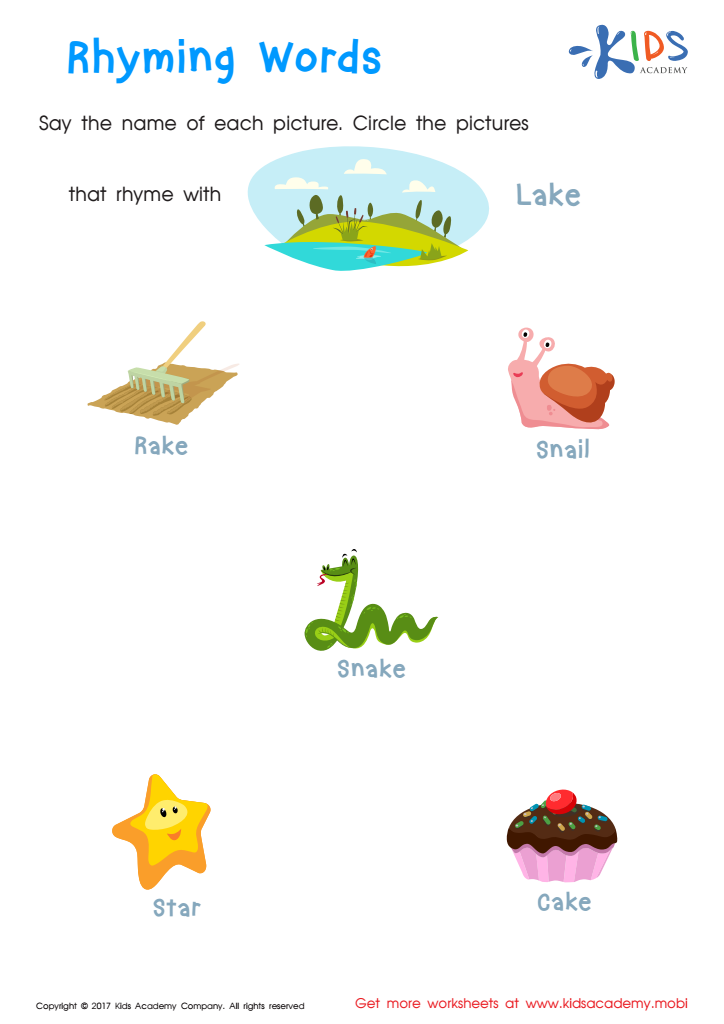
Rhyming Words Rhyming Worksheet
 Assign to My Students
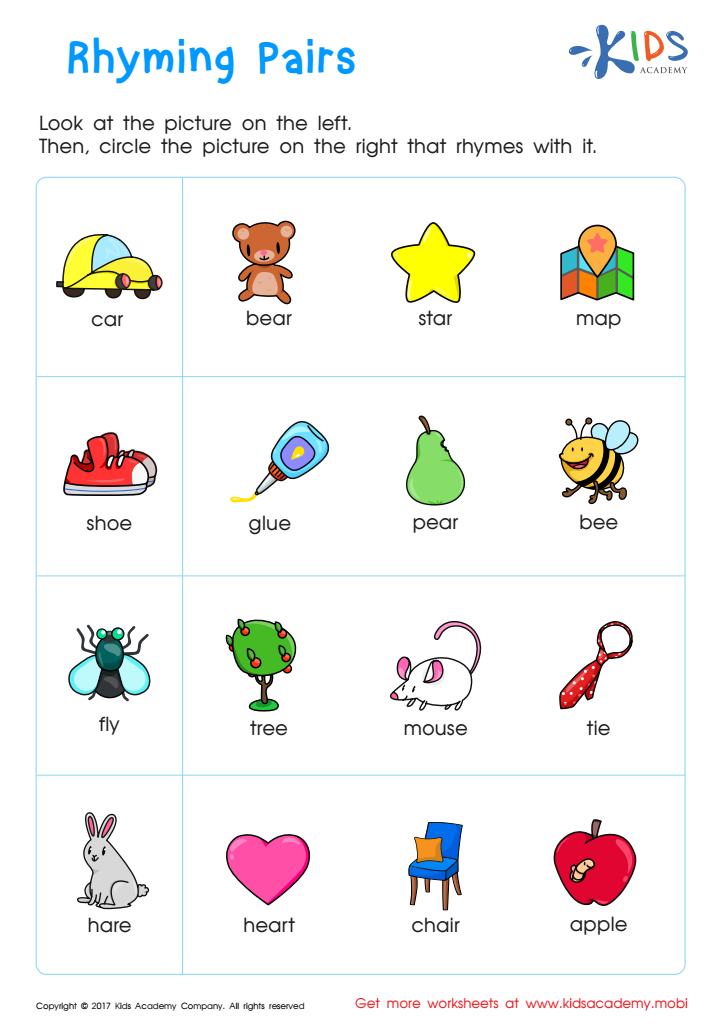
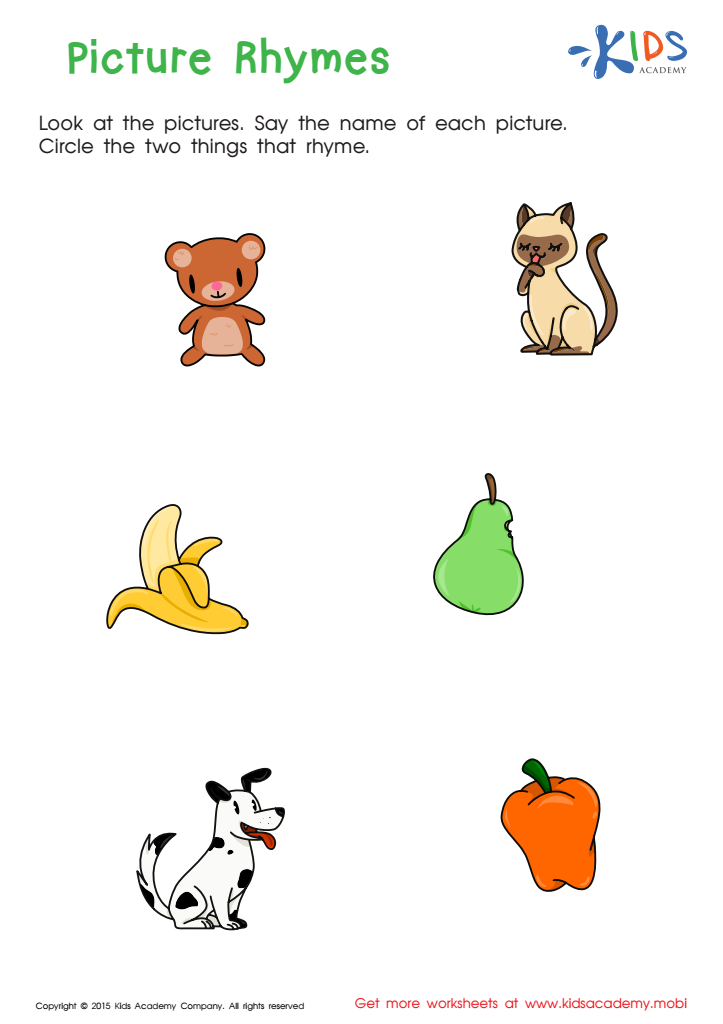
First Words: Picture Rhymes Worksheet








Rhyming skills are a fundamental aspect of early language and literacy development for 5-year-olds, crucially aligning with lifelong learning benefits. Rhyming helps children recognize patterns in words, which in turn supports their phonological awareness—the ability to hear and manipulate sounds in spoken language. This skill is a cornerstone of learning to read, as it aids children in decoding new words by understanding sound structures and predicting similar word constructions.
When children engage with rhymes, they enhance their listening skills, vocabulary, and memory. Rhyming activities like singing songs, reciting poems, or playing rhyming games can make learning fun and engaging. This positive association with words and sounds fosters a love for reading and language that can inspire lifelong learning.
Moreover, rhyming helps children improve their auditory discrimination, enabling them to distinguish between different sounds, which is essential not just for reading but also for clear communication. By identifying the similarities and differences in sounds, children enhance their cognitive abilities, fostering critical thinking and problem-solving skills.
Both parents and teachers play a critical role in nurturing these skills. Incorporating rhyming activities into daily routines provides children with consistent, joyful opportunities to practice and develop their phonological awareness, serving as a solid foundation for reading proficiency and overall academic success.