Fine motor skills development Tracing Letters Worksheets for 5-Year-Olds
3 filtered results
-
From - To
Enhance your child's fine motor skills with our engaging tracing letters worksheets, specially designed for 5-year-olds! These worksheets provide a fun and interactive way for young learners to practice letter recognition, improve handwriting, and develop hand-eye coordination. By tracing each letter, children strengthen the small muscles in their hands and fingers, essential for writing and other everyday tasks. With colorful illustrations and varied designs, these worksheets make learning enjoyable while building confidence in letter formation. Explore our collection of tracing letters worksheets to support your child's developmental journey and lay a solid foundation for their future academic success!
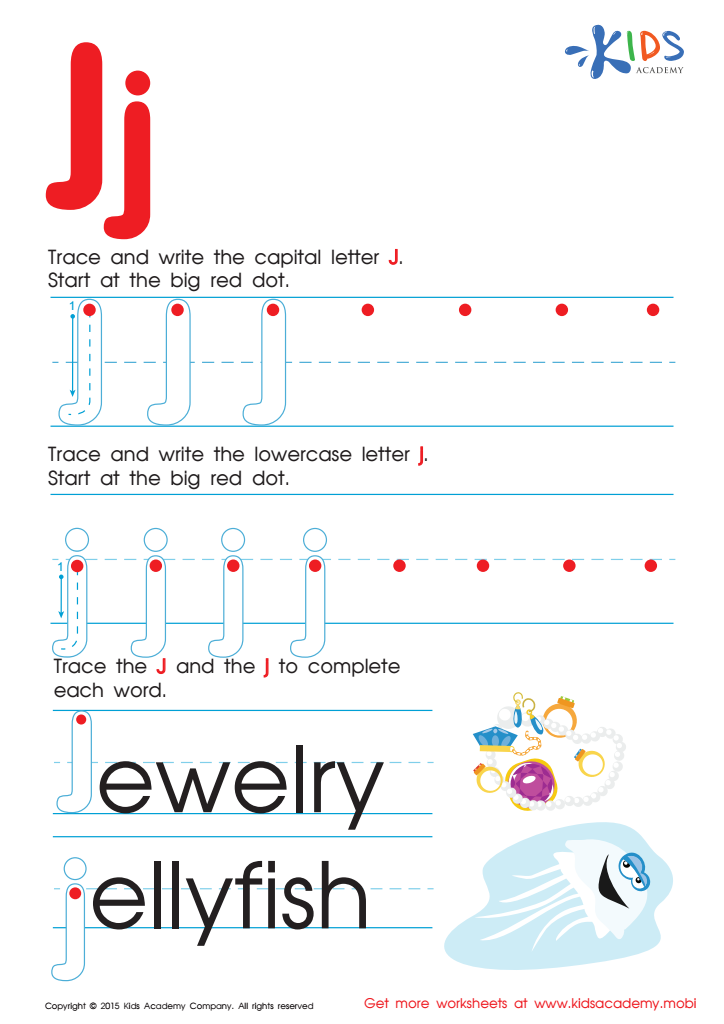
Letter J Tracing Page
 Assign to My Students
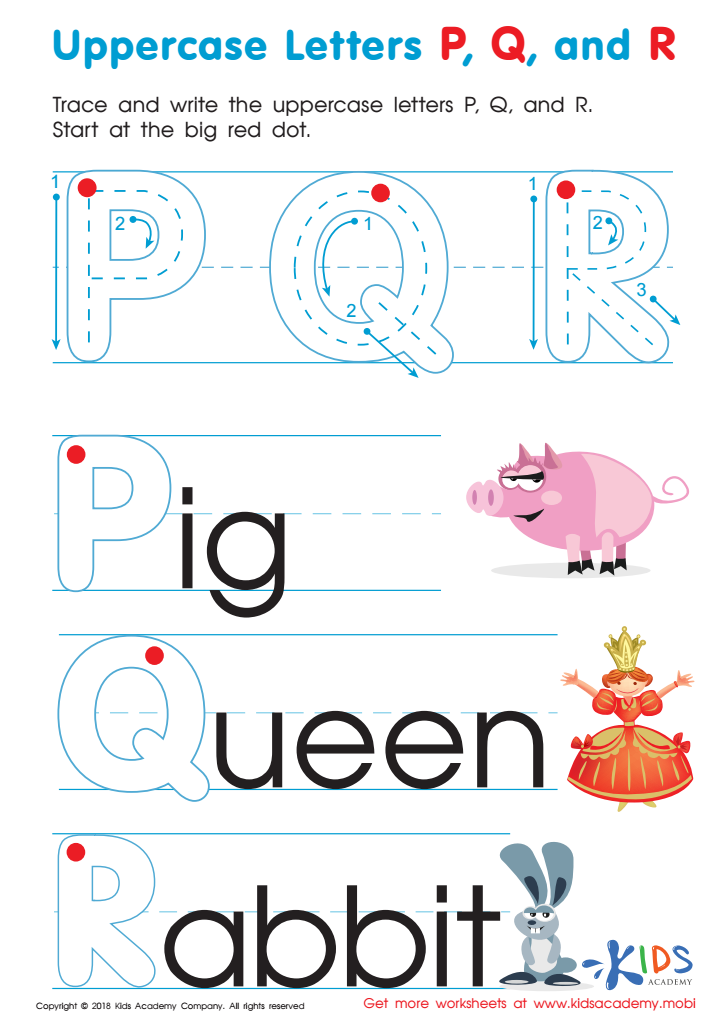
Uppercase Letters P, Q, and R Worksheet
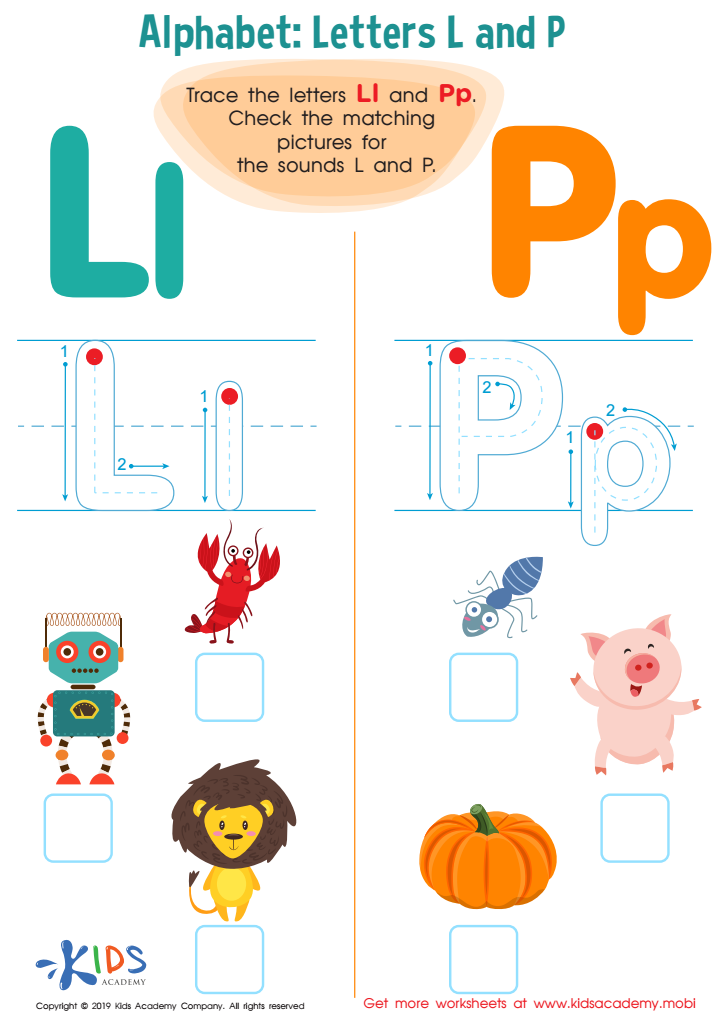
Letter L and P Tracing Worksheet







Fine motor skills are crucial for a child's overall development, particularly in the early years. Tracing letters is an essential activity that significantly enhances these skills for 5-year-olds. This developmental stage is critical as children's fine motor skills lay the groundwork for future tasks, such as writing, drawing, and self-care.
When children trace letters, they engage multiple small muscle groups in their hands and fingers. This practice strengthens their hand-eye coordination, which is fundamental for developing handwriting abilities. Mastery of fine motor skills also fosters independence, allowing children to perform tasks like buttoning clothing or using utensils more effectively.
Furthermore, tracing letters supports cognitive development. As kids learn to form shapes, they also improve their recognition of letters and sounds, which are vital for literacy. Engaging activities like tracing encourage concentration and patience, valuable traits that enhance overall learning.
By prioritizing fine motor skill development through tracing activities, parents and teachers ensure that children are better prepared for academic success while also promoting their confidence and creativity. In summary, nurturing fine motor skills in early education not only lays a foundation for effective writing but also enriches a child's broader educational journey.








