Alphabet understanding Upper & Lowercase Letters Worksheets for 5-Year-Olds
3 filtered results
-
From - To
Help your 5-year-olds master the alphabet with our engaging Upper & Lowercase Letters Worksheets! Designed to enhance alphabet understanding, these worksheets offer vibrant illustrations and interactive activities that make learning fun. Children will practice distinguishing between uppercase and lowercase letters while developing essential literacy skills. Each worksheet is crafted to stimulate curiosity and creativity, encouraging young learners to recognize letters in various contexts. Ideal for preschool or kindergarten settings, these resources will equip your child with the foundational tools for reading and writing. Download our printable worksheets today and let the alphabet adventure begin! Perfect for parents and educators alike!
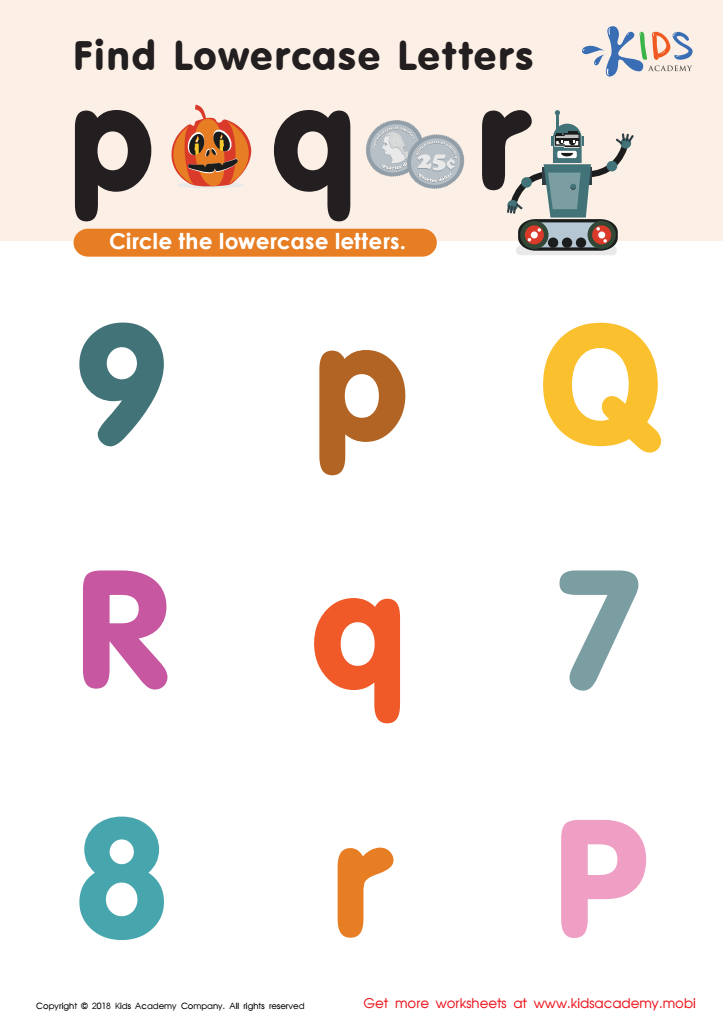
Find lowercase Letters p q r Worksheet
 Assign to My Students
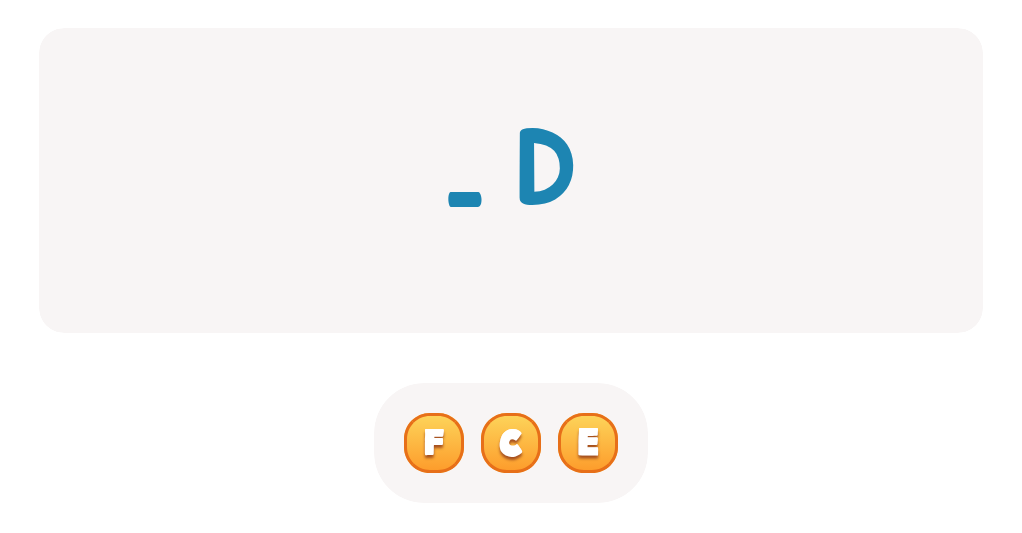

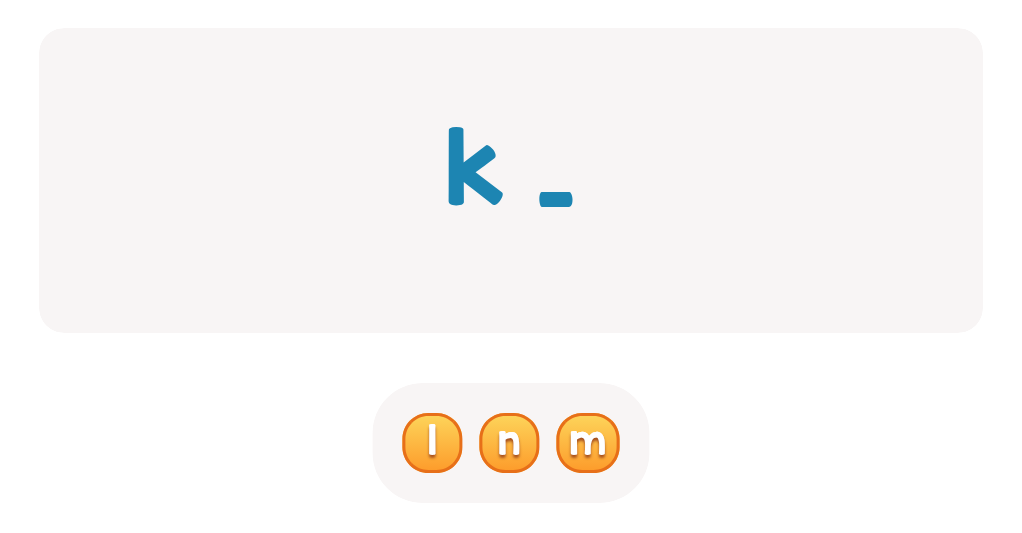
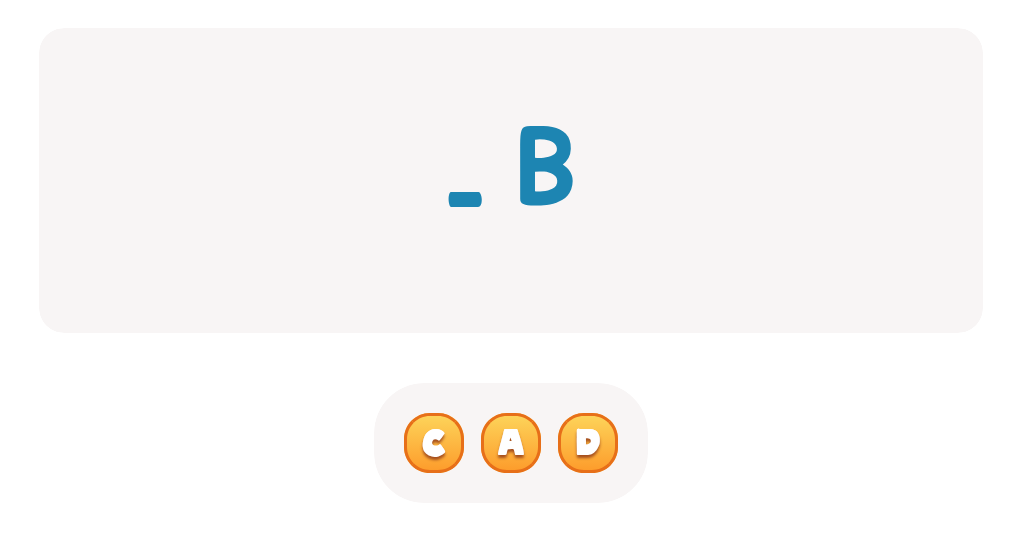
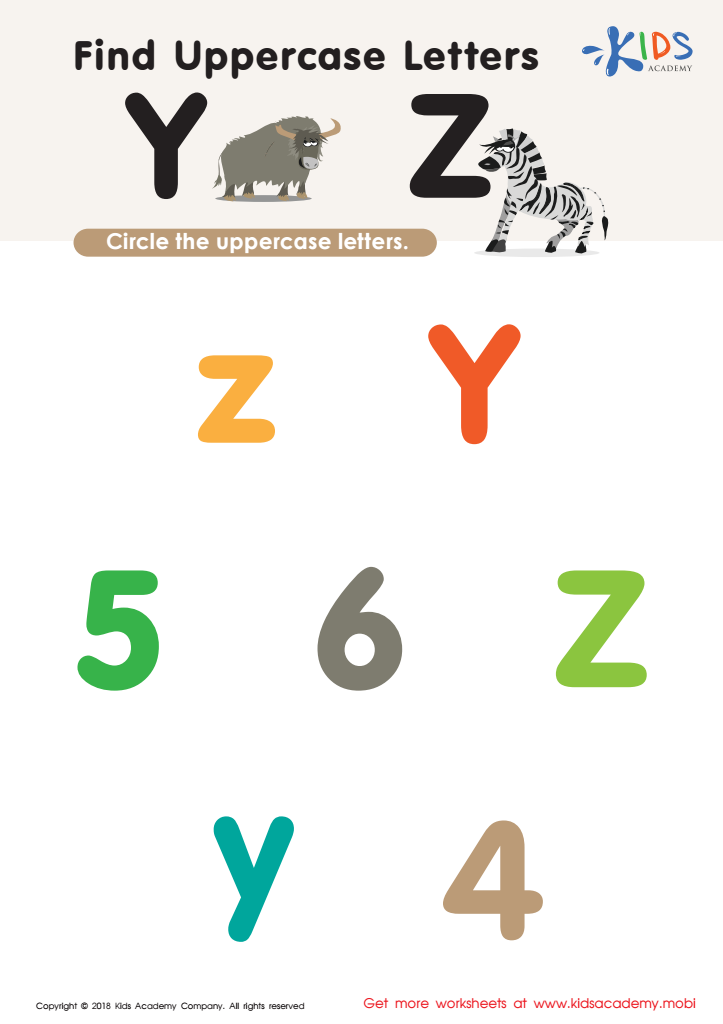
Find Uppercase Letters Y Z Worksheet
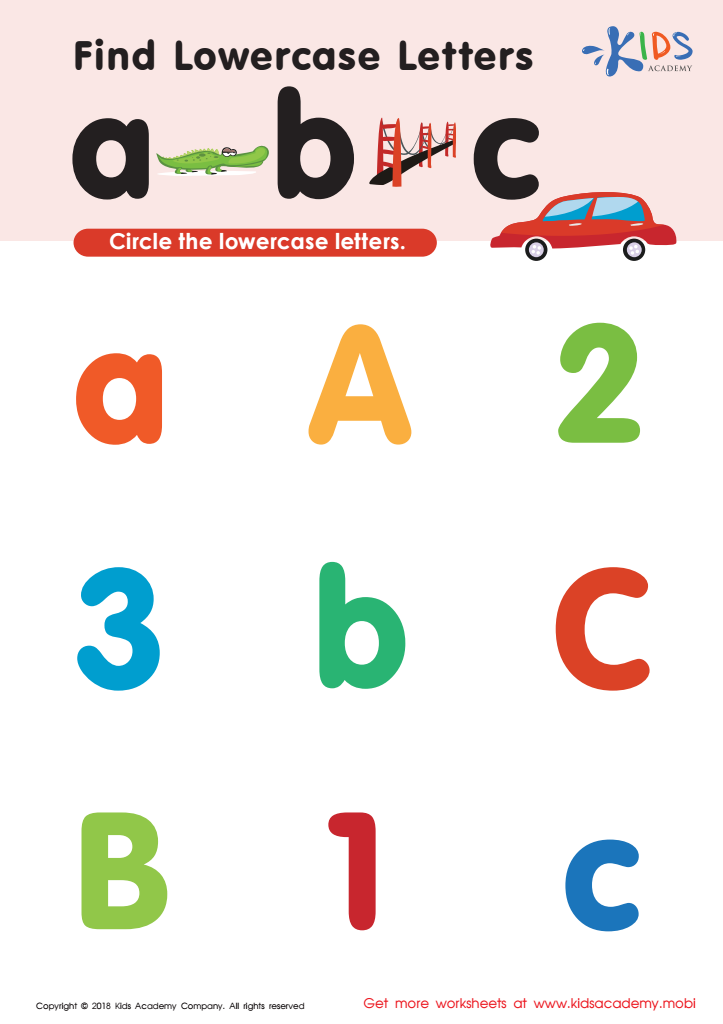
Find lowercase letters a b c Worksheet






Understanding uppercase and lowercase letters is crucial for 5-year-olds as it lays the foundation for their literacy development. First, recognizing letter forms enhances their ability to read and write. Familiarity with both versions helps children decode words, facilitating early reading skills. For example, many children's books utilize both forms, and an understanding of uppercase letters can represent the start of sentences or proper nouns, while lowercase letters appear more frequently in text.
Moreover, accurate letter recognition aids in developing phonemic awareness—an essential skill for understanding that letters represent sounds. This understanding can lead to improved spelling and writing abilities as children learn to apply their knowledge consistently.
In a broader context, letter knowledge contributes to children's self-esteem and motivation. When they can distinguish between uppercase and lowercase letters, they feel more confident in classroom activities and reading aloud.
Additionally, engaging parents in this process fosters a home environment conducive to literacy. Simple activities like letter games, crafting, or books that emphasize both letter forms can strengthen these skills. Therefore, parents and teachers should prioritize helping children grasp this essential building block of language, setting the stage for successful future learning.







