Fine motor skills development Upper & Lowercase Letters Worksheets for 5-Year-Olds
3 filtered results
-
From - To
Discover our Fine Motor Skills Development Upper & Lowercase Letters Worksheets, specially designed for 5-year-olds! These engaging printables are crafted to improve handwriting skills by guiding children through tracing and writing both uppercase and lowercase letters. Each worksheet offers fun, interactive exercises that boost fine motor skill proficiency, ensuring a solid foundation for future writing success. Brightly illustrated and intuitively laid out, these educational tools make learning enjoyable and effective. Ideal for early learners, our worksheets bolster confidence and pave the way for academic growth. Visit Kids Academy to explore our comprehensive collection and give your child a head start today!
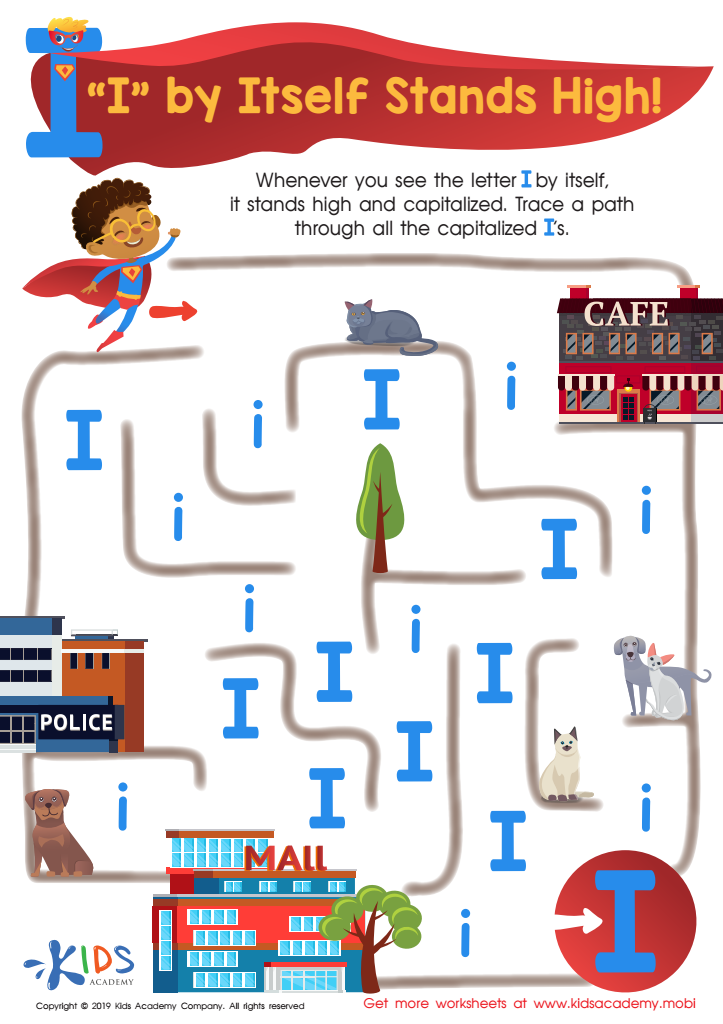
I Stands High Worksheet
 Assign to My Students









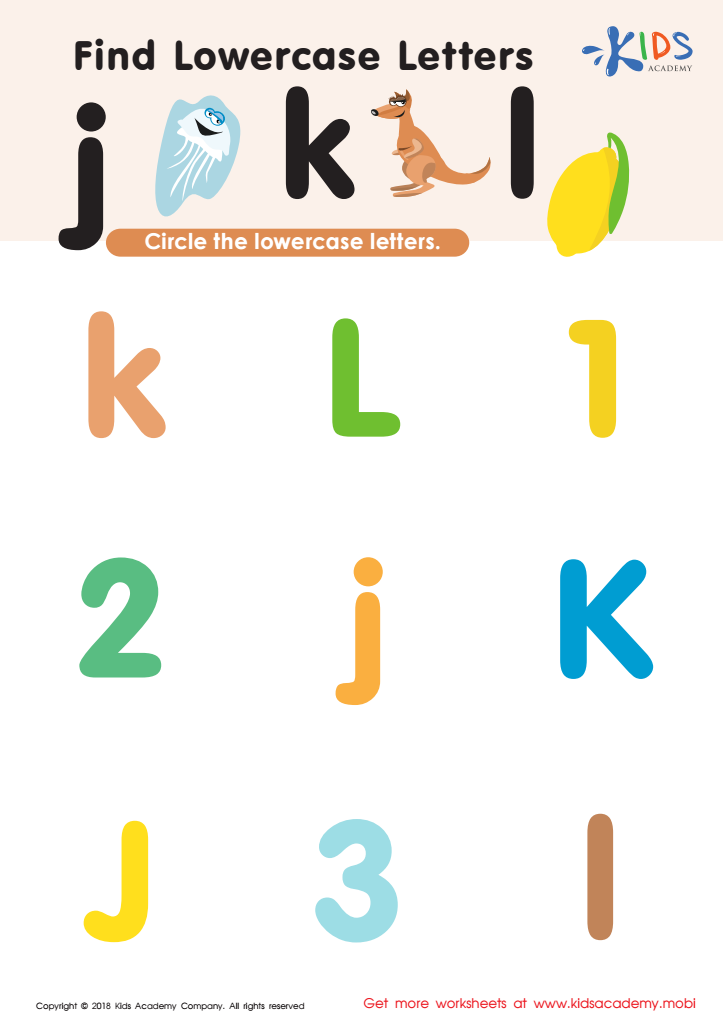
Find Lowercase Letters j k l Worksheet
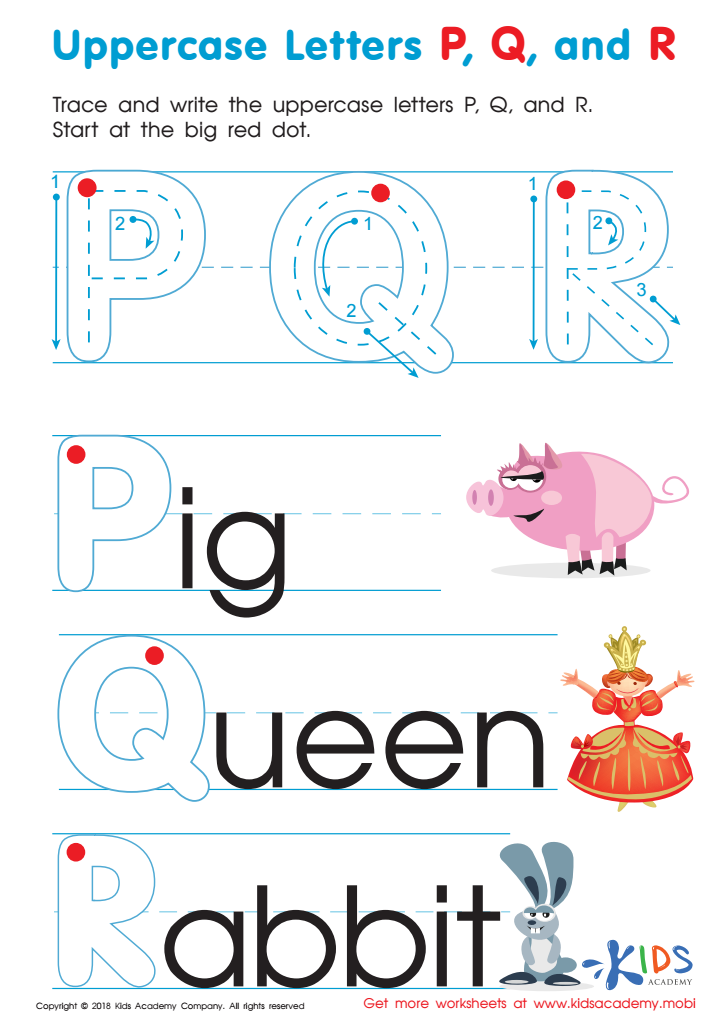
Uppercase Letters P, Q, and R Worksheet






Parents and teachers play a crucial role in nurturing fine motor skills, particularly the ability to write upper and lowercase letters, in 5-year-olds. Fine motor skills involve the coordination of small muscles in the hands and fingers, essential for tasks like writing, buttoning clothes, and tying shoes. Fostering these skills at an early age lays the foundation for academic success and independence in everyday tasks.
Writing upper and lowercase letters boosts cognitive and literacy skills. It enhances letter recognition, phonics, and reading readiness, which are critical for early education. Mastering these writing skills also improves hand-eye coordination and spatial awareness, contributing to more precise and legible handwriting as children advance in school.
Moreover, developing fine motor skills through letter writing builds self-esteem and confidence. Children experience a sense of accomplishment and pride when they see their progress. This motivates them to tackle more complex tasks, promoting perseverance and resilience.
Activities like tracing letters, using playdough, or playing with building blocks are fun, interactive ways to strengthen these skills. By prioritizing fine motor skills development, parents and teachers ensure that children are well-prepared for the academic challenges ahead and better equipped to perform daily tasks independently, setting them up for long-term success.







