Letter-sound association Upper & Lowercase Letters Worksheets for 5-Year-Olds
3 filtered results
-
From - To
Boost your child's literacy skills with our engaging Letter-Sound Association Worksheets, designed specifically for 5-year-olds! These printable activities explore both uppercase and lowercase letters, helping young learners recognize letters while connecting sounds to each one. With colorful illustrations and fun exercises, your child will enjoy tracing, matching, and identifying letters, reinforcing essential phonetic concepts. Perfect for parents and educators alike, these worksheets make learning both effective and enjoyable. Watch your child gain confidence in their reading abilities as they master the basics of the alphabet. Download our Letter-Sound Association Worksheets today and kickstart your child's journey to literacy!
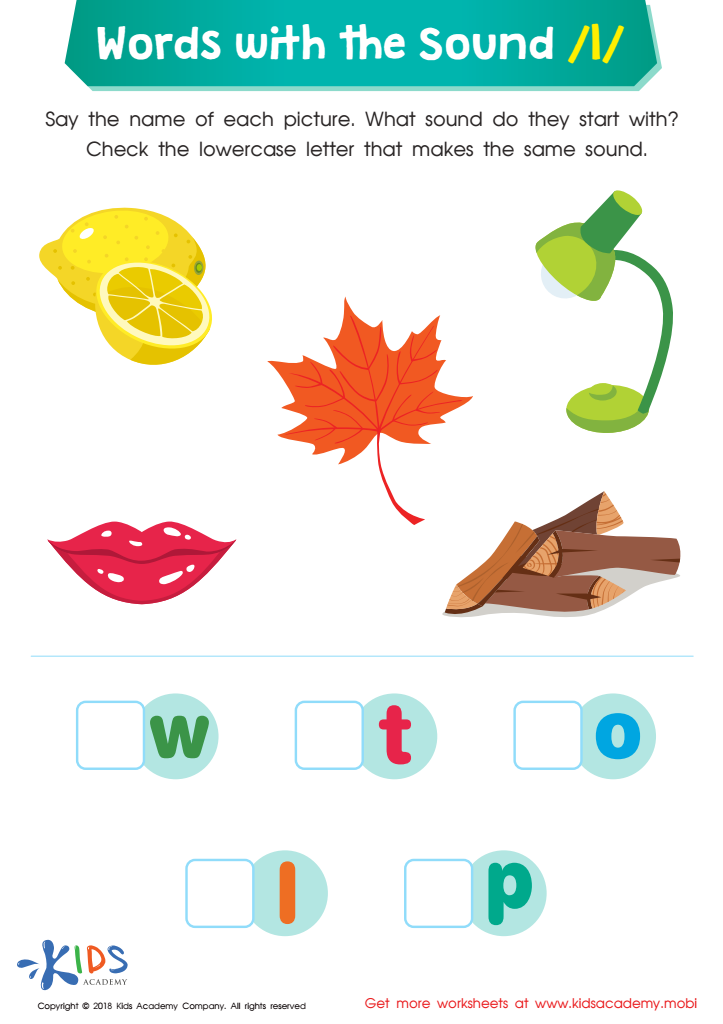
Words with Sound L Reading Worksheet
 Assign to My Students

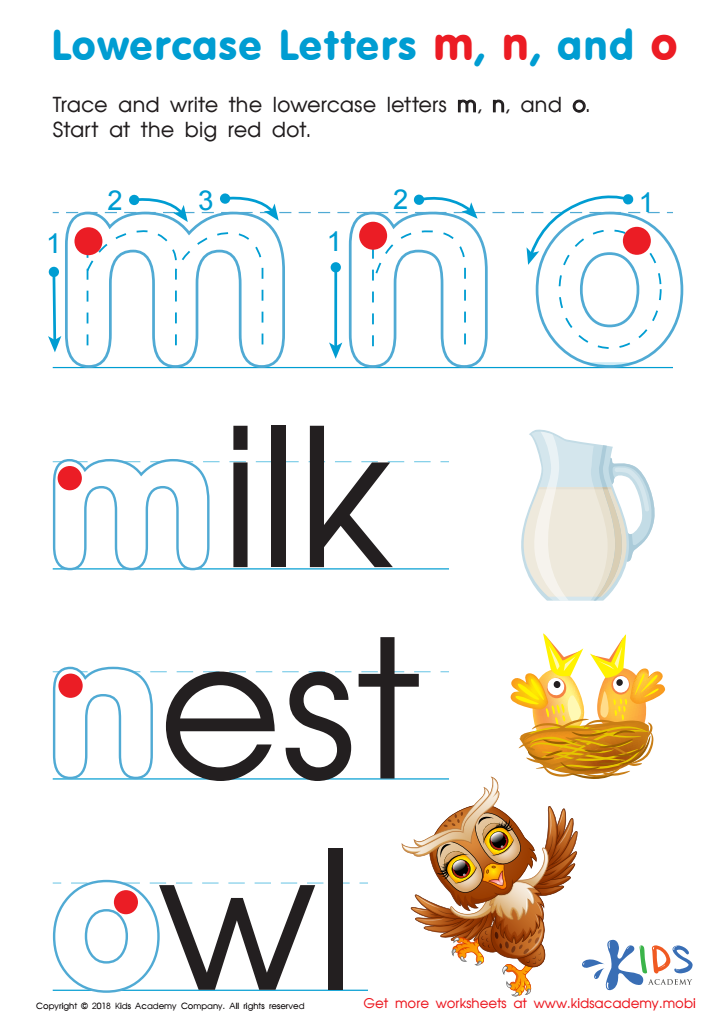
Lowercase Letters m n o Worksheet
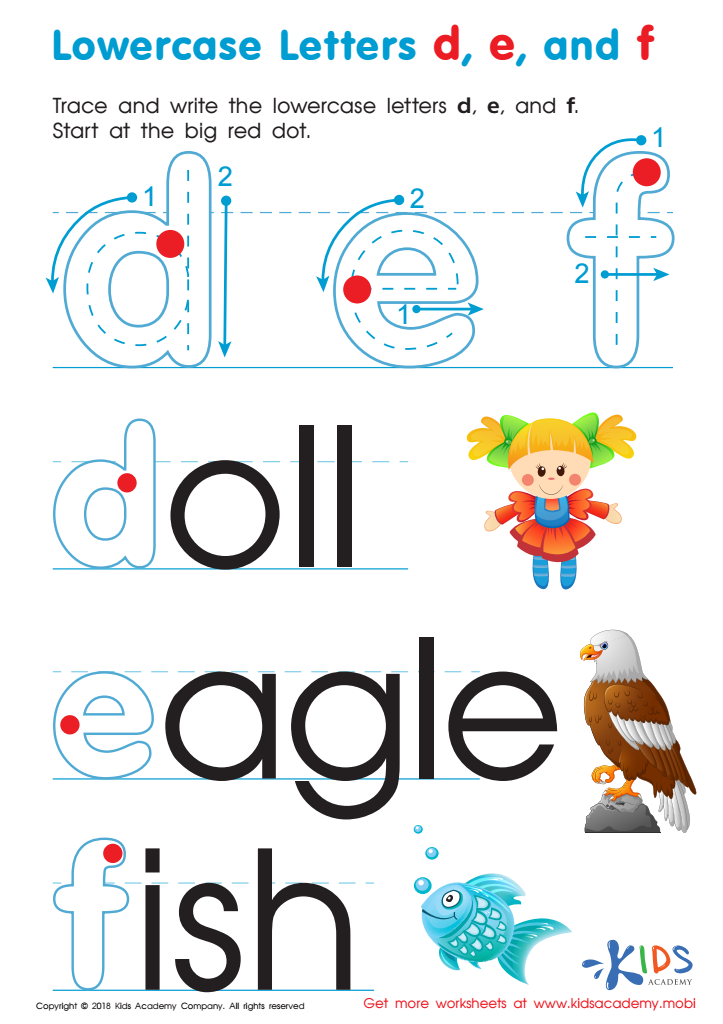
Lowercase Letters d e f Worksheet






Letter-sound association is crucial for 5-year-olds as it forms the foundation of literacy and language development. When children learn to associate letters with their sounds, they become equipped to decode words, which is essential for reading. Understanding both uppercase and lowercase letters is equally important, as they encounter both in everyday print, whether in books or labels. This dual understanding fosters confidence in reading and writing tasks, making it more likely for children to engage in literacy-rich activities.
Furthermore, mastering these associations supports phonemic awareness, enabling children to manipulate sounds when they start spelling and writing. Recognizing letters can also be a pathway for vocabulary development, enhancing their expression and communication skills. For educators and parents, nurturing this skill entails creating a supportive environment filled with phonics games, reading activities, and letter recognition practice, ensuring that children enjoy the learning process.
Additionally, consistent reinforcement and positive experiences can motivate students and encourage a lifelong love for reading. Overall, promoting letter-sound associations enriches children's cognitive development, setting them up for success in their educational journeys. Hence, both parents and teachers play a pivotal role in facilitating this vital aspect of early literacy.







