Letter Tracing Practice Upper & Lowercase Letters Worksheets for 5-Year-Olds
3 filtered results
-
From - To
Explore our engaging Letter Tracing Practice worksheets designed specifically for 5-year-olds! These interactive upper and lowercase letter activities help young learners develop essential writing skills while also boosting their confidence. Using fun and easy-to-follow tracing exercises, children will improve their hand-eye coordination and fine motor skills, setting a strong foundation for future literacy. Our worksheets not only make learning the alphabet enjoyable but also encourage the recognition of each letter’s unique shape. Perfect for both home and classroom use, these letter tracing tools are ideal for fostering a love of writing in early learners. Start tracing today for a brighter tomorrow!
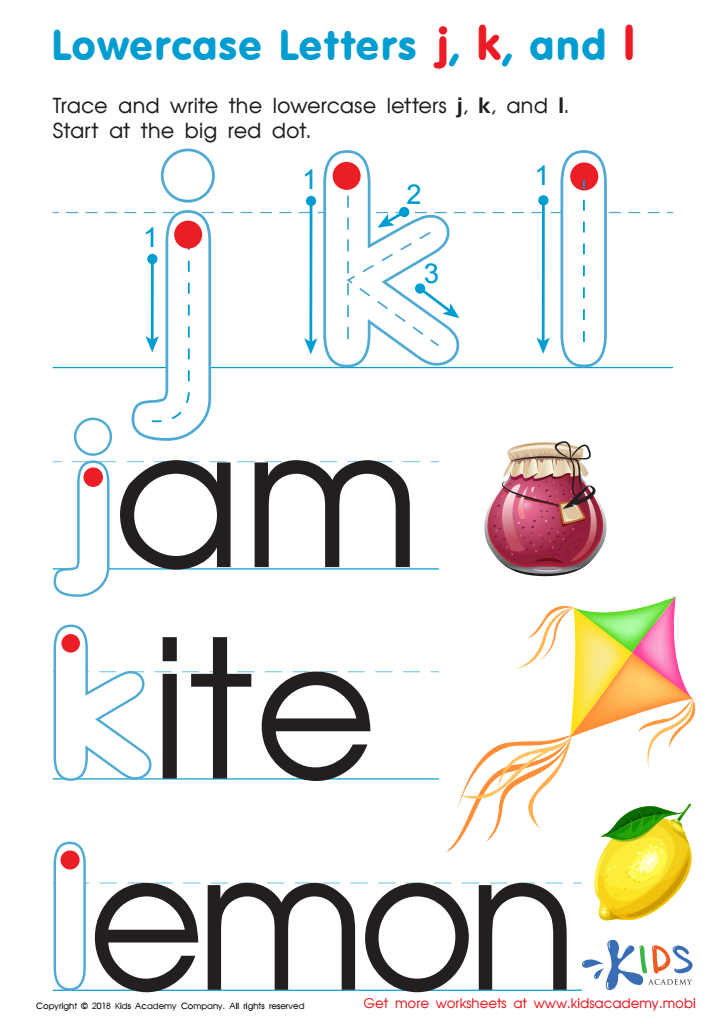
Lowercase Letters j k l Worksheet
 Assign to My Students


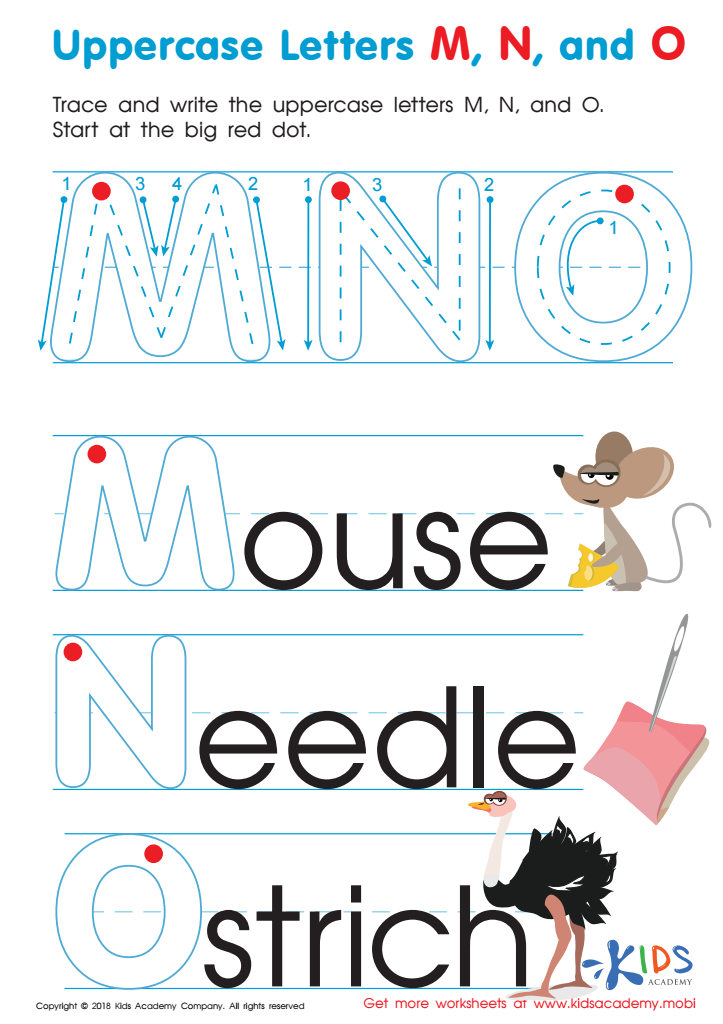
Uppercase Letters M, N, and O Worksheet
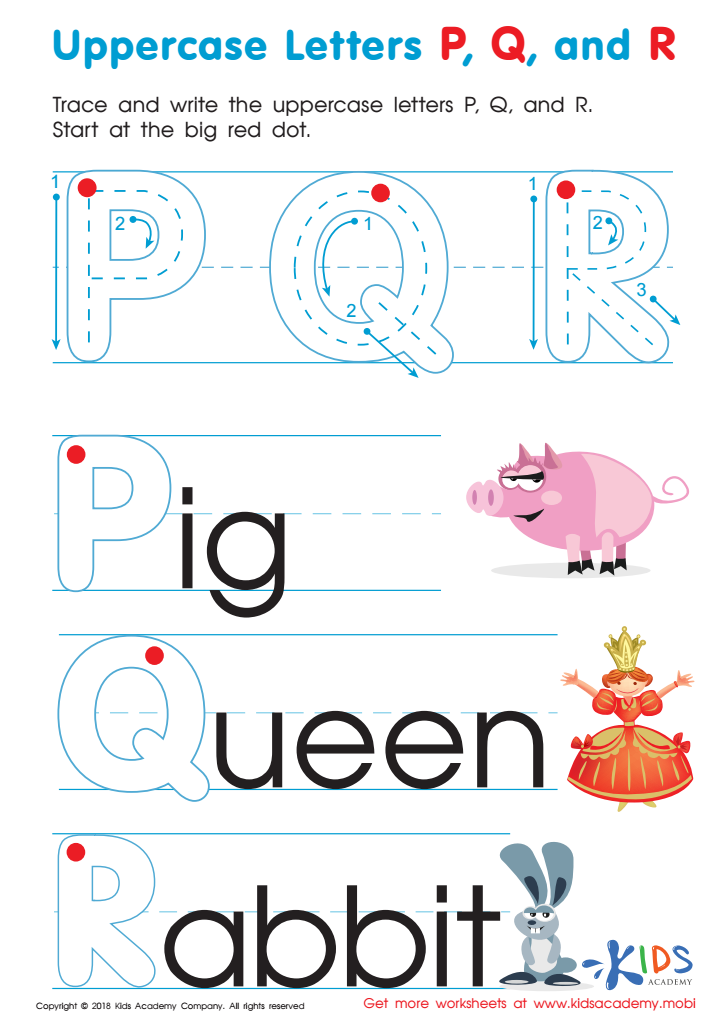
Uppercase Letters P, Q, and R Worksheet






Letter tracing practice for 5-year-olds is crucial for several reasons. First, it helps develop fine motor skills. As children trace both uppercase and lowercase letters, they practice the small muscle movements in their hands and fingers, which are essential for writing. This practice not only builds dexterity but also enhances their overall grip and control over writing instruments.
Second, letter tracing supports language and literacy development. At this age, children are beginning to understand the relationship between spoken and written language. Through tracing, they learn to recognize letter shapes, improve letter formation, and become familiar with the alphabet, which serves as the cornerstone of reading and writing.
Moreover, tracing provides children with a structured and engaging way to reinforce consistency in their writing. It fosters an awareness of letter size, spacing, and alignment, leading to better legibility. This skill is especially important as they transition into more independent writing tasks.
Finally, tracing can be a fun and interactive learning activity. When incorporated into games or creative projects, it keeps children engaged and motivated. By emphasizing letter tracing practice, parents and teachers can lay a solid foundation for their children's literacy journey, ultimately enhancing academic success and confidence in their writing abilities.







