Lowercase letter writing Upper & Lowercase Letters Worksheets for 5-Year-Olds
3 filtered results
-
From - To
Help your 5-year-old master lowercase letters with our engaging Upper & Lowercase Letters Worksheets. Perfect for young learners, these worksheets make learning fun and effective. Each page features exciting activities designed to strengthen fine motor skills and improve letter recognition. Children will trace and write lowercase letters while matching them to their uppercase counterparts, enhancing their understanding of the alphabet. Our worksheets are printable and kid-friendly, ensuring hands-on learning anytime and anywhere. Equip your child with essential foundational skills in a playful and educational way today. Start their alphabet journey with us now!
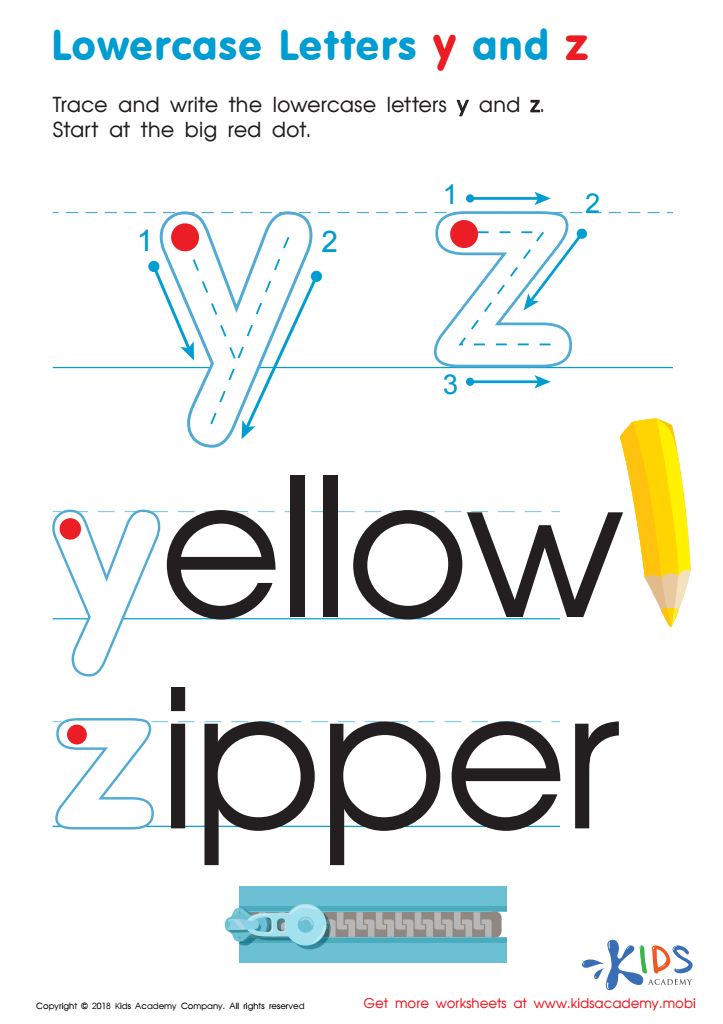
Lowercase Letters y z Worksheet
 Assign to My Students



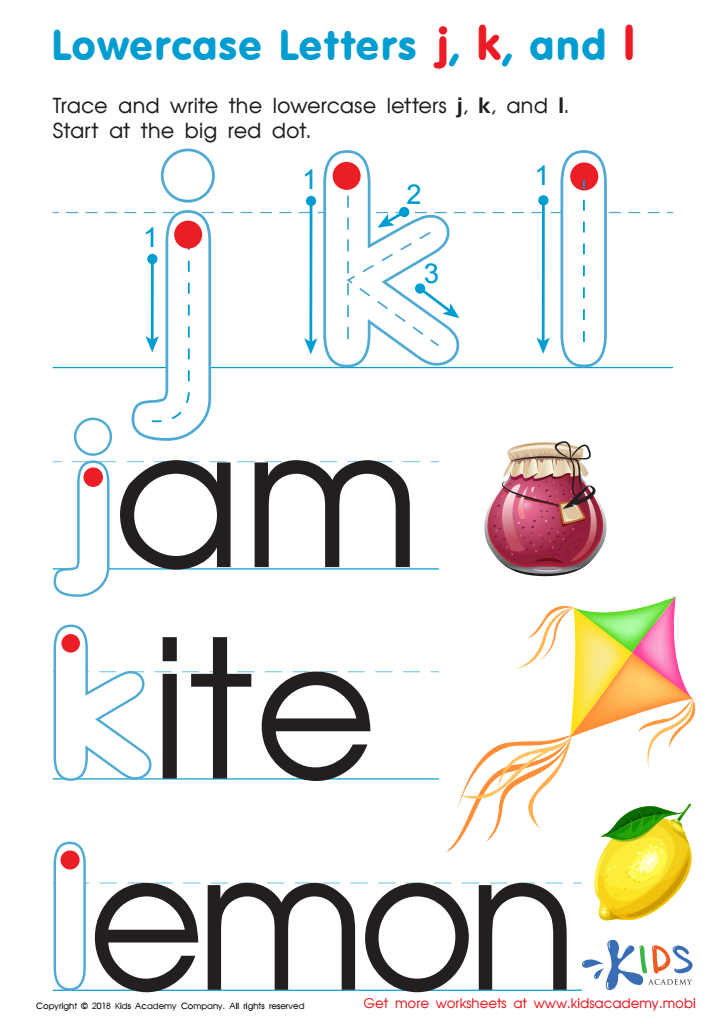
Lowercase Letters j k l Worksheet
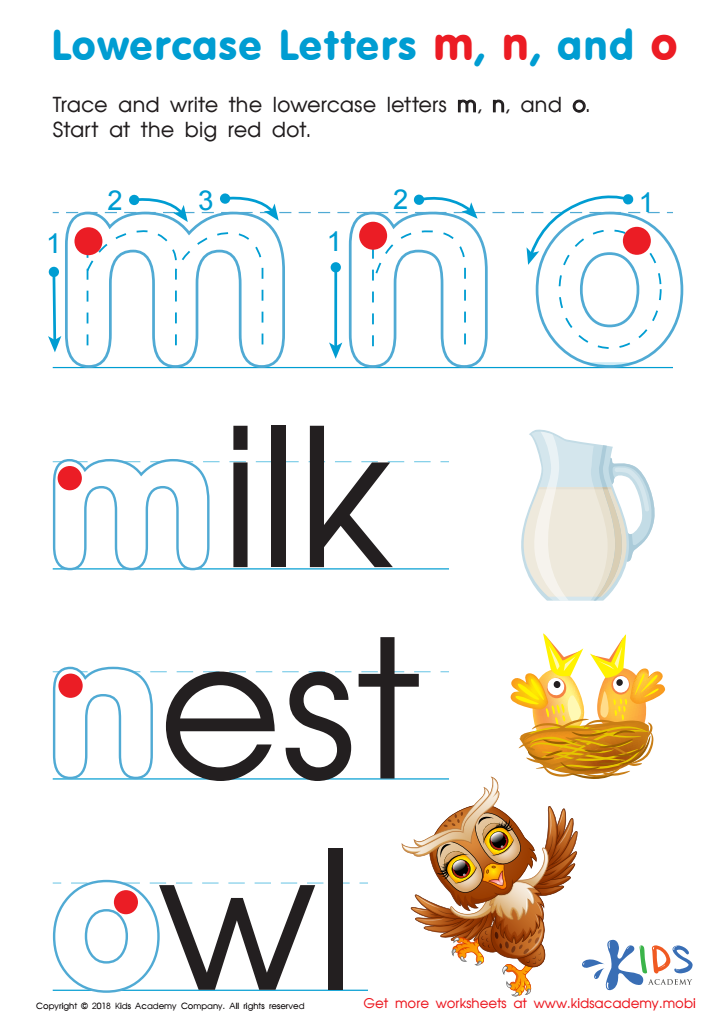
Lowercase Letters m n o Worksheet






Parents and teachers should prioritize the learning of both uppercase and lowercase letters for 5-year-olds to ensure a smooth transition into proper reading and writing skills. At this developmental stage, children are highly receptive to learning foundational literacy skills that will set the groundwork for their future education.
Learning uppercase letters is often easier for young children due to their simpler, more distinct shapes. However, lowercase letters are far more prevalent in everyday reading and writing—from books and signage to instructions and emails. By emphasizing both uppercase and lowercase letters, children become equipped not only to recognize and differentiate between the two sets but also to understand their appropriate use in writing sentences, names, and other important contexts.
Moreover, knowing how to write and distinguish between uppercase and lowercase letters fosters fine motor skills, hand-eye coordination, and cognitive development. It prepares children for more advanced literacy tasks, builds their confidence, and promotes a sense of achievement. Involving both sets of letters in early literacy development reduces potential confusion during reading and helps create a comprehensive foundation for future learning. Therefore, cultivating these skills is essential for children's academic growth and overall development.







