Letter-sound association English for Beginners Worksheets for 5-Year-Olds
6 filtered results
Difficulty Level
Grade
Age
-
From - To
Subject
Activity
Standards
Introduce your 5-year-old to the world of reading with our exciting "Letter-Sound Association English for Beginners" worksheets. Designed to make learning fun and engaging, these printables help young learners connect letters with their corresponding sounds, a vital skill in early reading development. Perfect for English as a Second Language (ESL) students, our worksheets feature playful illustrations, interactive activities, and simple instructions to reinforce learning. Ideal for both classroom and home use, they support foundational literacy skills and build your child's confidence in mastering English. Discover the joy of learning with our expert-crafted resources!
Favorites
With answer key
Interactive
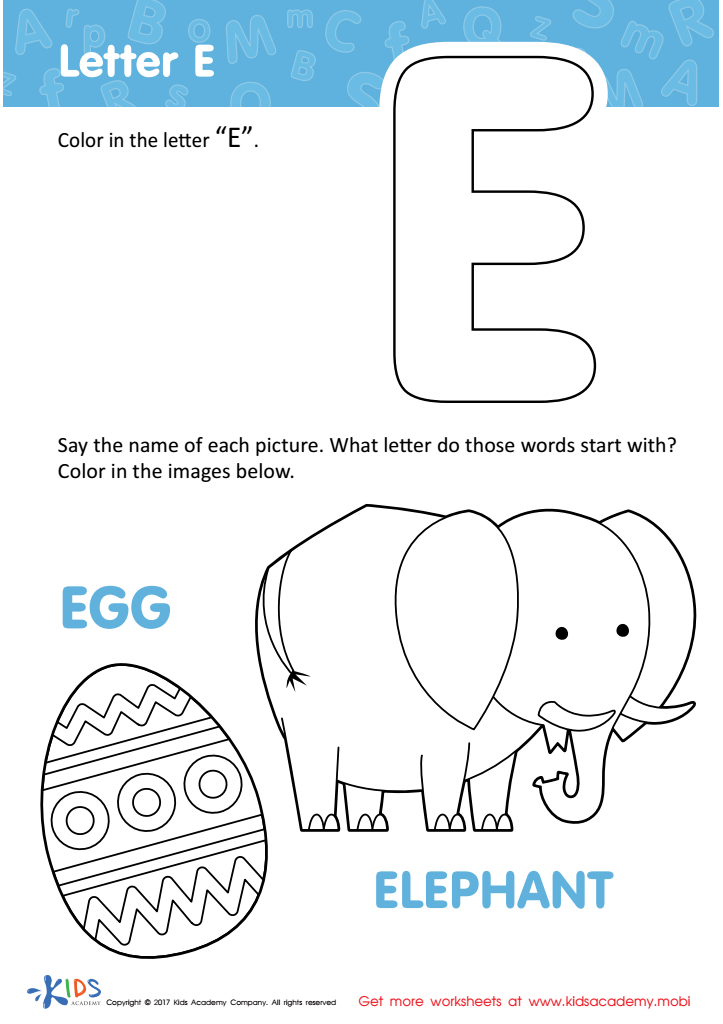
Letter E Coloring Sheet
Coloring pages are great for teaching kids the alphabet and words! This "E" page features a cute elephant and Easter egg. Kids will love it and learn the letter "E" at the same time. 80 words
Download (PDF)
 Assign to My Students
Assign to My Students
Letter E Coloring Sheet
Worksheet
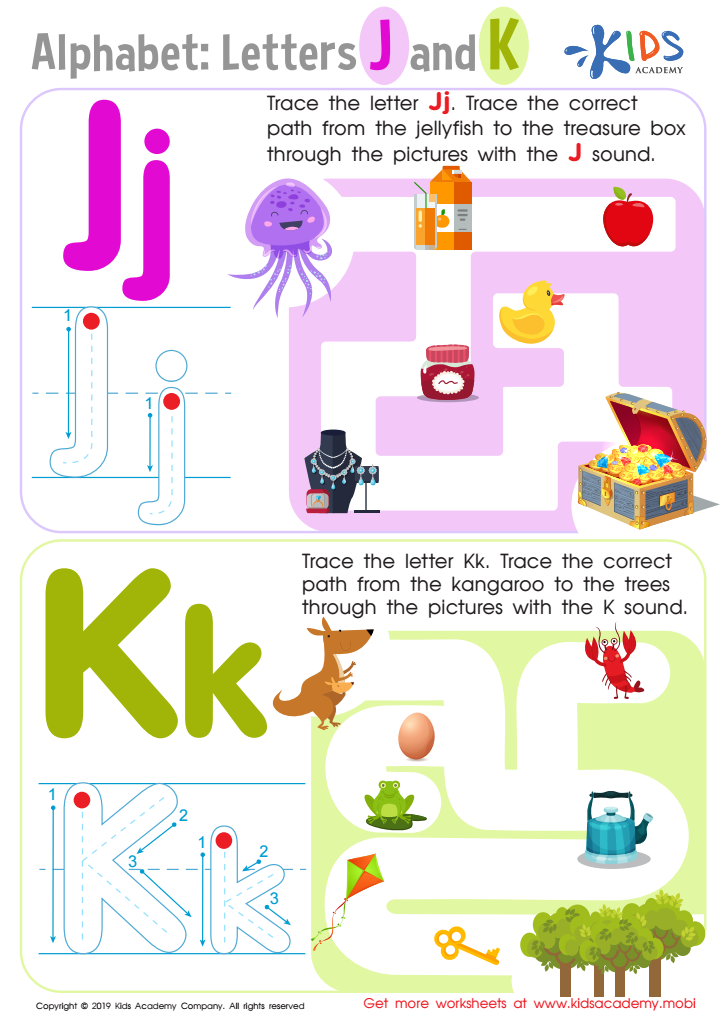
Letters J and K Tracing Worksheet
Tracing the letters «J» and «K» is the first step. Help the jellyfish find a path to the treasure chest with pictures of the «J» sound, and assist the kangaroo in finding a path to the trees with pics of «K». Fun, educational and enjoyable for children!
Letters J and K Tracing Worksheet
Worksheet
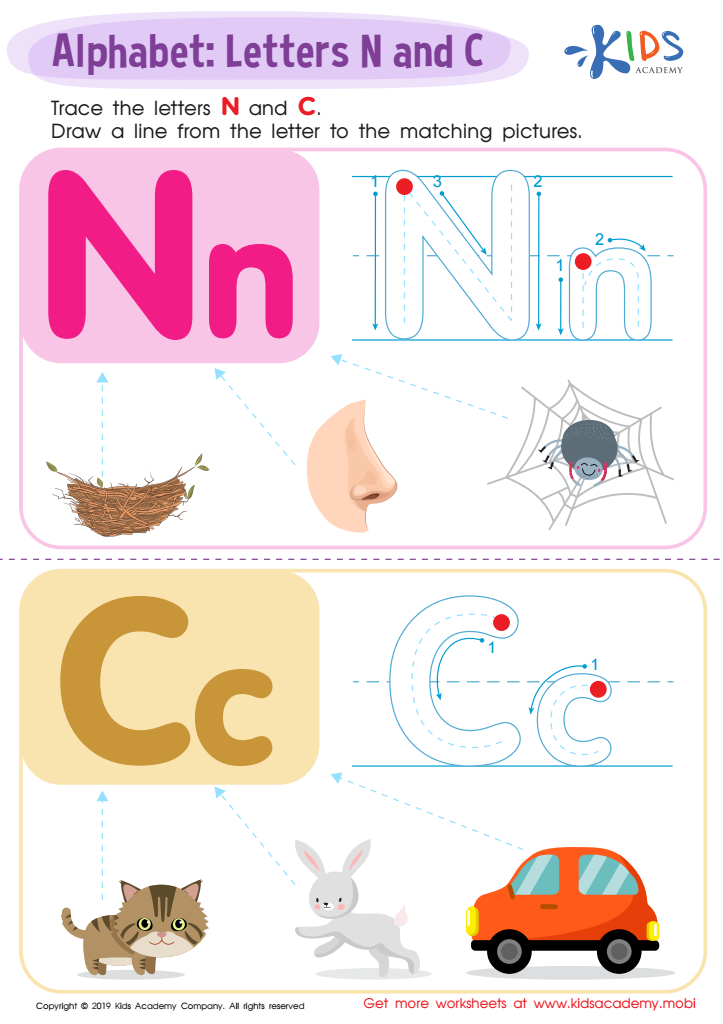
Letter N and C Tracing Worksheet
Kids can trace the letters N and C, then draw a line to the words starting with each letter. This worksheet helps them practice letter writing, distinguish capital and lowercase letters, and match pictures with the right letter. It also teaches essential skills for learning letters efficiently.
Letter N and C Tracing Worksheet
Worksheet
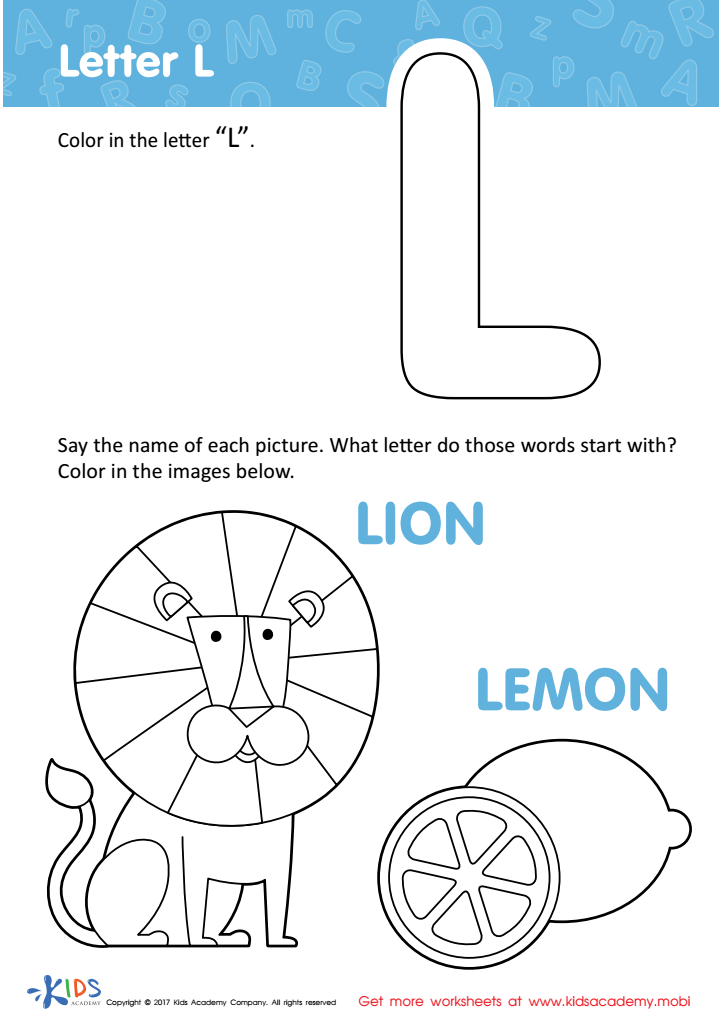
Letter L Coloring Sheet
Kids often struggle to say "L" and love it because so many things they love start with it! This coloring page combines the letter and fun images like a lemon and lion to teach and entertain!
Download (PDF)
Assign to My Students
Assign to My Students
Letter L Coloring Sheet
Worksheet
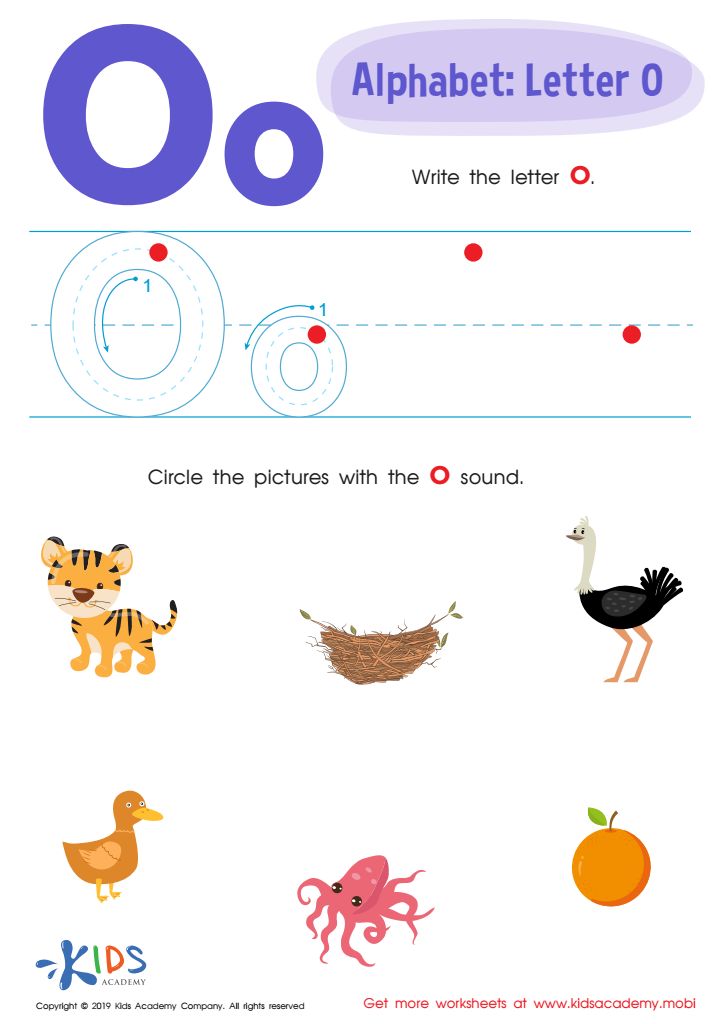
Letter O Tracing Worksheet
This worksheet gives kids the chance to trace the letter "O" while also circling pictures that have the "O" sound. Visual and hands-on learners will benefit from the visuals and tracing, helping them learn the letter "O" with ease. It's the perfect way to learn what "octopus" and "ostrich" start with!
Letter O Tracing Worksheet
Worksheet
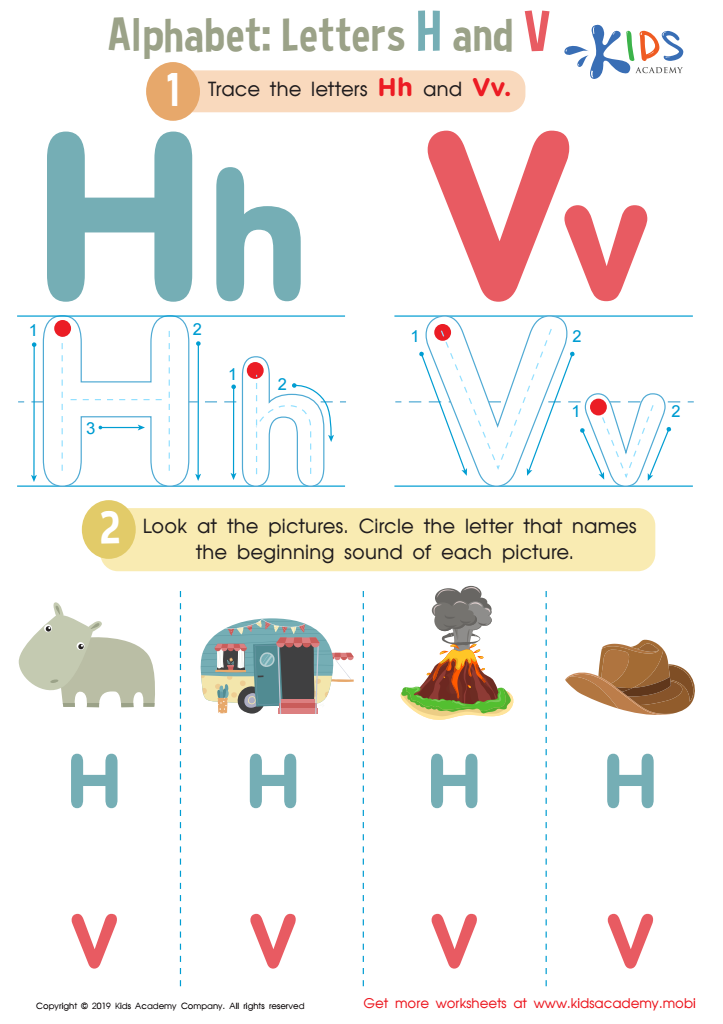
Letters H and V Tracing Worksheet
Kids will trace the letters H and V and circle the letter of the beginning sound of each picture. This helps strengthen writing and identify objects with their beginning sound, with two letter options to choose from.
Letters H and V Tracing Worksheet
Worksheet
Join Kids Academy for Free
Who is primarily going to use this learning content?




Letter-sound association is a foundational skill crucial for early literacy development in children. For 5-year-olds, mastering this skill builds the groundwork for reading and writing success. When children understand that letters represent specific sounds, they begin to decode words, enhancing their ability to read with comprehension. This phonemic awareness allows them to sound out unfamiliar words, fostering independent reading skills.
Parents and teachers should prioritize letter-sound association because it directly impacts future academic achievement. Early proficiency in reading sets the stage for success across all subjects, as reading is a critical skill for learning. Children who struggle with letter-sound associations may find reading to be challenging and frustrating, which can negatively affect their confidence and love for learning.
Moreover, strong letter-sound knowledge facilitates better spelling and writing. When children can correspond letters with their respective sounds, they are more likely to write words correctly and express their ideas clearly.
In addition, consistent practice with letter-sound associations supports cognitive development. It encourages pattern recognition, memory skills, and analytical thinking. Engaging children with fun and interactive activities, such as phonics games and read-alouds, makes learning enjoyable and reinforces these associations.
Therefore, investing time and effort in developing letter-sound association in young learners ensures they possess the essential tools for literacy and long-term educational success.