Letter tracing skills English for Beginners Worksheets for 5-Year-Olds
3 filtered results
-
From - To
Welcome to our "Letter Tracing Skills English for Beginners Worksheets for 5-Year-Olds" page! Our engaging and educational worksheets are designed to help young learners master the fundamentals of writing the English alphabet. Through fun and interactive tracing activities, children will develop fine motor skills and hand-eye coordination while learning to recognize and write letters correctly. Perfect for early grade teachers and parents, these worksheets provide an excellent foundation for young learners to build their English language skills. Download now to give your child a head start on their writing journey!
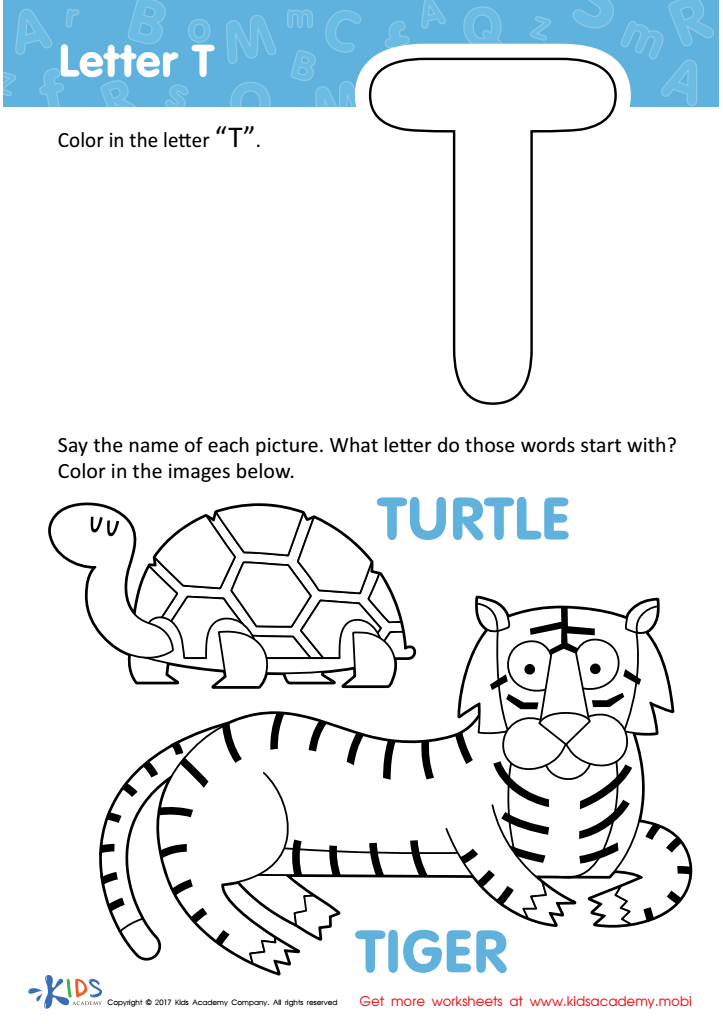
Letter T Coloring Sheet
 Assign to My Students
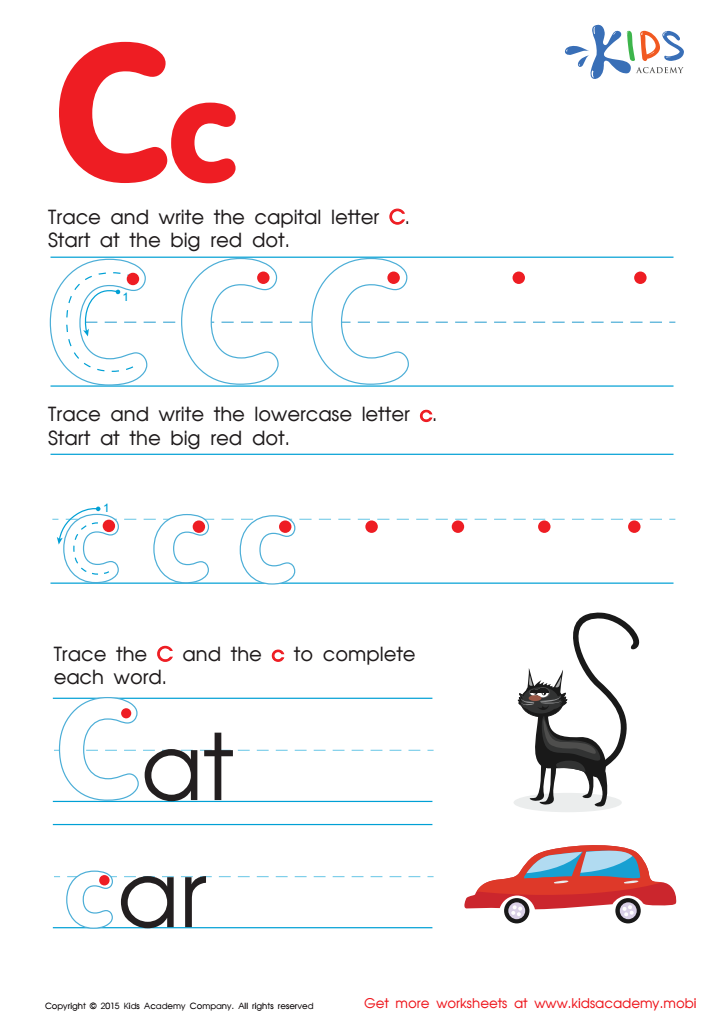
Letter C Tracing Page
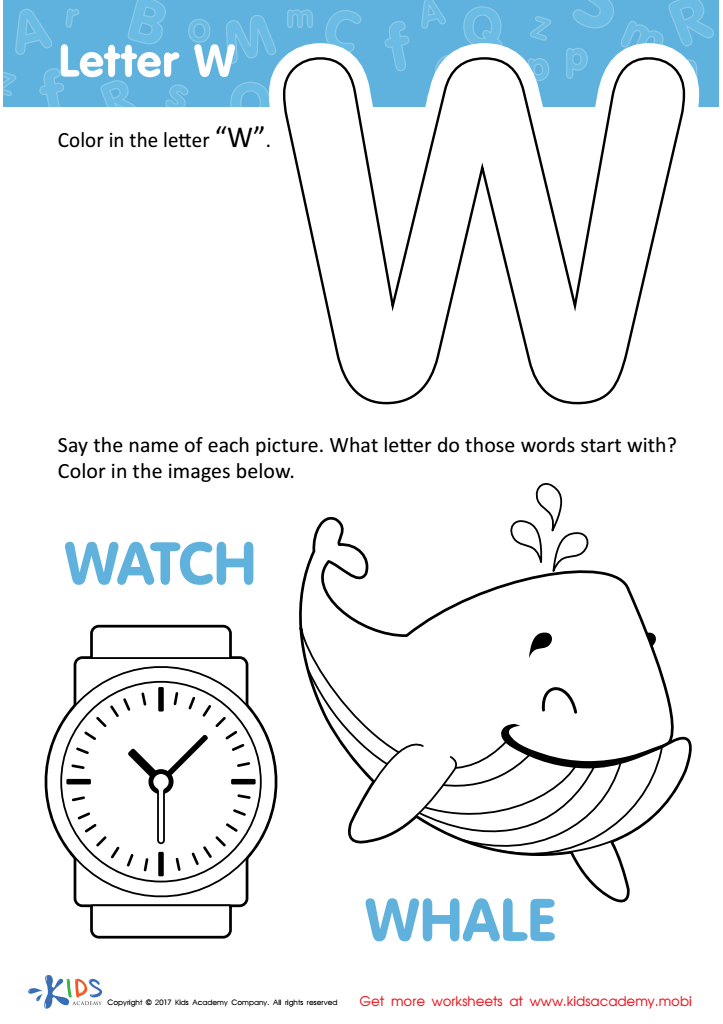
Letter W Coloring Sheet
Assign to My Students




Parents and teachers should care about letter tracing skills for 5-year-olds because these foundational activities are critical for early literacy development. At this age, children are just beginning to become familiar with the alphabet, and letter tracing helps to solidify their understanding of letter shapes and formations. By practicing these skills, children not only learn to recognize each letter but also develop fine motor control, which is essential for writing. Tracing letters provides a multisensory experience; children see the letter, hear its sound, and feel the movement required to create it. This holistic approach reinforces their memory and aids in learning.
Moreover, letter tracing skills contribute to a child's confidence in their writing ability. When children can trace letters accurately, they feel more competent and are therefore more likely to engage in other literacy activities, such as reading and independent writing. These early successes create a positive association with learning and education, which can foster a lifelong love of literacy. Additionally, strong letter tracing skills support other educational domains, such as reading comprehension and even basic mathematical notation. Early intervention in these skill areas can vastly improve educational outcomes, making letter tracing a vital exercise for young learners.