
Addition up to 5 Worksheets for 5-Year-Olds
4 filtered results
Difficulty Level
Grade
Age
-
From - To
Subject
Activity
Standards
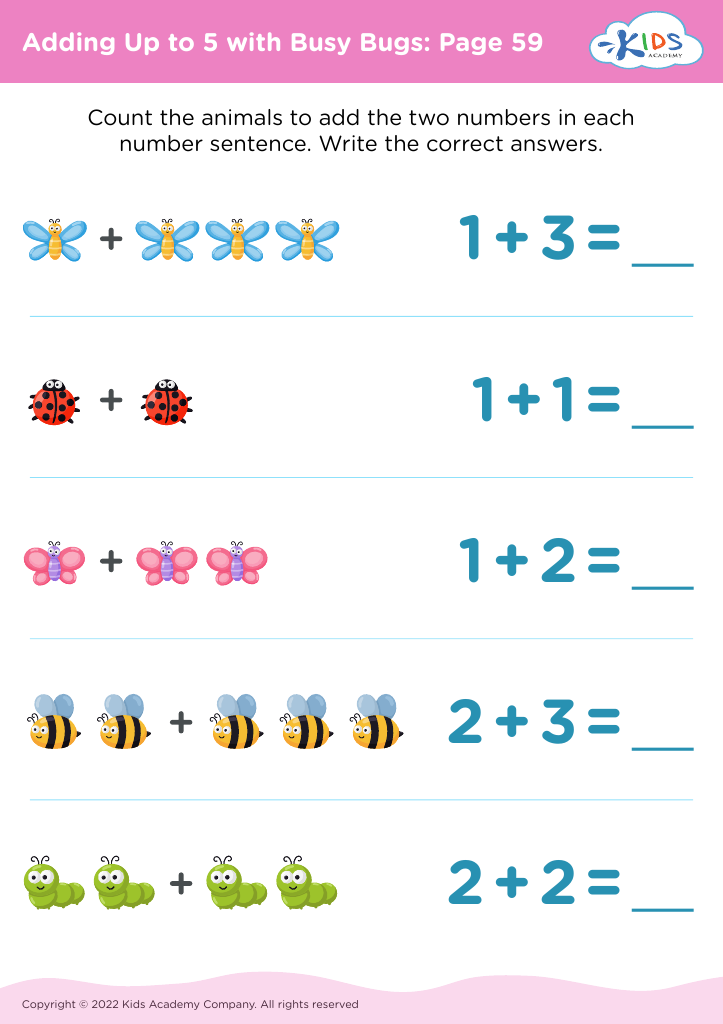
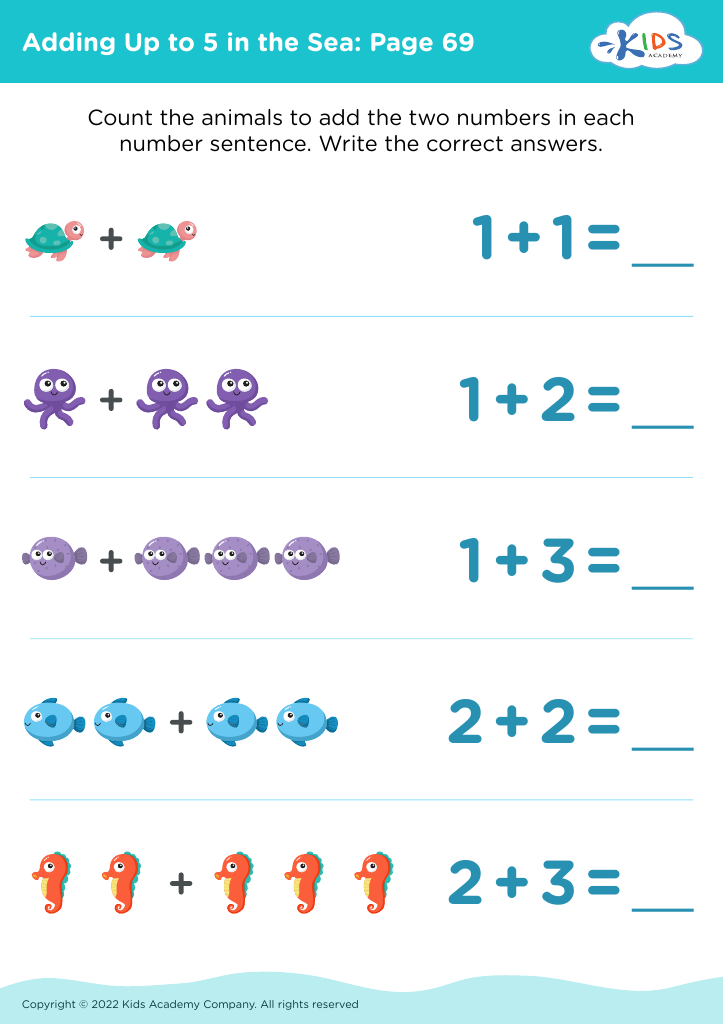
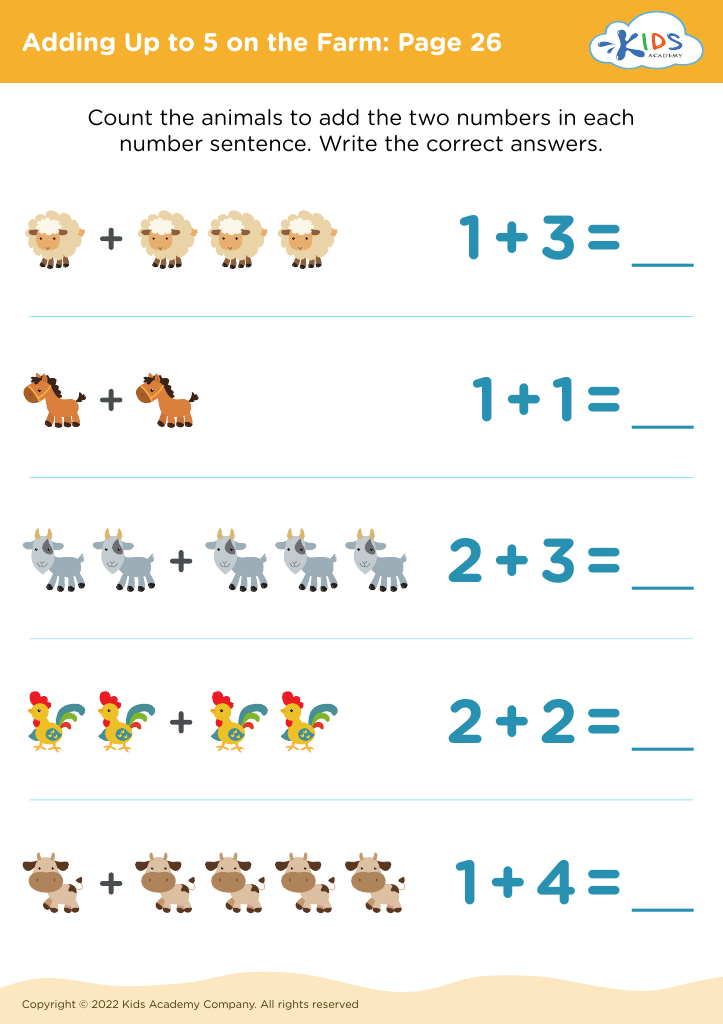
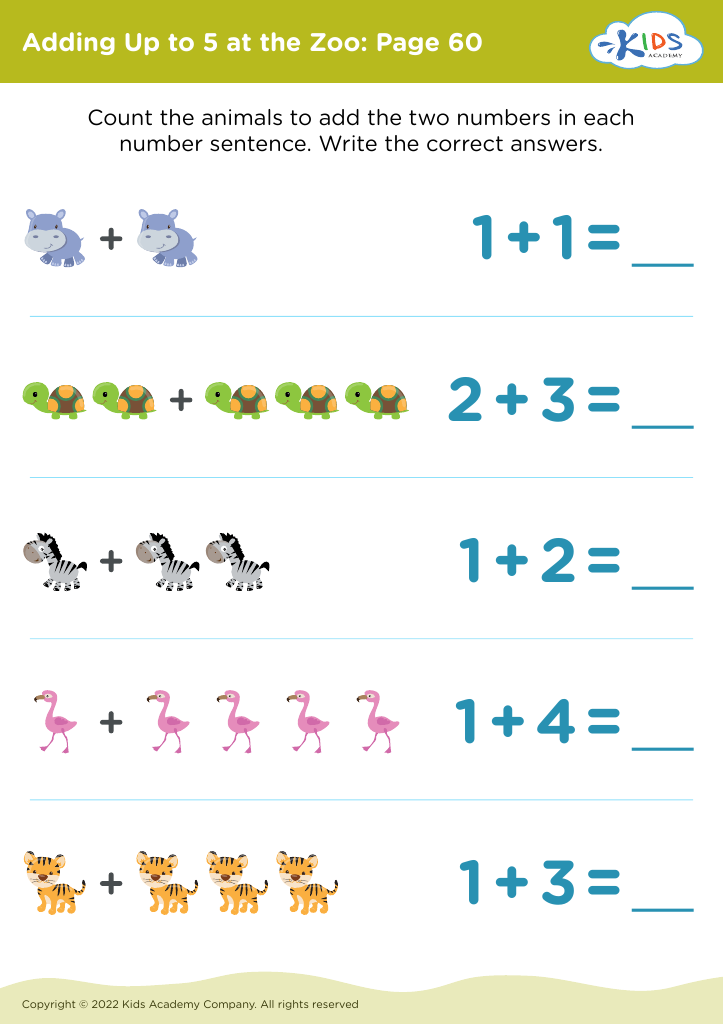
Welcome to our engaging “Addition Up to 5 Worksheets for 5-Year-Olds”! Designed to make learning fun, these worksheets introduce young learners to the basics of addition using visual aids and colorful illustrations. Kids will practice adding numbers up to 5 through interactive activities like counting, matching, and simple problem-solving. Our materials are tailored to enhance early math skills while keeping children entertained. Perfect for home or classroom use, these worksheets encourage independent learning and boost confidence in young mathematicians. Explore our collection to support your child’s journey into the exciting world of numbers today!
Favorites
With answer key
Interactive
Join Kids Academy for Free
Who is primarily going to use this learning content?







Parents and teachers should prioritize teaching addition up to 5 for 5-year-olds because it lays a crucial foundation for early mathematical understanding. Mastery of simple addition helps children develop number sense, enabling them to recognize quantities and relationships between numbers. This skill is essential not only for later math concepts but also for everyday life situations, such as sharing snacks or counting toys.
Understanding addition also encourages children to think critically and solve problems independently. As they manipulate objects to add and count, they engage in hands-on learning that enhances their cognitive skills. This not only bolsters their mathematical abilities but also supports their overall brain development.
Furthermore, confident mastery of basic addition fosters a positive attitude towards math. When children experience success in learning, they become more motivated and enthusiastic about tackling new concepts.
By ensuring that children grasp addition up to 5, parents and teachers play a pivotal role in setting the stage for more complex math skills in the future. Ultimately, incorporating fun, interactive methods of teaching these basic mathematical concepts can spark a lifelong love for learning in children.








