Comparing numbers Worksheets for 5-Year-Olds
4 filtered results
-
From - To
Discover fun and engaging Comparing Numbers Worksheets for 5-Year-Olds designed to enhance your child's early math skills. These worksheets offer a variety of activities that teach little learners how to compare and evaluate different numbers. With colorful illustrations and diverse exercises, children will learn concepts like greater than, less than, and equal to, all while boosting their confidence in math. Perfect for both classroom and at-home practice, our age-appropriate materials make learning an exciting adventure. Help your child build a solid mathematical foundation with our expertly crafted, printable worksheets!
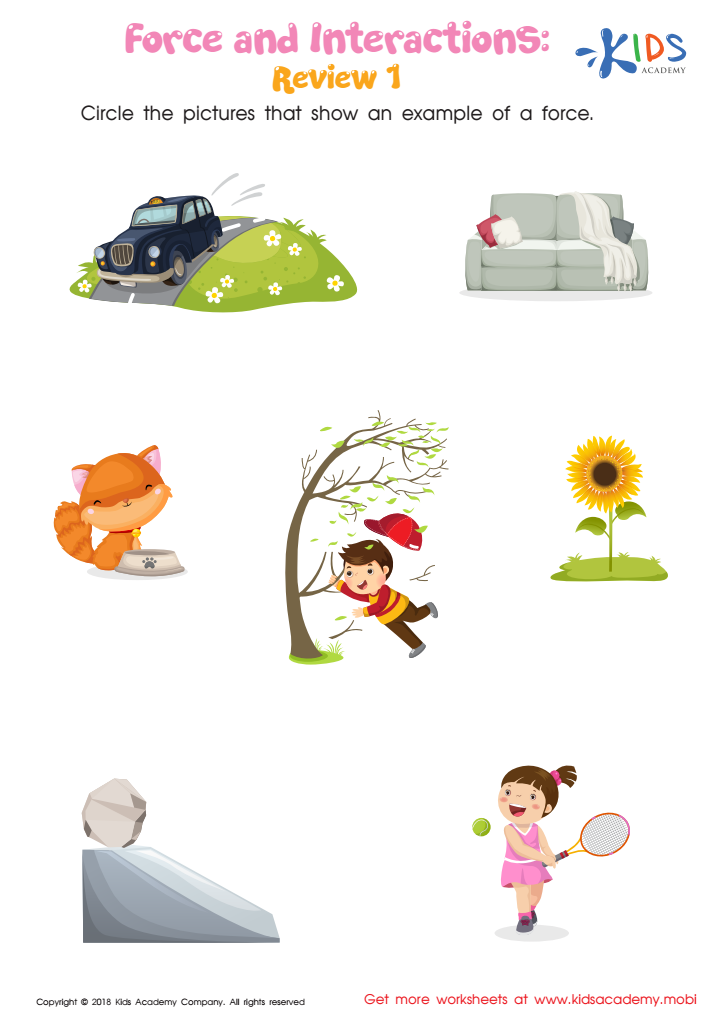
Force and Interactions: Review 1 Worksheet
 Assign to My Students
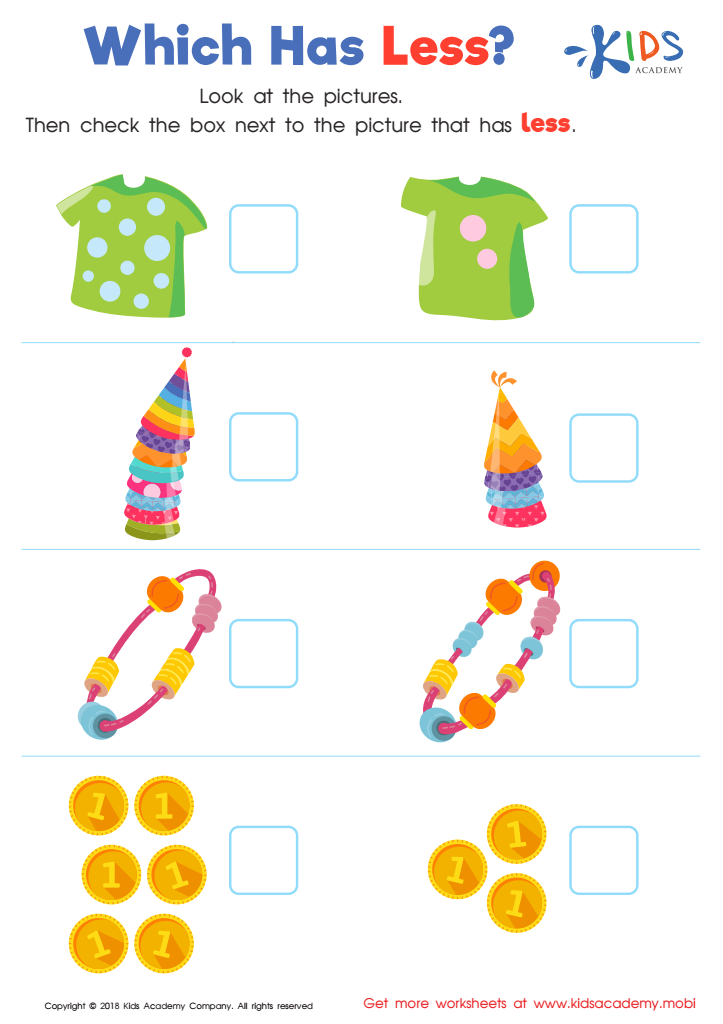
Which Has Less? Worksheet
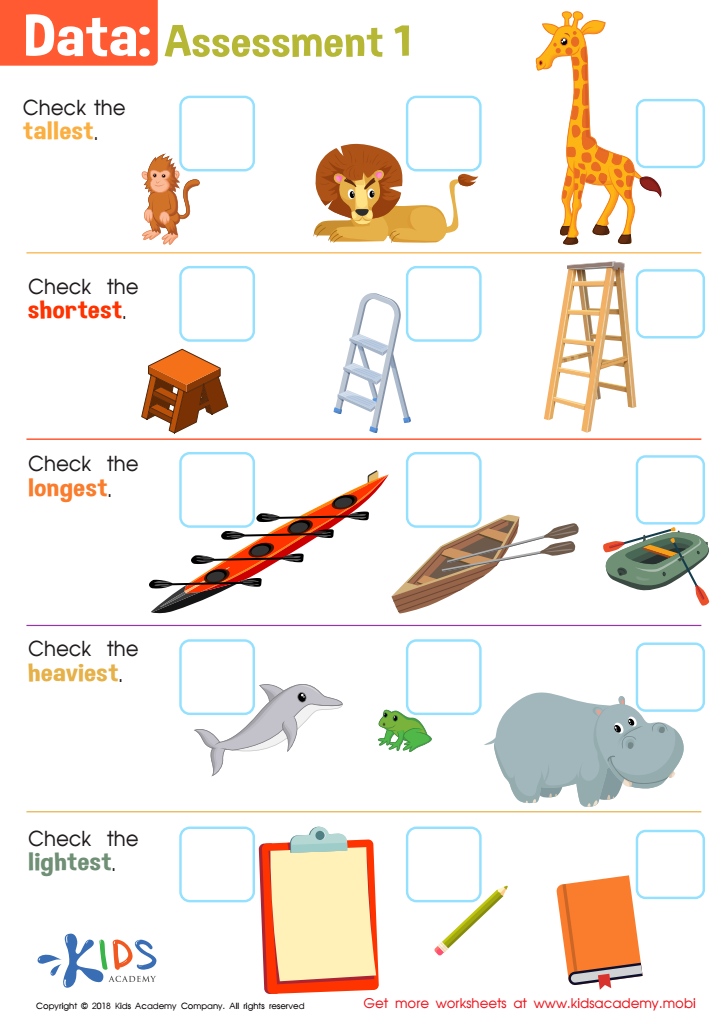
Data: Assessment 1 Worksheet







Understanding how to compare numbers is a crucial foundational skill in early childhood education. Parents and teachers should prioritize this because it helps children develop important cognitive abilities. Comparing numbers involves identifying which of two or more numbers is greater, lesser, or if they are equal, which fosters critical thinking and problem-solving skills. This kind of numerical literacy is essential for future math proficiency, including tasks like addition and subtraction.
Moreover, learning to compare numbers enhances a child's capacity to observe, analyze, and articulate differences and similarities. These skills are not limited to math alone but are transferable to various other subjects and everyday situations. For example, they can help children understand the concept of more or fewer, which is fundamental in making decisions, such as sharing snacks equally among friends.
Additionally, engaging in number comparisons can be made fun and interactive, such as through games or everyday tasks like counting toys or sorting items. Such activities can boost confidence and foster a love for learning in a stress-free environment. Thus, by embedding comparing numbers into early learning, parents and teachers set a solid groundwork that stimulates logical thinking, supporting overall academic and personal development.








