Comparing sizes Worksheets for 5-Year-Olds
7 filtered results
-
From - To
Introduce your 5-year-olds to the concept of size comparison with our engaging and educational Comparing Sizes Worksheets. Tailored specifically for young learners, these worksheets help children develop critical thinking and observational skills as they explore differences in size. Bright, colorful graphics capture their attention, while fun, interactive tasks guide them in identifying larger, smaller, and equal objects. Designed to align with early learning standards, these printable activities foster a solid foundation in math and logical reasoning in a playful and enjoyable manner. Perfect for both classroom and at-home learning, these worksheets make mastering size comparison a delightful experience!
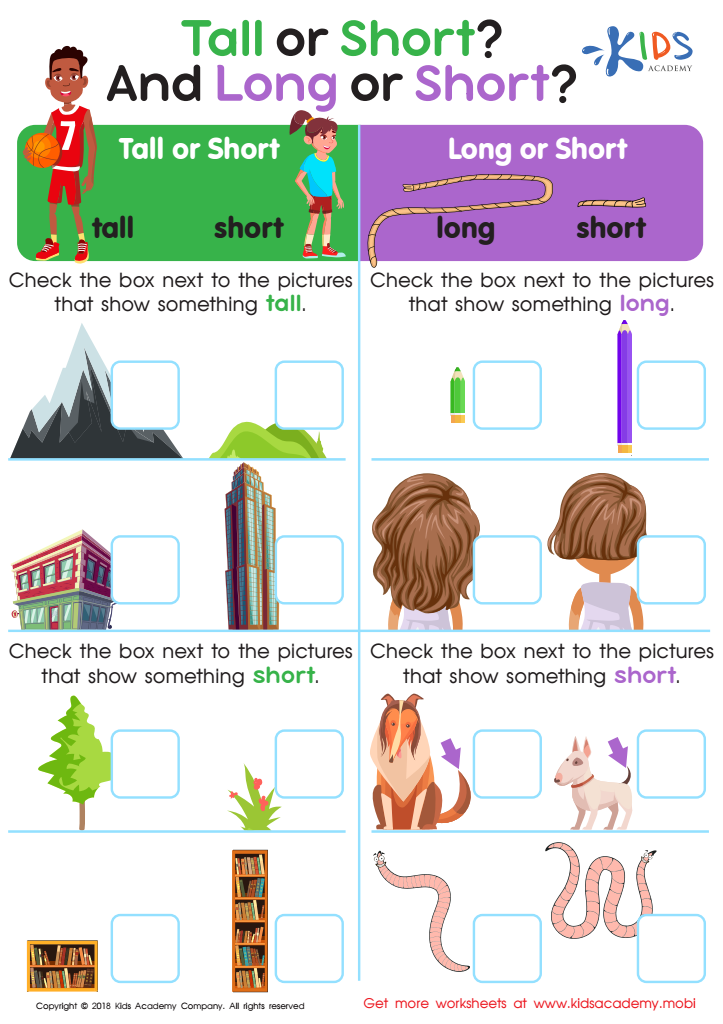
Tall or Short and Long or Short? Worksheet
 Assign to My Students
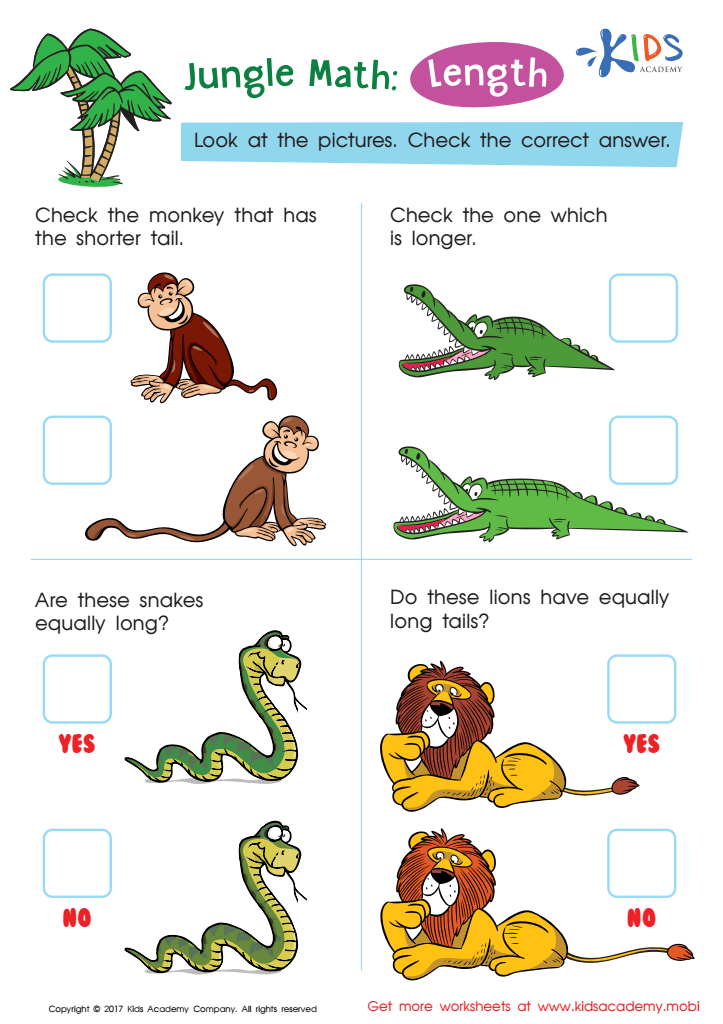
Which One Is Longer - Length Worksheet
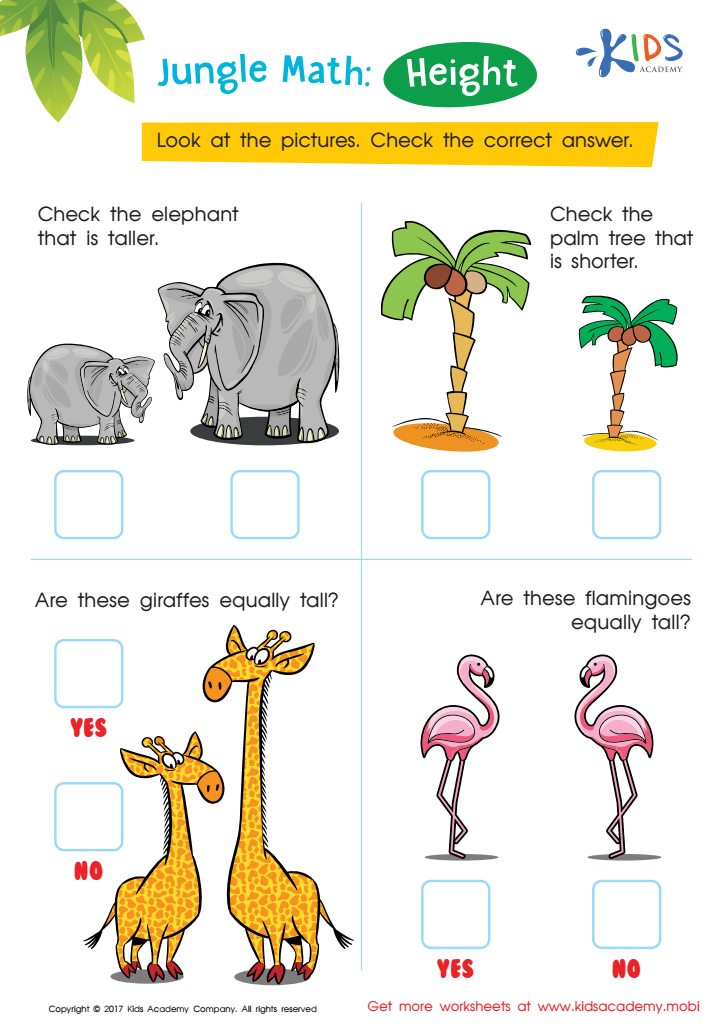
Which Is Taller Worksheet
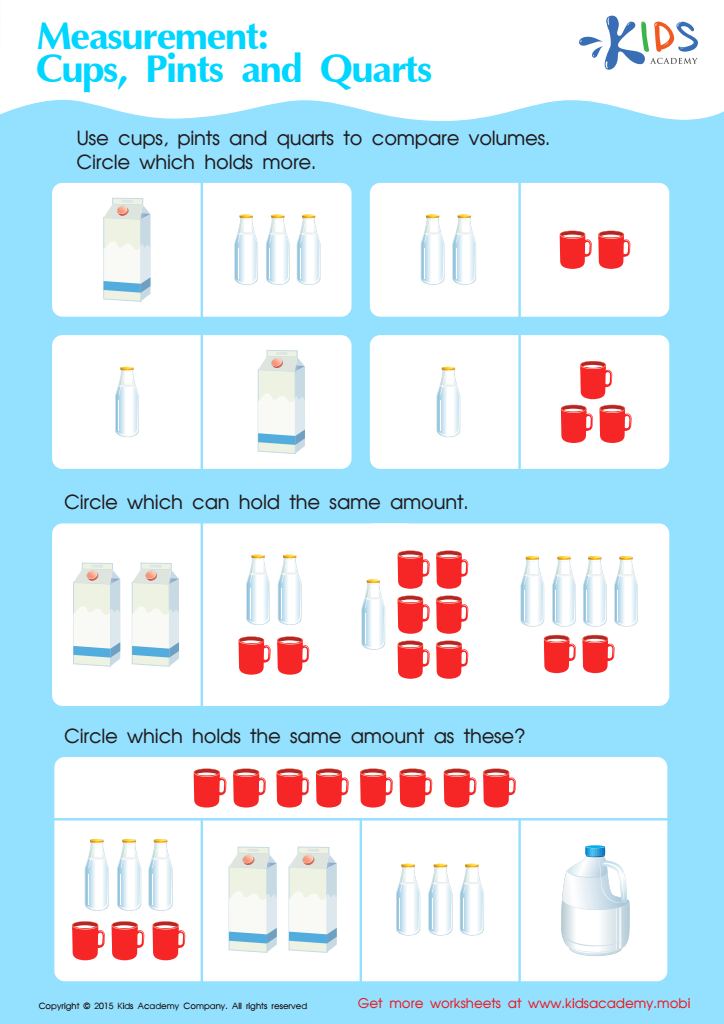
Measurement: Compare Volumes Worksheet
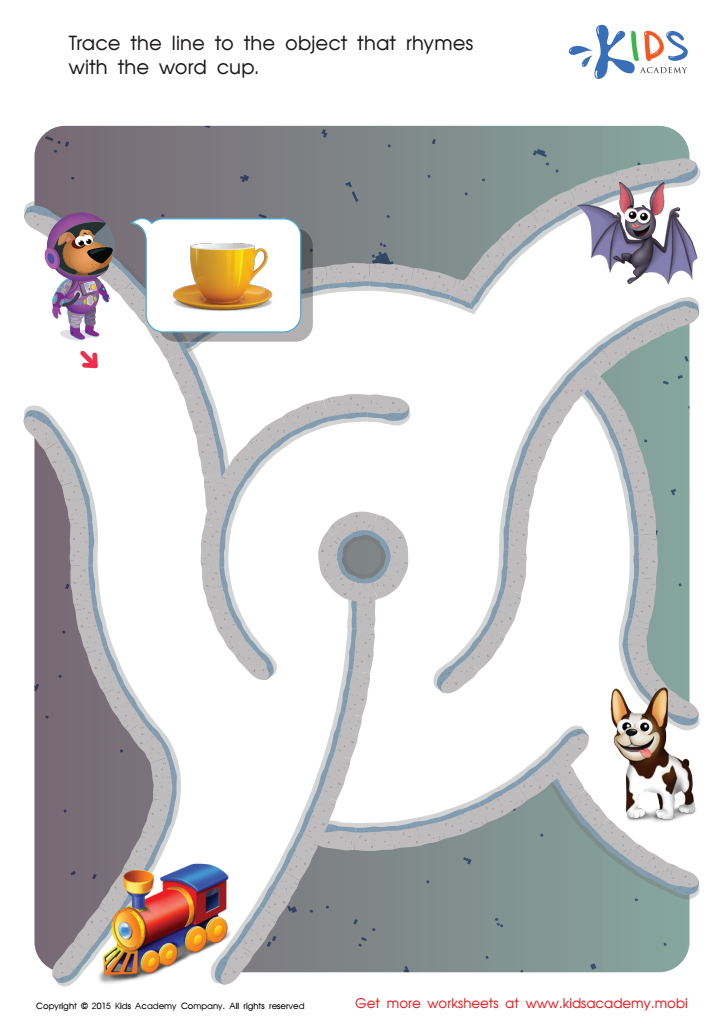
Cup Rhyming Words Worksheet
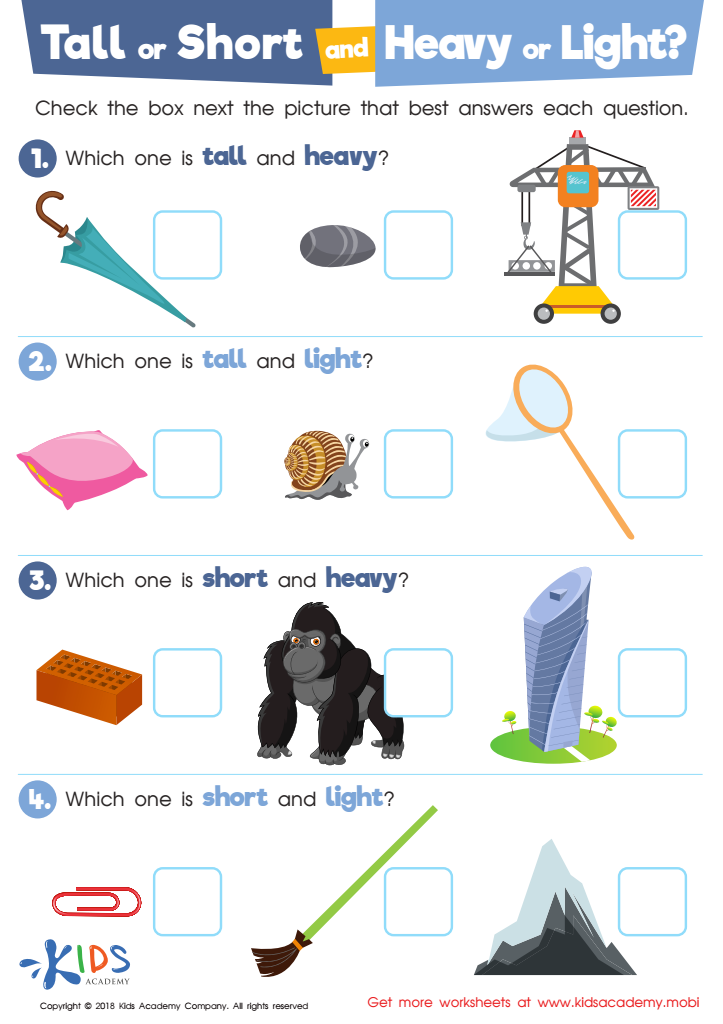
Tall or Short and Heavy or Light? Worksheet
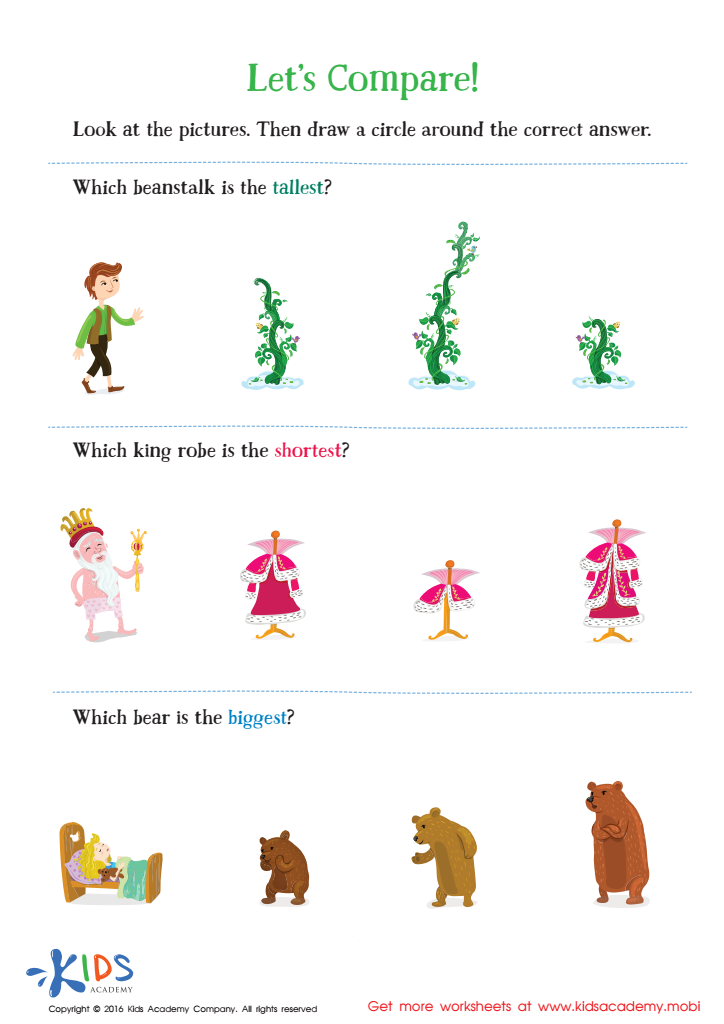
Fairy Tale Worksheet: Let's Compare


.jpg)



Comparing sizes is a fundamental aspect of early childhood education that parents and teachers should prioritize for 5-year-olds. At this pivotal age, children are developing crucial cognitive and fine motor skills. Introducing concepts such as big and small, longer and shorter, or heavier and lighter helps refine their understanding of the world around them.
One significant benefit is the enhancement of mathematical language and concepts. Through comparing sizes, children begin to grasp basic geometry, measurement, and spatial awareness – foundational skills for future math learning. Additionally, these activities strengthen critical thinking and problem-solving abilities as children learn to observe, differentiate, and categorize objects based on size.
Comparing sizes also supports vocabulary development. When children engage in exercises involving size comparison, they are encouraged to use descriptive language, enriching their communication skills. Phrases like "bigger than" or "smaller than" become part of their lexicon, facilitating more complex expression and understanding.
Moreover, such activities can be seamlessly integrated into play, making learning enjoyable and engaging. Whether stacking blocks, sorting toys, or comparing natural objects during outdoor play, comparisons provide hands-on experiences that resonate with young minds.
In essence, focusing on size comparison nurtures a well-rounded developmental trajectory, setting the stage for academic and everyday success in a way that is both accessible and enjoyable for 5-year-olds.








