
Handwriting Skills Worksheets for 5-Year-Olds
17 filtered results
Difficulty Level
Grade
Age
-
From - To
Subject
Activity
Standards
Boost your 5-year-old's handwriting skills with our engaging and diverse worksheets! Designed specifically for early learners, these resources help develop fine motor skills and letter formation through fun activities. Children will practice tracing letters, writing their names, and completing interactive exercises that promote handwriting fluency. Our worksheets are tailored to capture young minds, making learning enjoyable and effective. Whether at home or in the classroom, these worksheets provide the perfect foundation for a lifetime of writing success. Explore our collection to inspire your child's confidence in handwriting while fostering essential skills they will use throughout their education!
Favorites
With answer key
Interactive
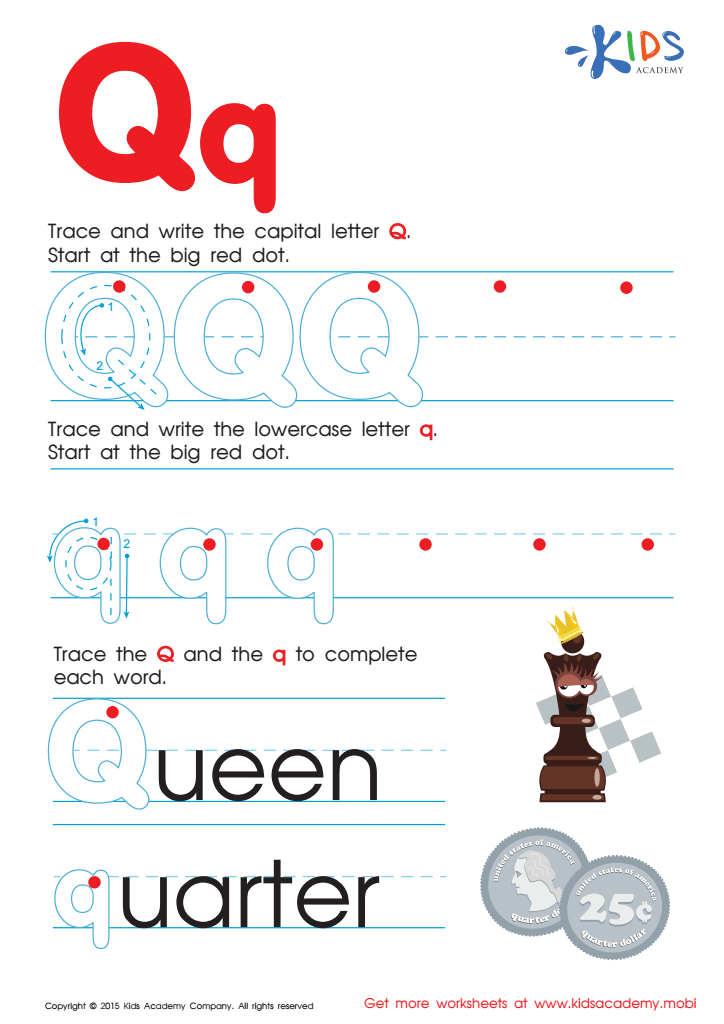
Letter Q Tracing Page
Learn the letter "Q"! Trace and write it a few times in upper and lowercase. Then help the Queen by writing her initial letter. Finally, write "quarters" and practice with more alphabet worksheets.
Letter Q Tracing Page
Worksheet
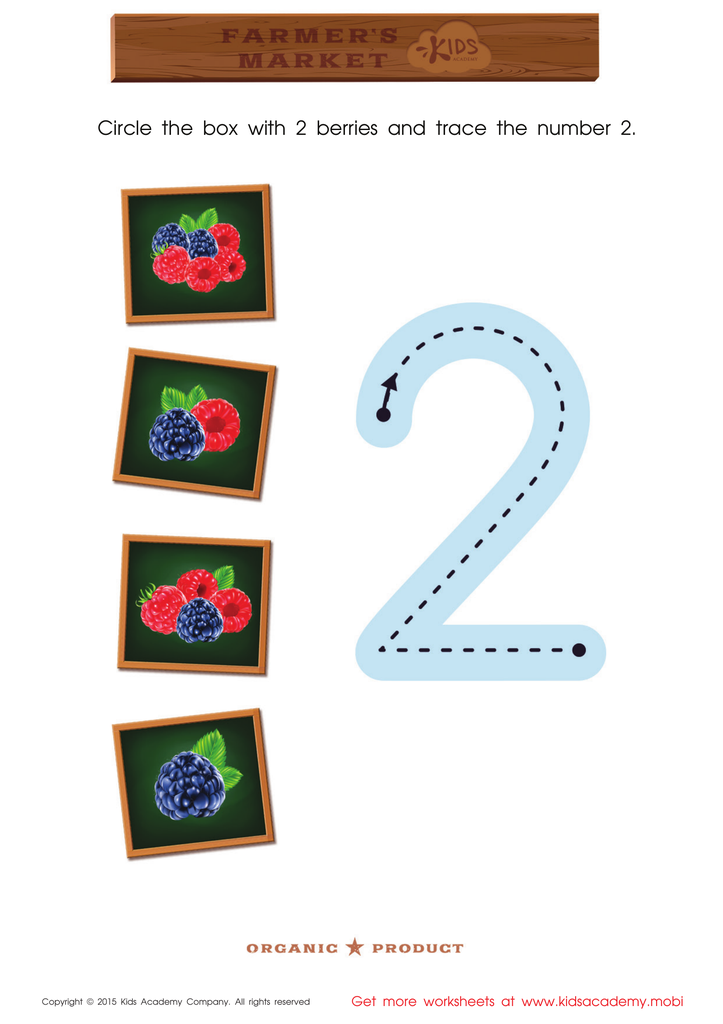
Count the Berries and Trace the Number 2 Printable
This math worksheet by Kids Academy helps kindergartners count and write number 2. Print it out and urge your kid to count the berries in the boxes, then circle the box with 2 of them. As they trace the number 2, they practice hand motions for good handwriting. More skill-building worksheets available.
Count the Berries and Trace the Number 2 Printable
Worksheet
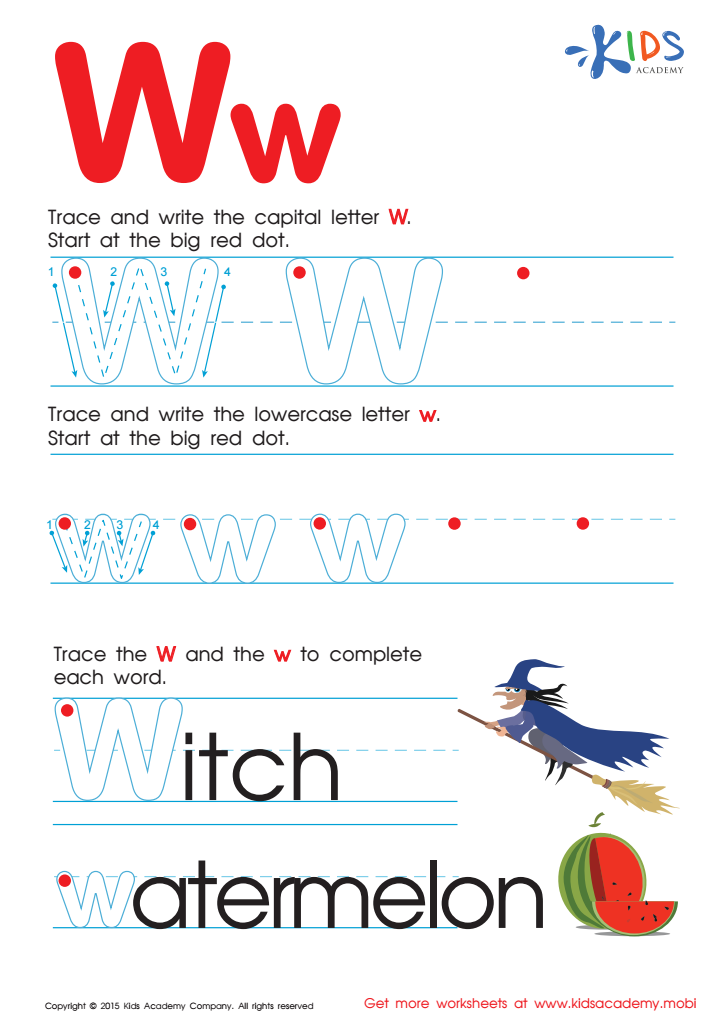
Letter W Tracing Page
Trace and write the capital and lowercase letter W with this free letter tracing worksheet by Kids Academy. Complete the words "Witch" (capital) and "watermelon" (lowercase). Check out our other kindergarten alphabet worksheets!
Letter W Tracing Page
Worksheet
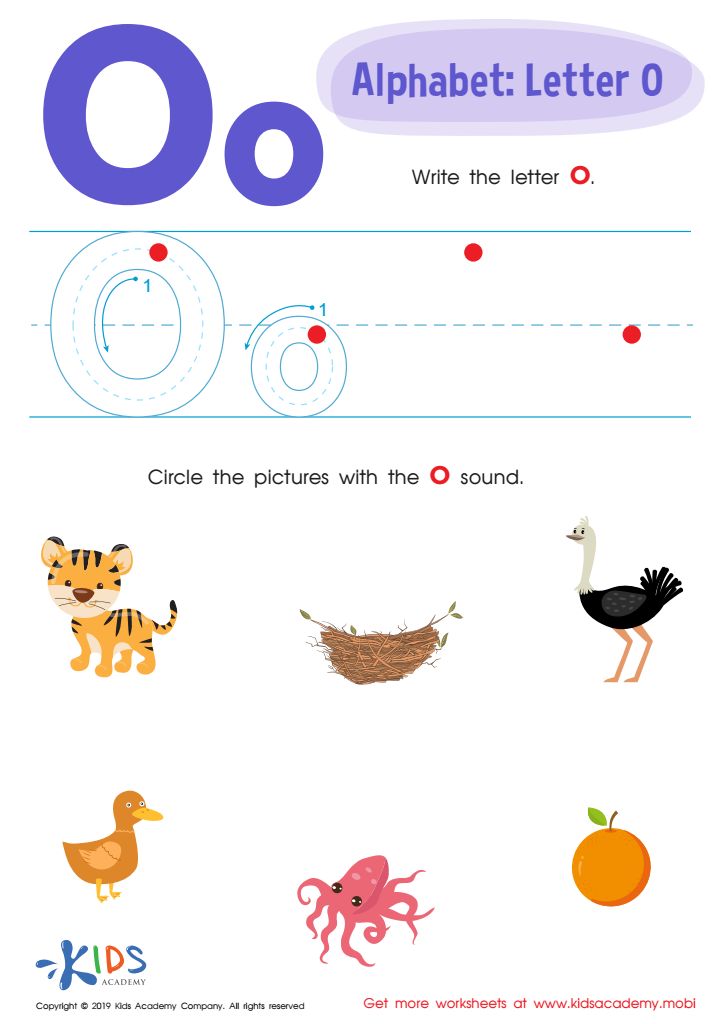
Letter O Tracing Worksheet
This worksheet gives kids the chance to trace the letter "O" while also circling pictures that have the "O" sound. Visual and hands-on learners will benefit from the visuals and tracing, helping them learn the letter "O" with ease. It's the perfect way to learn what "octopus" and "ostrich" start with!
Letter O Tracing Worksheet
Worksheet
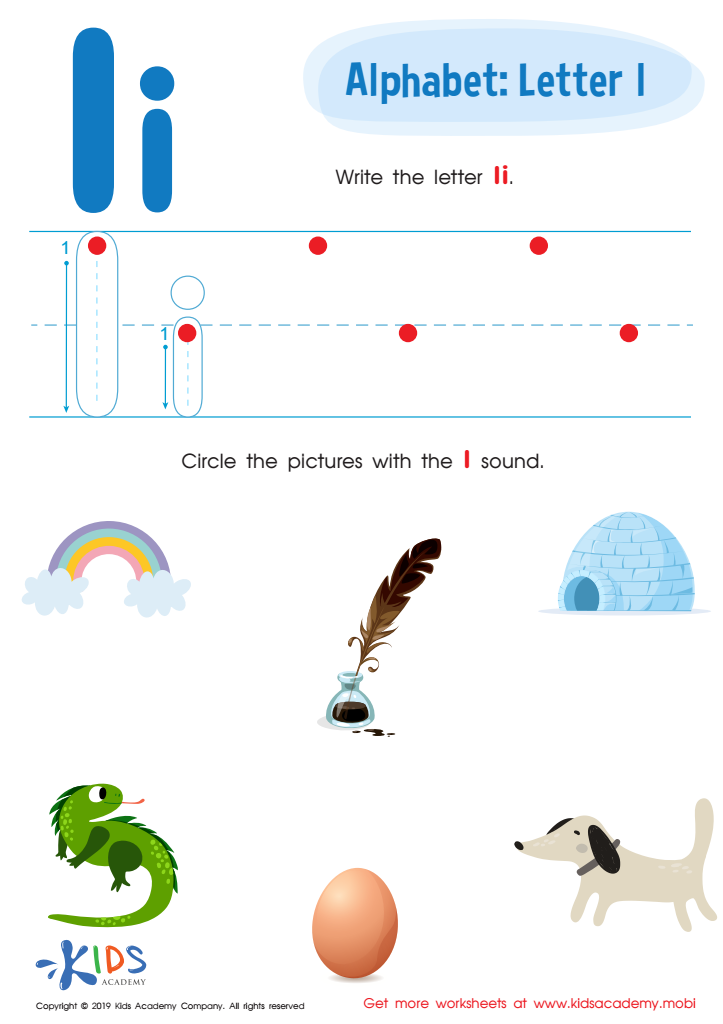
Letter I Tracing Worksheet
Kids can hone tracing, writing and identifying skills for the letter 'I' with this worksheet. Whether visual or reading/writing learners, every child can benefit from the tasks - tracing, writing and circling objects beginning with 'I'. This free sheet will soon get preschoolers confident with the 'I' letter!
Letter I Tracing Worksheet
Worksheet
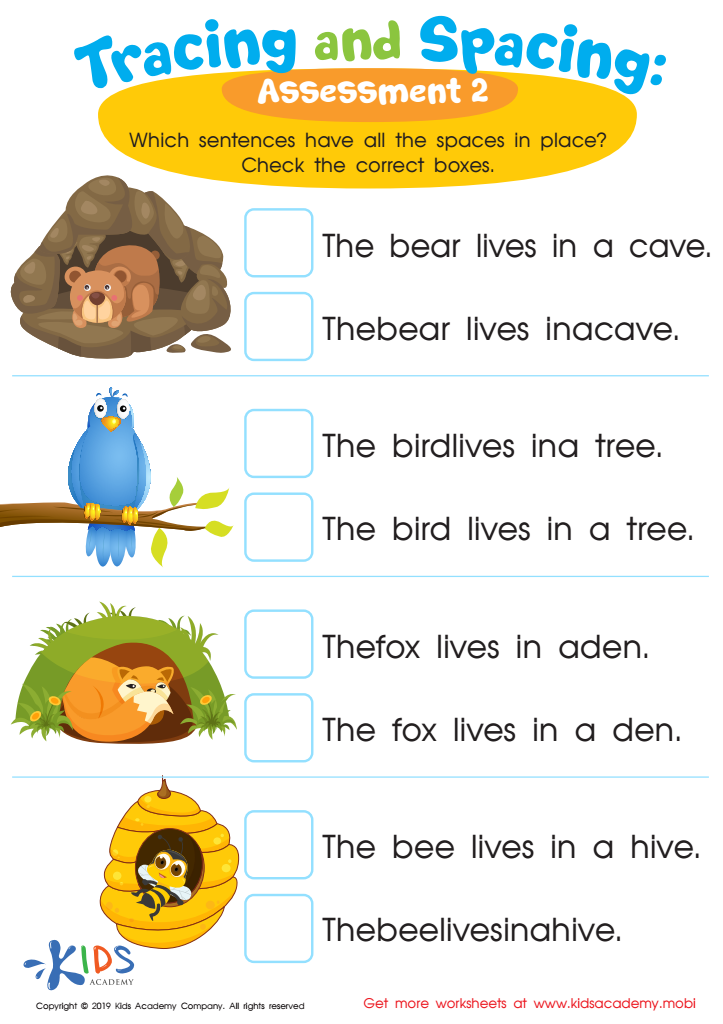
Tracing and Spacing: Assessment 2 Worksheet
Help your little learner master letter spacing by using this charming assessment worksheet! Illustrated animals are paired with sentences; read each sentence and look at the spacing. Check the box next to the correctly spaced sentences to complete the sheet.
Tracing and Spacing: Assessment 2 Worksheet
Worksheet
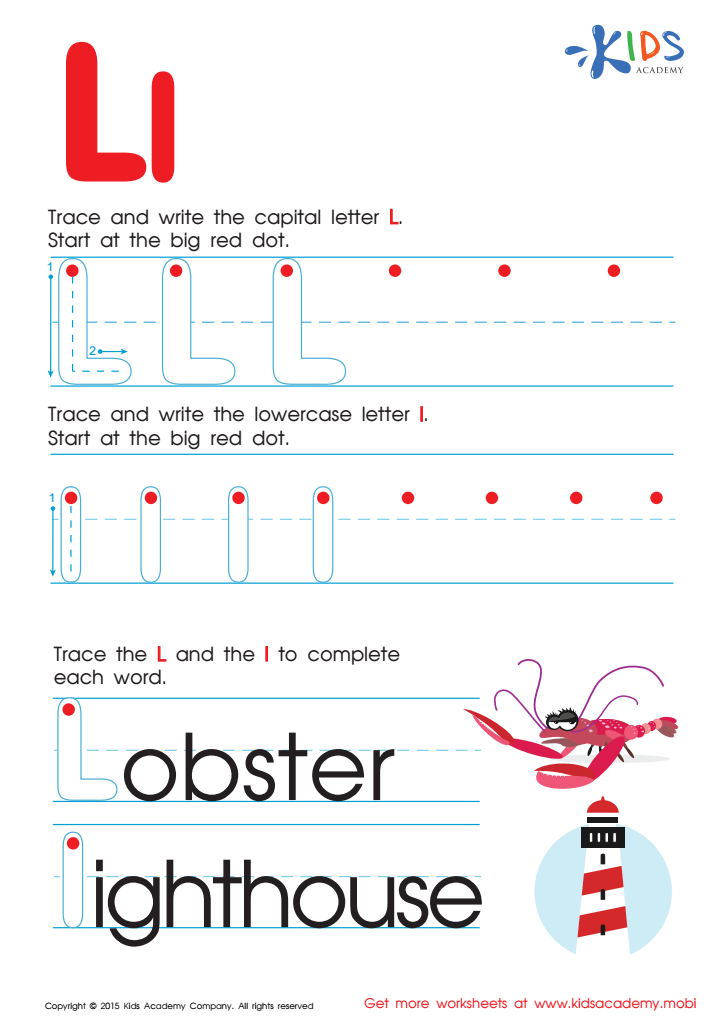
Letter L Tracing Page
Trace uppercase and lowercase letters to practice writing. Pay attention to the lowercase letters, like the "L", that are not as tall as an uppercase "I" or as short as a lowercase "i". Words like "lobster" and "lighthouse" are waiting to be completed. Enjoy!
Letter L Tracing Page
Worksheet
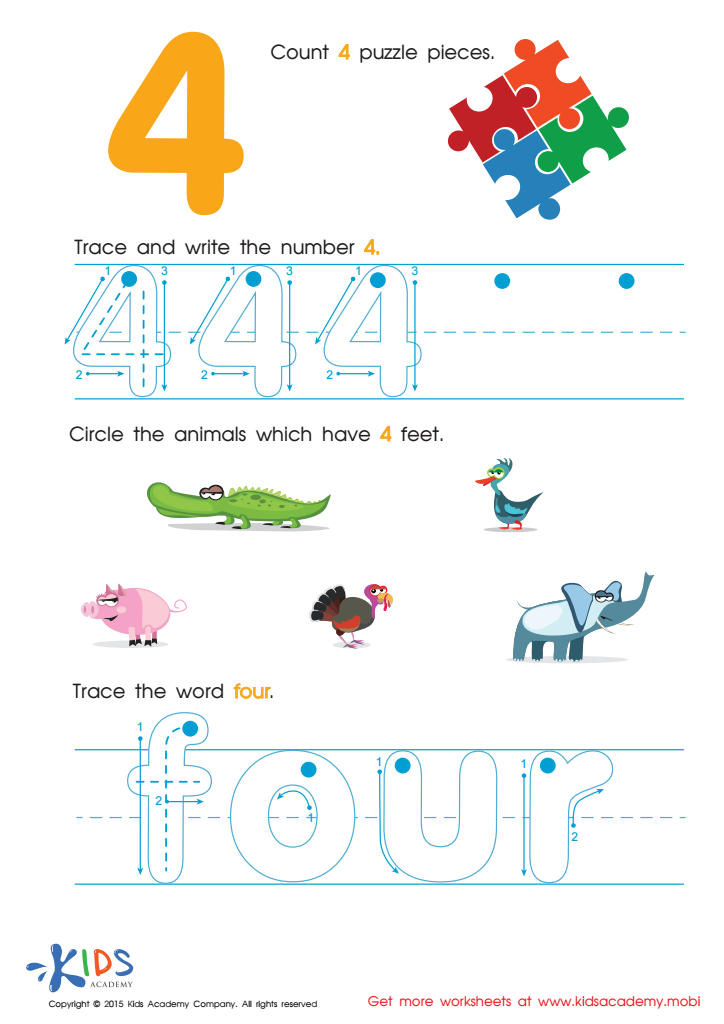
Teaching Children to Write Number 4 Worksheet
Count the pieces of the puzzle - there are four. Trace the number and write it. Circle the animals with four feet. Trace the word "four" too. Kids Academy offers tracing numbers worksheets for preschoolers, making studies easy and effective.
Teaching Children to Write Number 4 Worksheet
Worksheet
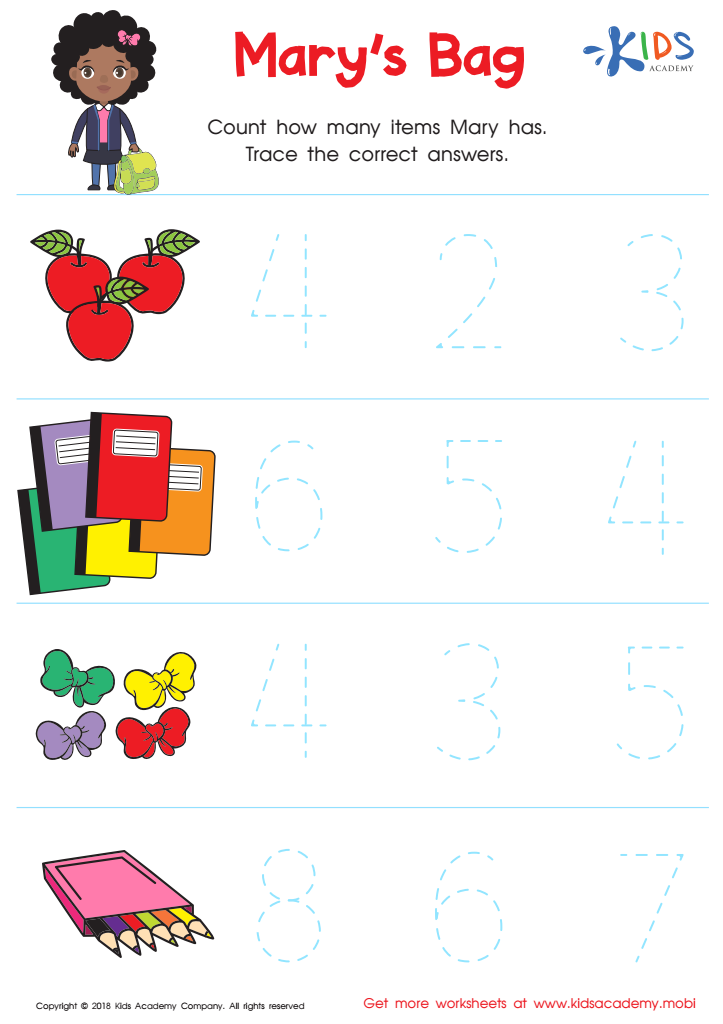
Kindergarten Number Tracing: Mary's Bag Worksheet
Counting and writing skills are honed with this kindergarten tracing worksheet. Guide Mary in counting the items in her bag then trace the correct number for each. Your child will get a great head start on essential kindergarten skills!
Kindergarten Number Tracing: Mary's Bag Worksheet
Worksheet
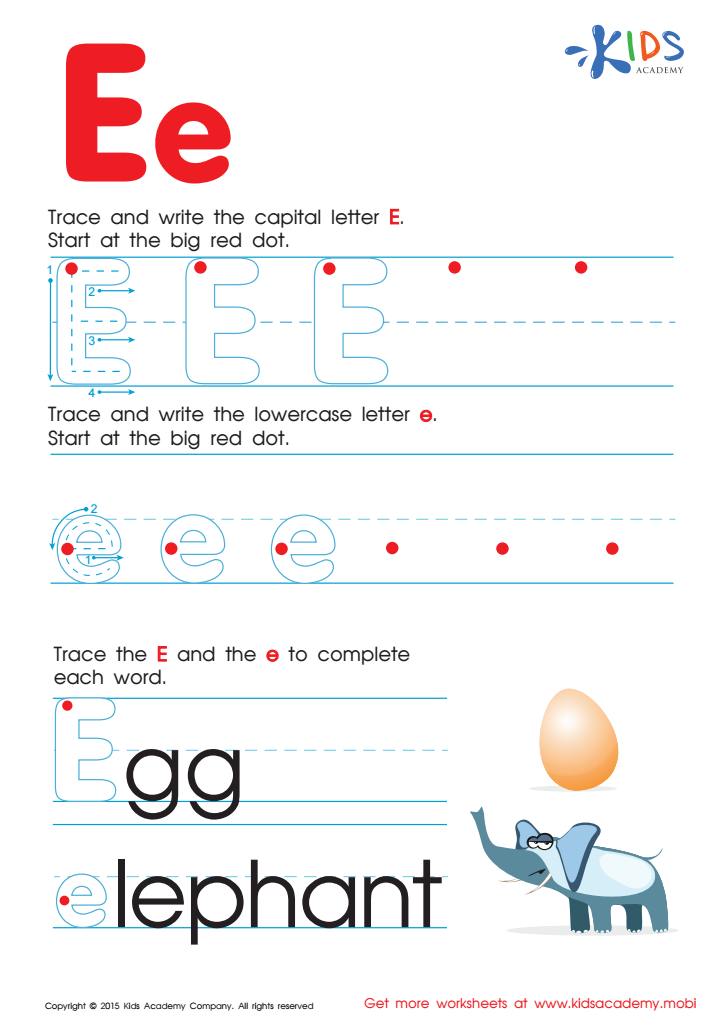
Letter E Tracing Page
Trace and write the uppercase and lowercase "E" starting at the big red dot. Complete words to perfect letter writing. Egg and Elephant must be written carefully. More alphabet worksheets for kindergarten are available for download to spend more time with your children learning.
Letter E Tracing Page
Worksheet
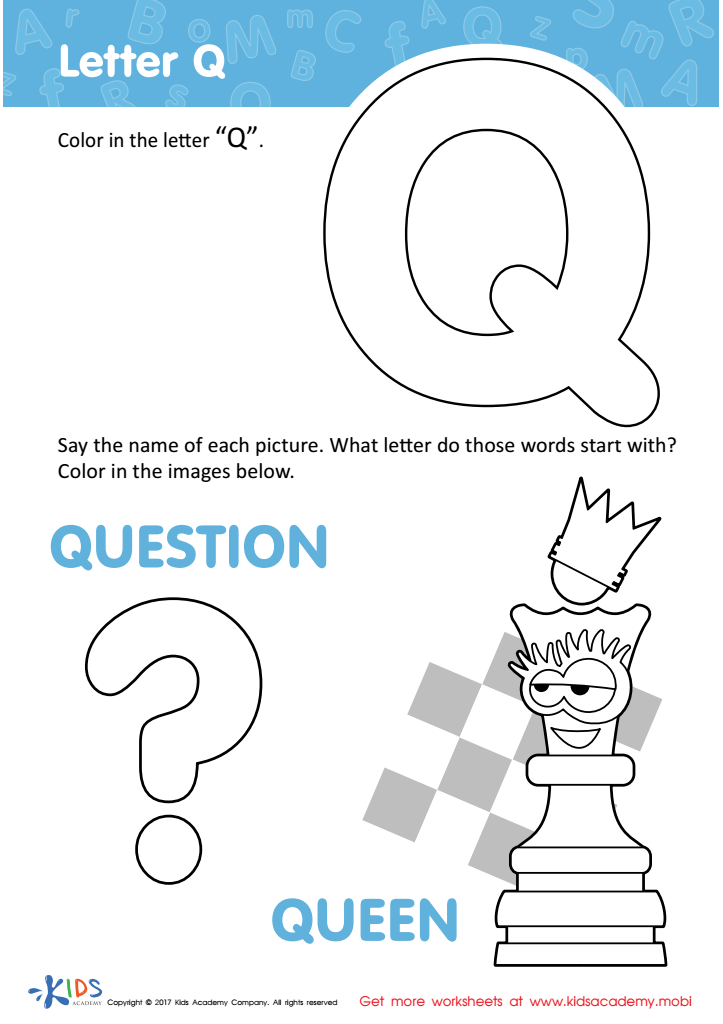
Letter Q Coloring Sheet
Kids need practice with letters not seen often. Give your child a boost with this letter "Q" coloring page! Have them color in the queen and question mark, while learning the sound "Q" makes. Fun and educational!
Download (PDF)
 Assign to My Students
Assign to My Students
Letter Q Coloring Sheet
Worksheet
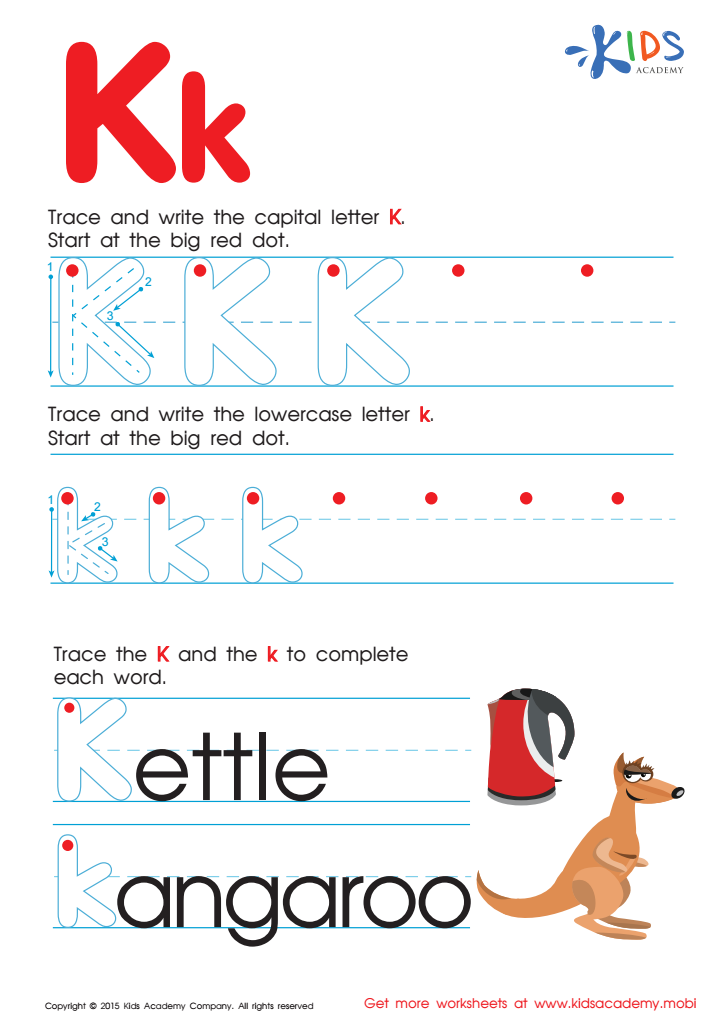
Letter K Tracing Page
Trace and write the letter K; start at the big red dot. Use it to complete words like "Kettle" and "Kangaroo". Visit Kids Academy for more free alphabet worksheets for kindergarten.
Letter K Tracing Page
Worksheet
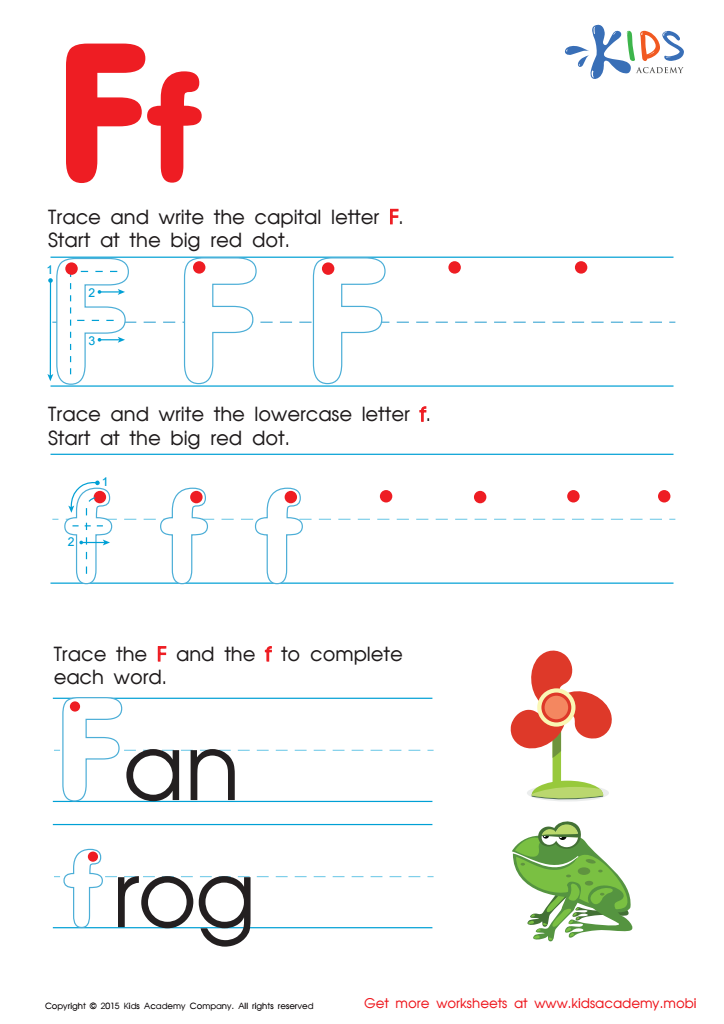
Letter F Tracing Page
Trace "F" with your pencil! Start at the red dot and draw lines — it's fun! Check it out — it looks great! Keep practicing to make it even better. Then, try completing words. Help out the broken fan and funny frog! Get free alphabet worksheets and activities for your kids. Come see our new tracing pages!
Letter F Tracing Page
Worksheet
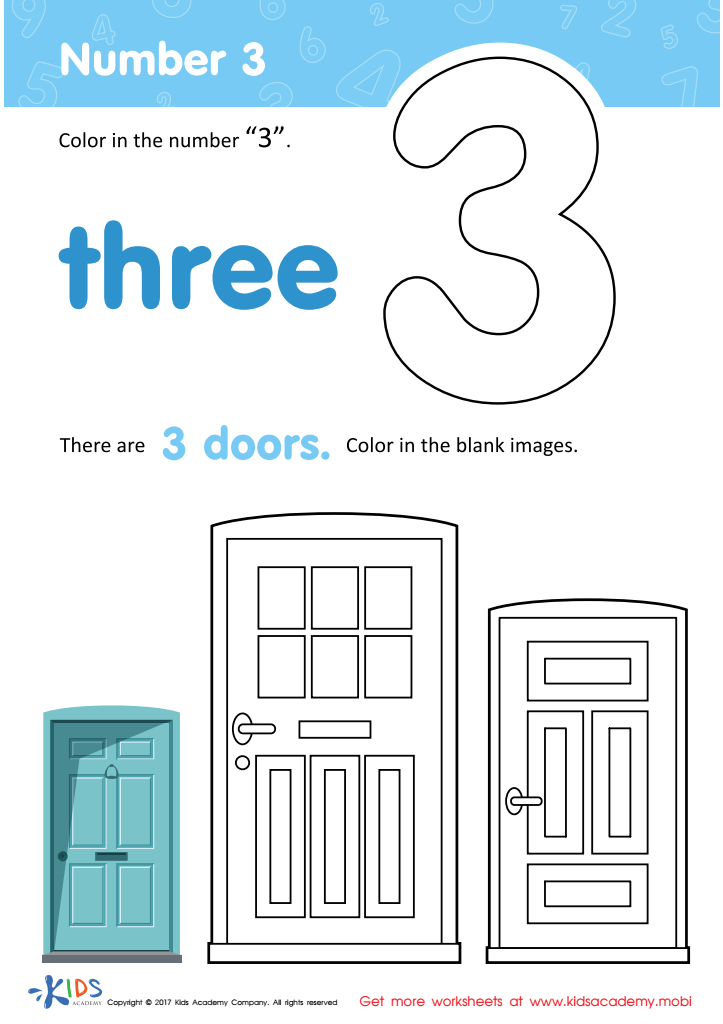
Number 3 Worksheet
Open the door to learning numbers! This counting coloring page helps kids recognize and count to 3, while using imagination and creativity to design lovely doors. It's a fun way to learn numbers!
Download (PDF)
Assign to My Students
Assign to My Students
Number 3 Worksheet
Worksheet
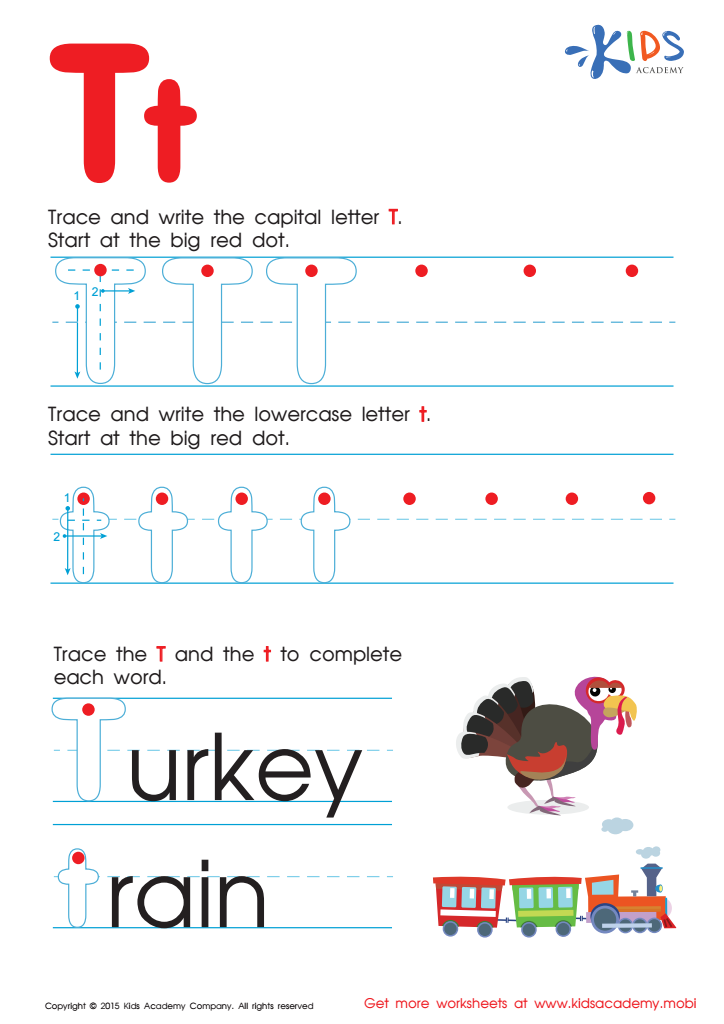
Letter T Tracing Page
Trace letters, complete words, draw pictures and see your kids having fun!
Kids Academy offers alphabet tracing worksheets to learn to write letters. Start with the big red dot, trace the letter, then write it. Practice uppercase and lowercase. Have fun completing words with a Turkey or a rain-train and draw pictures. Get more printable worksheets to make learning enjoyable.
Letter T Tracing Page
Worksheet
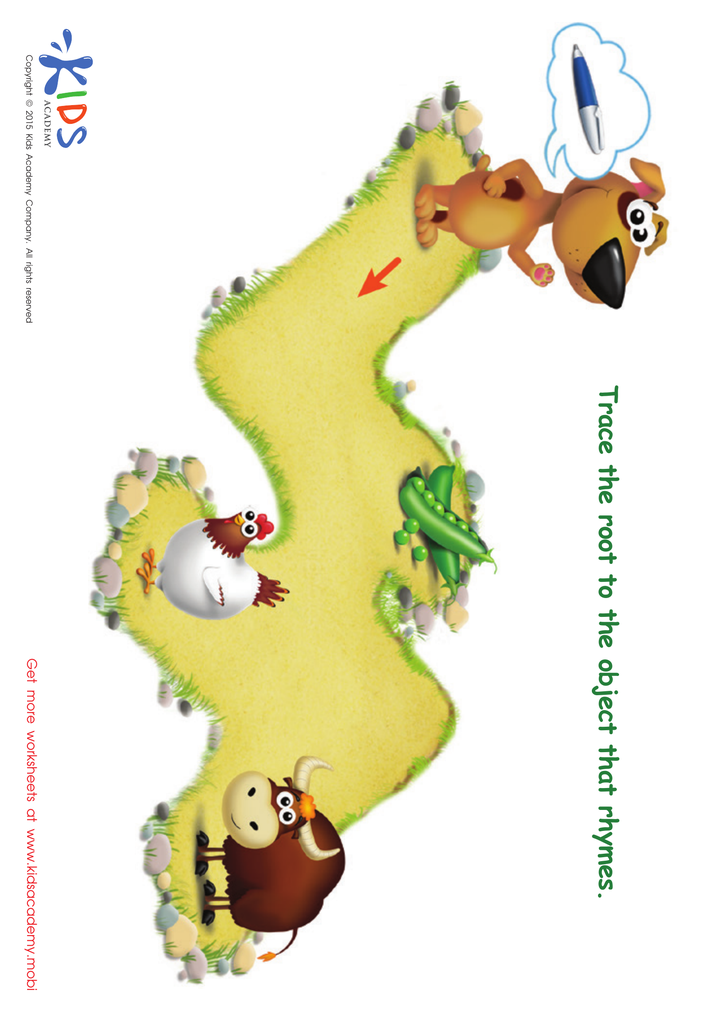
Pen Rhyming Words Worksheet
Check out the cute pup, pondering away. He's thinking of a root word - no suffix or prefix. Now check the hen, green beans, and the cow. Can you find the word that rhymes with pen? Draw a line from the root word to its rhyme for this simple yet beneficial worksheet. It helps young learners practice hearing and recognizing rhymes.
Pen Rhyming Words Worksheet
Worksheet
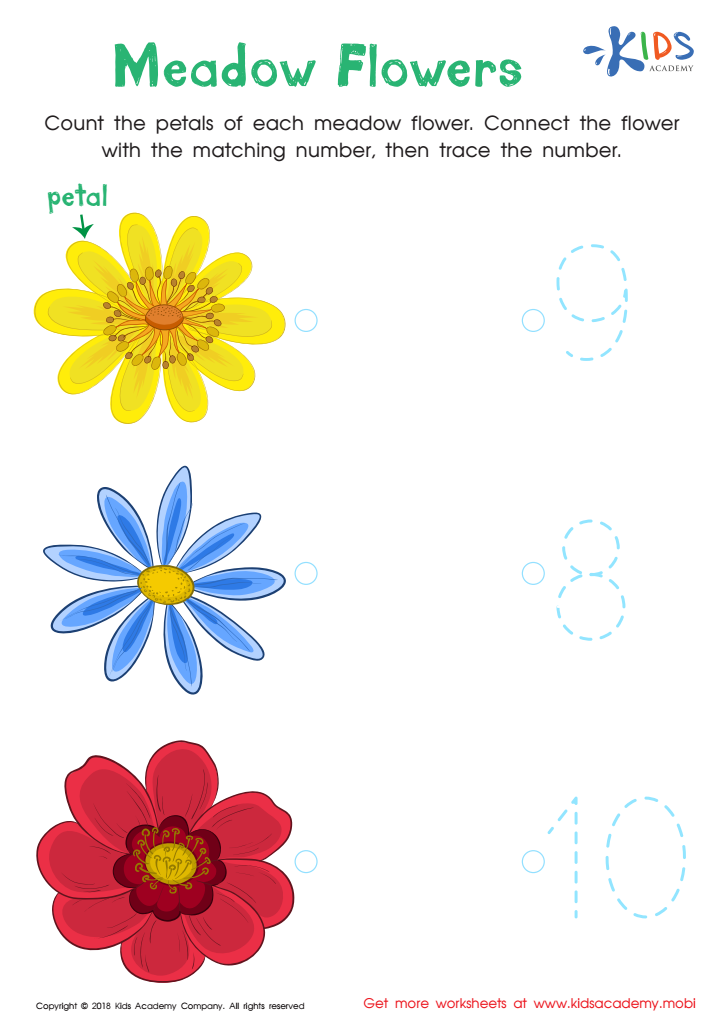
Kindergarten Number Tracing: Medow Flowers Worksheet
Take your child to the garden to count flower petals and trace numbers with this fun kindergarten PDF worksheet. They'll learn to count and write, all while enjoying the sweet scent of the flowers.
Kindergarten Number Tracing: Medow Flowers Worksheet
Worksheet
Join Kids Academy for Free
Who is primarily going to use this learning content?








Handwriting skills are crucial for 5-year-olds as they serve as foundational capabilities that significantly influence a child's academic journey and overall development. At this age, children are beginning to refine their fine motor skills, which are essential not only for writing but also for other everyday tasks like buttoning clothes, cutting with scissors, and tying shoelaces. Practicing handwriting helps improve hand-eye coordination and dexterity, vital for their physical development.
Additionally, handwriting is a vital communication tool. It allows young learners to express their thoughts, ideas, and creativity on paper. Developing legible handwriting builds confidence, encouraging them to engage more willingly in writing activities. Early writing experiences also pave the way for literacy development; as children write letters and words, they reinforce their understanding of language mechanics.
Lastly, handwriting practice fosters concentration, focus, and patience—skills that are important in all academic areas. Parents and teachers should care about promoting handwriting skills in 5-year-olds not only to equip them with essential tools for school, but also to enhance their self-esteem and prepare them for future learning challenges. Building a positive attitude toward writing at this tender age can motivate children to become enthusiastic learners throughout their educational journey.








