Identifying Animals Worksheets for 5-Year-Olds
4 filtered results
-
From - To
Our "Identifying Animals Worksheets for 5-Year-Olds" are designed to make early learning fun and engaging. These worksheets provide interactive activities that help young children recognize and name various animals. Through colorful illustrations and simple exercises, kids can deepen their understanding of the animal kingdom while developing critical thinking and observation skills. Perfect for both classroom and at-home learning, these worksheets are an excellent resource for fostering a love of nature and biology in your child. Dive into a world of animal discovery today and watch your little one become an animal identification expert!
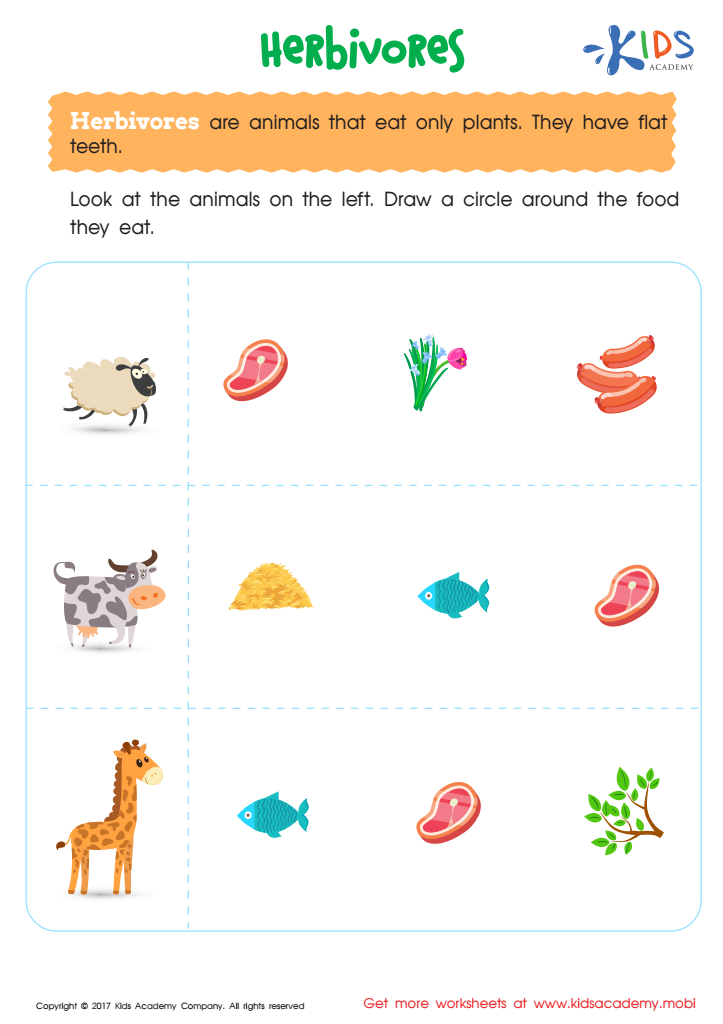
Herbivores Printable
 Assign to My Students
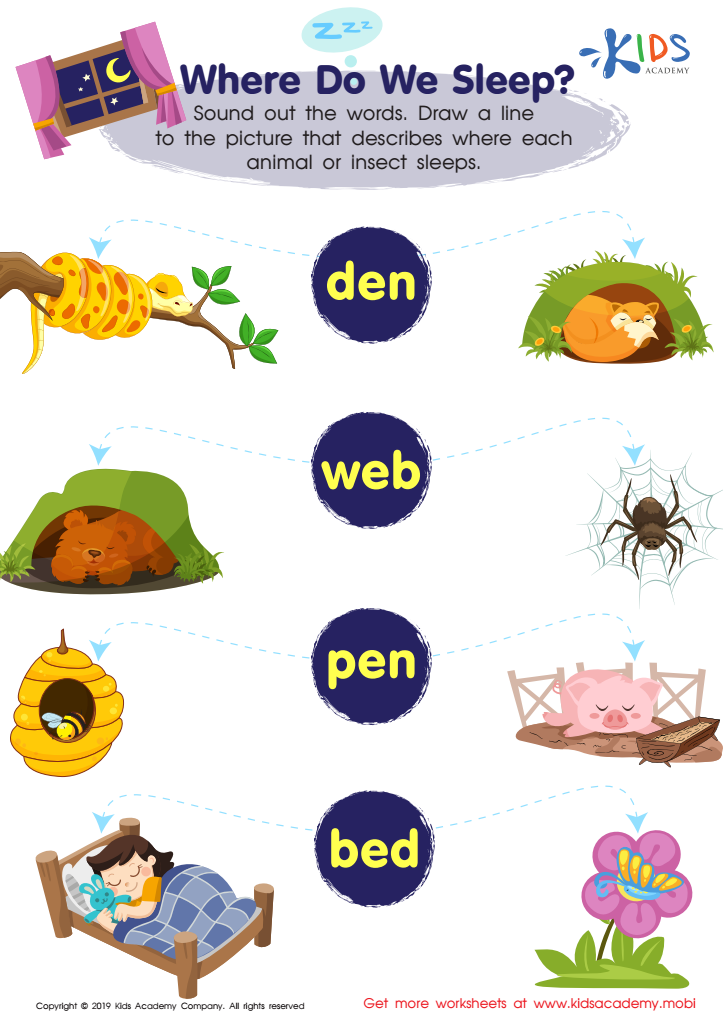
Where Do We Sleep Worksheet
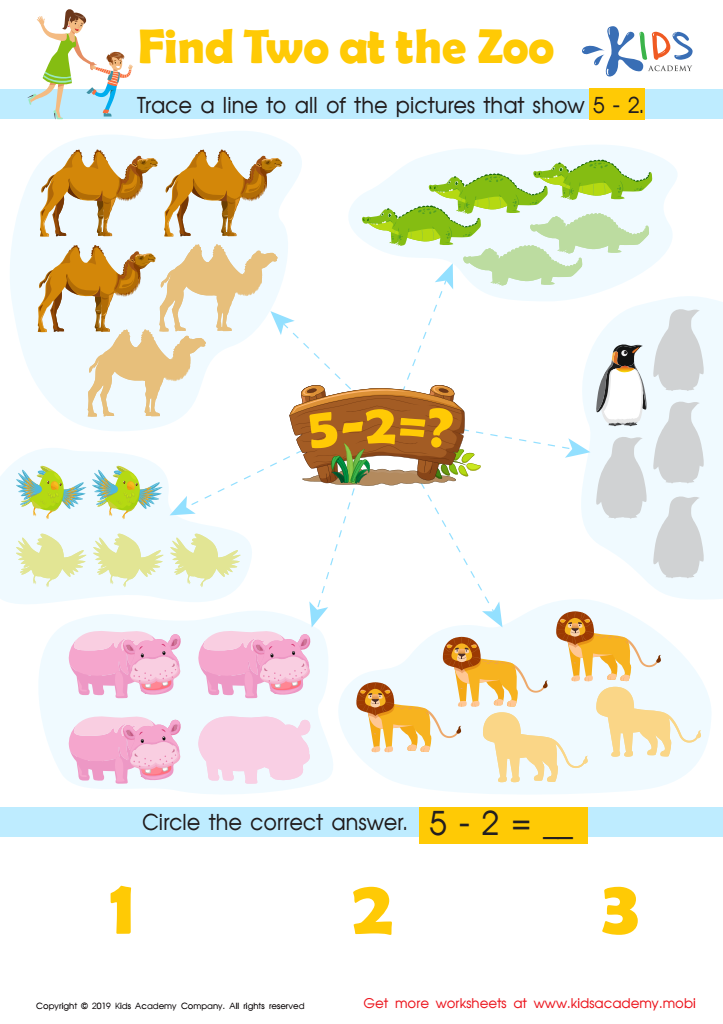
Find Two at the Zoo Worksheet








Identifying animals is fundamental to the development of a 5-year-old for several reasons, encompassing educational and emotional growth as well as fostering an early appreciation for nature. Firstly, learning to identify animals nurtures cognitive development by expanding a child's vocabulary and understanding of the world around them. Words like "mammal," "reptile," and "amphibian" introduce them to complex categories, enhancing their cognitive sorting and reasoning skills.
Additionally, distinguishing between animals fosters observational abilities and attention to detail. These skills are critical in fields like science and logical reasoning later on. Socially and emotionally, recognizing and naming animals aids in fostering empathy and care for other living beings. When children learn about various animals, particularly those in different habitats, they can develop a sense of curiosity and concern for the environment and conservation.
Involving children in learning about animals can also be a fun and interactive way to strengthen the bond between parents, teachers, and the child, providing opportunities for shared experiences, such as visiting zoos, reading animal books, or engaging in animal-themed educational activities. These activities support emotional and social development, creating a balanced learning environment that promotes both fun and education.
For teachers, integrating animals into the curriculum can also enrich classroom discussions, making learning interdisciplinary—touching on science, geography, and even art. Hence, teaching children to identify animals equips them with essential tools for holistic development and a lifelong appreciation for the natural world.








