Number comparison skills Worksheets for 5-Year-Olds
3 filtered results
-
From - To
Boost your child's math skills with our engaging Number Comparison Skills Worksheets designed specifically for 5-year-olds! These interactive resources help young learners understand the concept of comparing numbers through fun activities and colorful visuals. Children will practice identifying greater than, less than, and equal to relationships, laying a strong foundation for future math success. Each worksheet is crafted to enhance critical thinking and problem-solving abilities while promoting number recognition in a playful way. Perfect for classroom use or at-home learning, these worksheets make mastering number comparisons both enjoyable and educational. Start your child's mathematical journey today!
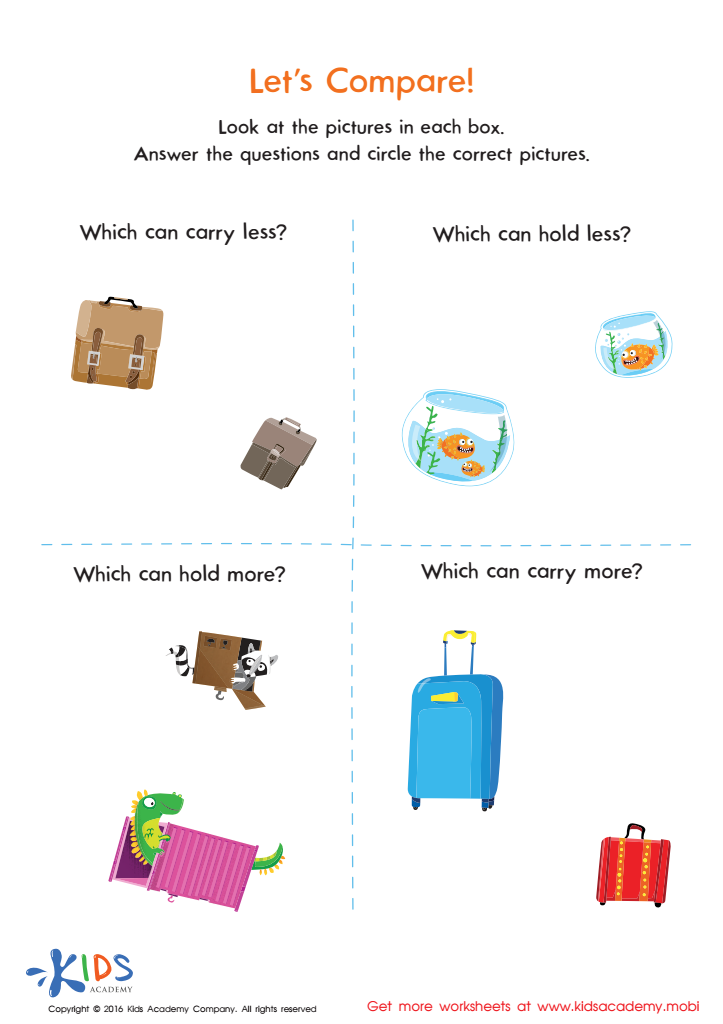
Let's Compare Worksheet: Big or Small
 Assign to My Students
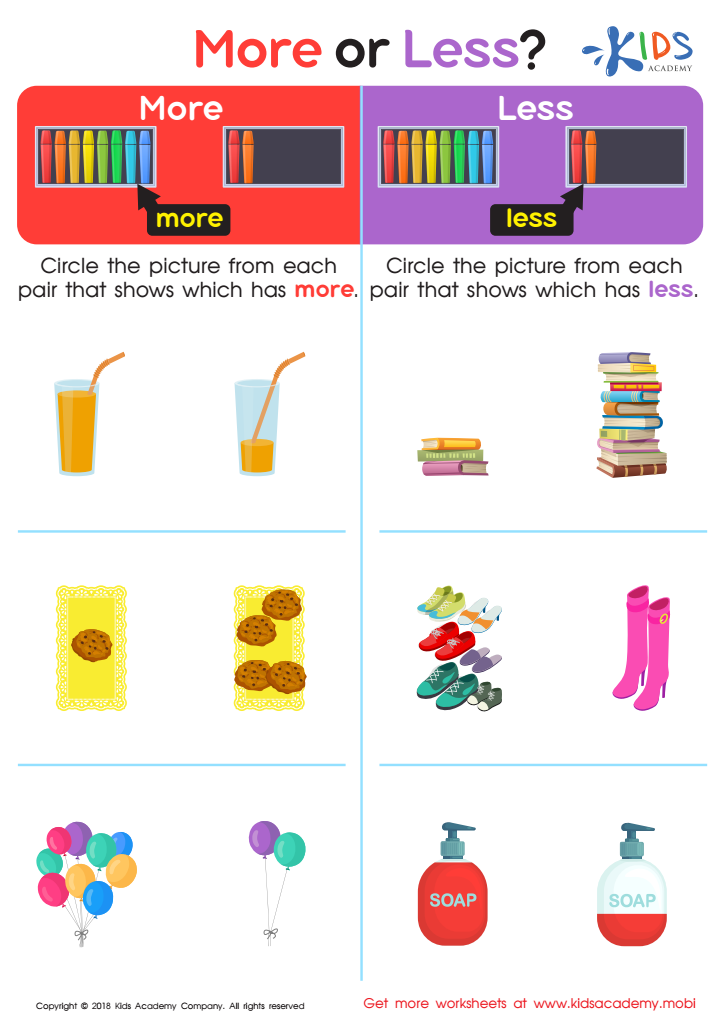
More or Less? Worksheet
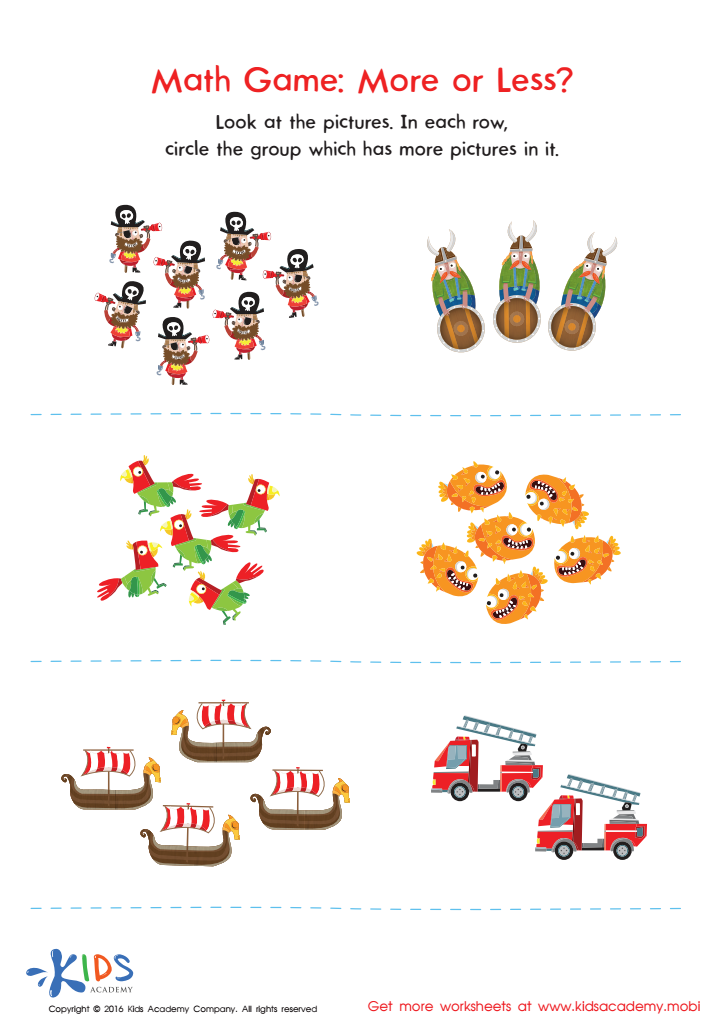
More or Less Worksheet




.jpg)


Number comparison skills are crucial for 5-year-olds as they lay the foundation for more complex mathematical concepts and critical thinking. Mastering the ability to compare quantities fosters a sense of number sense, which is fundamental for future learning. By enabling children to recognize which numbers are larger or smaller, they can develop essential problem-solving skills. This skill not only aids in mathematics but also enhances cognitive development, promoting logical reasoning and improved decision-making abilities.
Additionally, number comparison contributes to a child’s confidence in handling mathematical tasks. As they engage with numbers, they become familiar with their properties, leading to better comprehension of addition, subtraction, and later operations. This foundational knowledge is necessary for success in higher math skills that they will encounter as they progress through school.
Furthermore, teachers and parents play a pivotal role by integrating number comparison activities into daily routines. Simple games, real-life examples, and everyday discussions can enhance a child's understanding while making learning enjoyable. By investing time in developing these skills, parents and educators foster a passion for math and strengthen academic readiness, ultimately setting children up for long-term success.








