Sound Association Worksheets for 5-Year-Olds - Page 2
27 filtered results
-
From - To
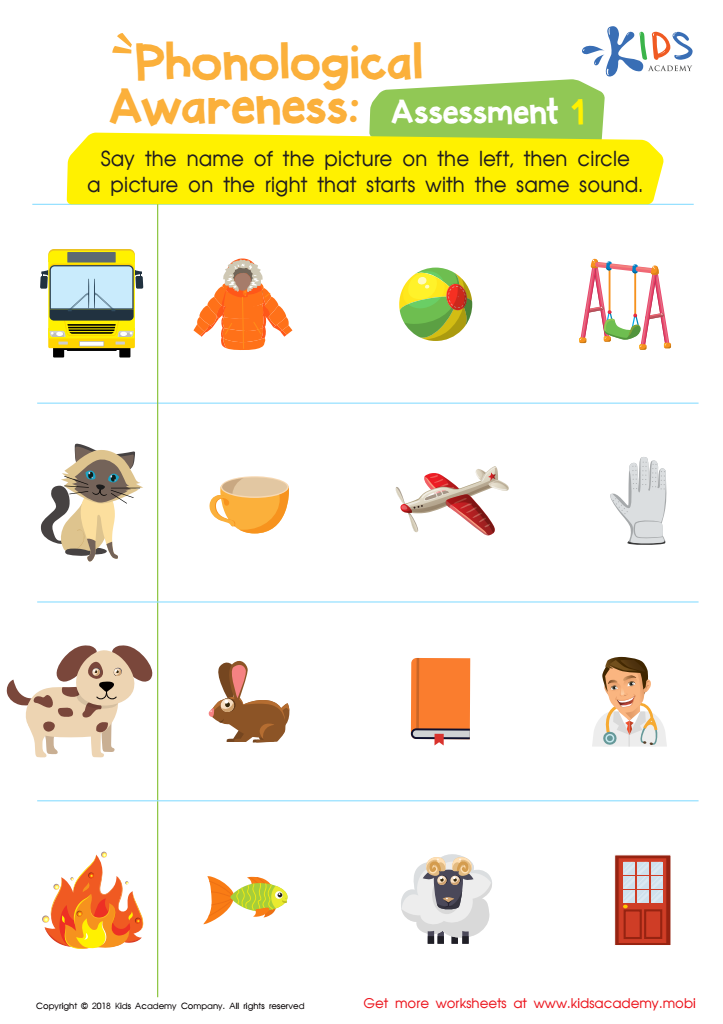
Phonological Awareness: Assessment 1 Worksheet
 Assign to My Students
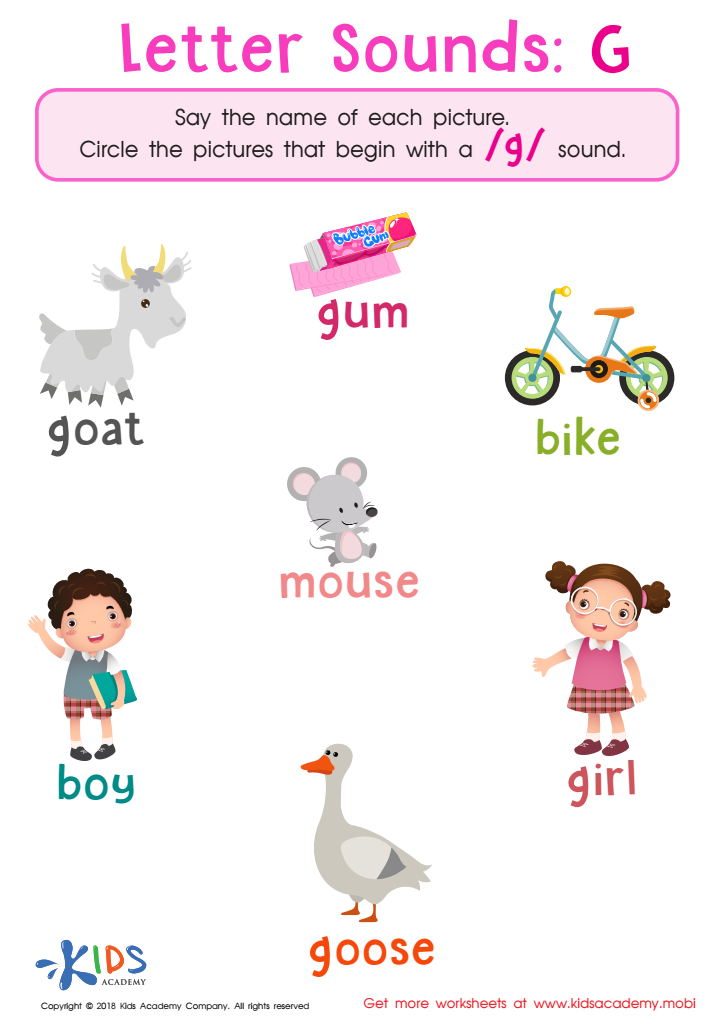
Letter G Sounds Worksheet
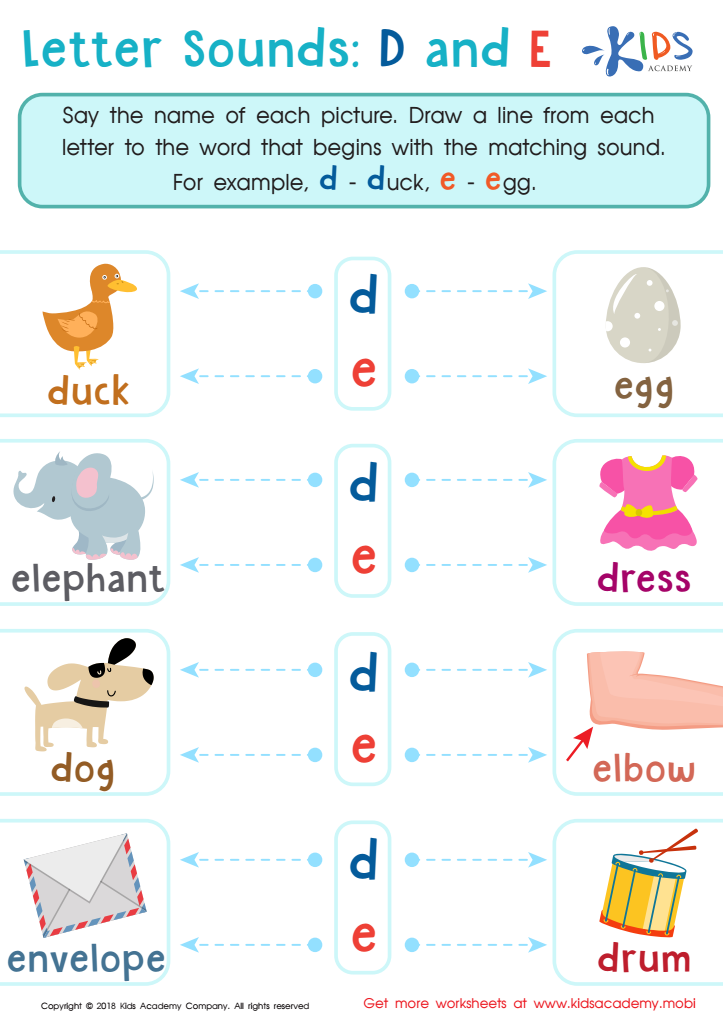
Letter D and E Sounds Worksheet






Sound association is a fundamental cornerstone in early literacy development for 5-year-olds. When parents and teachers focus on this skill, they are setting children up for long-term success in reading and writing. Sound association means linking letters to their sounds, a critical first step in phonemic awareness. This awareness is essential for learning to read; it helps children understand that words are made up of individual sounds, or phonemes.
By mastering sound association, children can start to "decode" words, which means they can translate written text into spoken words. This skill is crucial for reading fluency and comprehension. In addition, understanding sound association aids spelling. Once a child knows that the letter "b" makes a "buh" sound, they can begin to spell words by listening to the sound in words and knowing which letters correspond.
Moreover, drawing connections between sounds and letters can make learning to read more engaging and less daunting for children. Activities like singing songs, rhyming, and playing sound-matching games can turn learning into a fun, interactive experience. By laying this vital foundation early, parents and teachers ensure children are not just academically prepared but also confident and enthusiastic about learning to read. Investing time in sound association can foster a lifelong love of reading, benefiting children academically and beyond.








