Understanding number relationships Worksheets for 5-Year-Olds
4 filtered results
-
From - To
Discover our engaging "Understanding Number Relationships Worksheets" designed specifically for 5-year-olds! These worksheets provide a fun and interactive way for young learners to grasp essential math concepts, such as one-to-one correspondence, recognizing greater and lesser values, and basic grouping. Each activity is crafted to stimulate critical thinking and enhance number sense through vibrant visuals and relatable themes. Our resources support early childhood education by blending learning with play, making mathematics an enjoyable experience. Encourage your child to explore numbers and build a strong foundation in mathematics with our comprehensive selection of worksheets today! Perfect for home or classroom use!
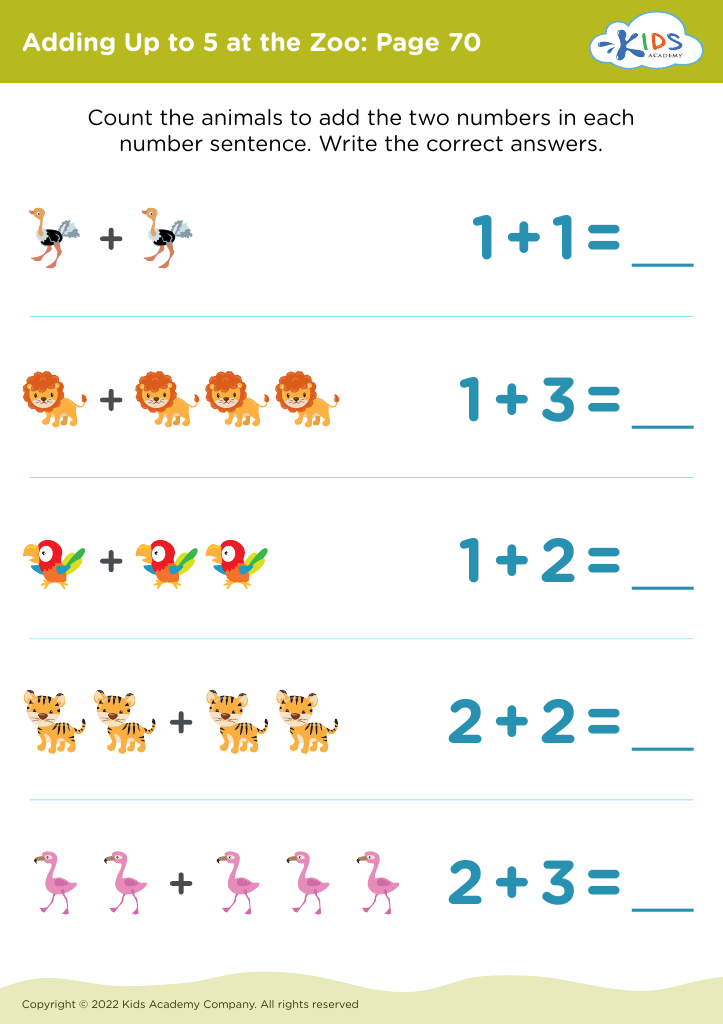
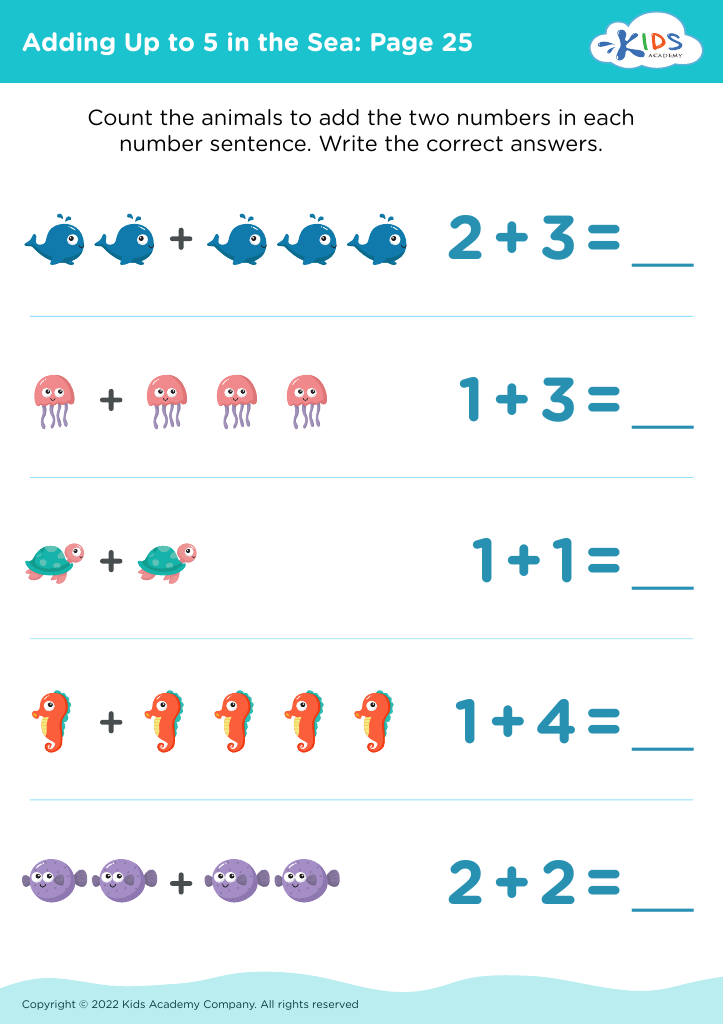
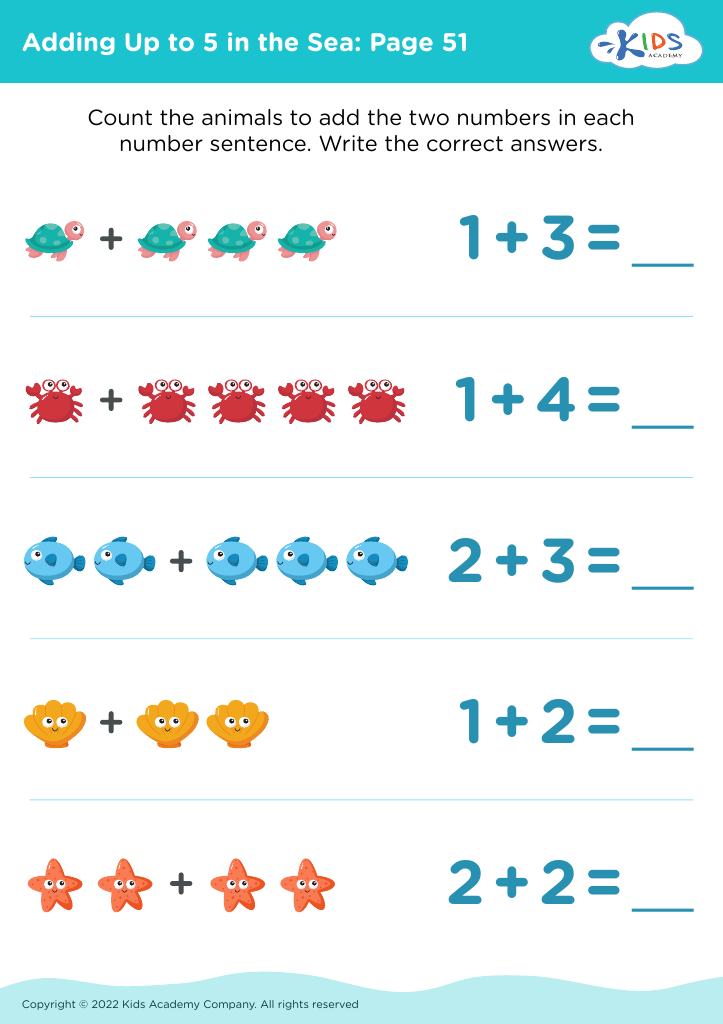
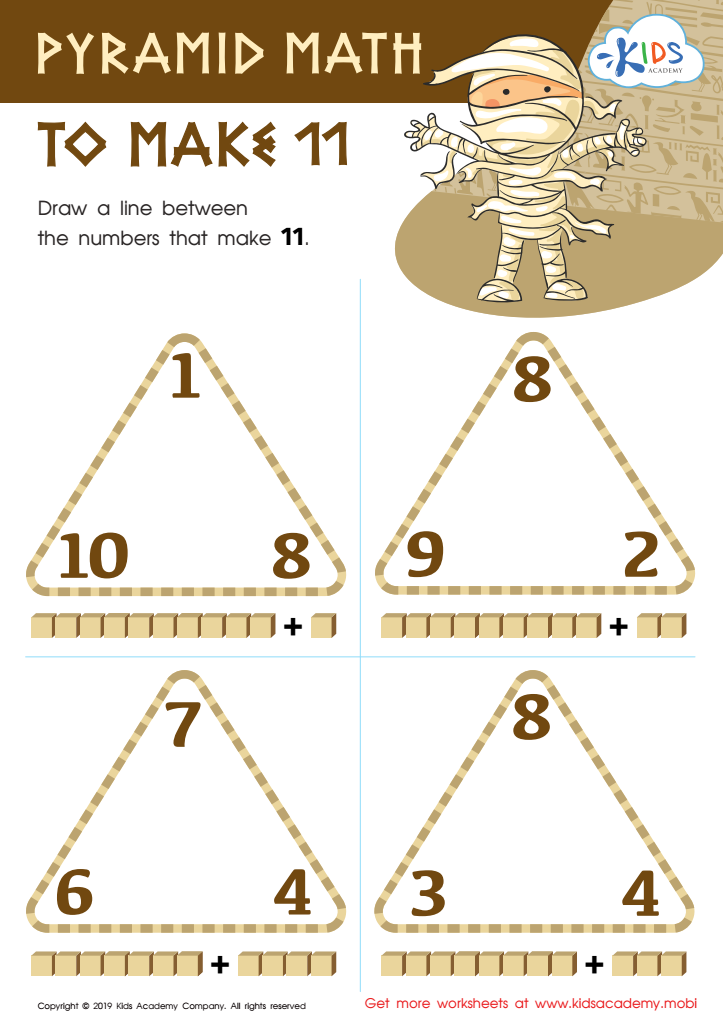
Pyramid Math to Make 11 Worksheet
 Assign to My Students







Understanding number relationships is foundational to a child’s mathematical development and essential for both academic success and everyday problem-solving. For 5-year-olds, grasping concepts like one-to-one correspondence, number sense, and the relationships between numbers provides a solid base from which to explore more complex ideas in the future.
When children understand that numbers are interconnected, they begin to see patterns and can make sense of addition and subtraction naturally. This early comprehension fosters critical thinking skills and enhances their ability to compare quantities, recognize more/less relationships, and eventually leads to the ability to perform calculations.
Moreover, understanding number relationships enhances a child's confidence and enjoyment in math, reducing anxiety often associated with the subject later in life. Engaging in fun, interactive activities that emphasize these concepts—not only involves counting but also encourages playing with numbers creatively—instills a greater appreciation for mathematics.
For parents and teachers, fostering number relationships isn't just a task; it’s an investment in a child's cognitive skills. By prioritizing numerical understanding, adults empower children to build a robust foundation for future learning, resulting in better academic outcomes and enriched problem-solving skills in everyday situations.








