
Understanding sequencing Worksheets for 5-Year-Olds
4 filtered results
Difficulty Level
Grade
Age
-
From - To
Subject
Activity
Standards
Our "Understanding Sequencing Worksheets for 5-Year-Olds" are designed to enhance early learning and development skills. These fun and engaging activities help young children grasp the concept of sequencing by arranging pictures and events in the correct order. With colorful illustrations and simple prompts, kids practice logical thinking and narrative skills. These worksheets are perfect for fostering critical thinking, enhancing memory, and improving organizational abilities. Whether used at home or in the classroom, our sequencing activities are a great way to support your child's educational journey and prepare them for future learning milestones. Enjoy learning with Kids Academy!
Favorites
With answer key
Interactive
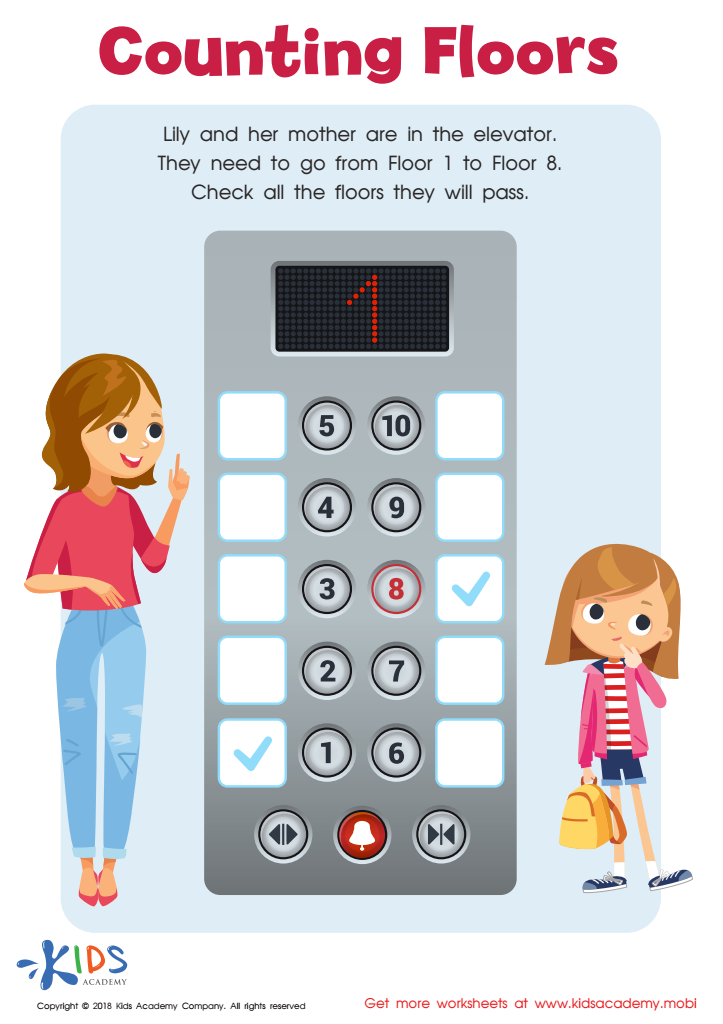
Counting Floors Worksheet
Take your kids on an elevator ride and have them help you. With this worksheet, little ones meet Lily and her mom. They're taking an elevator from Floor 1 to Floor 8. Ask them to check the floors they pass and help the two reach their destination.
 Assign to My Students
Counting Floors Worksheet
Worksheet
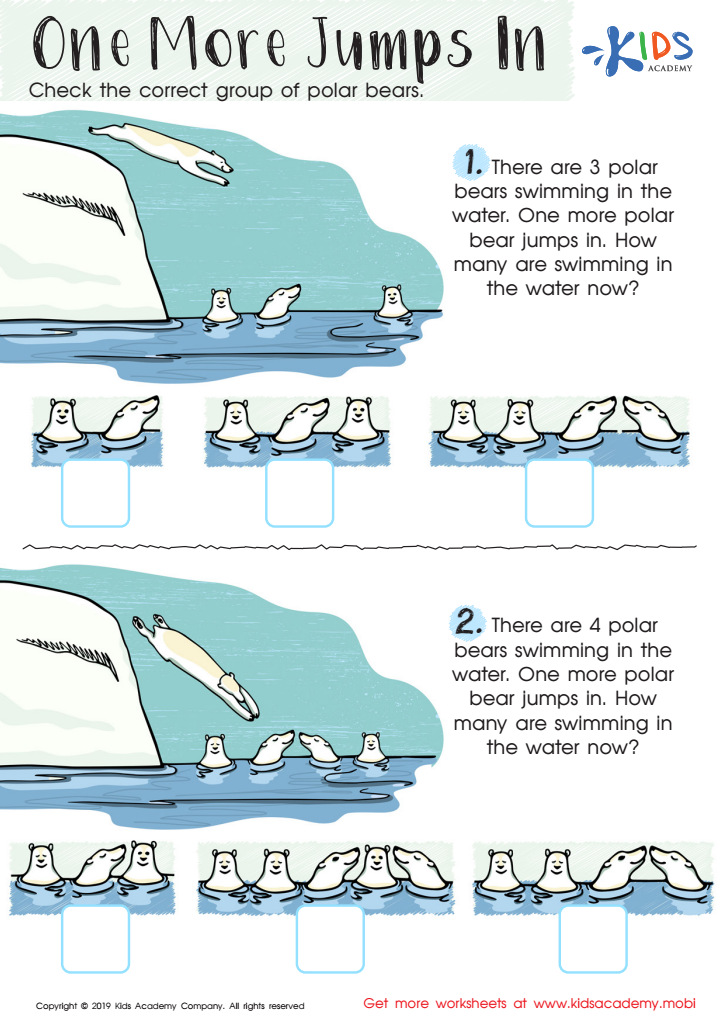
One More Jumps In Worksheet
Polar bears live in the Arctic which is always cold and snowy. Show your kids pictures of polar bears swimming in the water. Read the text and help them count correctly to answer the questions in the first and second sections.
One More Jumps In Worksheet
Worksheet
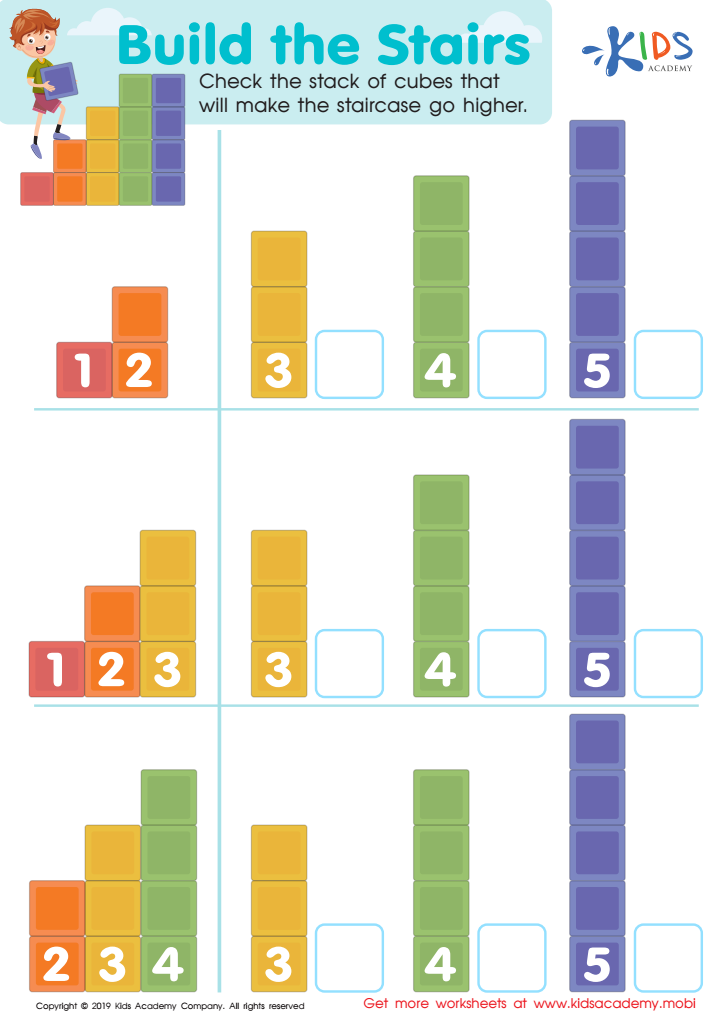
Build the Stairs Worksheet
Does your kid need help counting numbers? Make it fun with a staircase math worksheet! This printable PDF uses stairs to help your preschooler practice counting. Let them build the staircase by picking the next highest number as they go up! It's an interactive way to teach counting and sure to please your little one.
Build the Stairs Worksheet
Worksheet
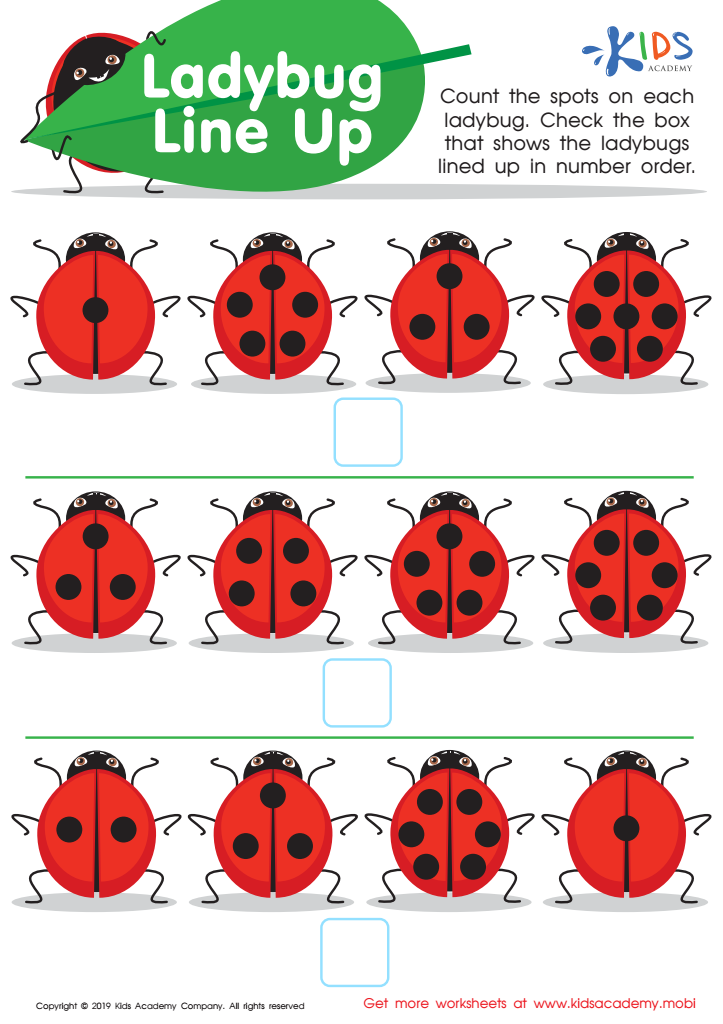
Ladybug Line Up Worksheet
Count the spots on the back of each ladybug in the three groups. Help kids check the box under each group that shows the ladybugs in proper number order. Ladybugs are an adorable insect with unique spots. This worksheet encourages counting and ordering.
Ladybug Line Up Worksheet
Worksheet
Join Kids Academy for Free
Who is primarily going to use this learning content?







Understanding sequencing is fundamental for a 5-year-old's cognitive and social development, and it's crucial for parents and teachers to nurture this skill. Sequencing involves the ability to order events logically, which is foundational for many aspects of learning and daily activities.
Firstly, sequencing aids in language development. Recognizing the beginning, middle, and end of stories helps children understand narratives and improves their listening and storytelling skills. This translates to better reading comprehension as they grow, making it easier for them to process and retain information.
Secondly, sequencing is essential for mathematical concepts. Understanding orders, patterns, and the flow of events lays a groundwork for arithmetic operations and problem-solving techniques. It teaches kids about cause and effect, enhancing their analytical thinking.
Moreover, sequencing also plays a significant role in executing day-to-day tasks. Routine activities like getting dressed, following a recipe, or playing games involve steps that must be followed in a specific order. Mastering this helps children build organizational skills and become more independent.
Finally, sequencing supports social interactions. Kids learn to predict outcomes, share fair turns during play, and adhere to social norms that often follow sequential patterns.
Thus, focusing on sequencing sets the stage for broader educational achievements and smoother day-to-day functioning, making it an indispensable skill for both current development and future success.








