Understanding shapes Worksheets for 5-Year-Olds
4 filtered results
-
From - To
Explore our engaging "Understanding Shapes Worksheets for 5-Year-Olds"! Perfect for young learners, these worksheets are designed to make shape recognition fun and interactive. Each activity helps children identify and differentiate between various shapes, such as circles, squares, triangles, and more. With colorful illustrations and child-friendly exercises, these worksheets promote visual learning and critical thinking skills. Ideal for home or classroom use, they encourage kids to develop essential math skills while boosting their creativity. Download and print them easily to support your child's educational journey in a playful and enjoyable way! Start shaping their future today!
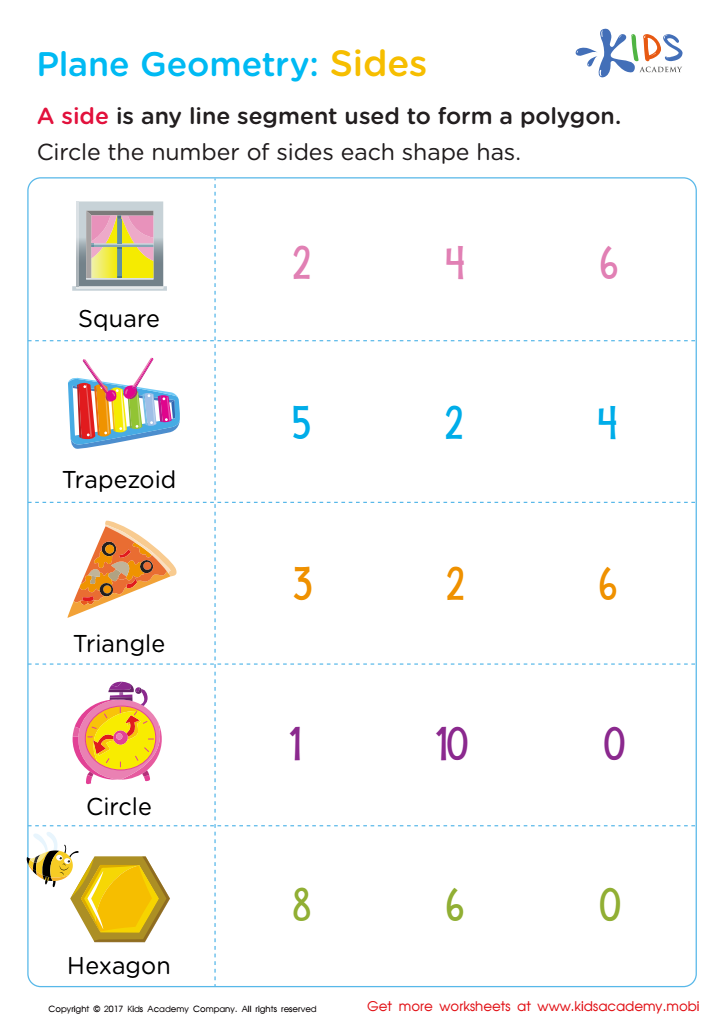
 Assign to My Students
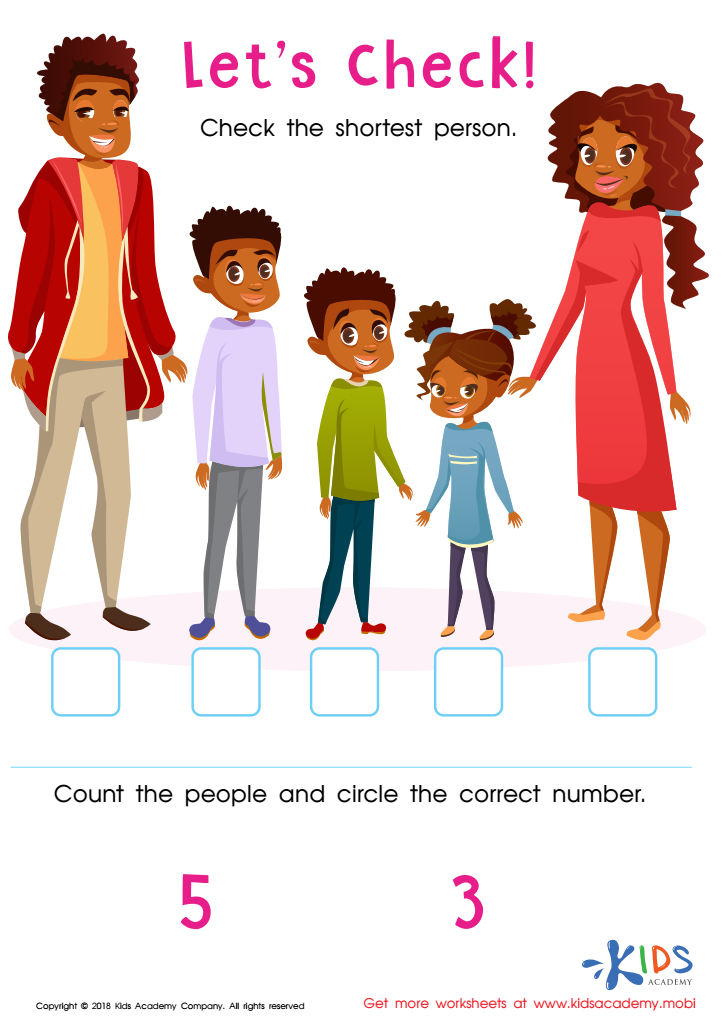
Let's Check! Assessment Worksheet
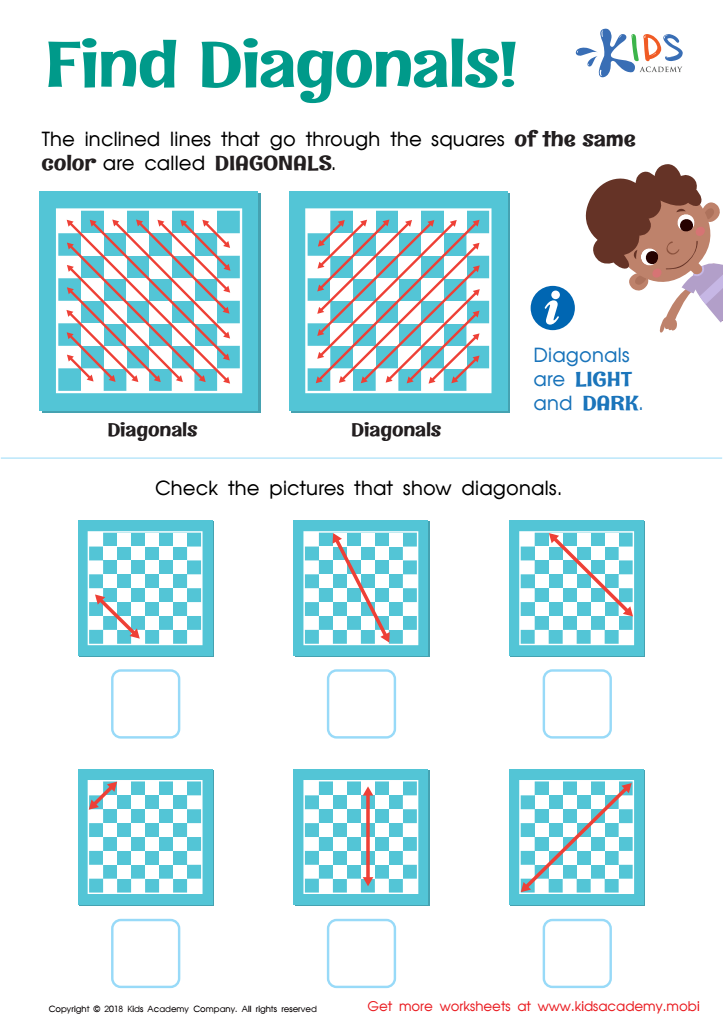
Find Diagonals Worksheet
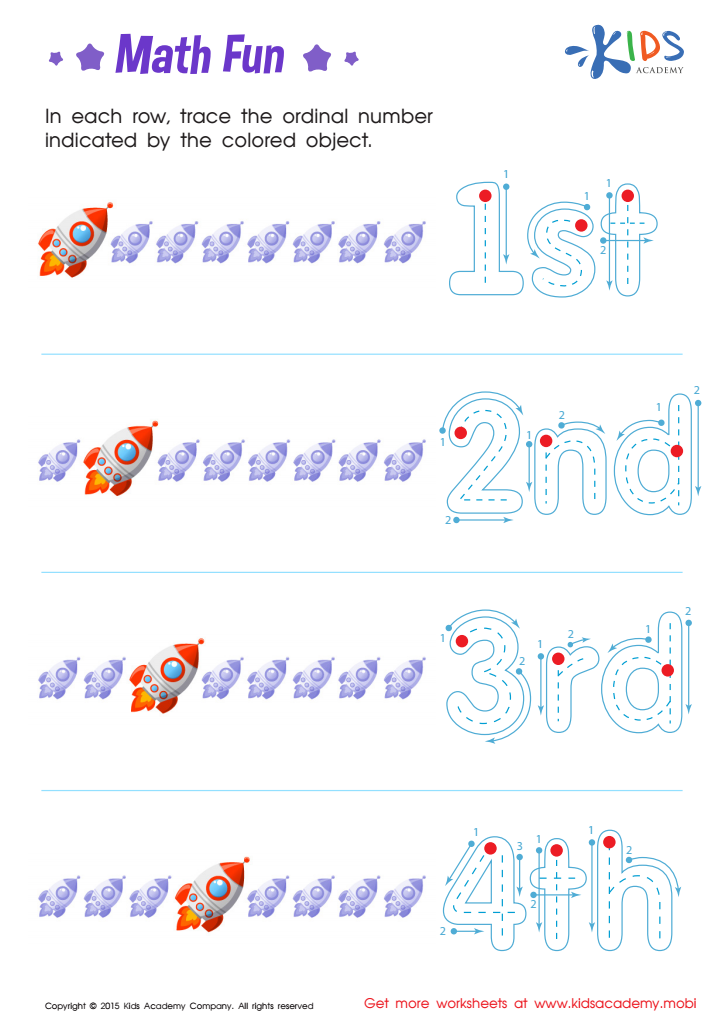
Ordinal Numbers: Math Fun Worksheet








Understanding shapes is vital for 5-year-olds as it lays the groundwork for essential cognitive and developmental skills. At this age, children are naturally curious and eager to explore their environment. Recognizing and naming shapes fosters their ability to categorize and make sense of the world around them.
Shapes are foundational in mathematics; knowing basic shapes—like circles, squares, and triangles—enables children to tackle more complex mathematical concepts in the future. Furthermore, recognizing shapes enhances spatial awareness, crucial for tasks ranging from drawing and building to solving puzzles, all of which develop fine motor skills and hand-eye coordination.
Beyond math, shape recognition is integral to critical thinking and problem-solving. By engaging in activities involving shapes—such as sorting, classifying, and creating—children develop their reasoning abilities and learn to observe relationships and patterns.
For parents and teachers alike, encouraging shape exploration through games and hands-on activities not only aligns with educational frameworks but also supports children's social-emotional development. Collaborative activities allow for language development as they discuss and describe shapes, promoting confidence in communication. As foundational knowledge, shape understanding equips children with the skills necessary for lifelong learning and exploration.








