
Underwater animal identification Worksheets for 5-Year-Olds
3 filtered results
Difficulty Level
Grade
Age
-
From - To
Subject
Activity
Standards
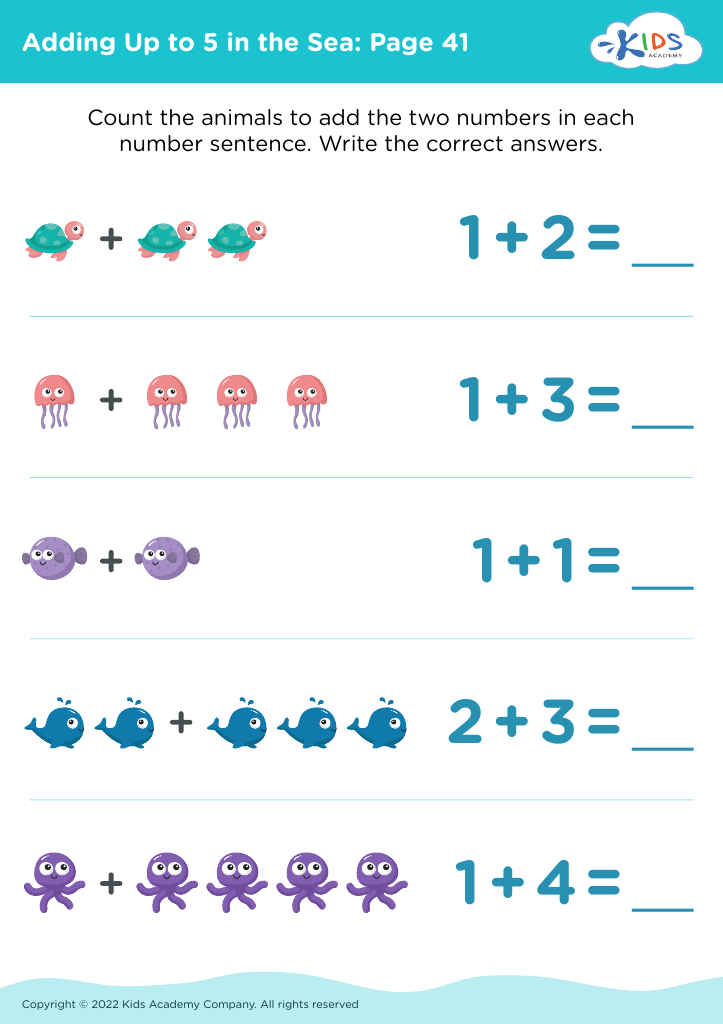
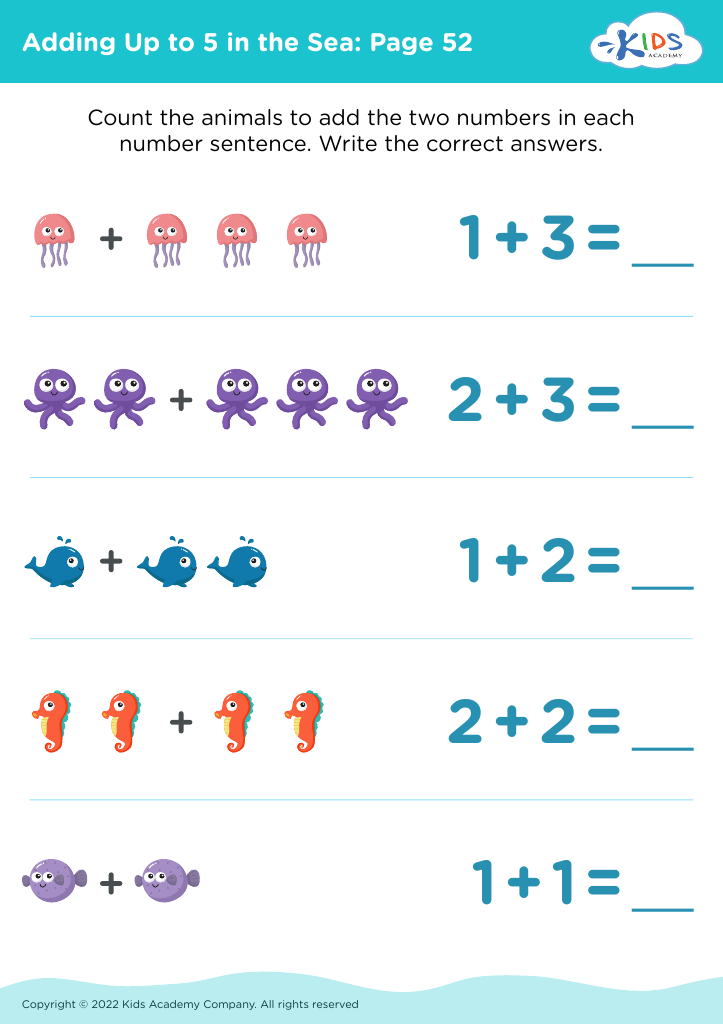
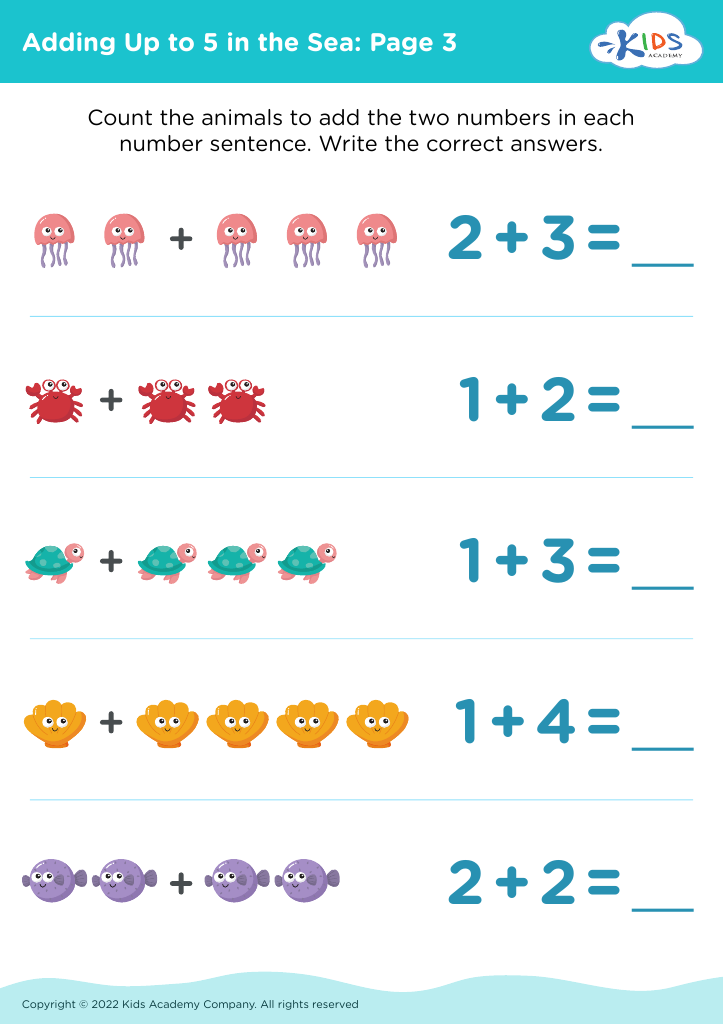
Discover our engaging Underwater Animal Identification Worksheets designed specifically for 5-year-olds! These colorful and interactive printables introduce young learners to fascinating marine life while enhancing their observation and vocabulary skills. Each worksheet features delightful illustrations of various underwater animals, encouraging kids to match, identify, and explore the ocean’s wonders. Perfect for home or classroom use, these worksheets promote immersive learning experiences, inspire creativity, and foster a love for the environment. With easy-to-follow instructions and fun activities, your child will build confidence in their identification skills while enjoying the beauty of underwater creatures. Dive into learning today!
Favorites
With answer key
Interactive
Join Kids Academy for Free
Who is primarily going to use this learning content?







Teaching 5-year-olds about underwater animal identification is crucial for several reasons. First, this knowledge fosters curiosity and a love for nature, encouraging children to explore aquatic environments and appreciate biodiversity. Engaging with underwater animals helps to build a foundation for future learning in science and ecology, promoting a sense of environmental responsibility from a young age.
Secondly, identifying underwater animals can enhance cognitive development. Children learn to classify information, compare species, and understand habitats through interactive activities like games, crafts, and field trips. This not only enhances their vocabulary but also hones their observation and critical-thinking skills.
Moreover, marine life education can promote emotional growth. Understanding the traits and behaviors of different underwater animals encourages empathy, as children learn to value and respect all forms of life. This can lay the groundwork for broader discussions about conservation and the impact of human actions on aquatic ecosystems.
Lastly, such learning moments create opportunities for parents and teachers to bond with children. Collaborative projects, such as creating posters or visiting aquariums, can strengthen relationships while encouraging teamwork and communication skills. Overall, underwater animal identification enriches children's educational experiences and fosters a strong, conscientious outlook on the environment.








