Weather identification Worksheets for 5-Year-Olds
6 filtered results
-
From - To
Welcome to our Weather Identification Worksheets for 5-Year-Olds! Designed to make learning fun, these engaging worksheets help young children recognize and understand different weather types. From sunny days to rainy afternoons, kids will enhance their observation skills and vocabulary as they explore colorful visuals and interactive activities tailored to their age. Perfect for at-home learning or classroom use, our worksheets encourage creativity while reinforcing important concepts about weather phenomena. Ideal for enhancing language skills and motivating young learners, these resources empower kids to confidently identify and describe the world around them. Dive into the climate with us today!
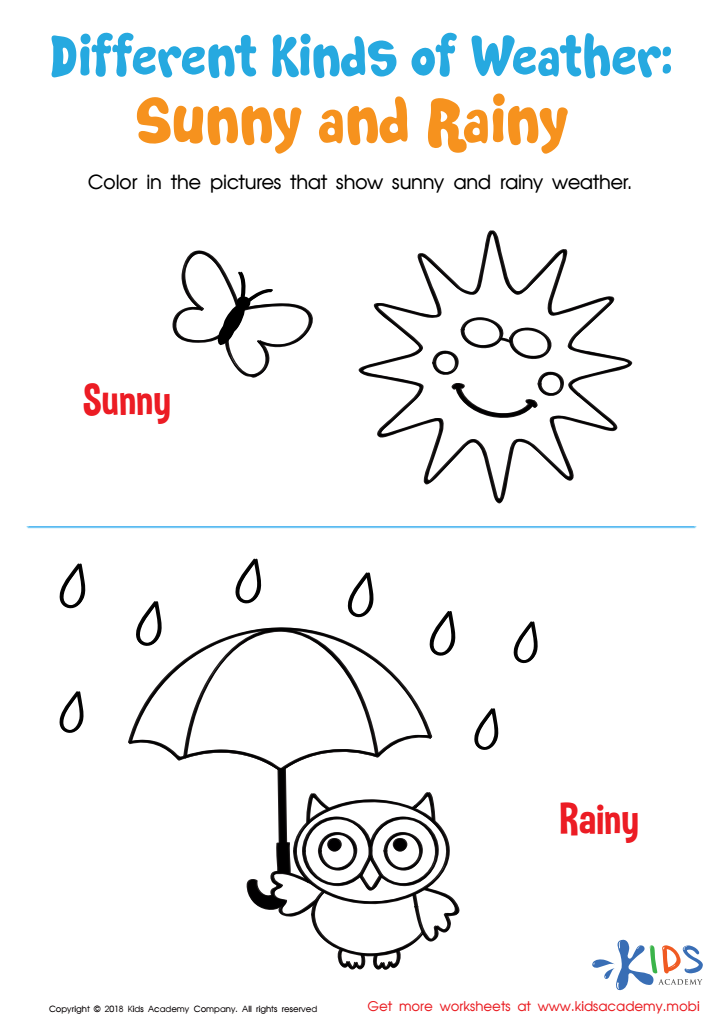
Different Kinds of Weather: Sunny and Rainy Worksheet
 Assign to My Students
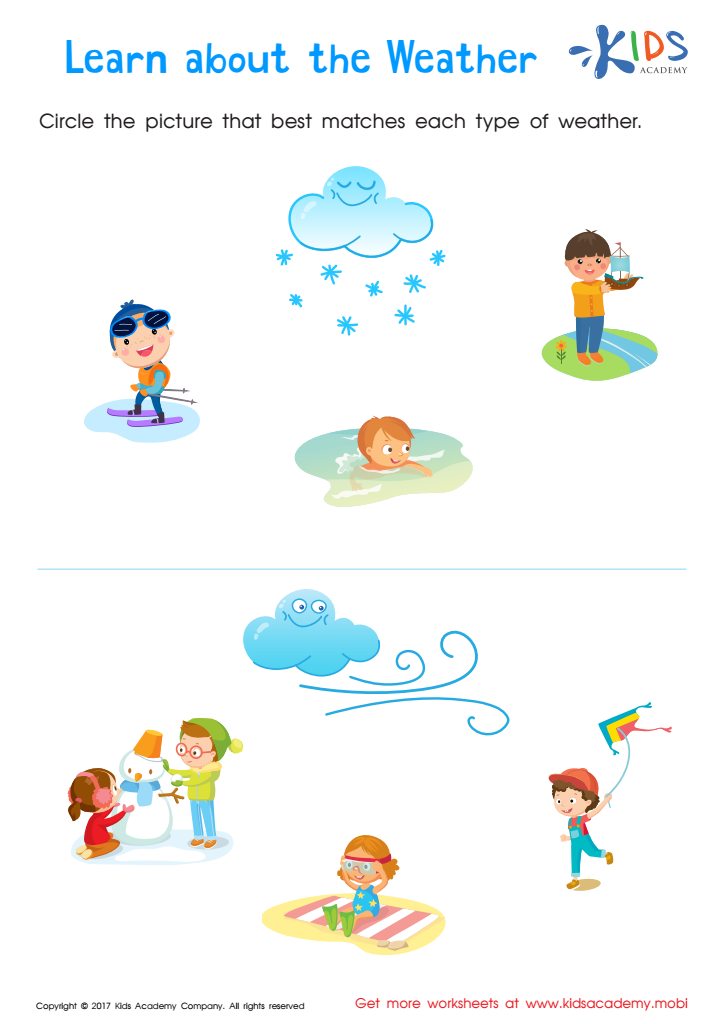
About the Weather Printable
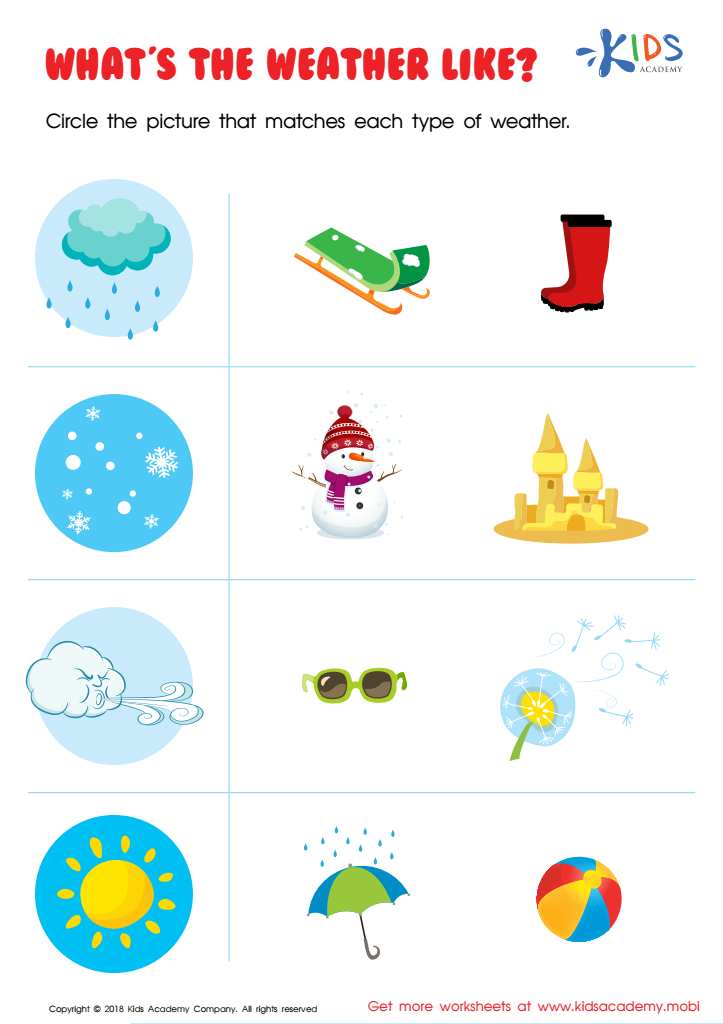
What's the Weather Like? Worksheet
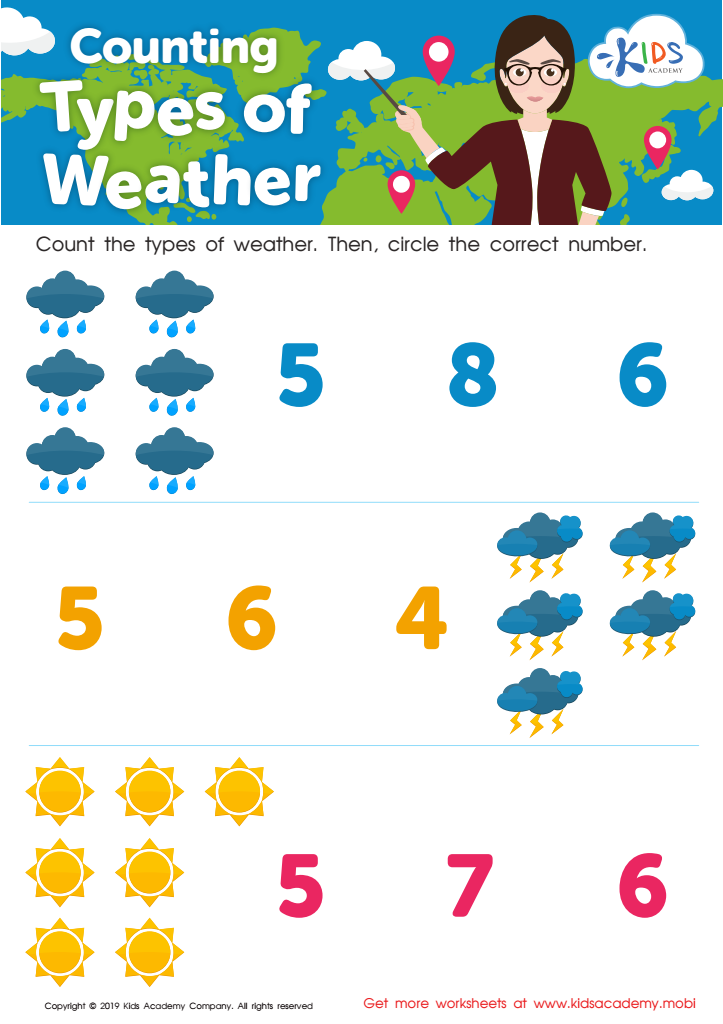
Counting Types of Weather Worksheet
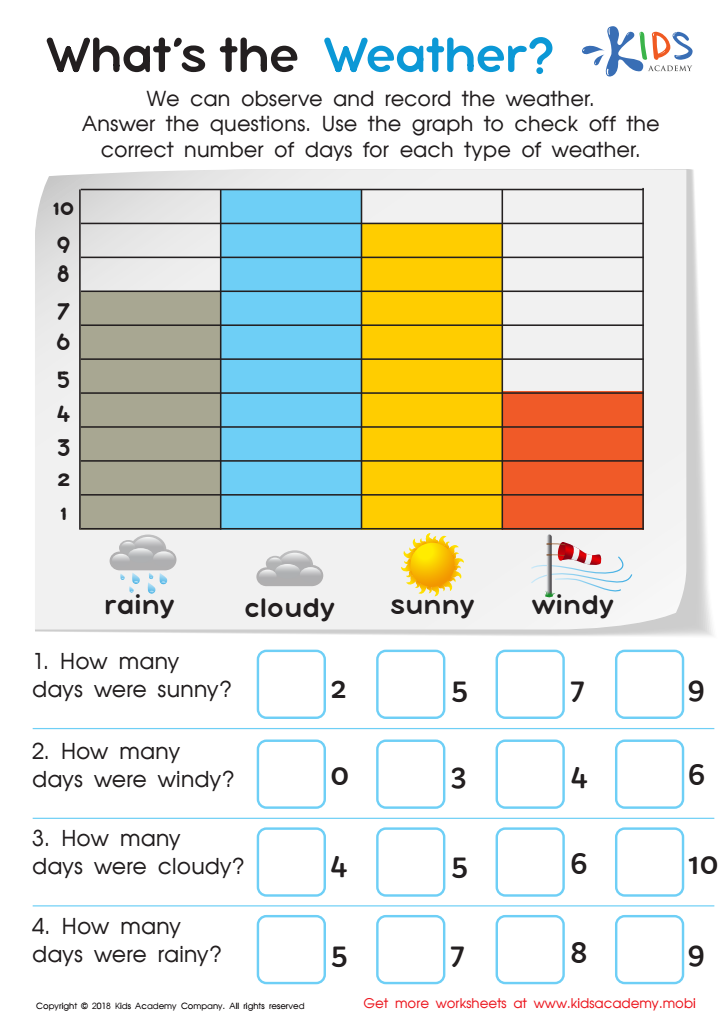
What's the Weather? Worksheet
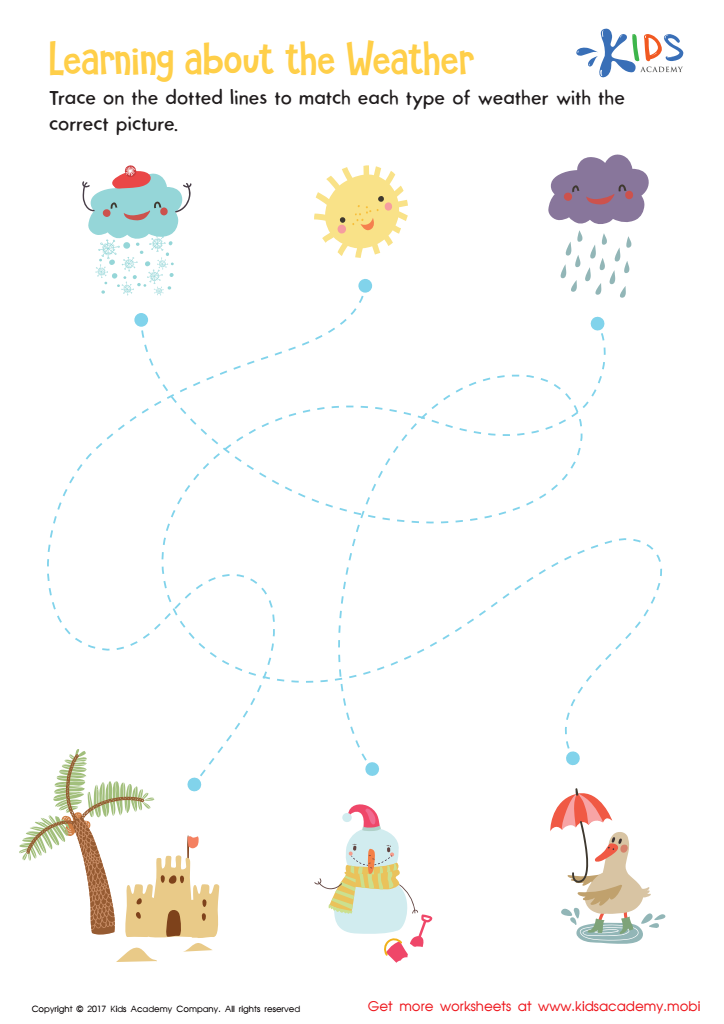







.jpg)
Weather identification is essential for 5-year-olds as it lays the foundation for their understanding of the world. At this young age, children are naturally curious about their environment, and learning about different weather conditions helps them make sense of their daily experiences. Parents and teachers should prioritize weather education for several reasons.
Firstly, recognizing various weather types teaches children to observe and engage with their surroundings. This mindfulness fosters critical thinking skills as they learn to draw conclusions about temperatures, seasons, and changes in weather patterns.
Moreover, understanding weather is crucial for safety. Educating young children about different weather conditions, such as storms, rain, or extreme heat, equips them with the knowledge to make safe choices, like dressing appropriately or seeking shelter when necessary.
Finally, weather identification provides rich opportunities for cross-disciplinary learning. It can be incorporated into science, art, and language activities, encouraging children to express their new knowledge creatively. Engaging with weather not only enhances cognitive growth but also allows for delightful discussions and explorations in nature.
In conclusion, teaching weather identification to 5-year-olds fosters curiosity, safety awareness, and holistic educational experiences, making it a vital component of early childhood learning.








