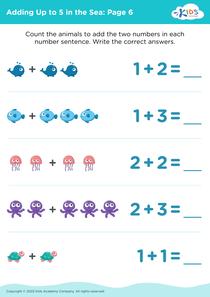
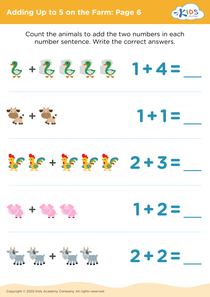
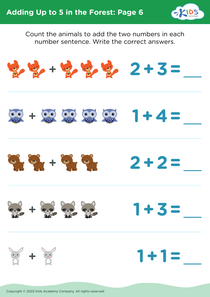
Cognitive Development Adding at the Zoo Worksheets for 5-Year-Olds
18 filtered results
-
From - To
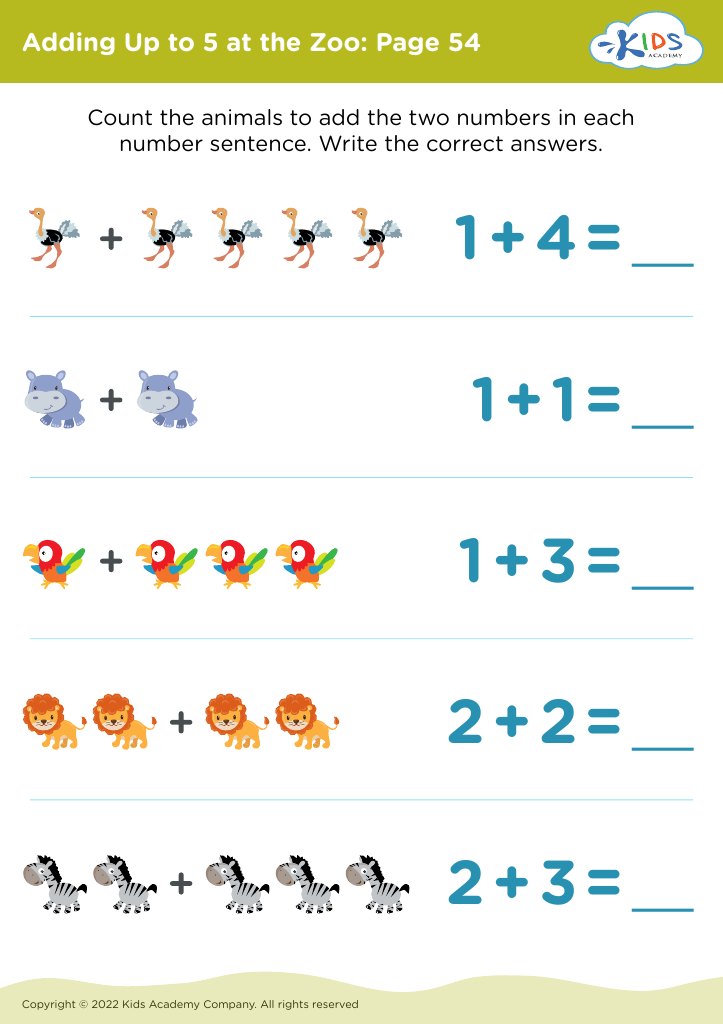
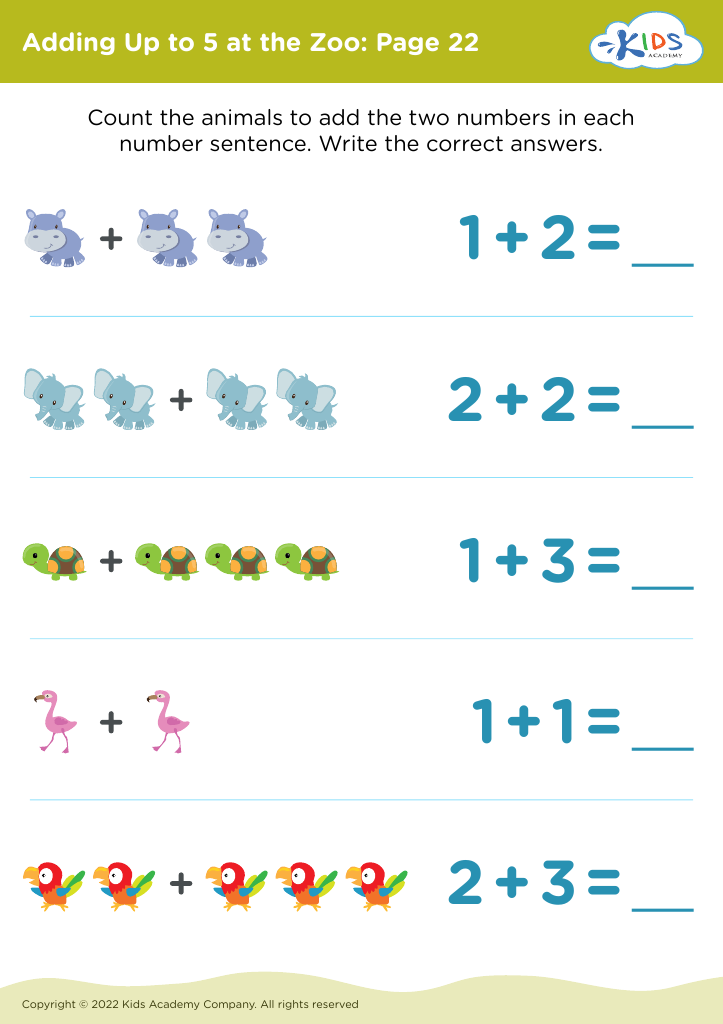
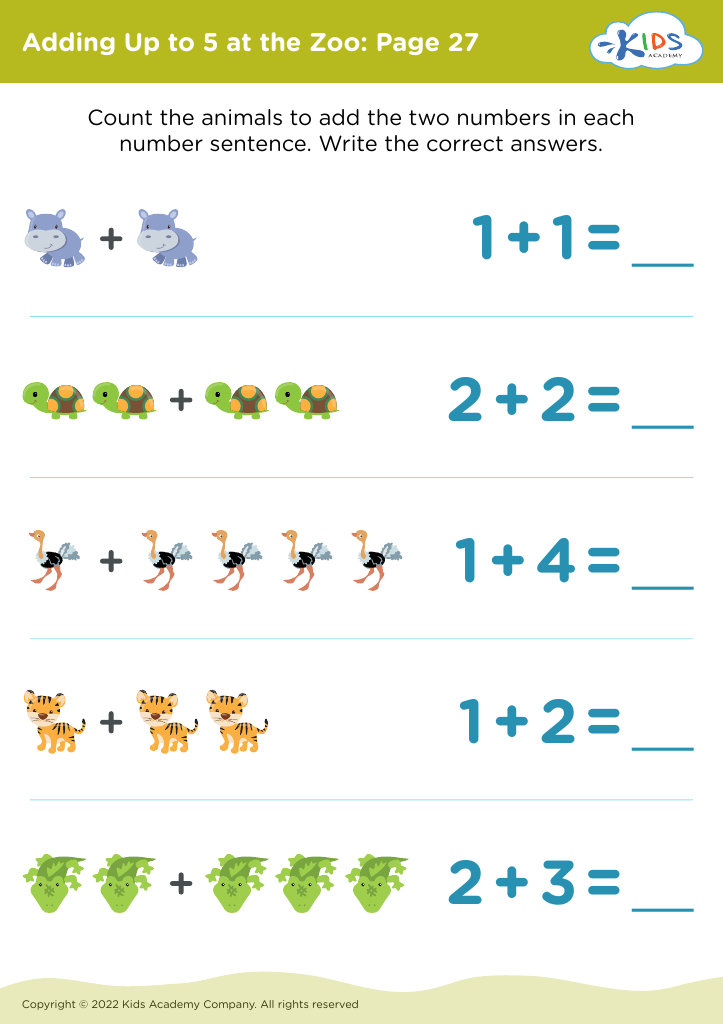
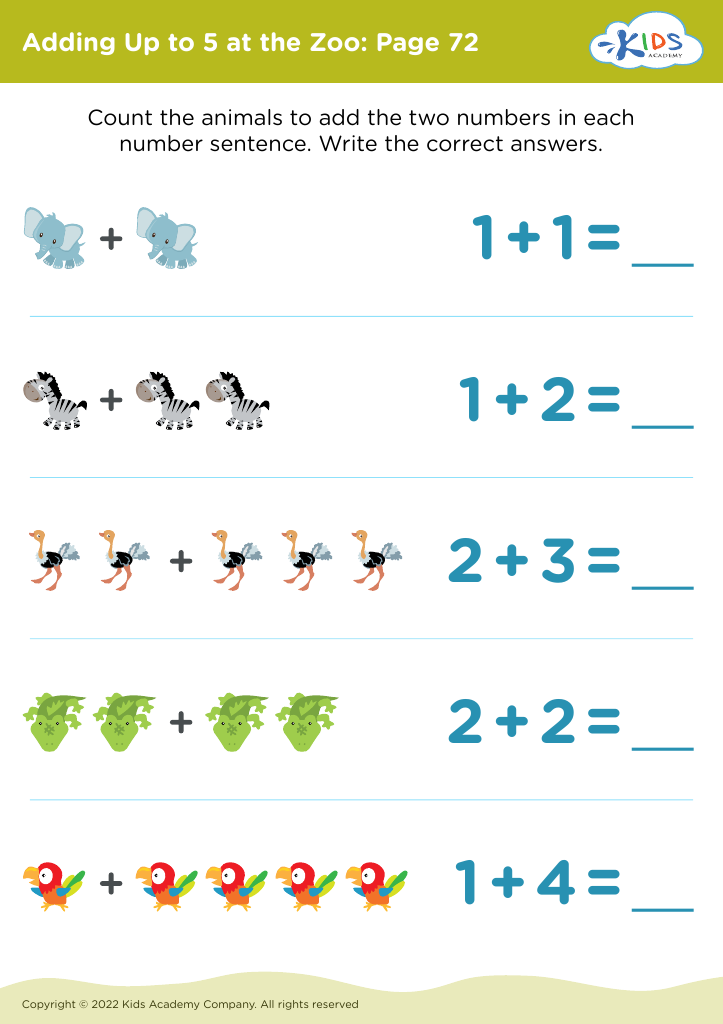
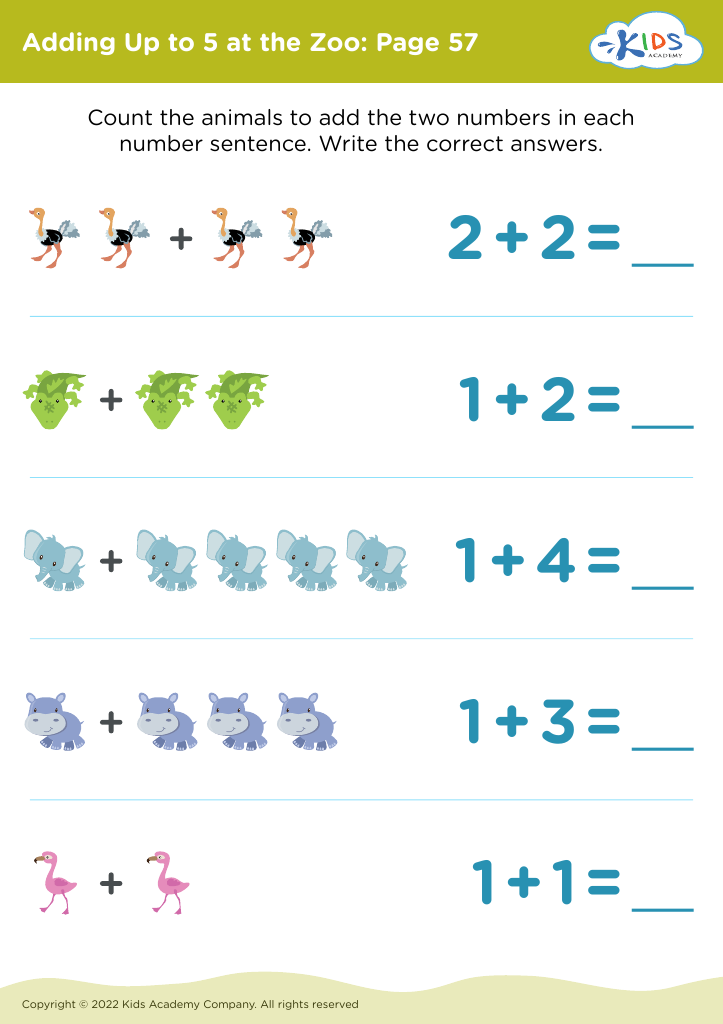
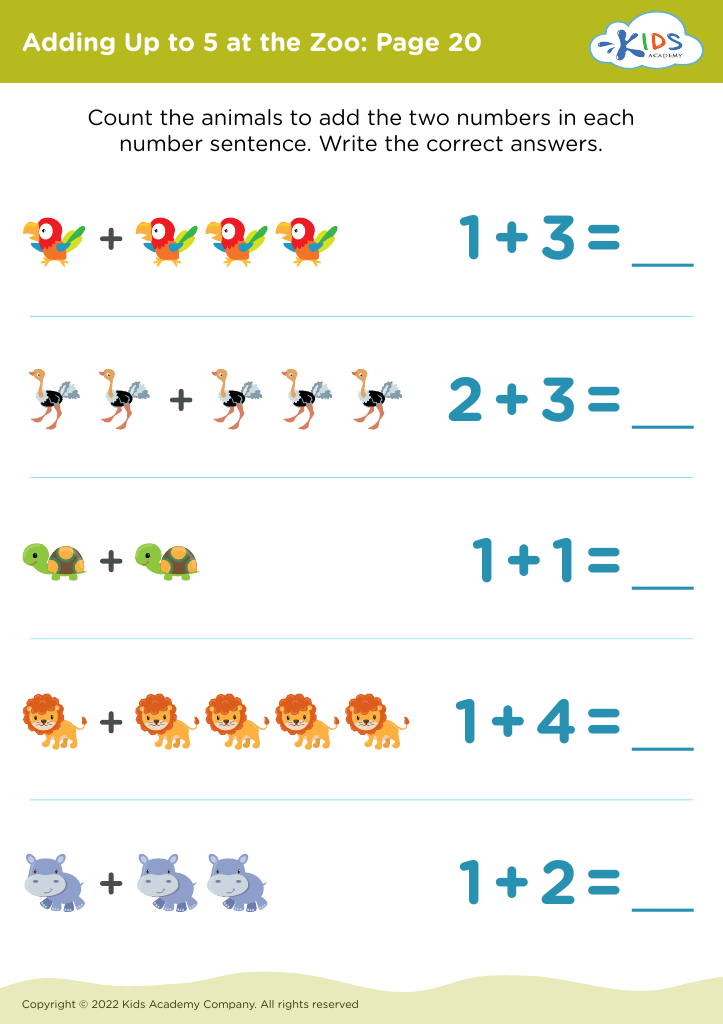
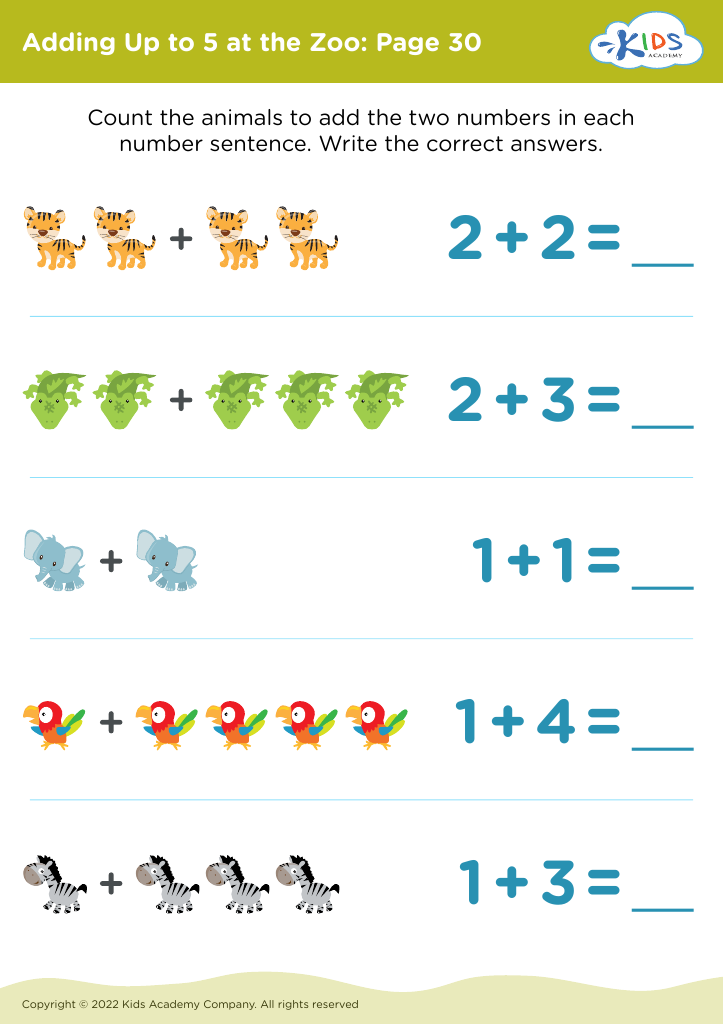
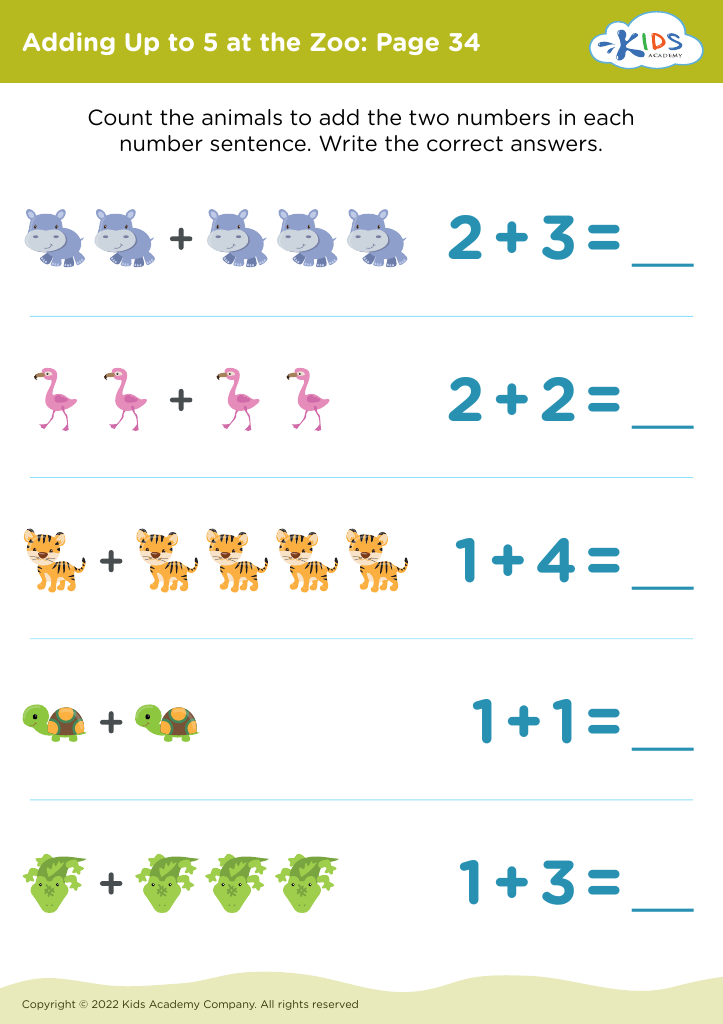
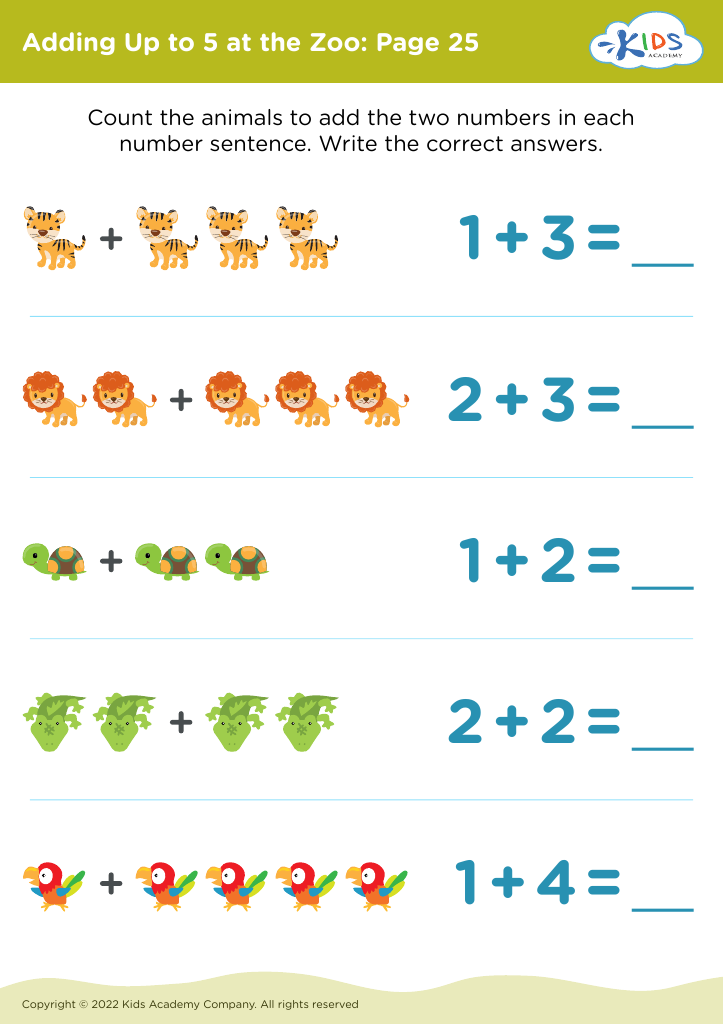
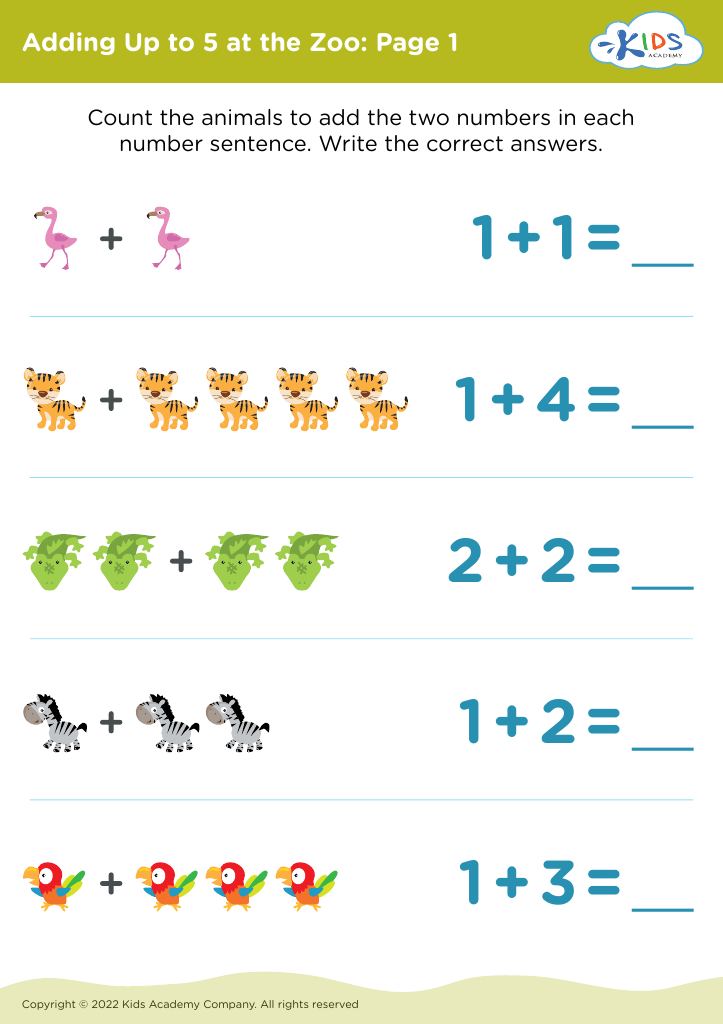
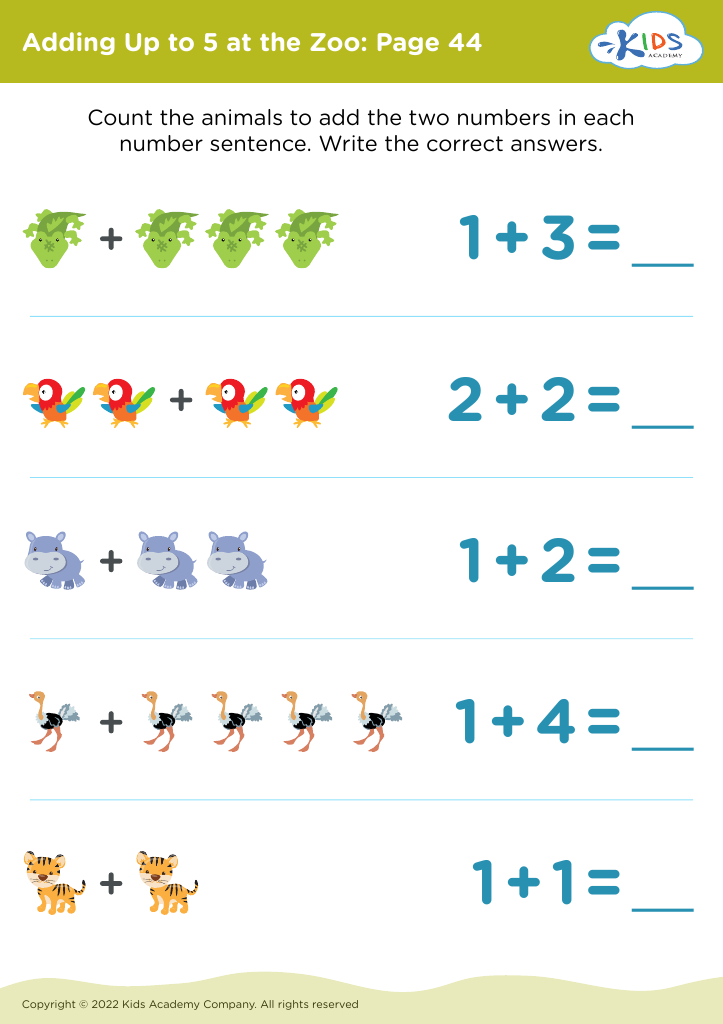
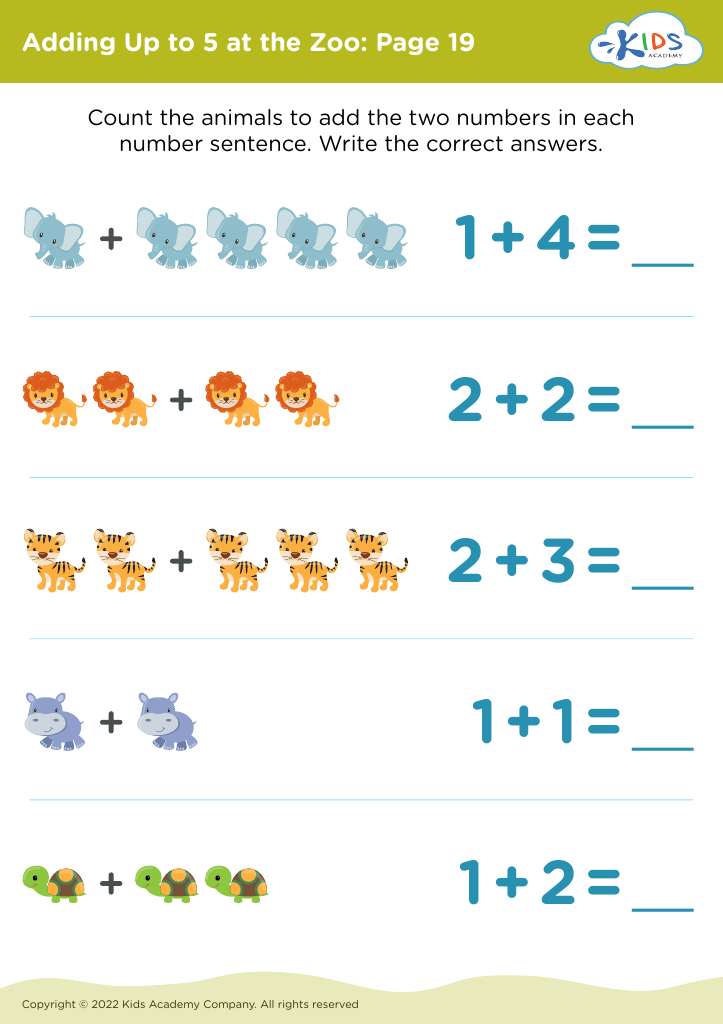
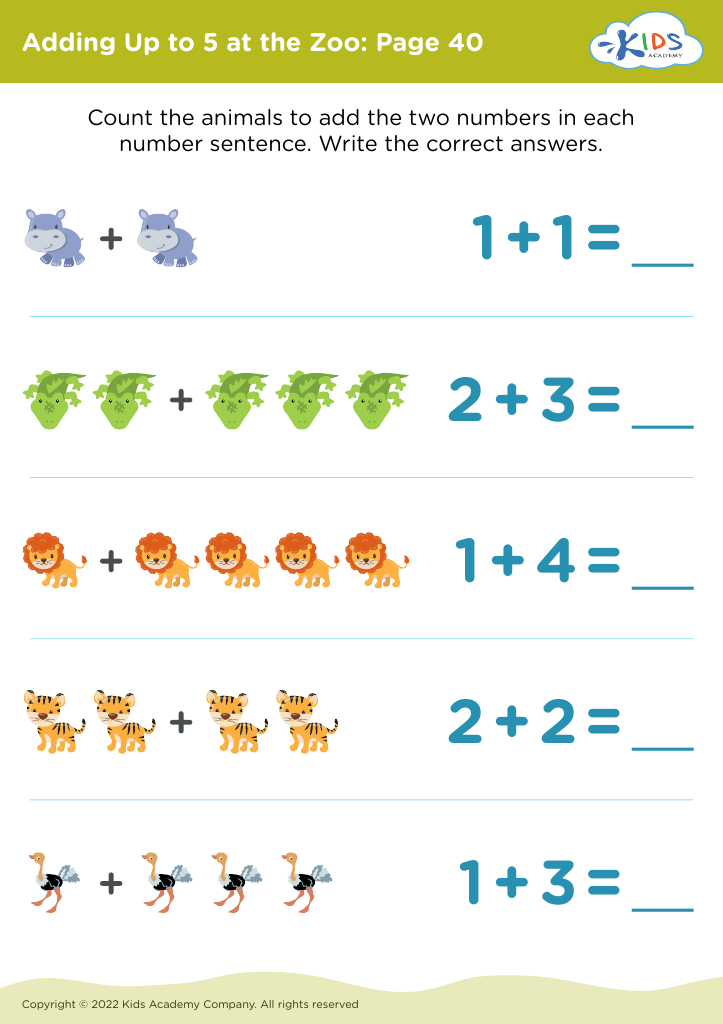
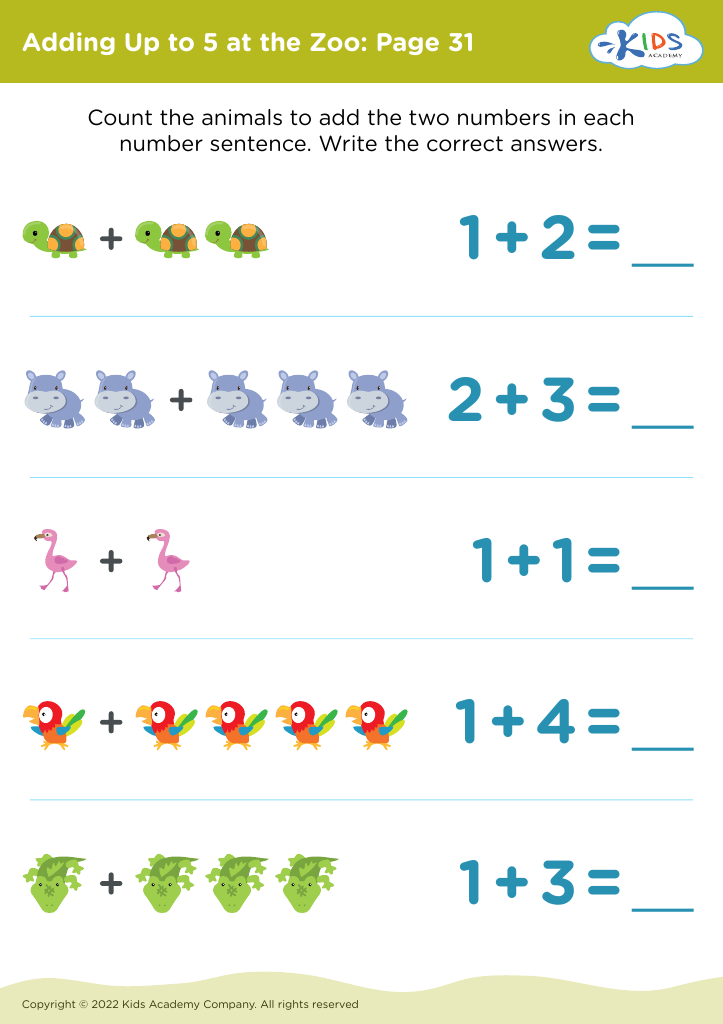
Enhance your child's cognitive development with our "Adding at the Zoo" worksheets designed specifically for 5-year-olds! These engaging and interactive worksheets combine the excitement of a zoo setting with essential math skills. Children will practice addition by counting animals, recognizing quantities, and solving fun problems. Each worksheet offers colorful illustrations that capture young learners' attention, promoting an enjoyable learning experience. These activities not only develop mathematical skills but also boost critical thinking, problem-solving, and fine motor skills. Perfect for home or classroom use, our worksheets foster a love of learning while preparing kids for future academic success!
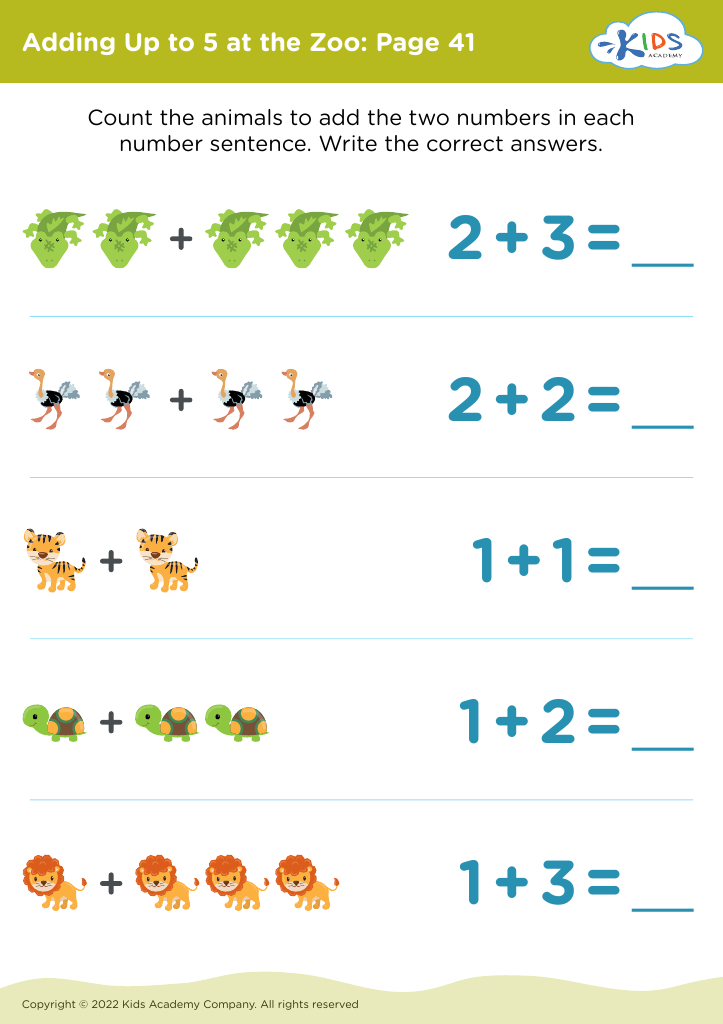
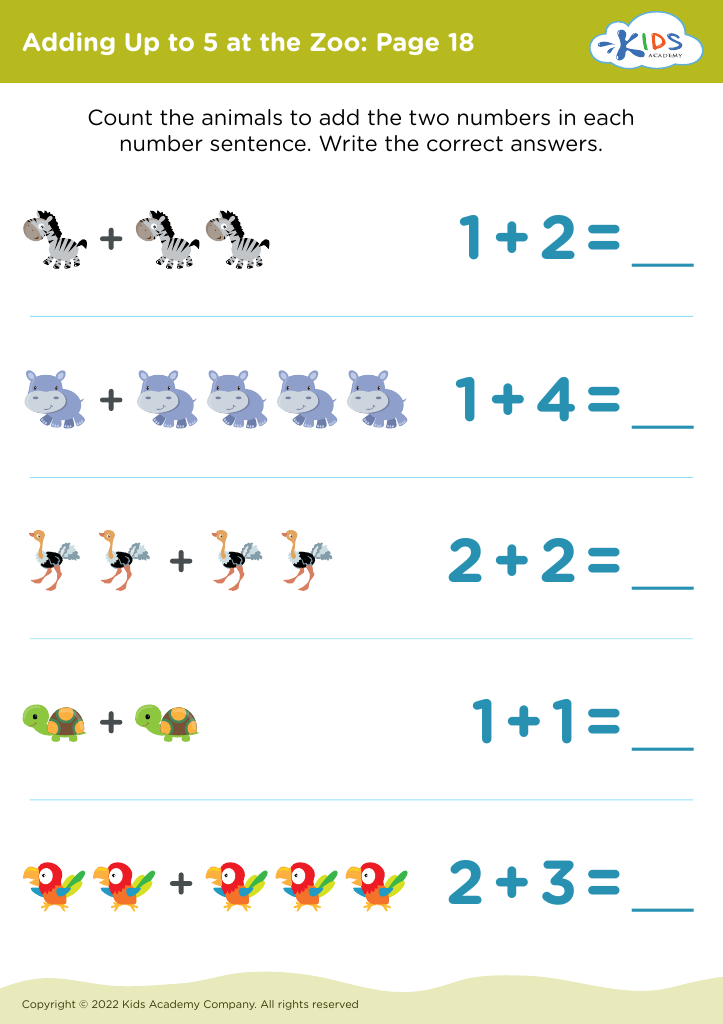
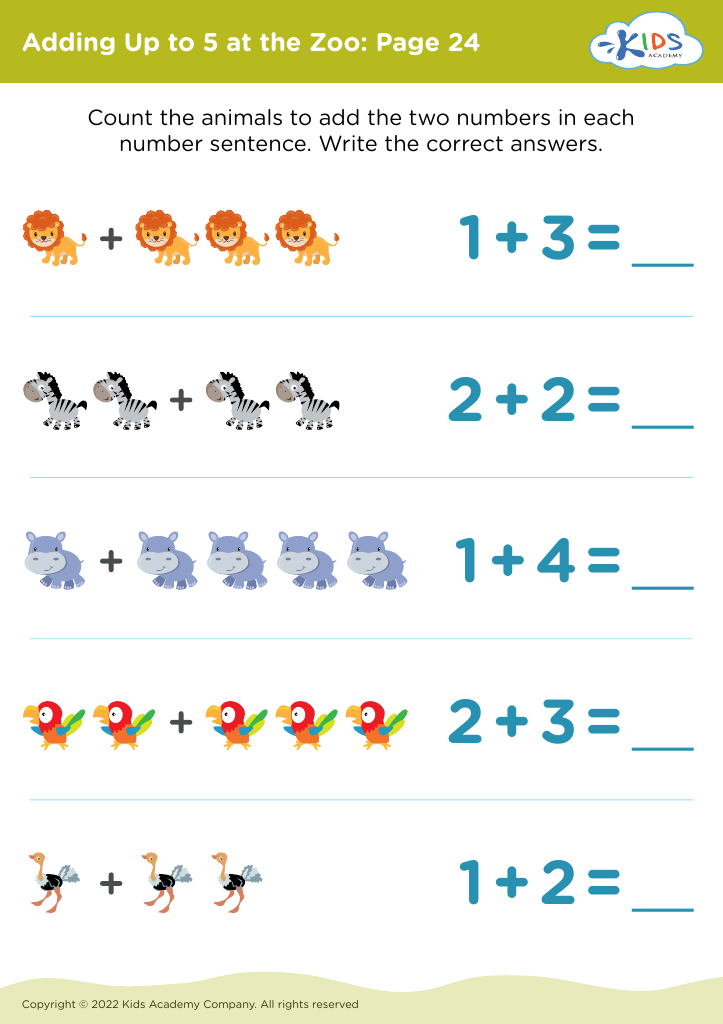
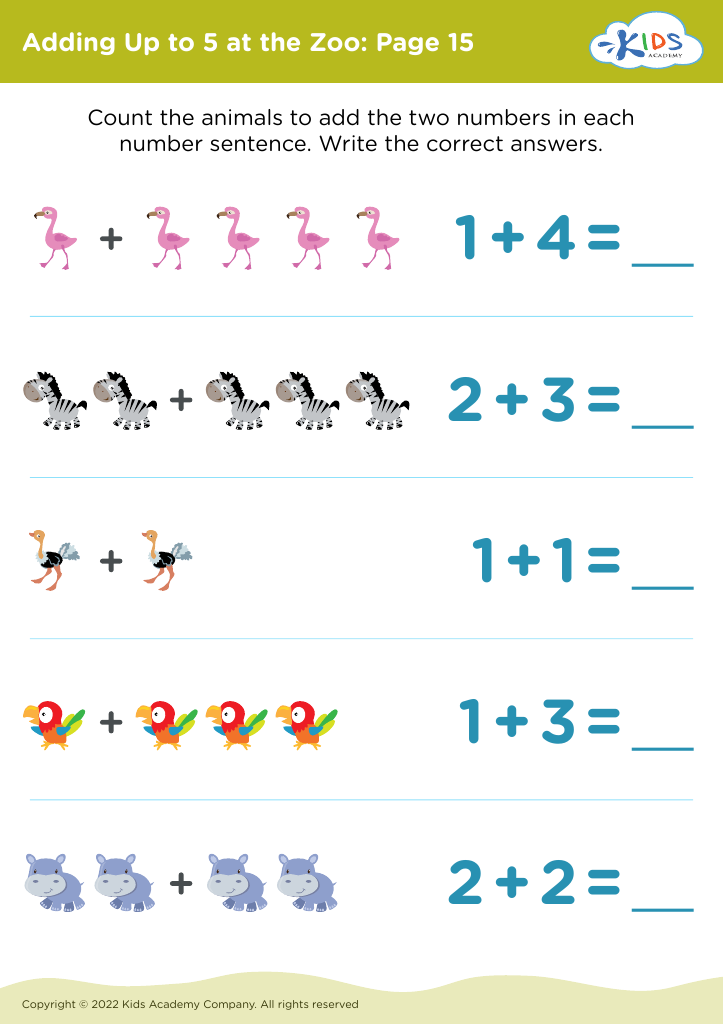



Parents and teachers should prioritize cognitive development in young children, particularly through engaging experiences like a trip to the zoo. At the age of five, children are in a critical stage of cognitive growth, characterized by curiosity and exploration. Activities at the zoo can significantly enhance their cognitive skills, such as observation, reasoning, and critical thinking.
While observing animals, children ask questions and formulate thoughts, which encourages language development and enhances vocabulary. They also practice counting, compare sizes and colors, and learn about social behaviors—stimulating essential math and science concepts. Moreover, discussions about habitats, diets, and conservation efforts foster an understanding of interdependence and environmental responsibility.
Zoo visits promote experiential learning, a method proven to boost memory retention. The sensory experience of seeing, hearing, and sometimes even touching animals provides concrete examples that help solidify abstract concepts. Furthermore, engaging in group activities during the visit can strengthen social skills, teamwork, and emotional understanding.
Incorporating such rich, hands-on learning experiences fosters a mindset of inquiry and exploration in children, setting a robust foundation for lifelong learning. Therefore, investing time in cognitive development activities like zoo visits creates lasting educational benefits for children.