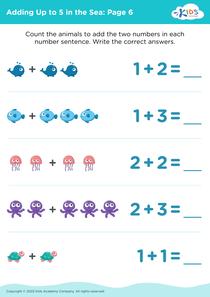
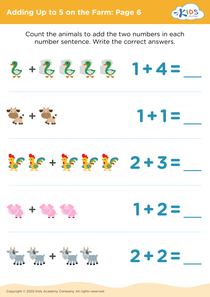
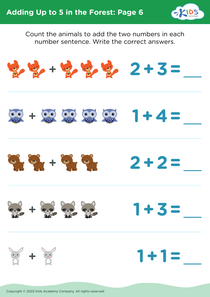
Hand-eye Coordination Adding at the Zoo Worksheets for 5-Year-Olds
3 filtered results
-
From - To
Welcome to our "Hand-eye Coordination Adding at the Zoo" worksheets, specifically designed for 5-year-olds! These engaging worksheets combine the excitement of a zoo adventure with essential math skills. Through colorful illustrations of various animals, your child will enhance their hand-eye coordination while practicing addition. Each activity encourages fine motor skills as children connect, trace, and count their way through fun problems. These worksheets not only make learning math enjoyable but also spark curiosity about wildlife. Perfect for home or classroom use, they provide a playful approach to math, ensuring your little ones build a solid foundation for future learning. Join the fun today!
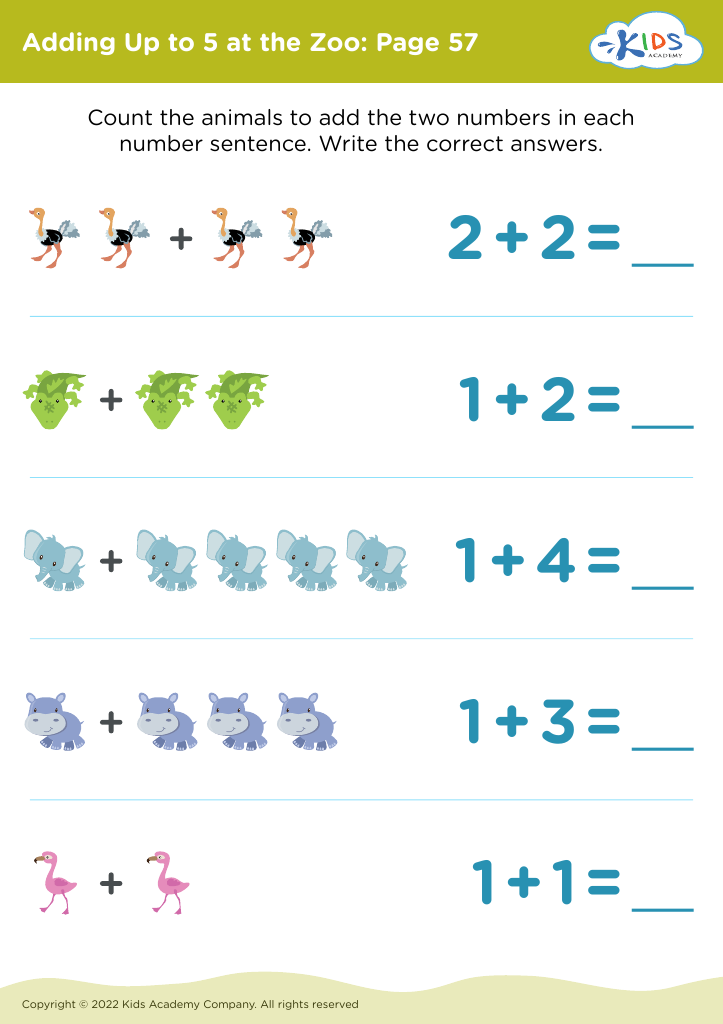
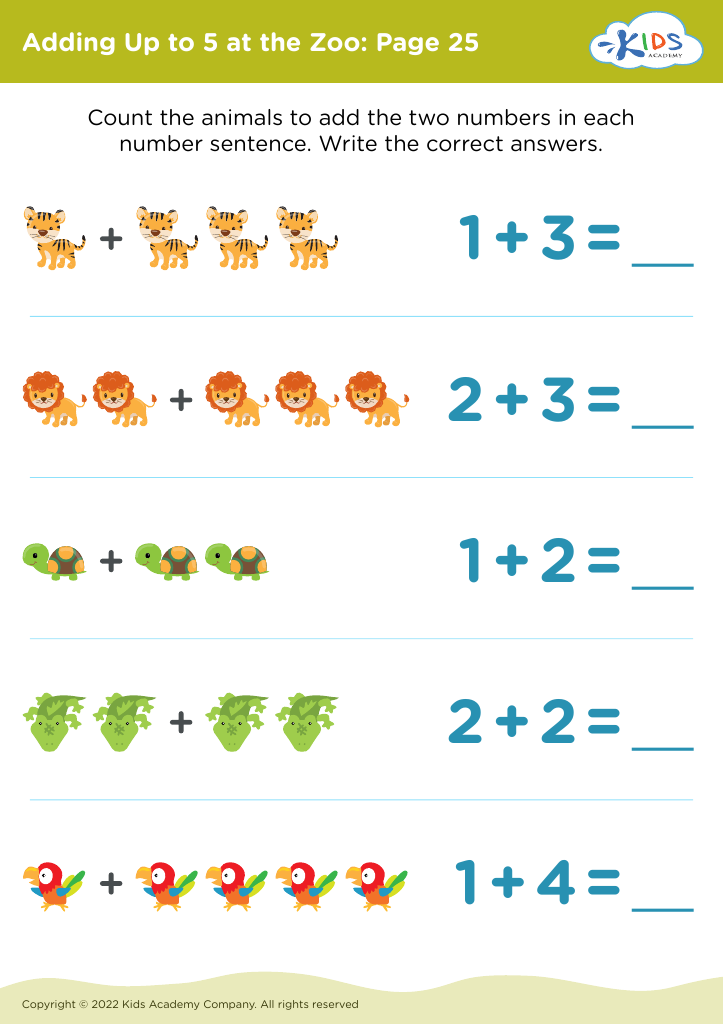
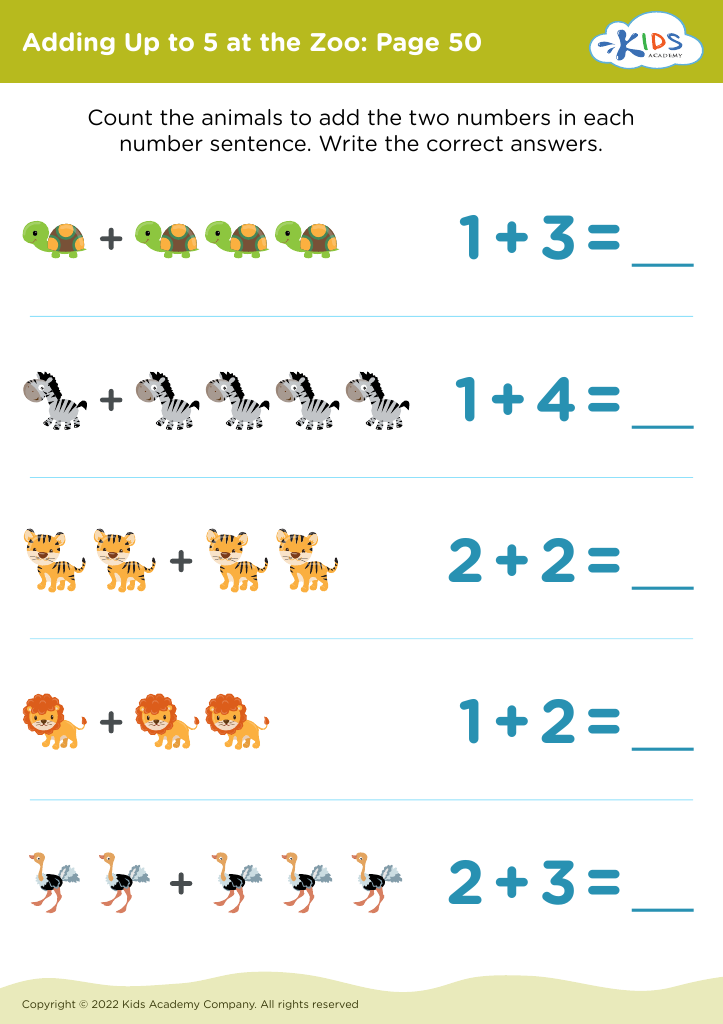



Hand-eye coordination is a crucial skill for young children, as it impacts their overall development, learning, and daily functioning. Engaging in activities like "Hand-eye Coordination Adding at the Zoo" can be especially beneficial for 5-year-olds for several reasons.
First, such activities promote essential motor skills. Children learn how to coordinate their hand movements with what they see, which is fundamental for writing, drawing, and participating in sports. By using fun themes like the zoo, lessons become enjoyable and relatable, keeping children motivated and focused.
Additionally, integrating hand-eye coordination with basic math skills, like addition, fosters cognitive development. It helps children grasp early math concepts by linking physical activities with numbers, making abstract ideas more tangible. Through this engaging context, they develop problem-solving skills as they figure out how to combine different animal counts.
Finally, these activities encourage social interactions among peers, teaching cooperation and sharing while enhancing communication and teamwork. This holistic approach not only nurtures fine motor skills and numerical understanding but also bolsters social-emotional growth. For parents and teachers, supporting play-based learning strategies like these can lay a strong foundation for lifelong learning while ensuring children enjoy their educational journey.