Problem Solving Adding at the Zoo Worksheets for 5-Year-Olds
3 filtered results
-
From - To
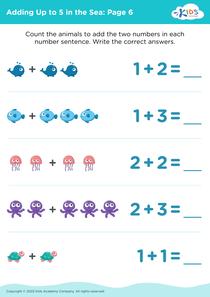
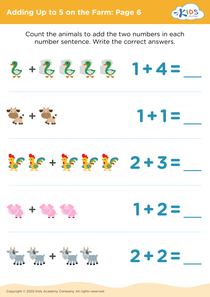
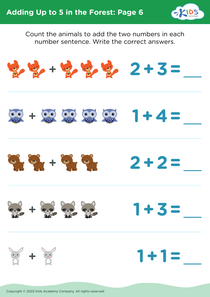
Engage your 5-year-olds with our "Problem Solving Adding at the Zoo" worksheets! Designed to blend math and fun, these interactive activities allow young learners to develop essential addition skills through captivating zoo-themed challenges. Children will solve problems by counting animals, creating visual connections, and applying their math knowledge in a natural context. These worksheets encourage critical thinking while making learning enjoyable. Ideal for preschool and kindergarten settings, each exercise is tailored to suit early learners, fostering a love for math as they explore the wonders of the zoo! Download now and watch your little ones thrive in problem-solving!
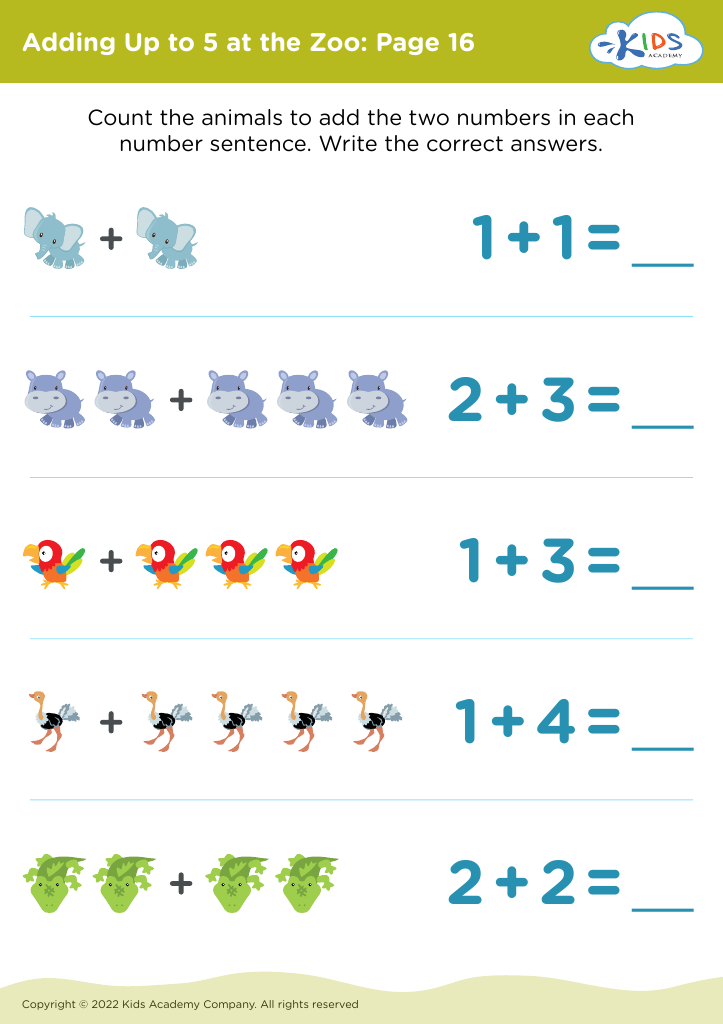
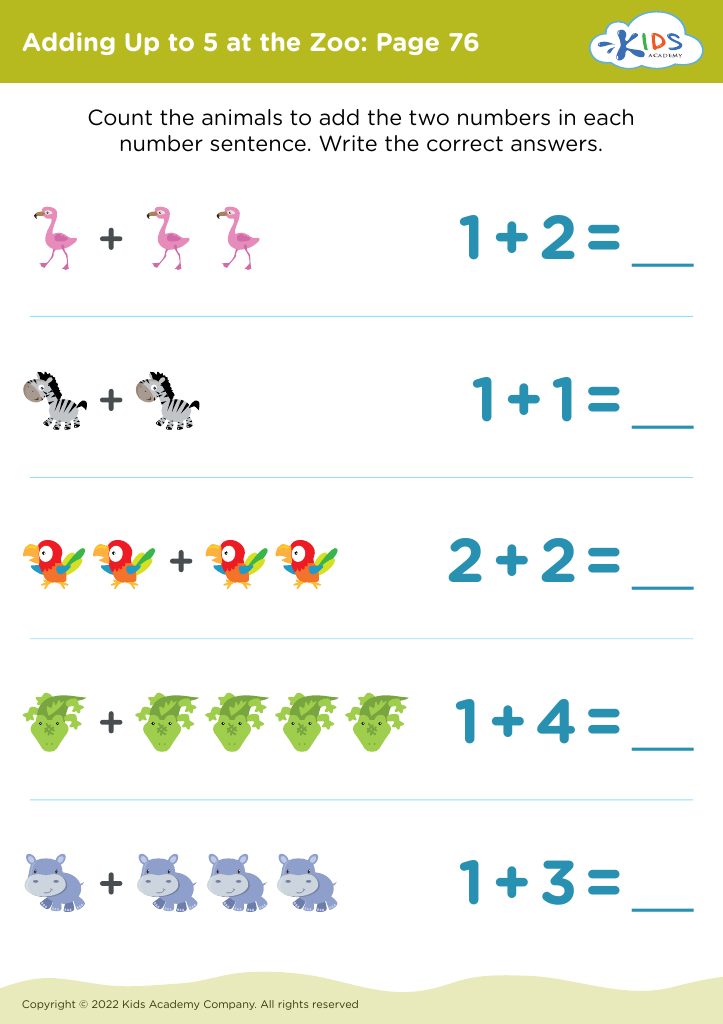
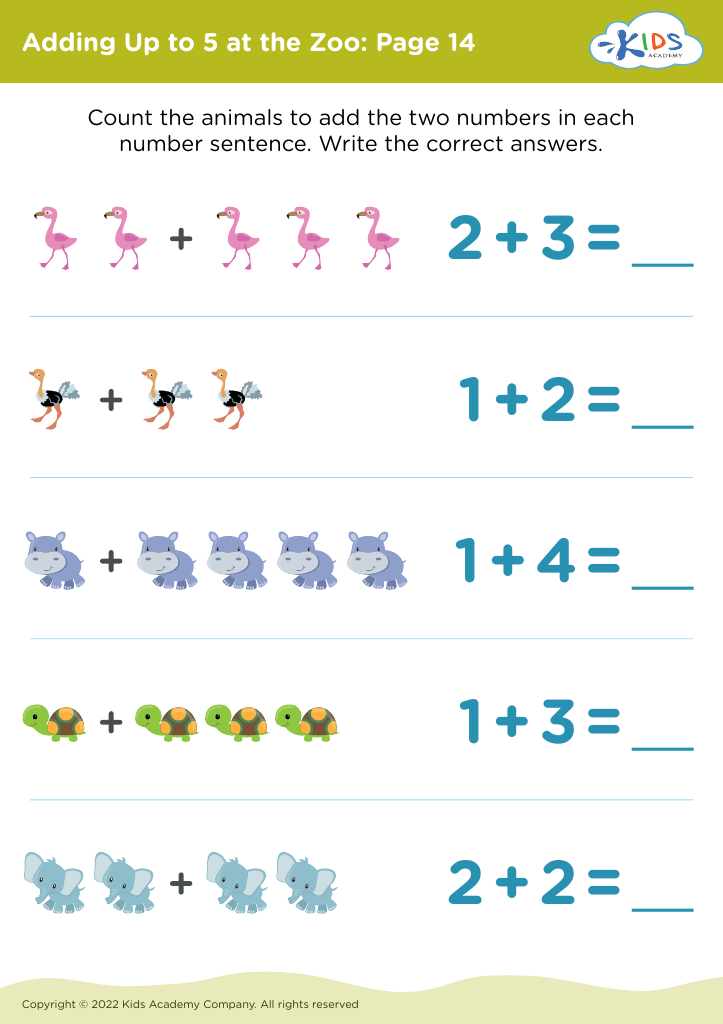



Problem Solving Adding at the Zoo is an excellent educational activity for 5-year-olds, blending learning with excitement and engagement. Parents and teachers should care about this approach for several reasons. First, it nurtures critical thinking skills by introducing young learners to real-world scenarios. For instance, asking children how many animals are at the zoo if there are 5 lions and 3 tigers encourages them to use addition in a playful context, making math relatable and fun.
Second, this activity supports social skills development. While exploring problem-solving at the zoo, children often work in groups, fostering collaboration, communication, and teamwork. These interactions not only enhance their social skills but also build confidence in expressing their thoughts.
Additionally, incorporating themes like animals and zoos captures children's natural curiosity and interest, making the learning process enjoyable. This approach can strengthen their love for learning, instilling a positive attitude toward future educational experiences.
Finally, engaging with practical math problems enhances cognitive development. Skills acquired during playful learning experiences set the groundwork for more complex mathematics and critical reasoning skills in later education. In essence, Problem Solving Adding at the Zoo is valuable for fostering a well-rounded educational foundation.