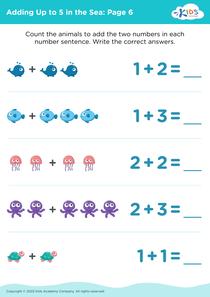
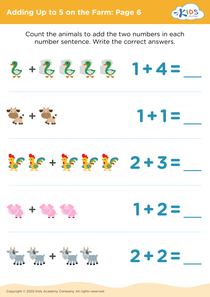
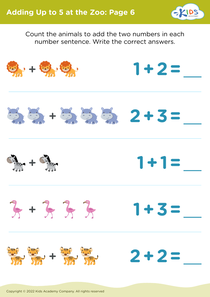
Nature awareness Adding in the Forest Worksheets for 5-Year-Olds
8 filtered results
-
From - To
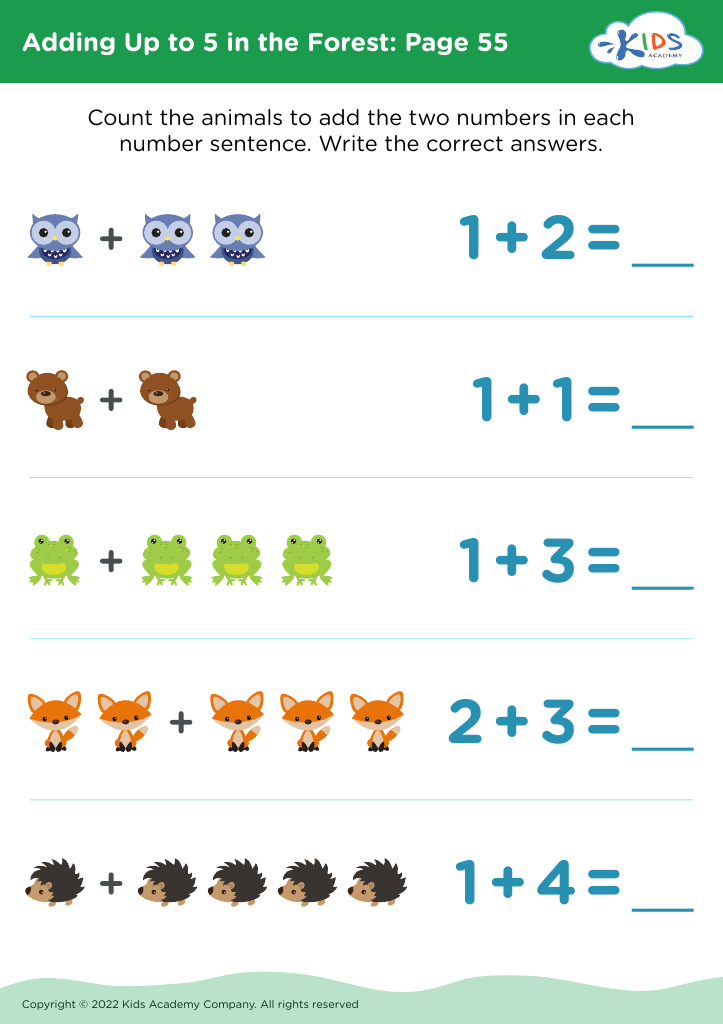
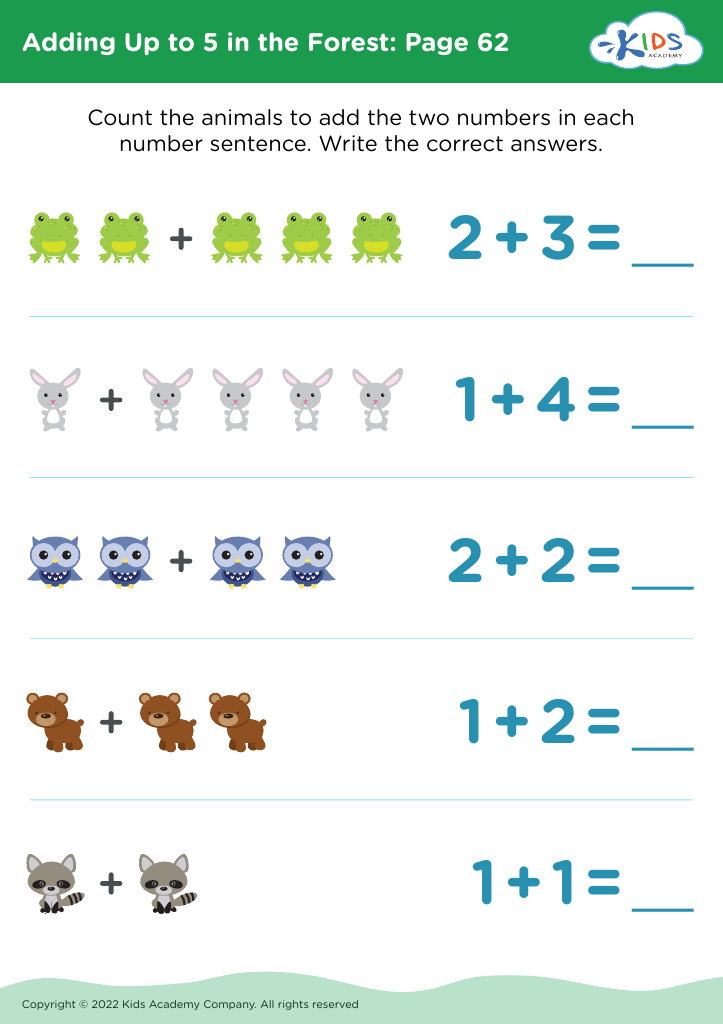
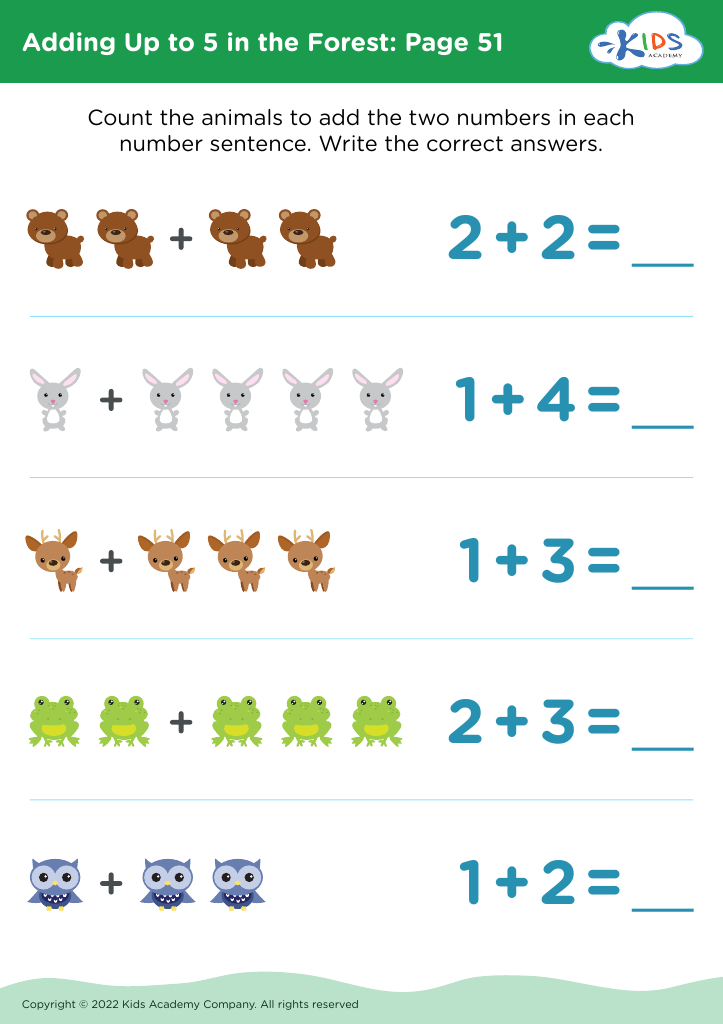
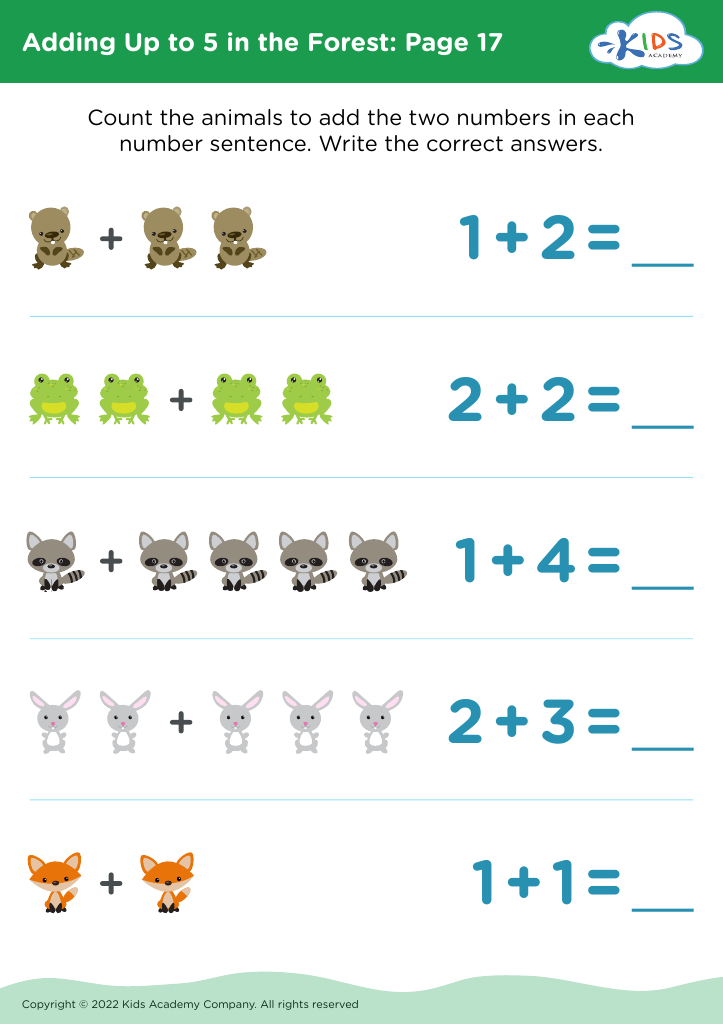
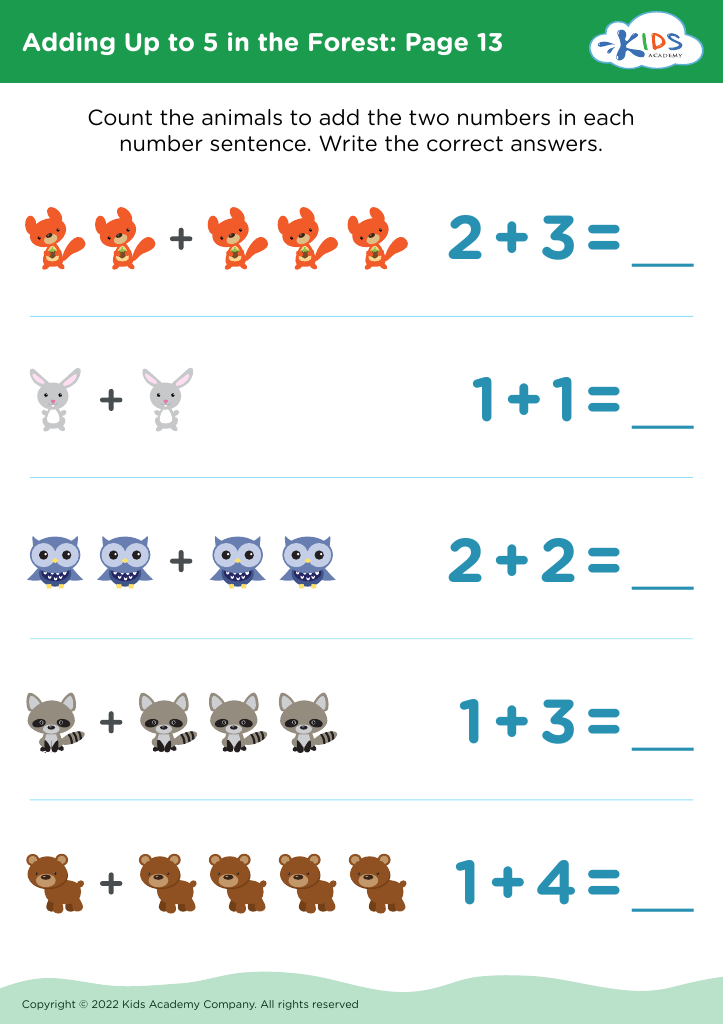
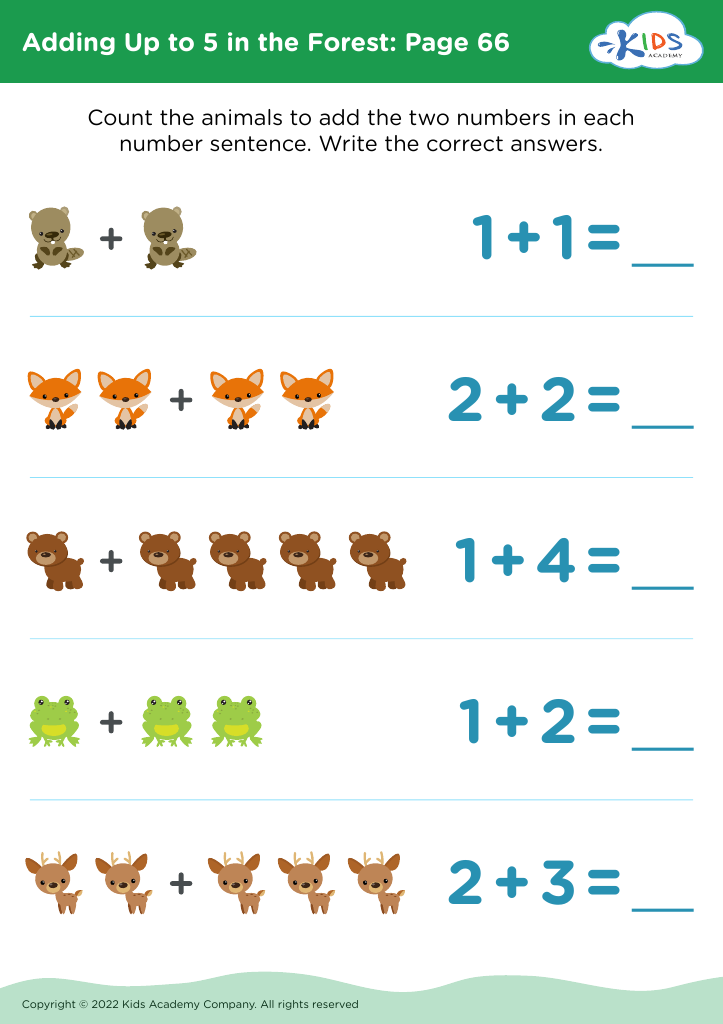
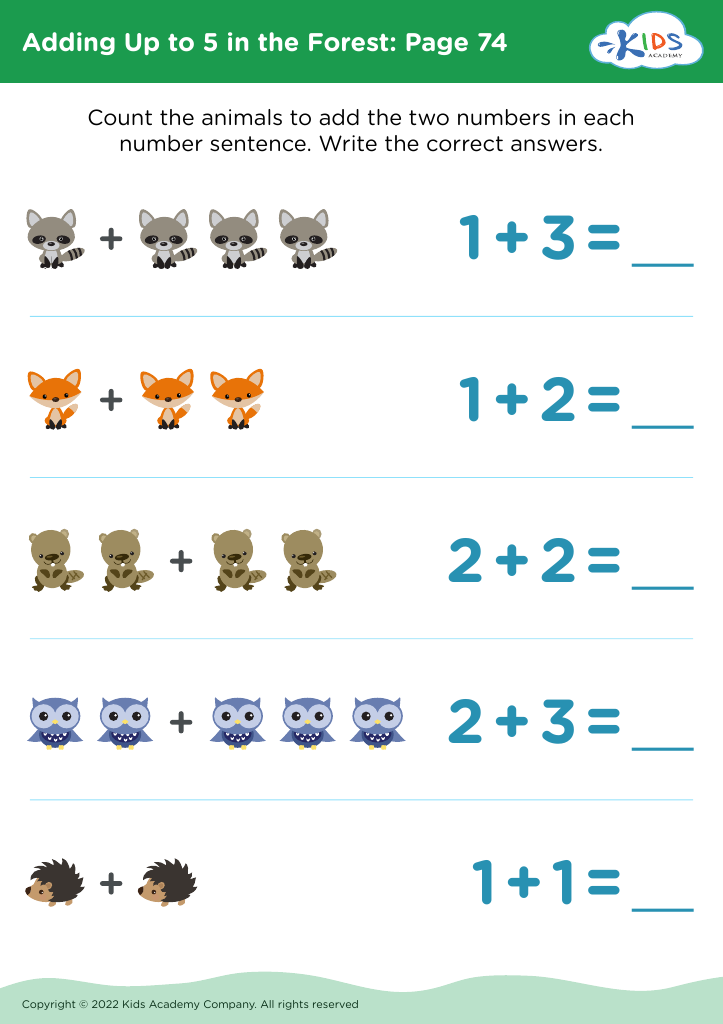
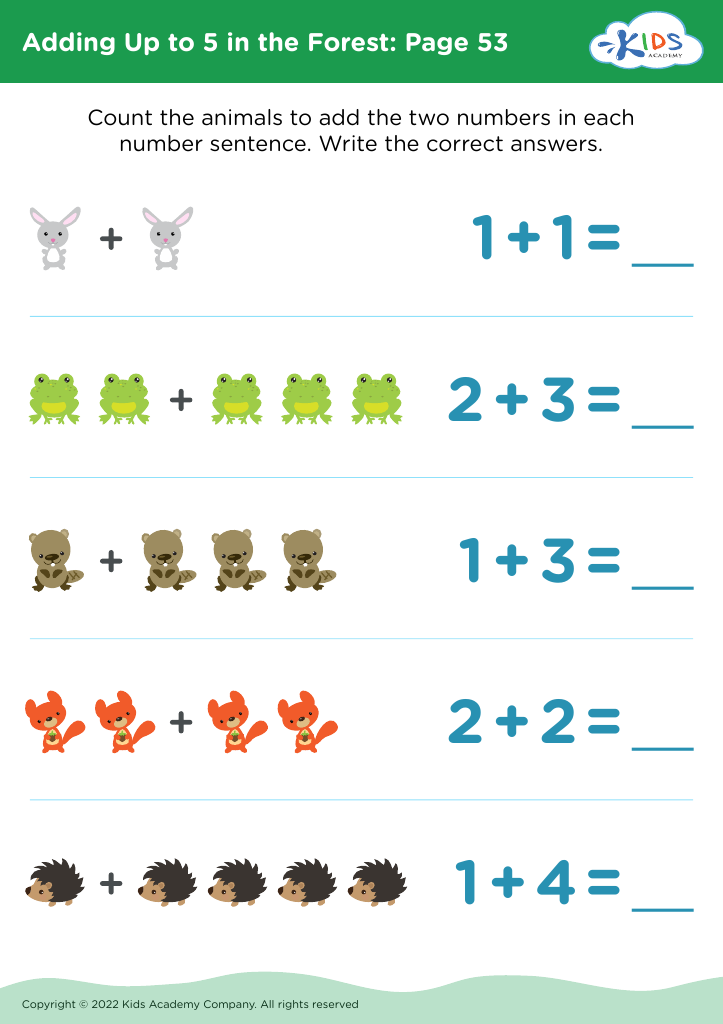
Discover the perfect blend of math and nature with our "Nature Awareness Adding in the Forest Worksheets for 5-Year-Olds". These engaging and educational worksheets are designed to teach kids fundamental addition skills while fostering a love for nature. By featuring captivating forest-themed illustrations and interactive activities, children will learn to appreciate the natural world around them. As they count and add forest animals, plants, and other natural elements, they'll also develop early math skills and a deeper understanding of the environment. Make learning fun and meaningful with our nature-centered math worksheets tailored for young minds!



Nature awareness at an early age, especially in settings like forests, is crucial for a child's holistic development. At age 5, children are exceptionally curious, and exploring the natural world provides them rich, sensory experiences that enhance their learning. Nature allows kids to engage their senses—hearing birds, touching leaves, seeing diverse colors, and smelling fresh air—which can foster observation skills and curiosity.
Moreover, spending time in nature has significant health benefits. Studies show improved mood, reduced stress levels, and lower incidences of hyperactivity among children who play outside regularly. Physical activity in forest environments also promotes motor skills, coordination, and overall physical fitness.
Social benefits are another compelling reason. Group activities in natural settings encourage cooperation, teamwork, communication, and empathy as children interact with each other in unstructured play. They learn to solve problems, share resources, and appreciate different perspectives, laying a foundation for strong social abilities.
Nature awareness also instills a sense of stewardship towards the environment. When children love and understand nature, they grow up wanting to protect it. Instilling these values early can lead to environmentally conscious adults who are equipped to advocate for the planet. Therefore, both parents and teachers have much to gain by encouraging young children to explore and appreciate nature through experiences like forest outings.