Filters

70 filtered results

Clear all filters
Favorites
With answer key
Interactive

70 filtered results

Difficulty Level

Grade


Check out this FREE Trial Lesson on Adding in the Forest for age 5!

Z

Favorites
With answer key
Interactive
  • 5
  • Number Recognition
  • Adding in the Forest
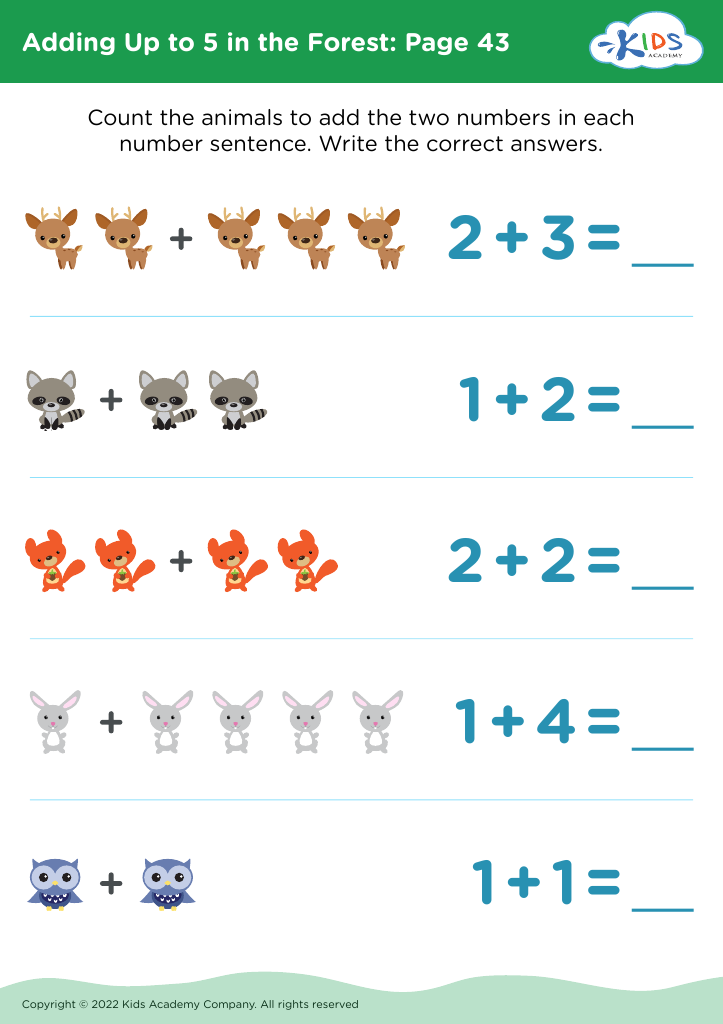
Adding Up to 5 in the Forest: Page 43
Worksheet
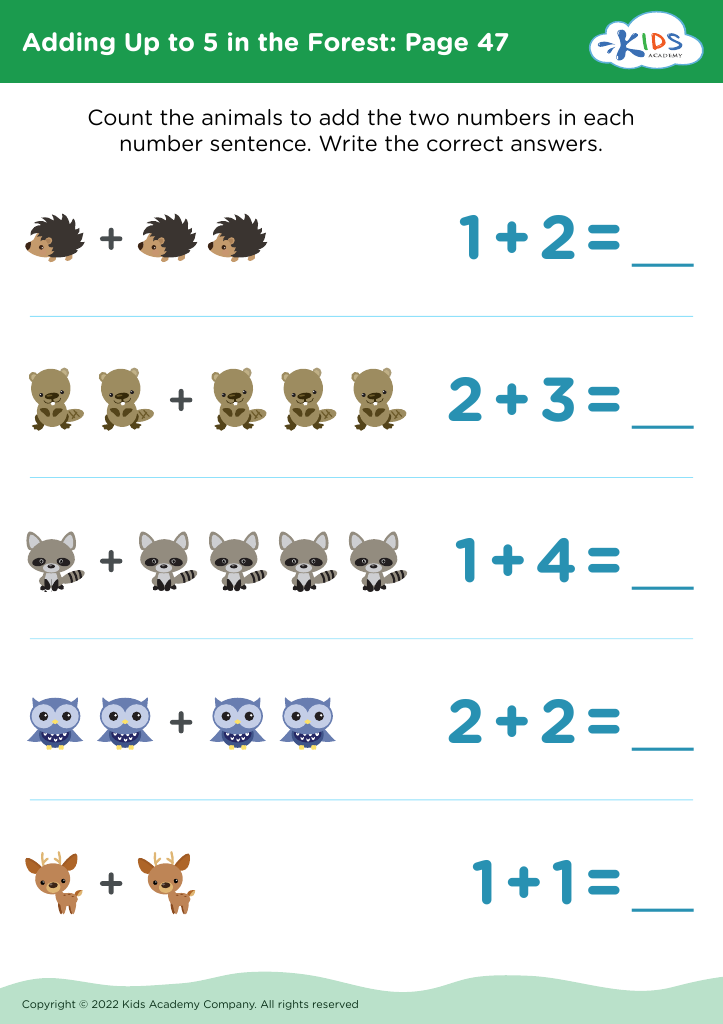
Adding Up to 5 in the Forest: Page 47
Worksheet
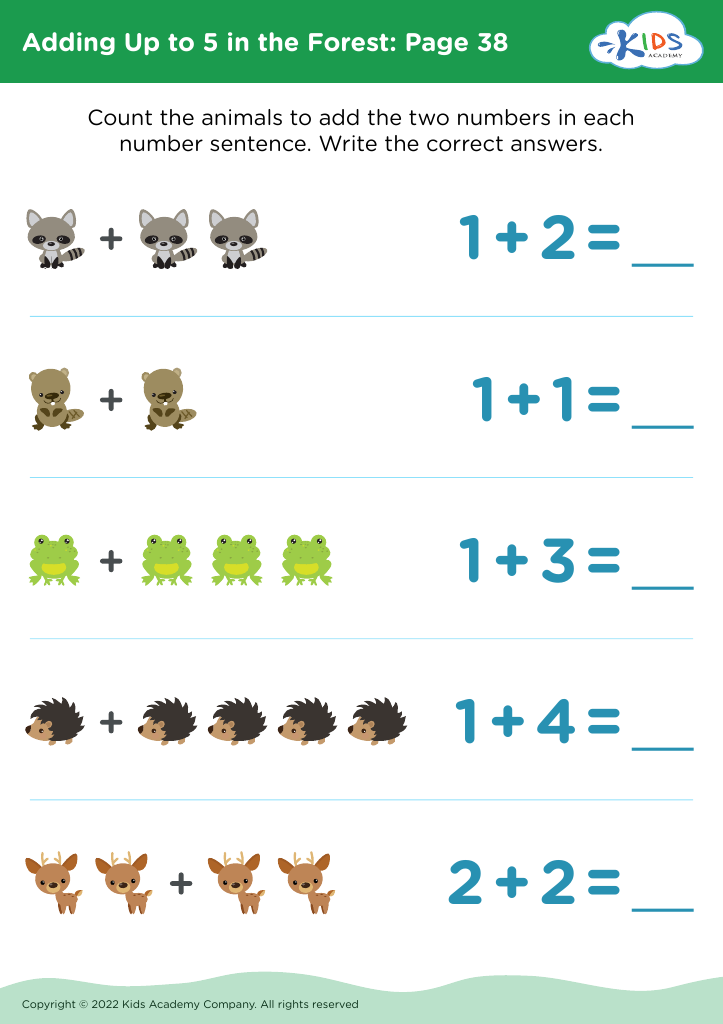
Adding Up to 5 in the Forest: Page 38
Worksheet
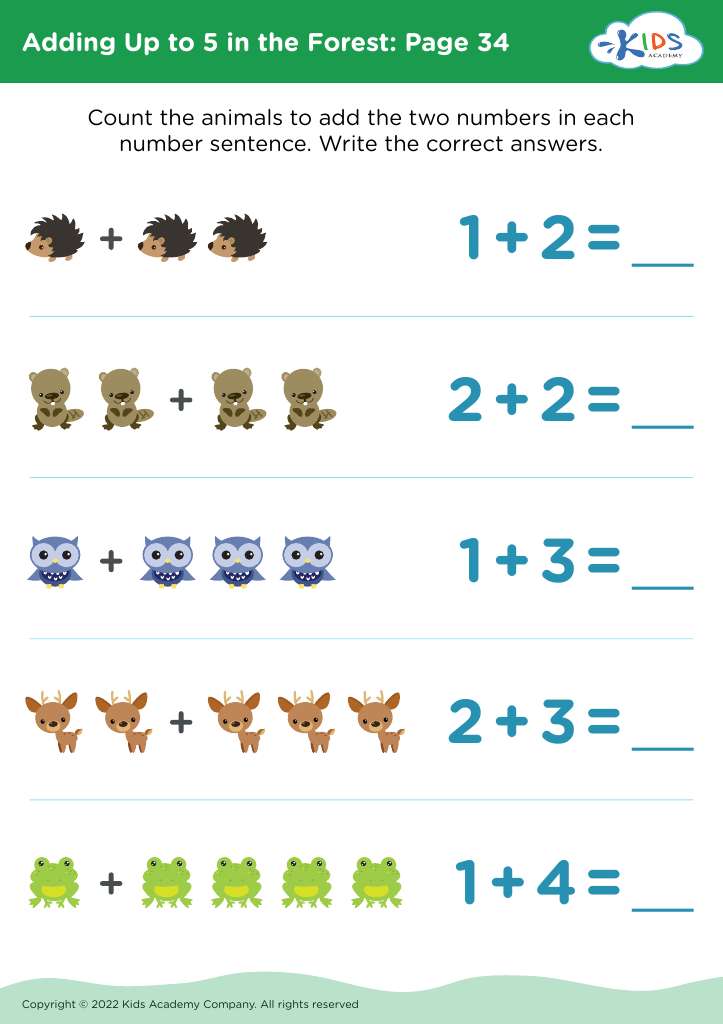
Adding Up to 5 in the Forest: Page 34
Worksheet
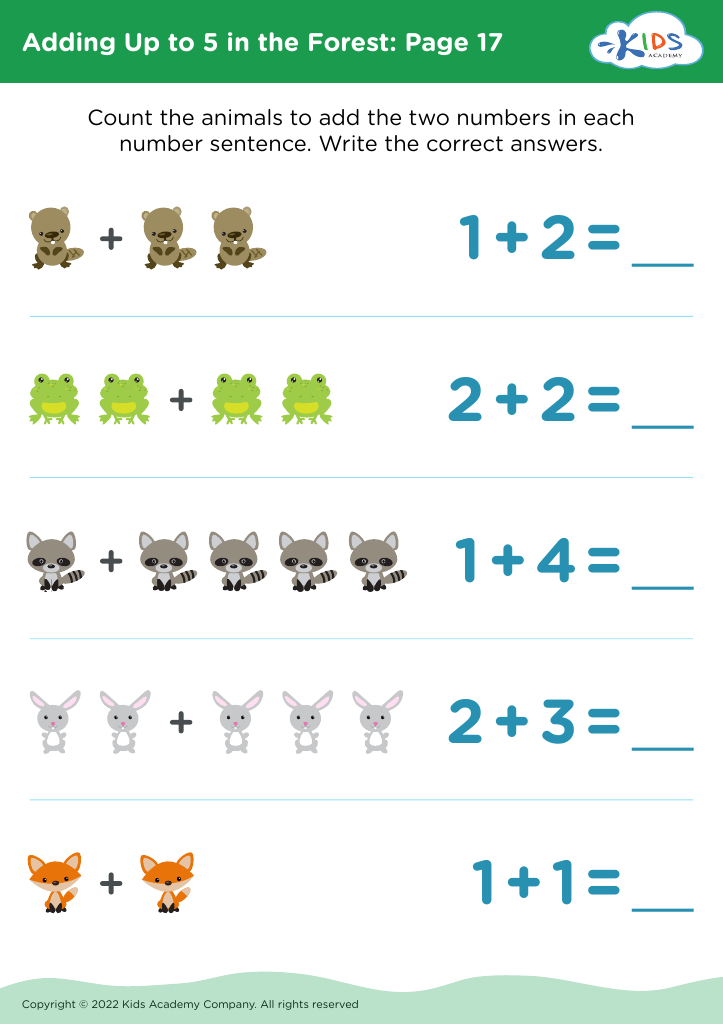
Adding Up to 5 in the Forest: Page 17
Worksheet
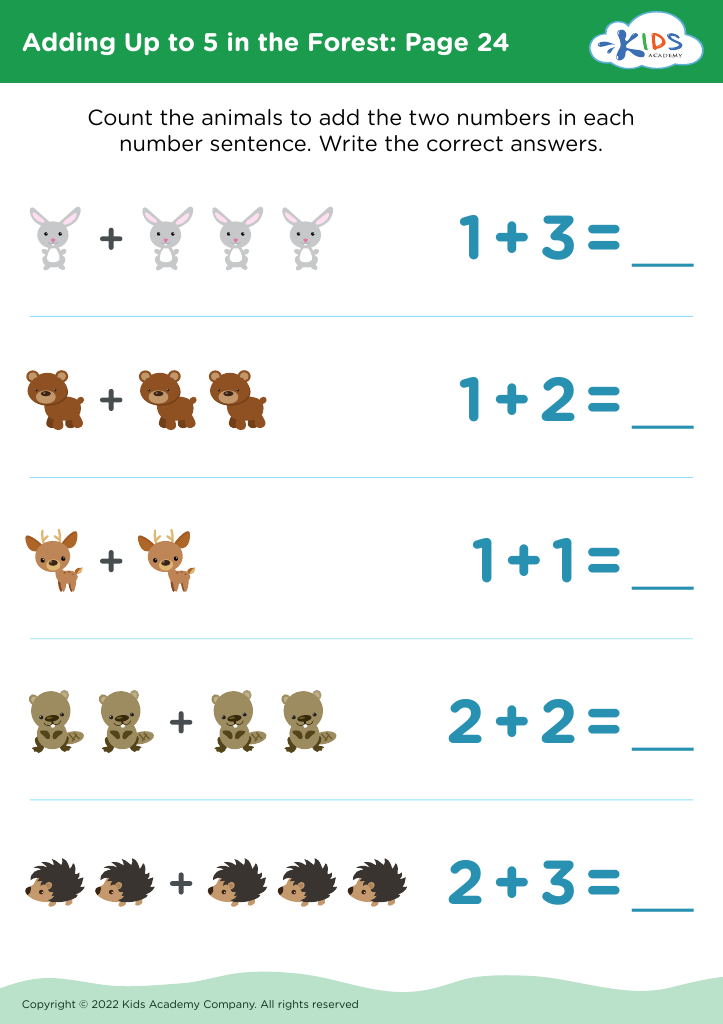
Adding Up to 5 in the Forest: Page 24
Worksheet
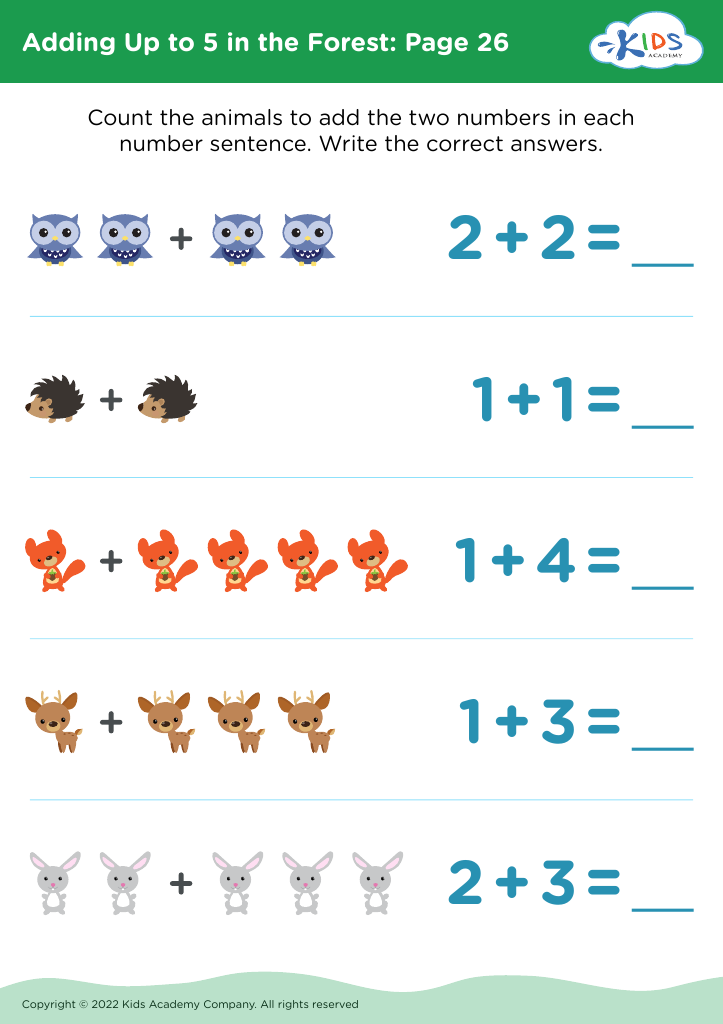
Adding Up to 5 in the Forest: Page 26
Worksheet
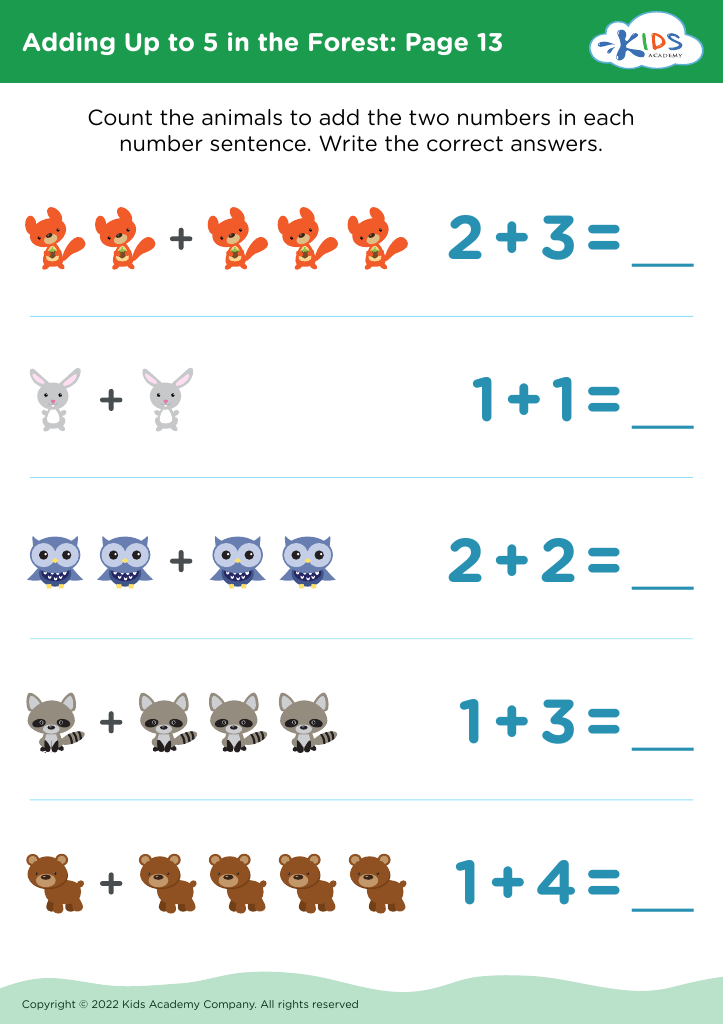
Adding Up to 5 in the Forest: Page 13
Worksheet
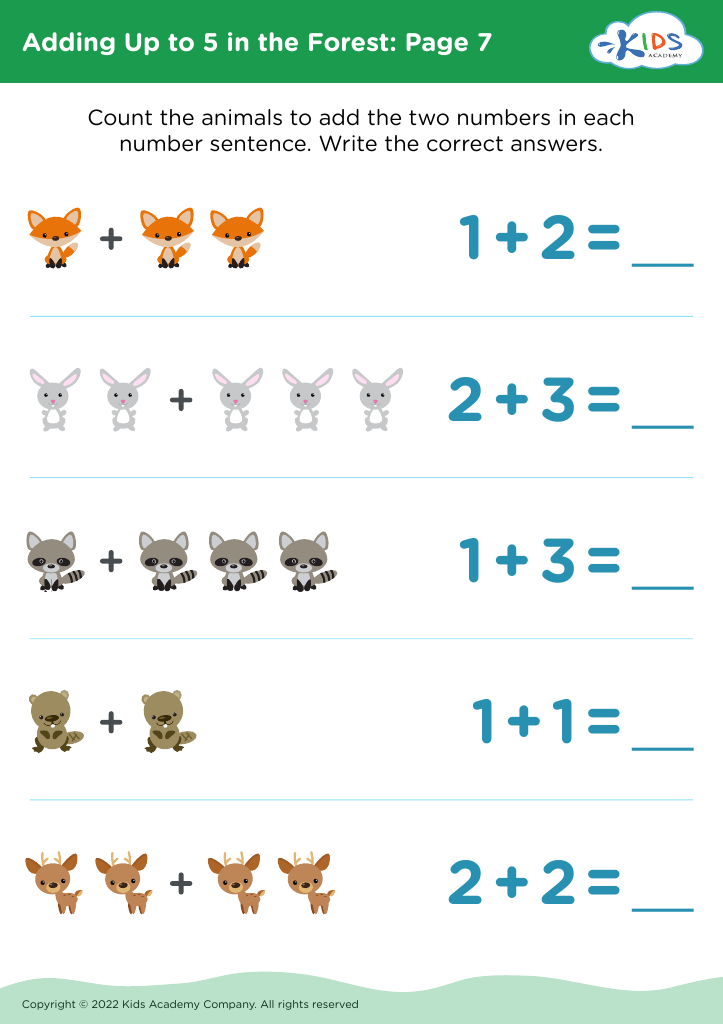
Adding Up to 5 in the Forest: Page 7
Worksheet
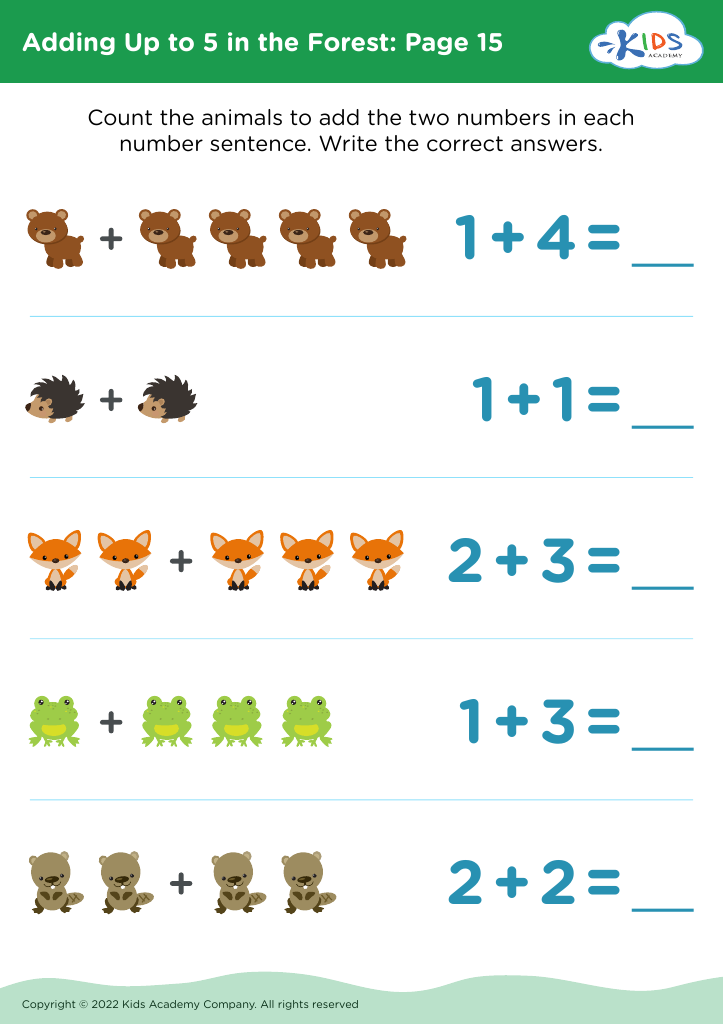
Adding Up to 5 in the Forest: Page 15
Worksheet
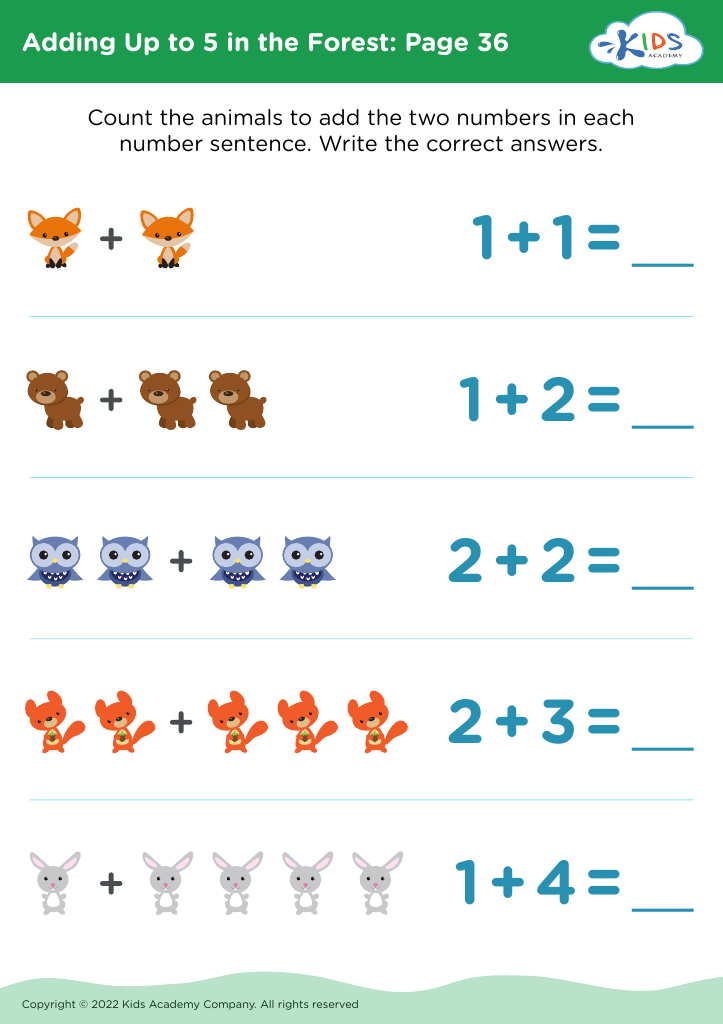
Adding Up to 5 in the Forest: Page 36
Worksheet
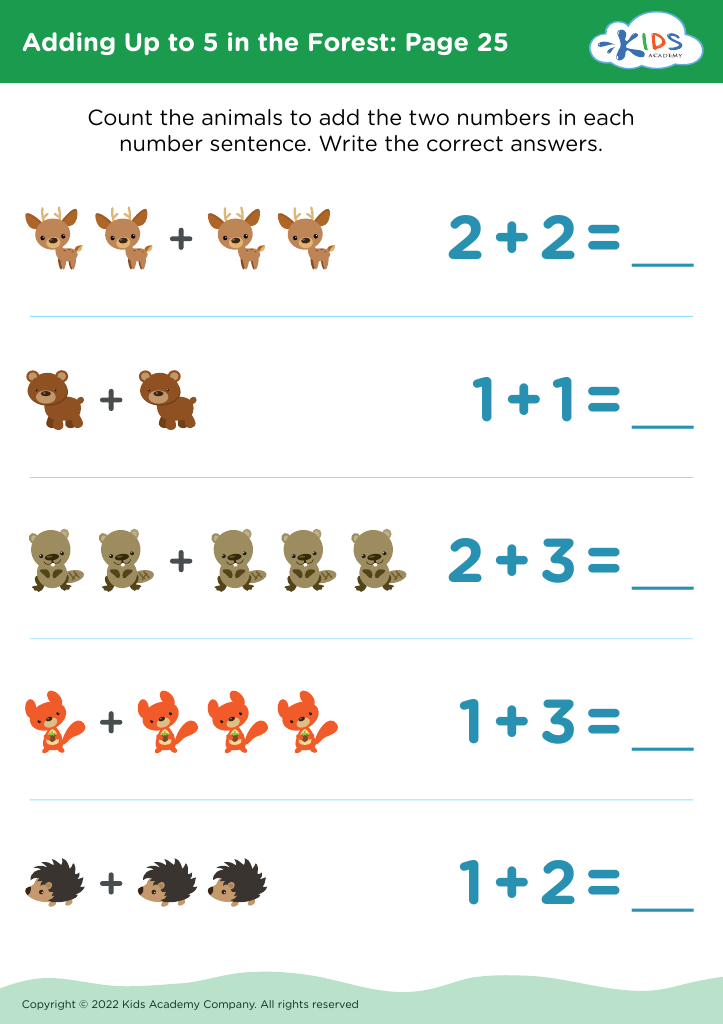
Adding Up to 5 in the Forest: Page 25
Worksheet
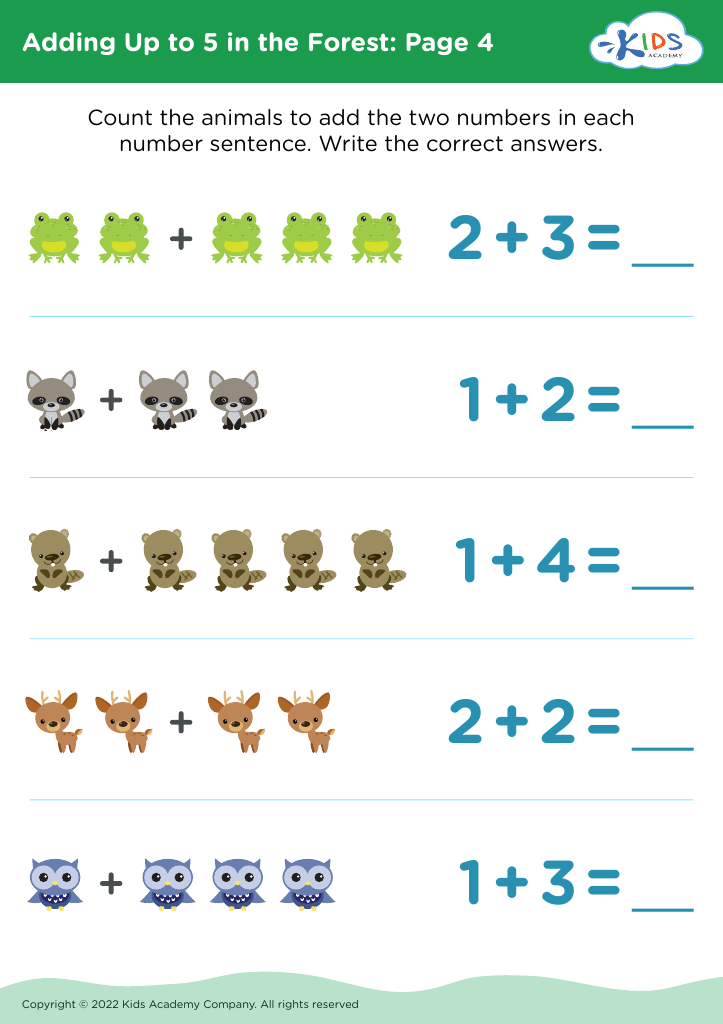
Adding Up to 5 in the Forest: Page 4
Worksheet
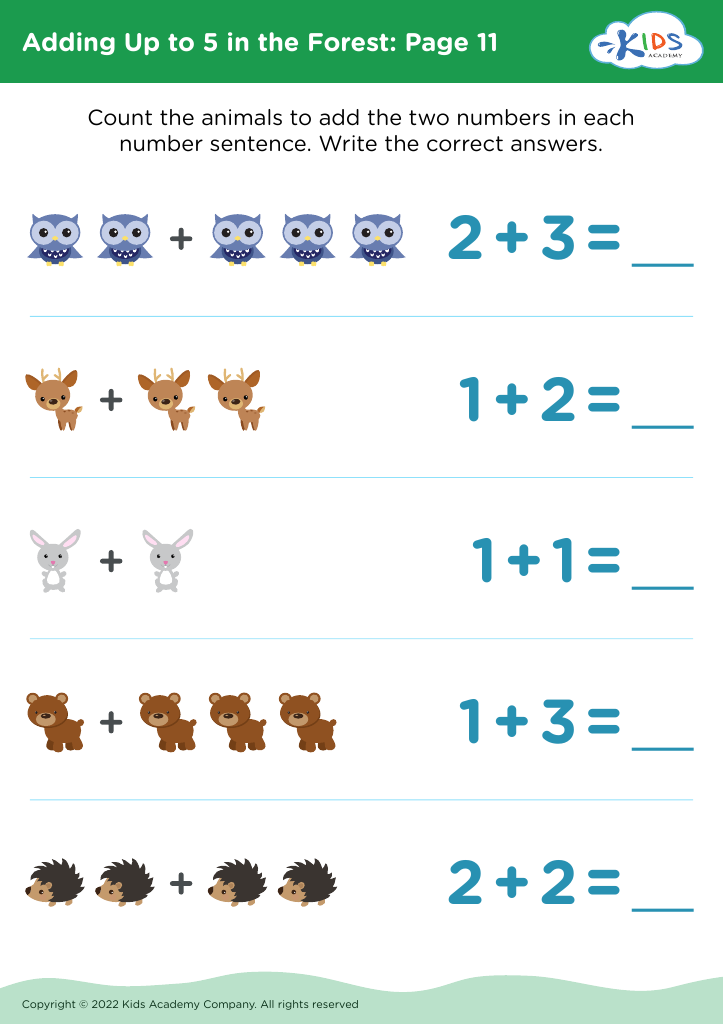
Adding Up to 5 in the Forest: Page 11
Worksheet
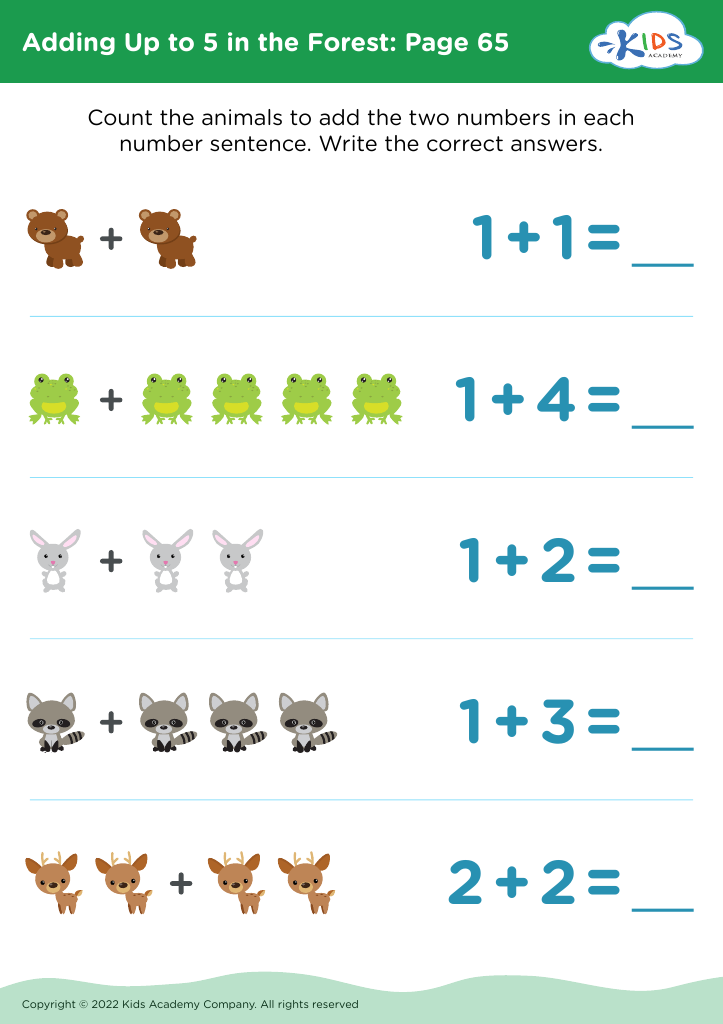
Adding Up to 5 in the Forest: Page 65
Worksheet
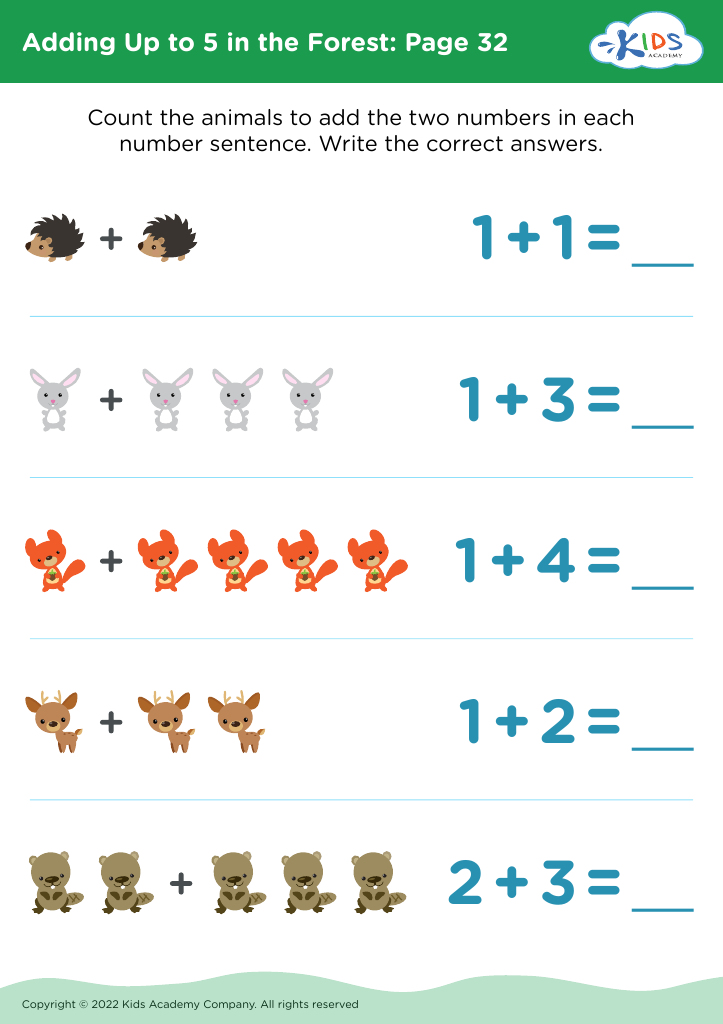
Adding Up to 5 in the Forest: Page 32
Worksheet
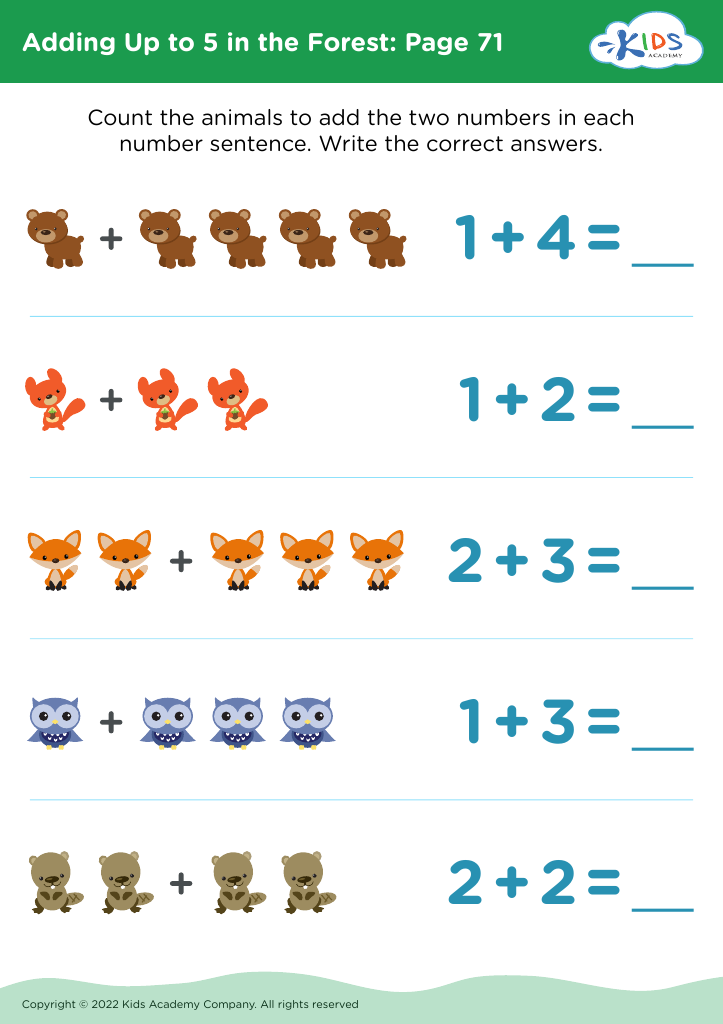
Adding Up to 5 in the Forest: Page 71
Worksheet
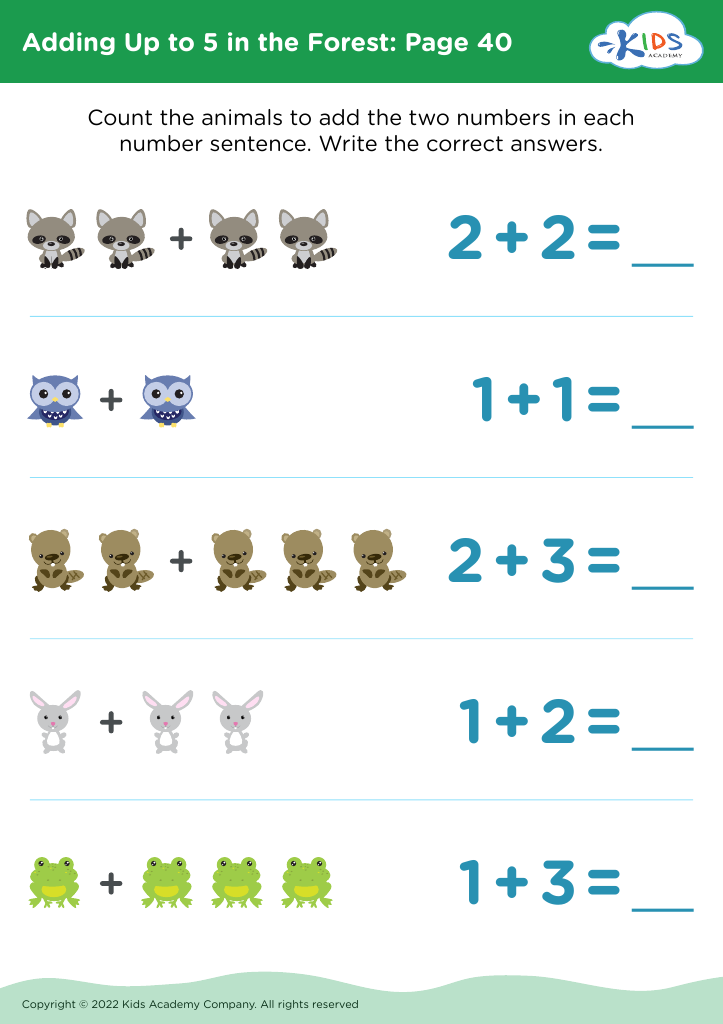
Adding Up to 5 in the Forest: Page 40
Worksheet
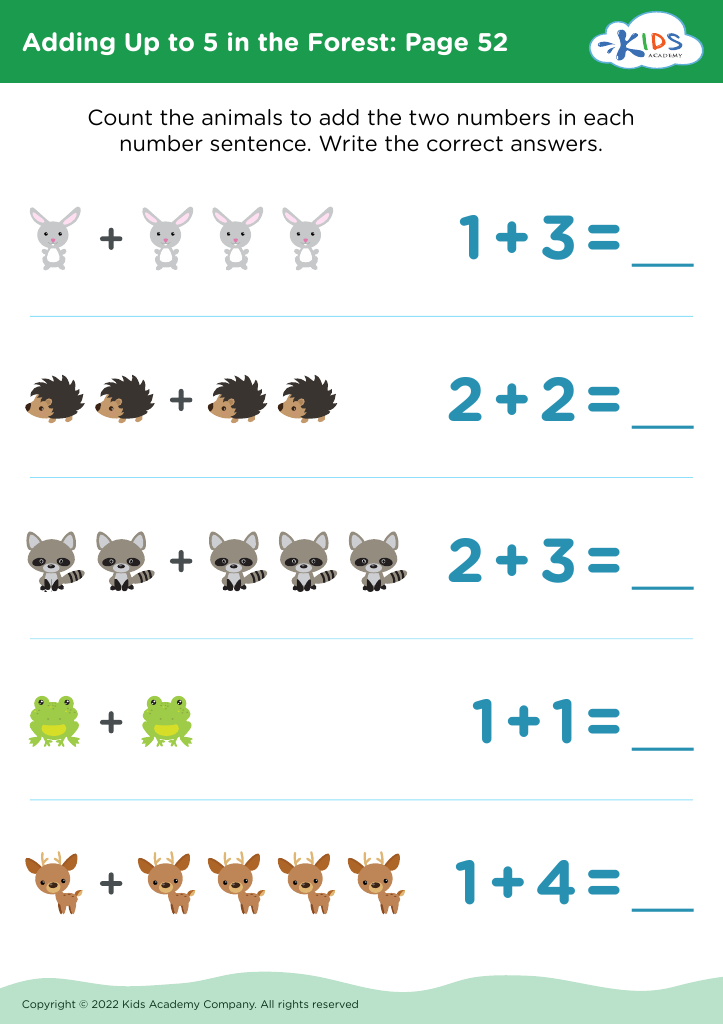
Adding Up to 5 in the Forest: Page 52
Worksheet
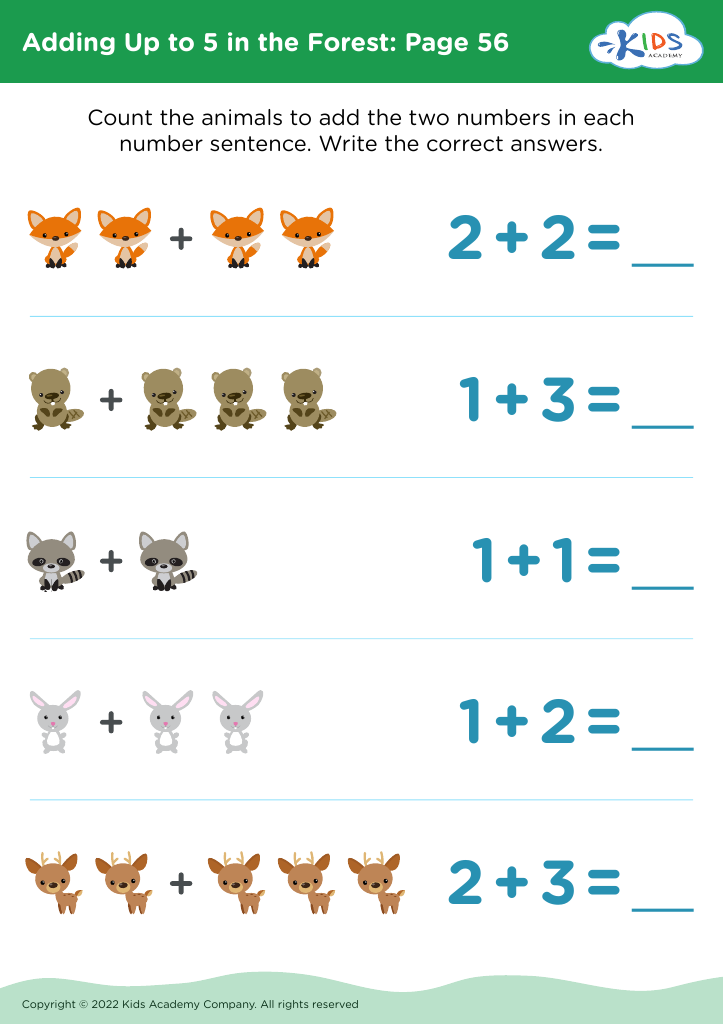
Adding Up to 5 in the Forest: Page 56
Worksheet
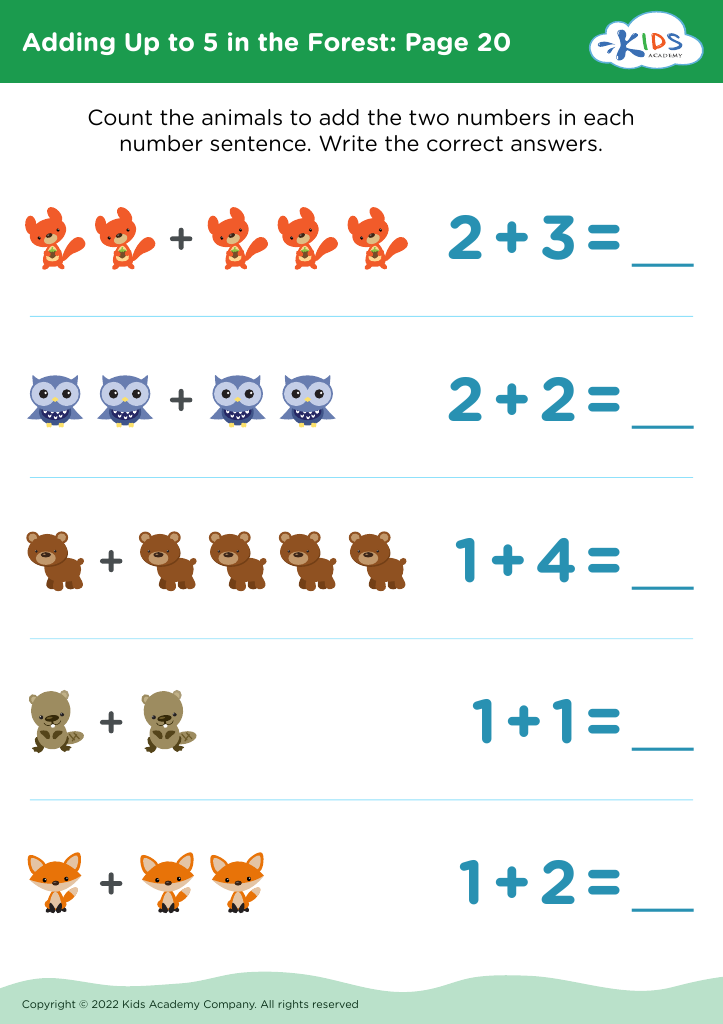
Adding Up to 5 in the Forest: Page 20
Worksheet
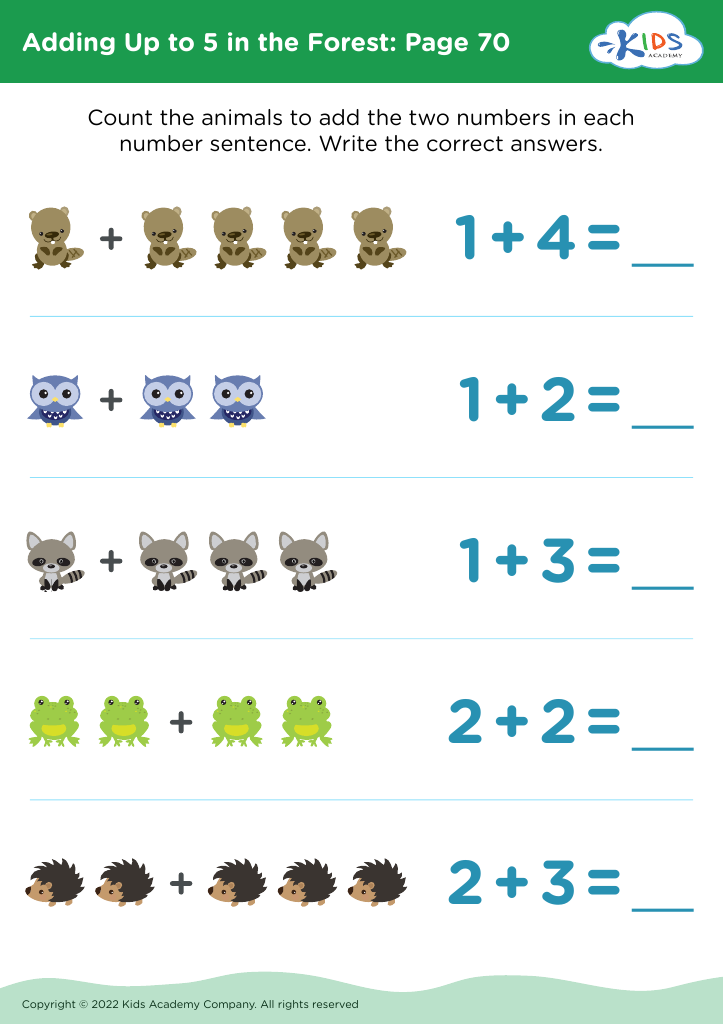
Adding Up to 5 in the Forest: Page 70
Worksheet
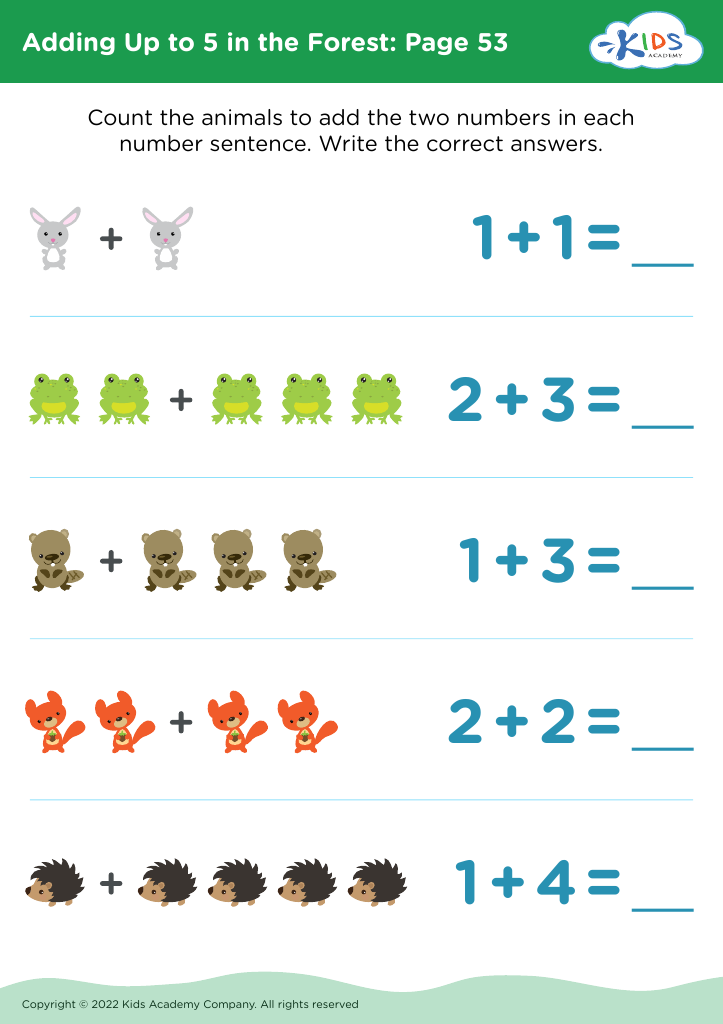
Adding Up to 5 in the Forest: Page 53
Worksheet
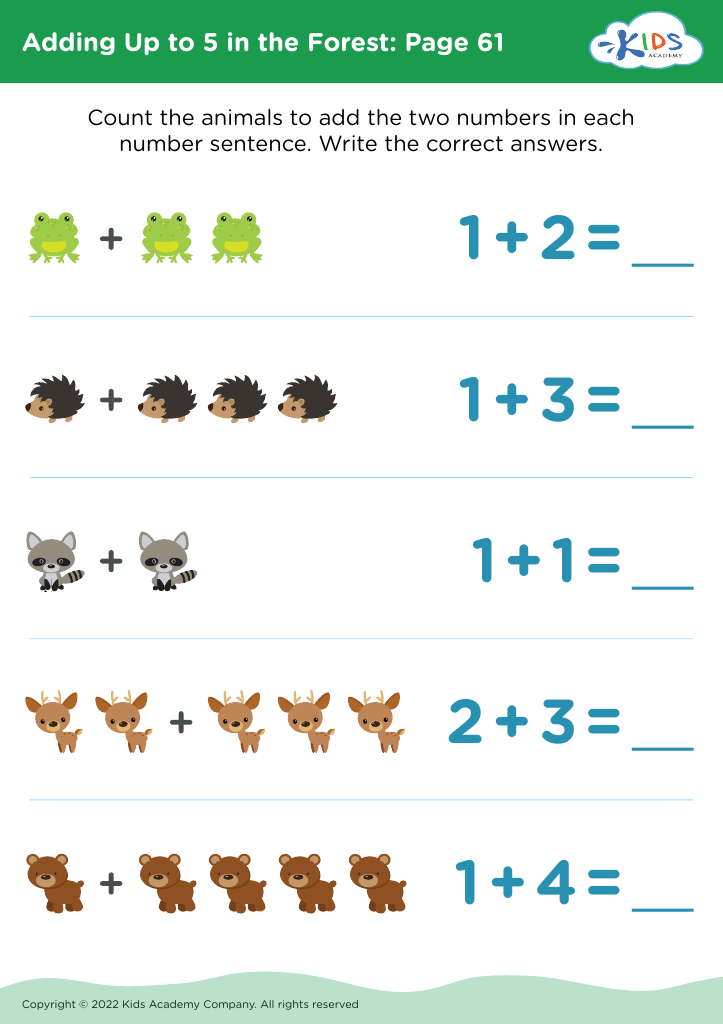
Adding Up to 5 in the Forest: Page 61
Worksheet


Number recognition and early math skills are the building blocks of a child's cognitive development and future academic success. "Adding in the Forest," an articulated approach to teaching number recognition to 5-year-olds, integrates environmental themes and nature-based learning, engages young learners in a fun and meaningful way. Here’s why parents and teachers should prioritize this approach:

Firstly, early numeracy skills lay the foundation for more complex mathematical concepts that children will encounter later in their education. Recognizing numbers effortlessly is critical for their understanding of counting, addition, and subtraction.

Secondly, intertwining math with a rich, relatable context like the forest encourages engagement and retention. It captures children's imagination and significantly enhances their learning experience by coupling abstract numerical concepts with tangible, real-world scenarios.

Thirdly, these skills are vital for practical life applications. Simple activities like identifying numbers on game boards, pressing the correct floor numbers in elevators, or understanding ages and dates become manageable tasks for kids who are confident with numbers and basic addition.

Lastly, early success in math builds a child’s confidence and encourages a positive attitude towards learning. This enthusiasm often translates to improved performance in other academic areas, fostering a well-rounded education and a curious mind.

In essence, investing in programs like "Adding in the Forest" gives children a strong mathematical foundation and helps cultivate lifelong learning habits.