Basic Math understanding Adding in the Sea Worksheets for 5-Year-Olds
3 filtered results
-
From - To
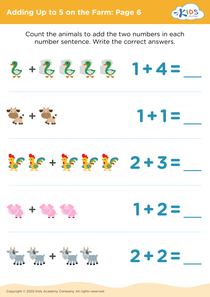
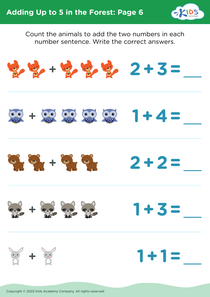
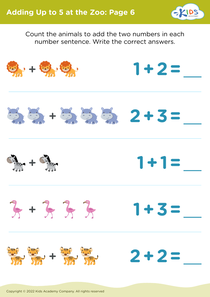
Explore the exciting world of ocean-themed learning with our "Basic Math Understanding Adding in the Sea Worksheets" designed specifically for 5-year-olds! These engaging worksheets combine vibrant sea creature illustrations with foundational math concepts, making learning fun and immersive for young learners. Perfect for teaching addition, each activity encourages children to count and solve simple problems using relatable ocean imagery. These worksheets support early math skills while fostering a love for both numbers and the sea. Dive into a splash of educational fun and watch your child’s confidence grow as they master the basics of adding with our captivating materials.
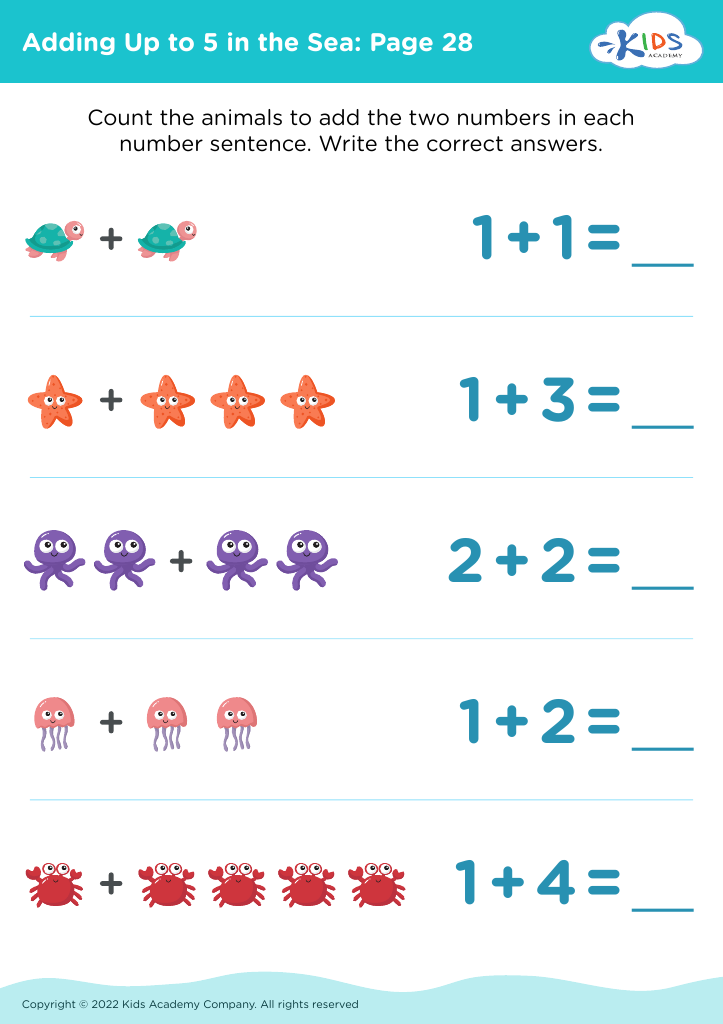
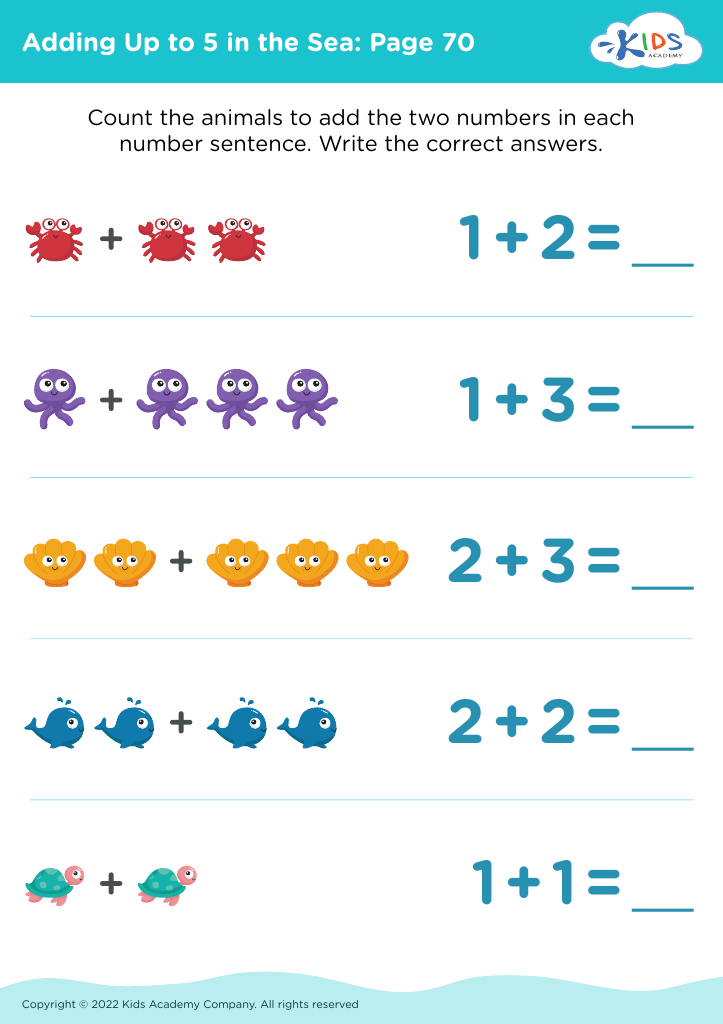
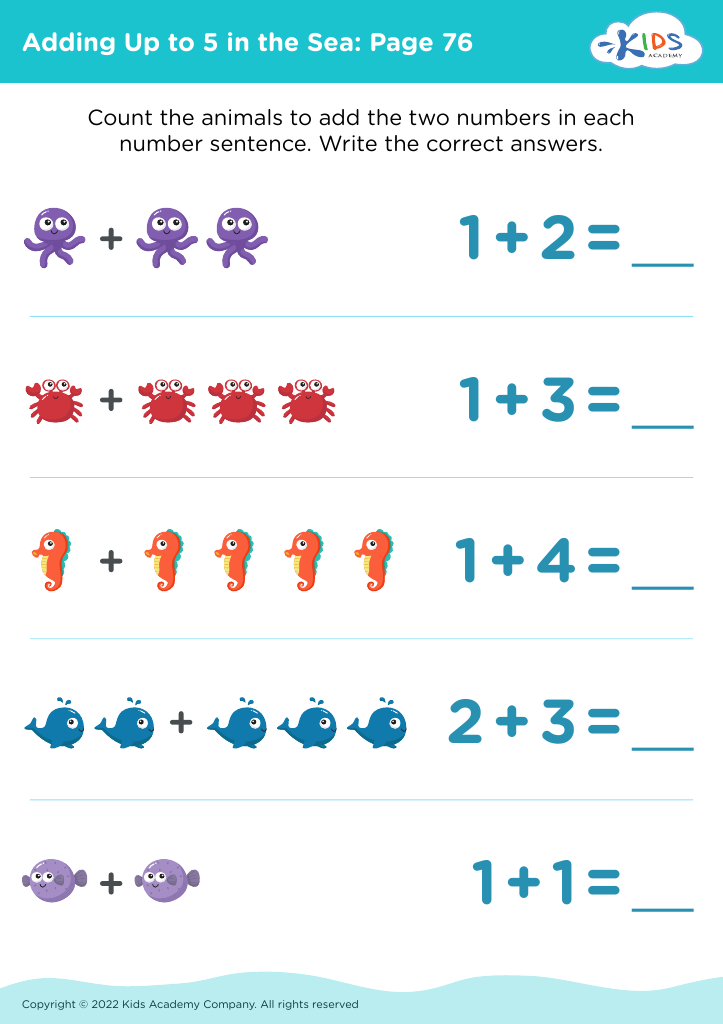



Understanding basic math, particularly concepts like addition, is crucial for five-year-olds as it lays the foundation for their future academic success and critical thinking skills. Introducing addition in engaging ways, such as through themes like "Adding in the Sea," enhances children's learning experiences by incorporating imaginative play and real-world contexts.
First, early math skills are linked to later academic achievement. Children who grasp basic addition are better prepared for more complex math concepts as they progress through school. Moreover, learning math in a playful and relatable way fosters a positive attitude toward learning, increasing their confidence and willingness to tackle new challenges.
Additionally, activities centered on a nautical theme can stimulate children's curiosity and creativity. For example, counting sea creatures and combining groups through playful storytelling makes the learning process enjoyable. This integration helps children make connections between math and their daily lives, enhancing their overall understanding.
Furthermore, by actively engaging with math through play, parents and teachers nurture the whole child's development—social, emotional, and cognitive. This comprehensive approach not only prepares children for future learning but also cultivates essential problem-solving and analytical skills. Therefore, fostering a solid understanding of addition is key to instilling a lifelong love for learning in young learners.