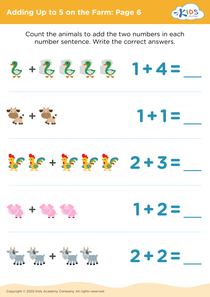
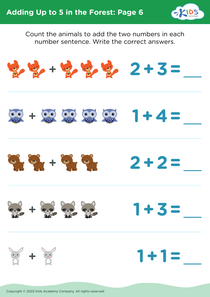
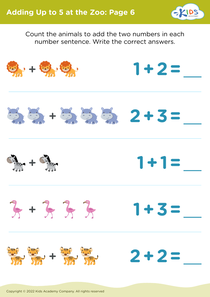
Fine motor skills (writing numbers) Adding in the Sea Worksheets for 5-Year-Olds
4 filtered results
-
From - To
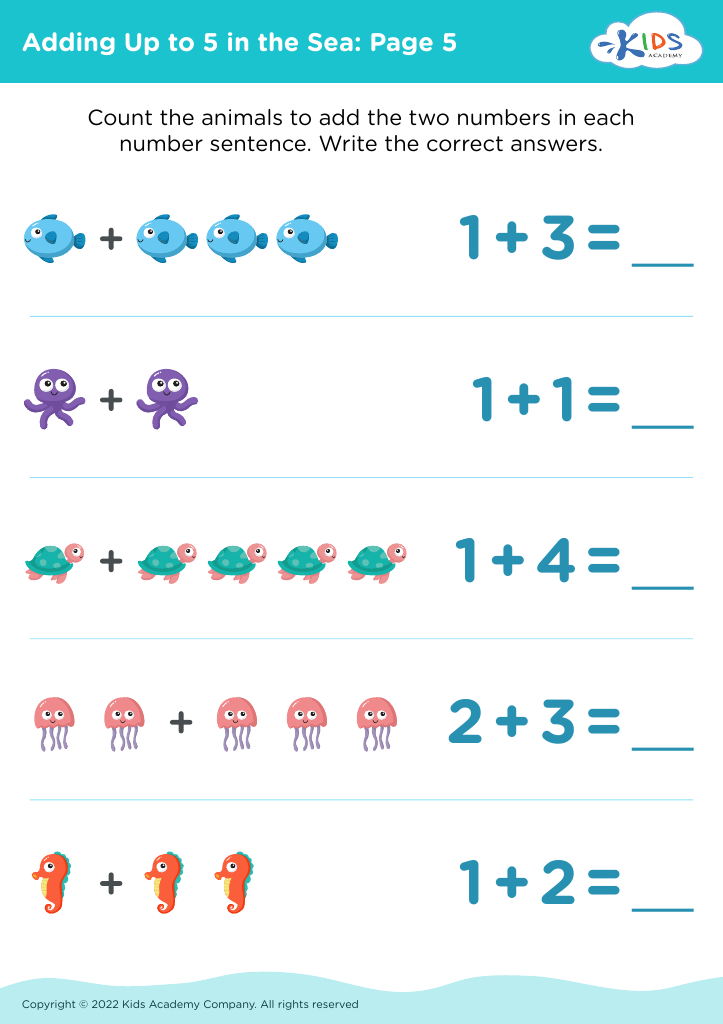
Enhance your child's fine motor skills with our engaging “Adding in the Sea” worksheets designed for 5-year-olds! These carefully crafted activities combine the joy of learning and ocean-themed excitement, making number writing and addition fun and accessible. As children trace, write, and solve math problems featuring charming underwater characters, they’ll build essential skills that support their early math proficiency. Each worksheet encourages precision and control, helping young learners develop their hand-eye coordination while strengthening their number recognition abilities. Dive into a world of creativity and learning that will capture your child's imagination and prepare them for future academic success!
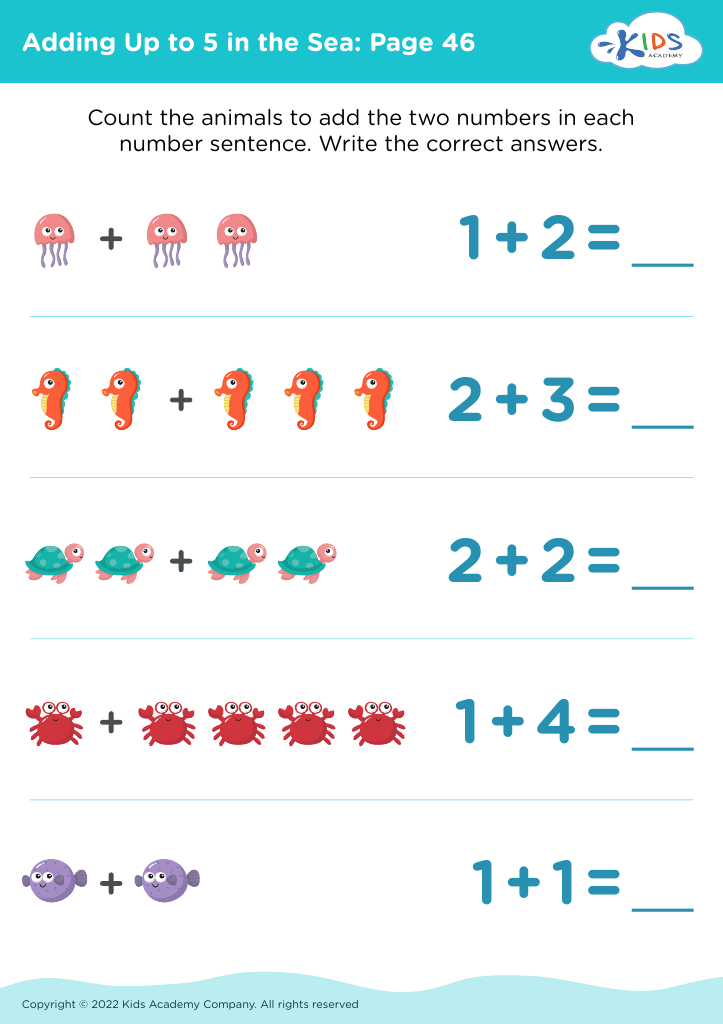
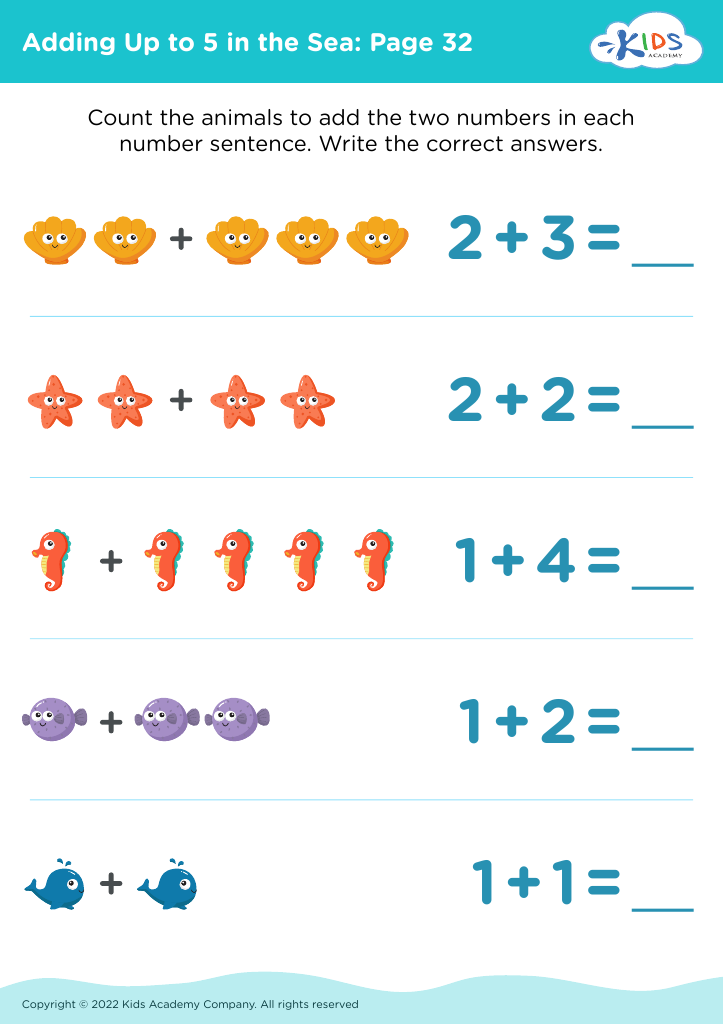
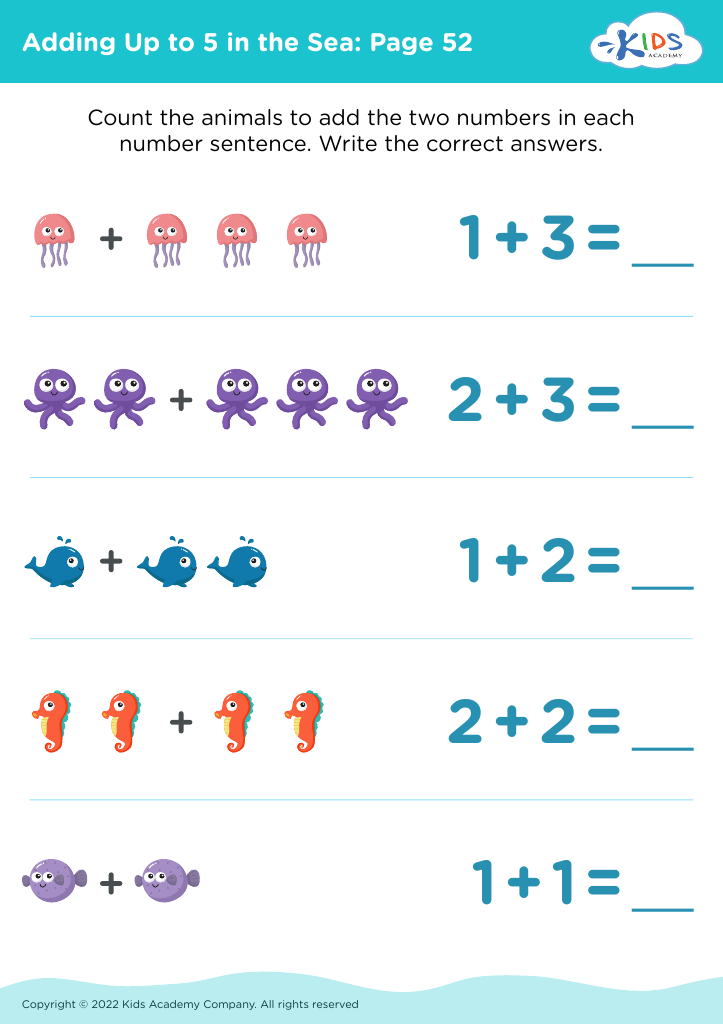



Fine motor skills are essential for young children's overall development, particularly for activities like writing numbers. For 5-year-olds, developing these skills lay the groundwork for academic success and everyday tasks. Proficient fine motor skills enhance a child's ability to manipulate objects, which is crucial for tasks ranging from using scissors to buttoning shirts.
Incorporating activities like "Adding in the Sea" not only makes learning engaging but also promotes fine motor development alongside mathematics. By manipulating ocean-themed counters or using their fingers to trace numbers in sand or water, children refine their hand-eye coordination and grip strength, laying the foundation for later writing. These activities make learning feel playful and exciting, fostering a positive attitude toward educational tasks.
Moreover, as children work on writing numbers and counting sea creatures, they enhance cognitive skills, spatial awareness, and problem-solving abilities. Parents and teachers should value fine motor skill development not just for academic readiness but also for building confidence, promoting independence, and encouraging creativity. Supporting children in these efforts develops essential life skills while making learning enjoyable and memorable. This, in turn, cultivates a lifelong love for learning, ensuring children thrive both in and out of the classroom.