Hand-eye Coordination Adding in the Sea Worksheets for 5-Year-Olds
4 filtered results
-
From - To
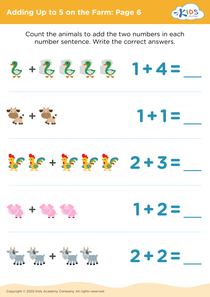
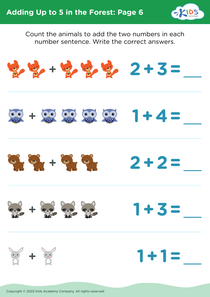
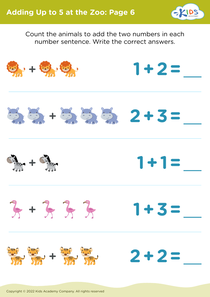
Enhance your 5-year-old's hand-eye coordination while they learn to add with our engaging "Adding in the Sea" worksheets! These fun, ocean-themed activities incorporate colorful illustrations and exciting scenarios to make learning enjoyable. Designed for young learners, each worksheet helps improve fine motor skills as children connect dots, color in numbers, and solve simple addition problems involving sea creatures. Our printable resources encourage active participation and stimulate cognitive development in a playful manner. Let your child dive into a world of education and adventure as they master addition and strengthen their hand-eye coordination with these dynamic worksheets!
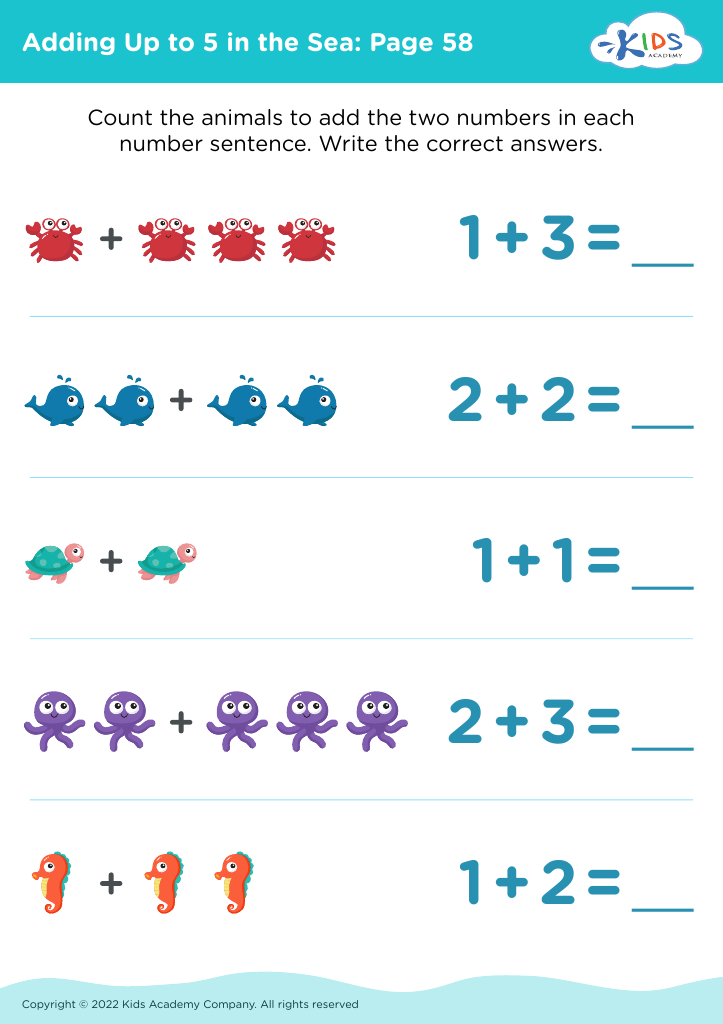
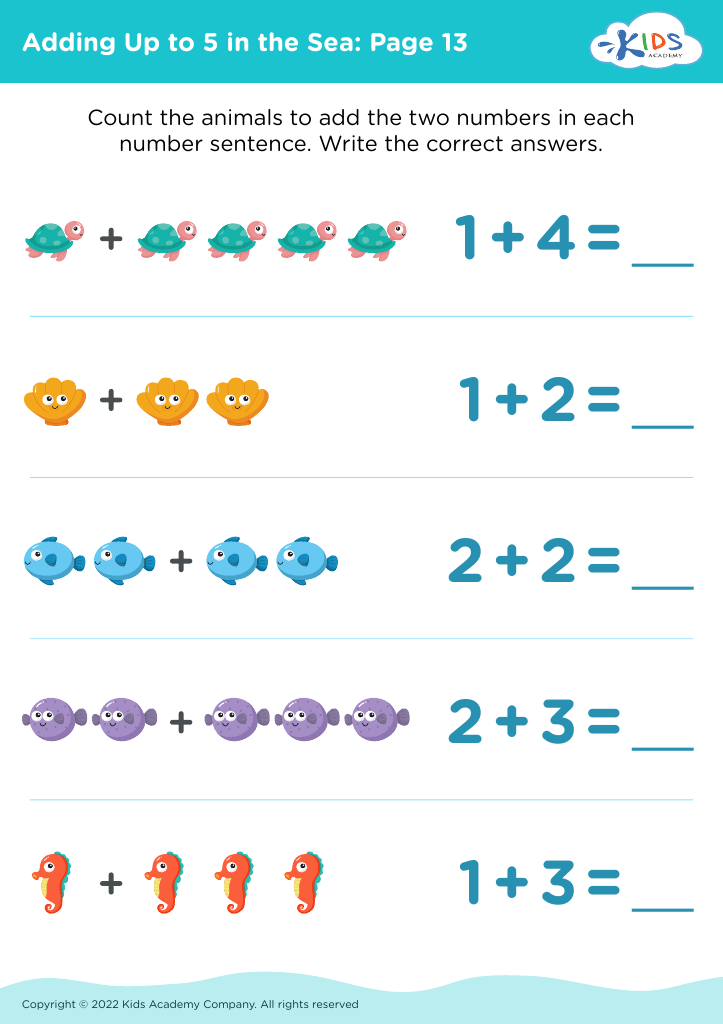
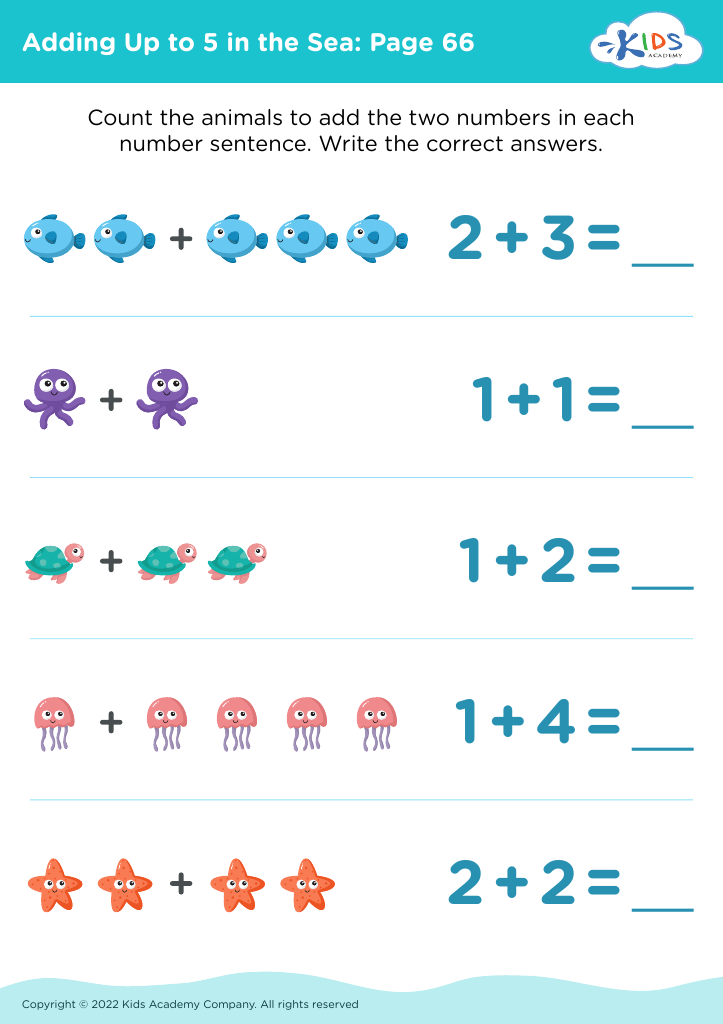
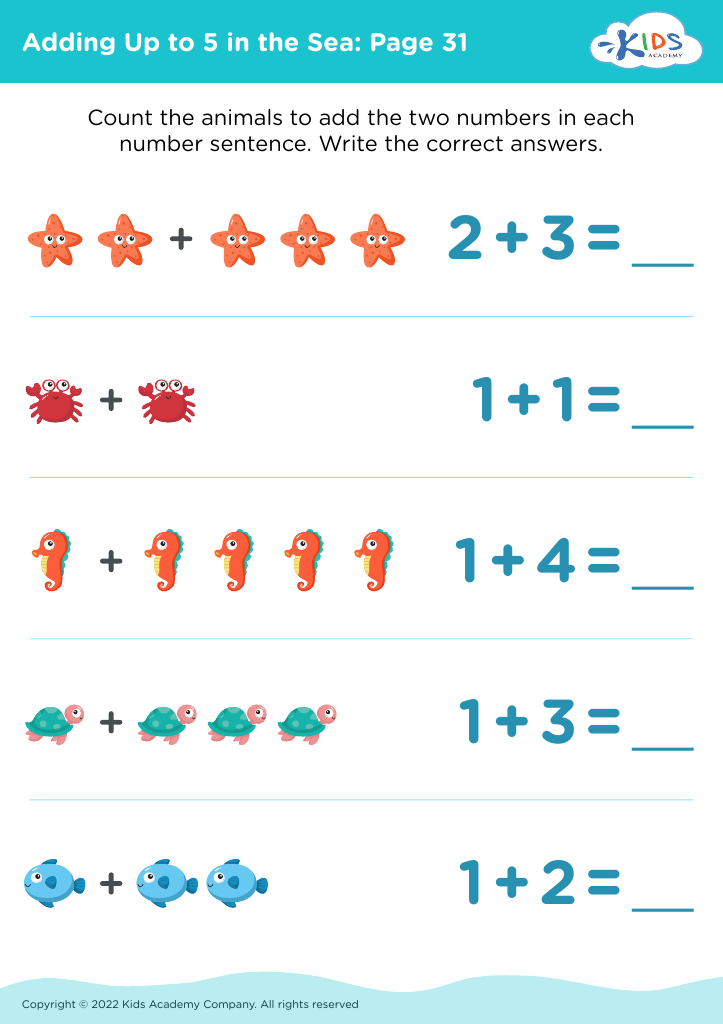



Hand-eye coordination is a crucial skill that significantly impacts a child's overall development, particularly in early childhood. For 5-year-olds, engaging in activities like "Adding in the Sea" can enhance this skill while making learning fun. This game typically involves using colorful sea-themed objects to visualize and practice basic math concepts such as addition.
Parents and teachers should care about developing hand-eye coordination because it plays a vital role in a child's ability to perform everyday tasks, from writing and cutting with scissors to participating in sports and other recreational activities. Improved hand-eye coordination also boosts self-esteem, as children become more confident in their abilities.
Moreover, incorporating playful approaches like "Adding in the Sea" connects academic concepts with physical activity, making learning more engaging. Children are naturally curious and imaginative; by integrating tactile and visual components, they are likely to retain information better.
In conclusion, focusing on hand-eye coordination through engaging activities supports not just mathematically inclined thinking but also fine motor skills, social interaction, and cognitive development. As both parents and teachers aim to prepare children for future learning, prioritizing these skills is essential for well-rounded growth and development.