Animal recognition Adding on the Farm Worksheets for 5-Year-Olds - Page 2
31 filtered results
-
From - To
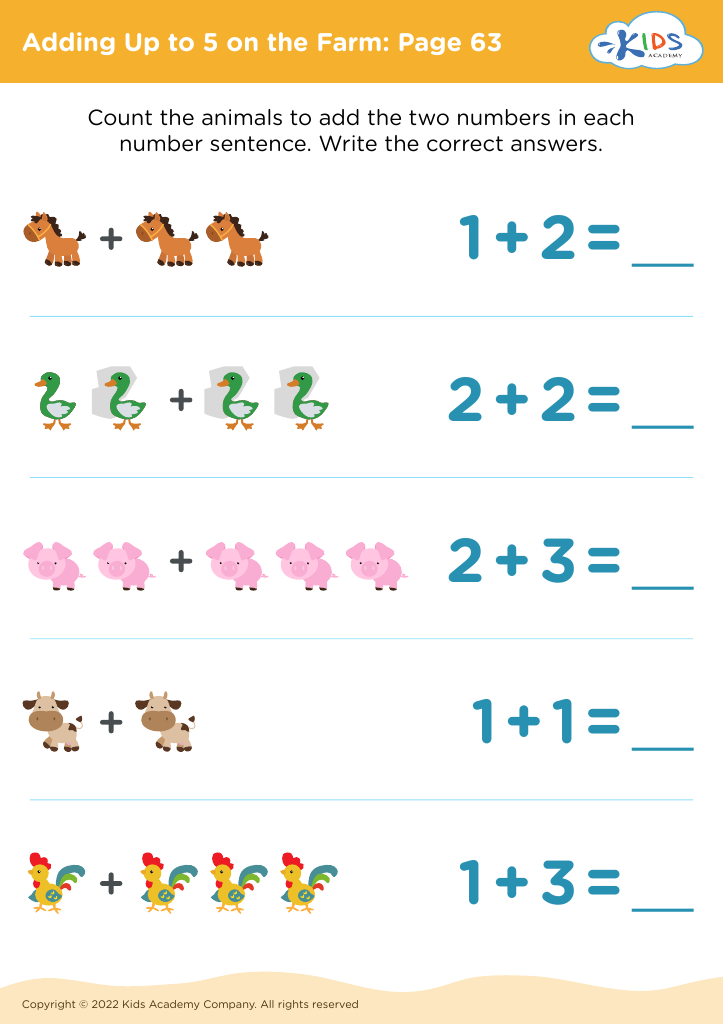
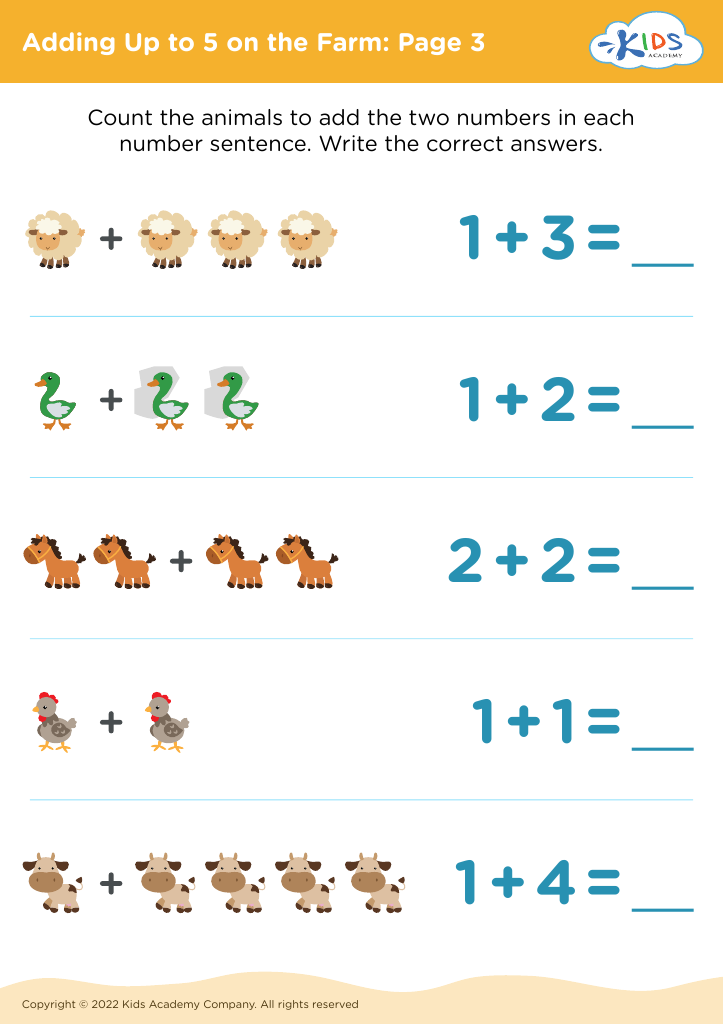
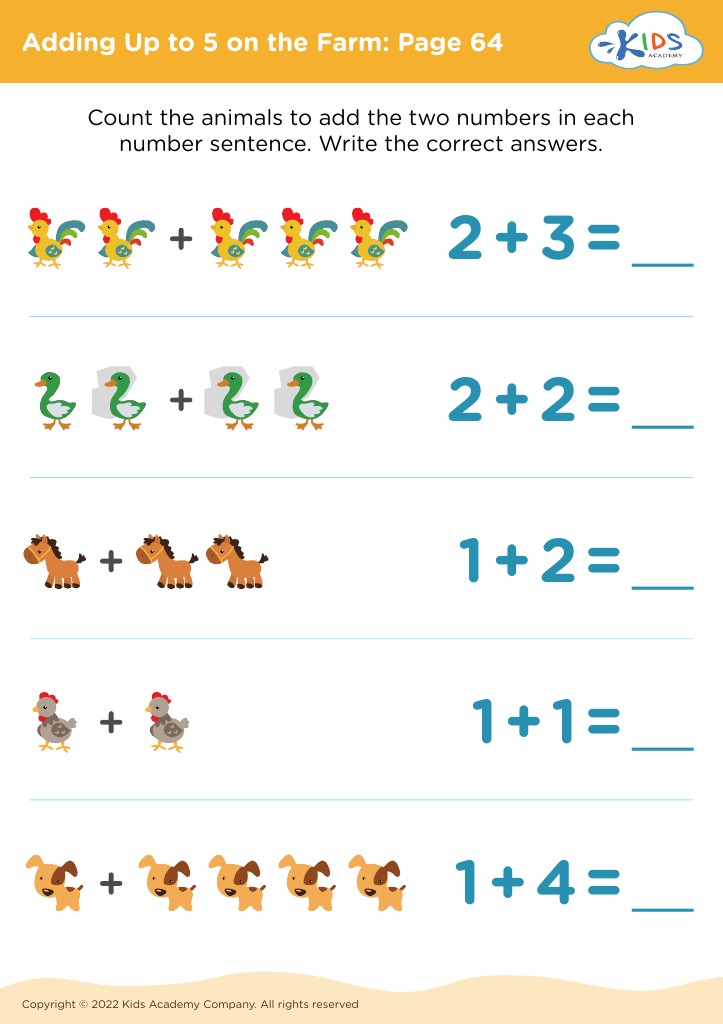
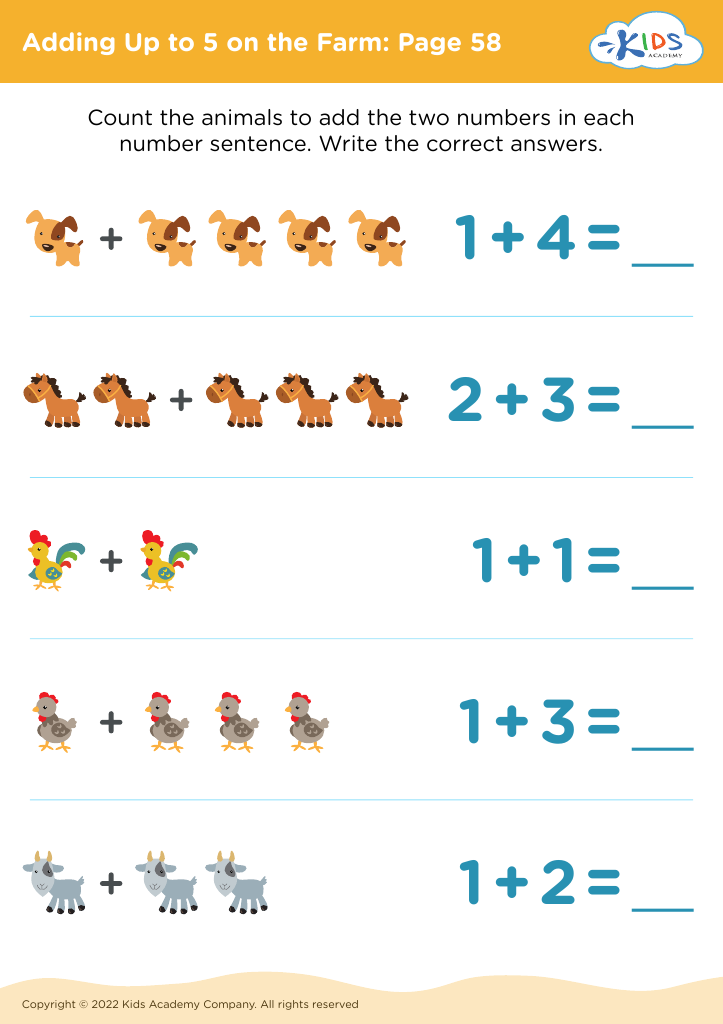
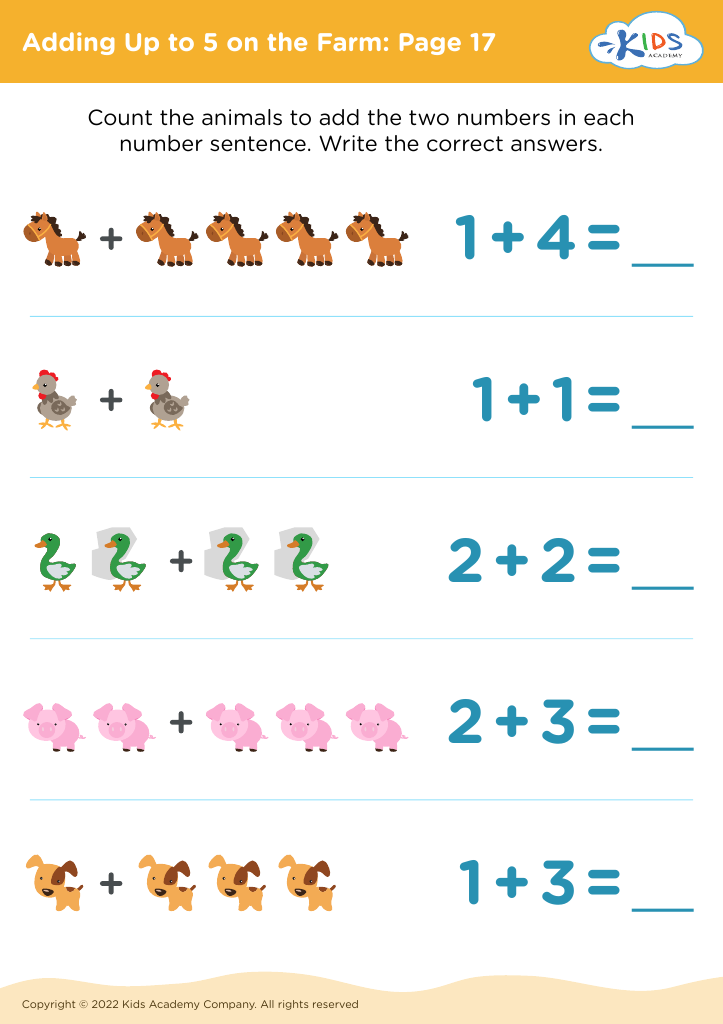
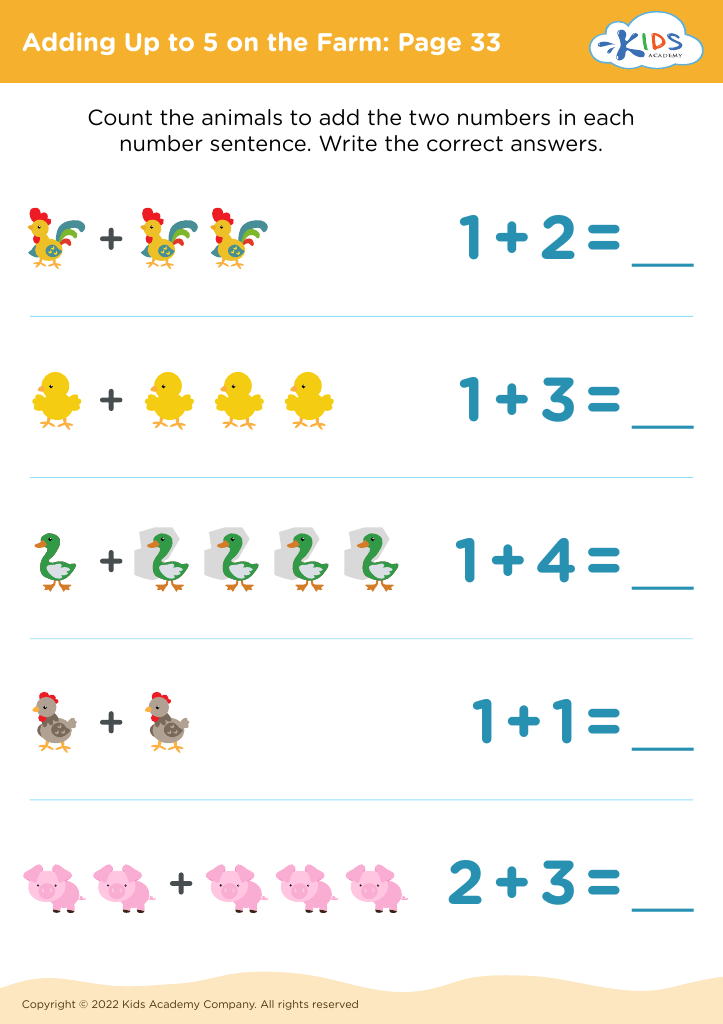
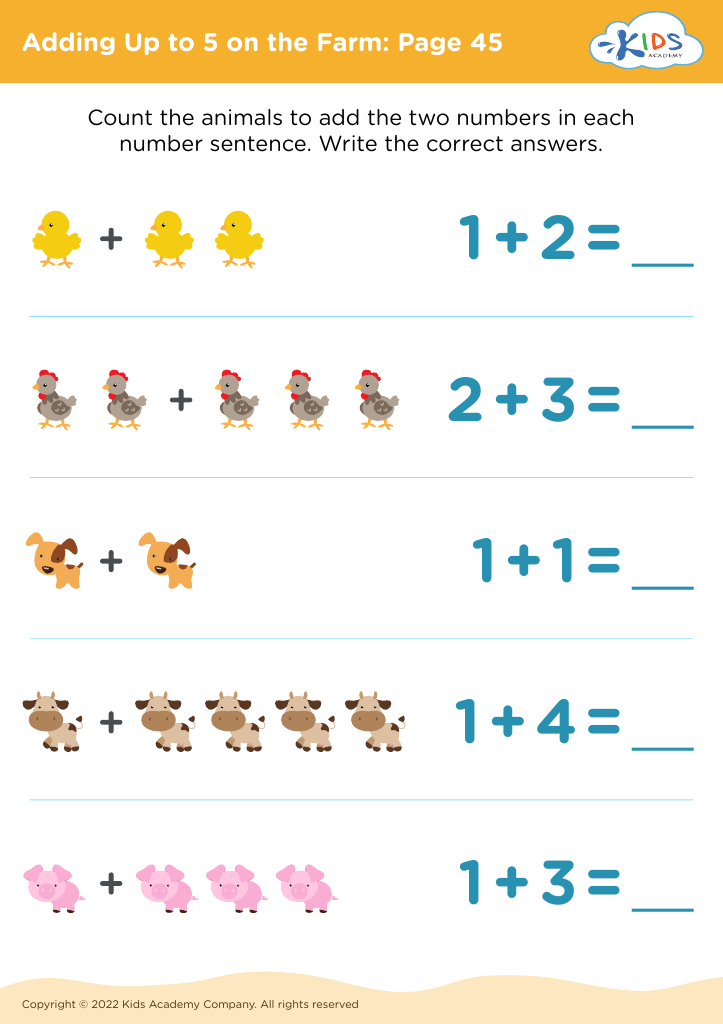



Animal recognition on the farm is essential for enhancing the cognitive, social, and emotional development of 5-year-olds. At this age, children are naturally curious and eager to explore the world around them. Engaging with farm animals helps fulfill that curiosity, allowing kids to learn about various species, their characteristics, and the roles they play in our ecosystem. Recognizing animals fosters critical thinking as children observe differences in size, behavior, color, and sounds, promoting cognitive skills.
Moreover, farm animals often represent themes of nurturing and responsibility. By learning to identify and interact with them, children develop empathy and an understanding of care, as they see firsthand the importance of looking after living creatures. These experiences can also cultivate a sense of responsibility, as children often partake in activities such as feeding or caring for animals, leading to valuable life skills.
Additionally, farm animals can introduce foundational concepts in science and ecology, laying the groundwork for broader environmental awareness. For parents and teachers, enriching children's understanding of the farm through animal recognition not only sparks interest in learning but also connects them to nature, encouraging a lifetime of curiosity and respect for the environment.