Problem Solving Adding on the Farm Worksheets for 5-Year-Olds
3 filtered results
-
From - To
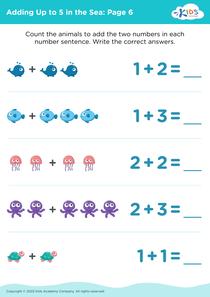
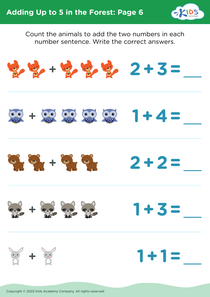
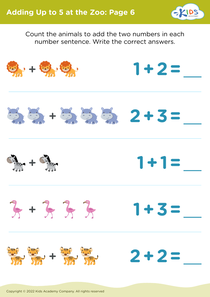
Introduce your little ones to the joy of math with our "Problem Solving Adding on the Farm Worksheets" designed specifically for 5-year-olds! These engaging worksheets combine fun farm-themed illustrations with essential addition exercises, fostering a love for learning. Children will solve simple math problems involving farm animals and engaging scenarios, promoting critical thinking and problem-solving skills. Each activity is tailored to suit young learners, ensuring they grasp foundational math concepts while enjoying captivating visuals. Perfect for home or classroom use, these worksheets make math exciting and approachable. Get ready for your child to embark on a fun-filled learning adventure on the farm!
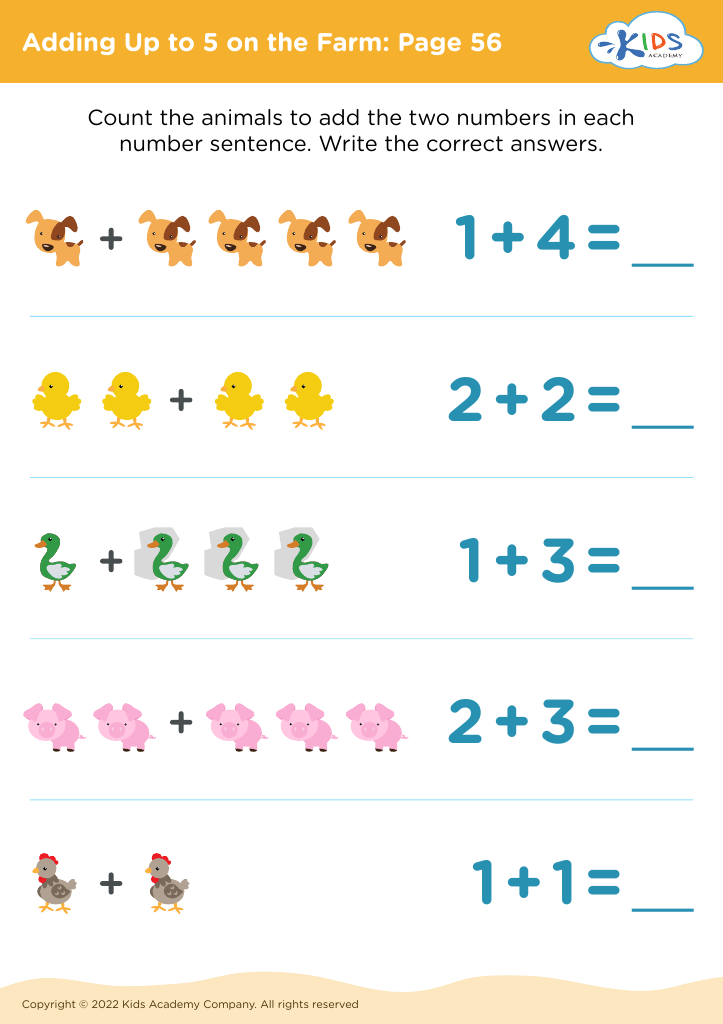
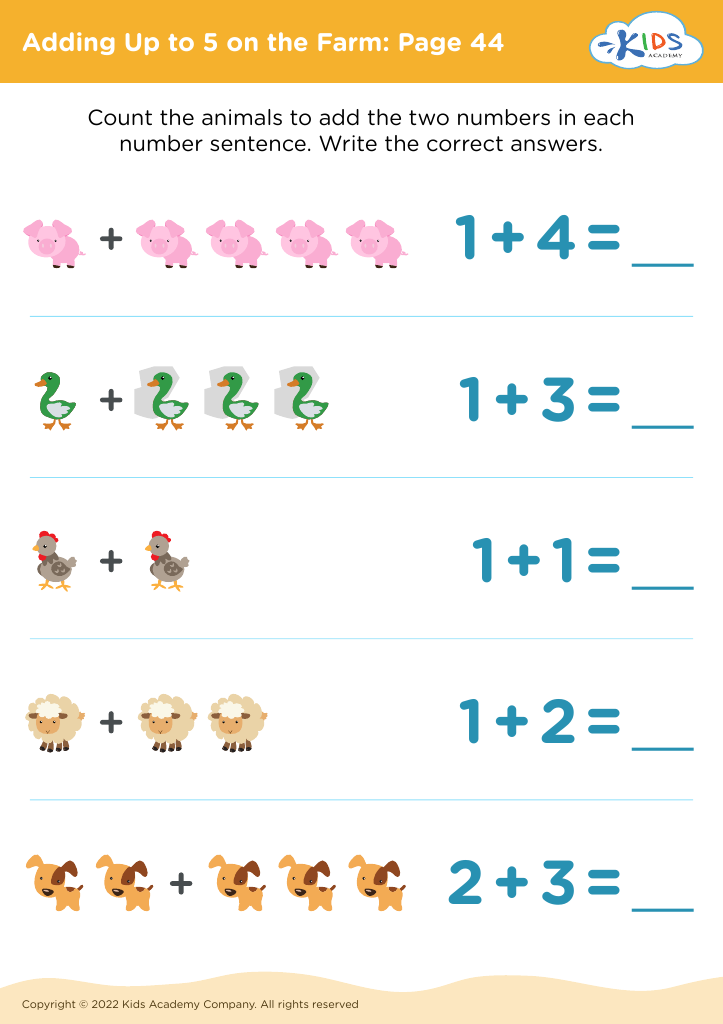
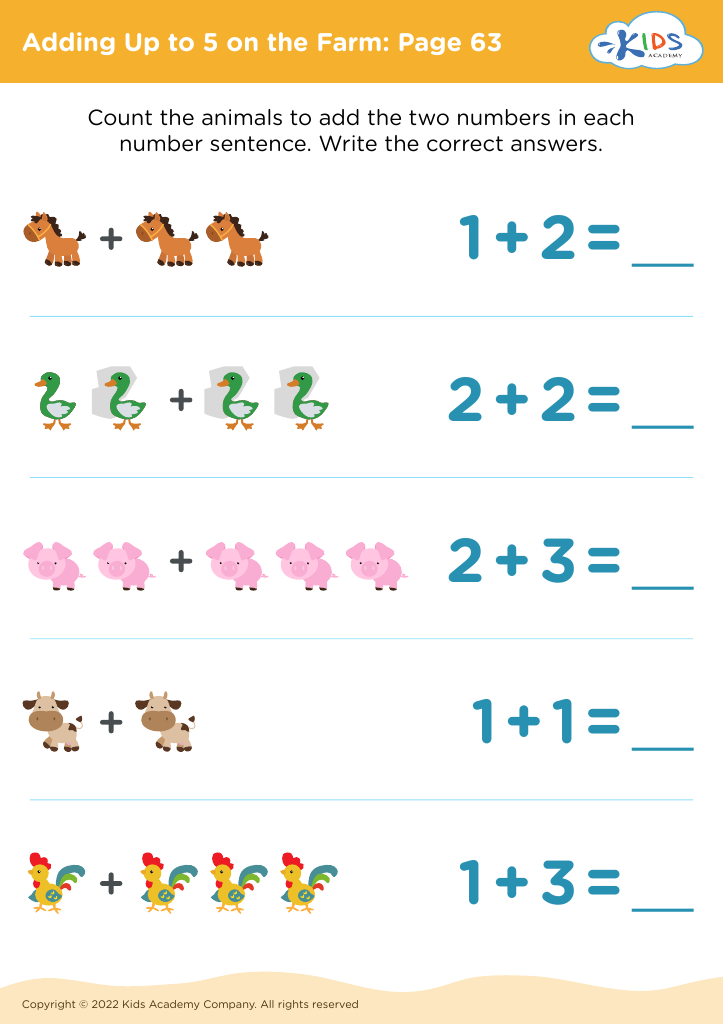



Problem Solving Adding on the Farm is crucial for 5-year-olds as it effectively combines foundational math skills with relatable, real-world scenarios. At this age, children are naturally curious and eager to learn, making it an ideal time to introduce mathematical concepts through engaging themes like a farm. This method not only captures their imagination but also promotes practical understanding of addition by using familiar contexts, such as counting animals or crops.
Encouraging problem-solving skills at this stage helps children develop critical thinking, perseverance, and creativity as they learn to approach challenges methodically. When children work through addition problems based on farm activities, they gain confidence in their abilities and learn to communicate their thought processes effectively.
Moreover, collaborating on these activities fosters a sense of community and teamwork, whether in a classroom or at home, as parents and teachers can scaffold learning experiences together. By care about and engaging with Problem Solving Adding on the Farm, adults can facilitate a richer learning experience that not only reinforces mathematical concepts but also cultivates socio-emotional skills, sensory exploration, and a love for learning. Ultimately, this lays a strong foundation for more complex mathematical problem solving in the future.