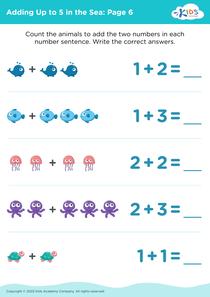
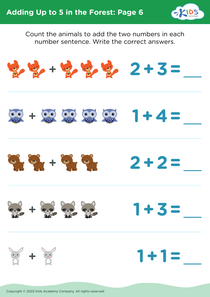
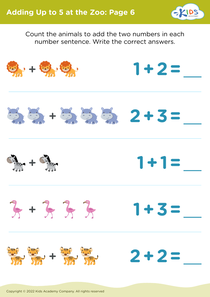
Problem-Solving Skills Adding on the Farm Worksheets for 5-Year-Olds
8 filtered results
-
From - To
Enhance your child's problem-solving skills with our "Adding on the Farm Worksheets" designed for 5-year-olds! These engaging worksheets introduce young learners to basic addition concepts through fun, farm-themed activities. Children will solve simple math problems using delightful images of animals and farm objects, fostering critical thinking while making learning enjoyable. Each worksheet encourages hands-on interaction, helping kids visualize addition in real-life scenarios. Perfect for early grade educators and parents, these resources promote cognitive development and mathematical reasoning, setting the stage for a solid foundation in math skills. Join us on the farm and let the learning begin!
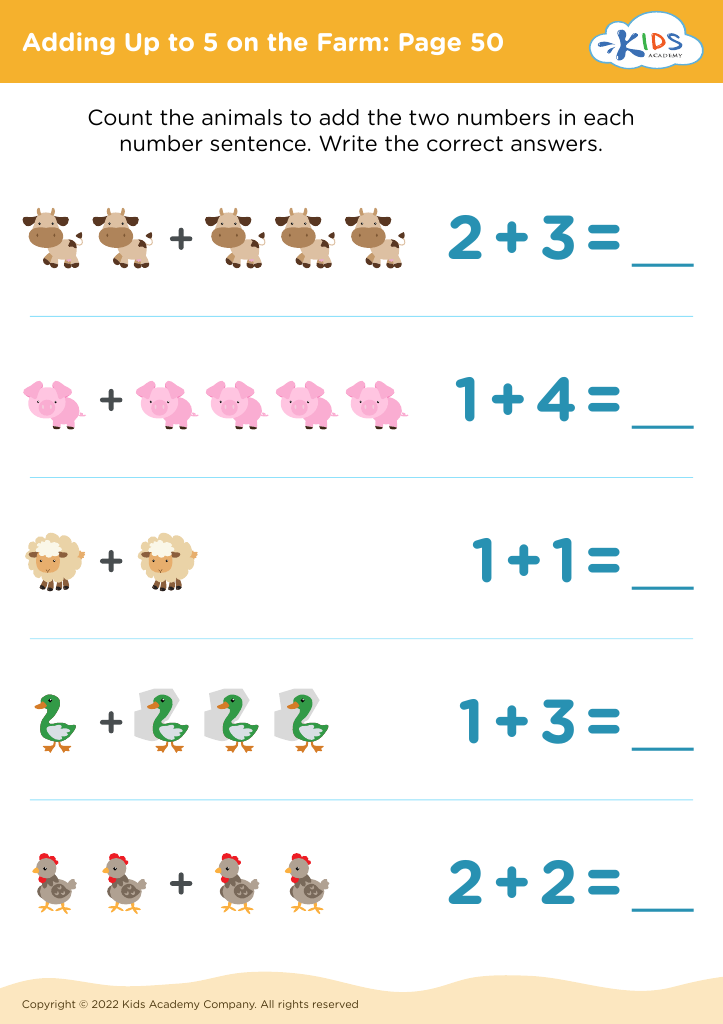
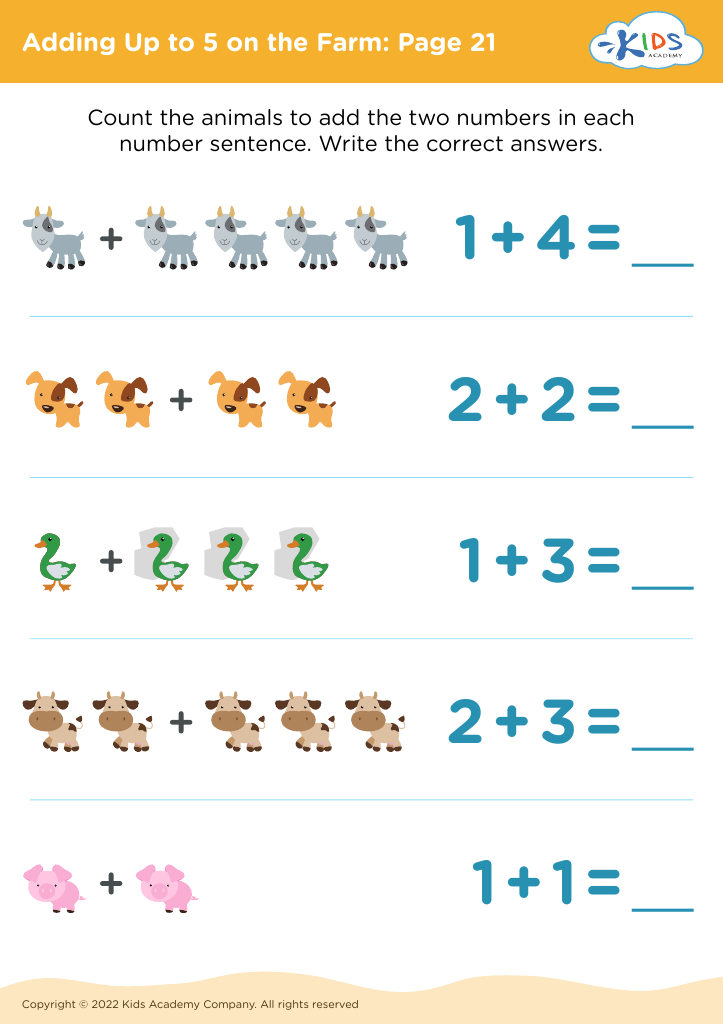
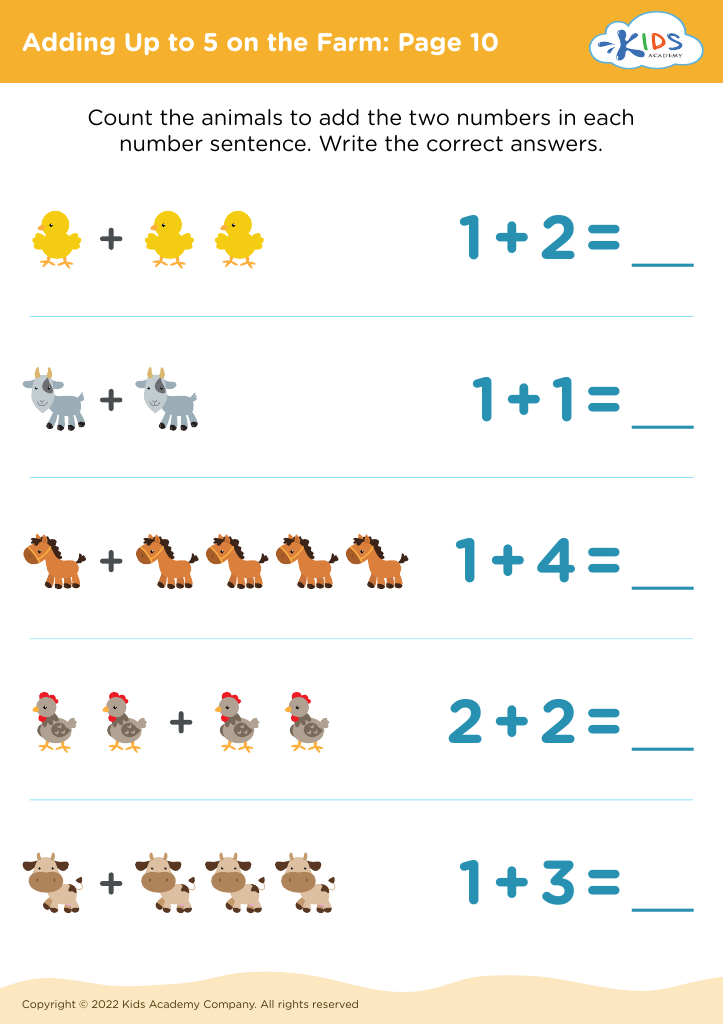
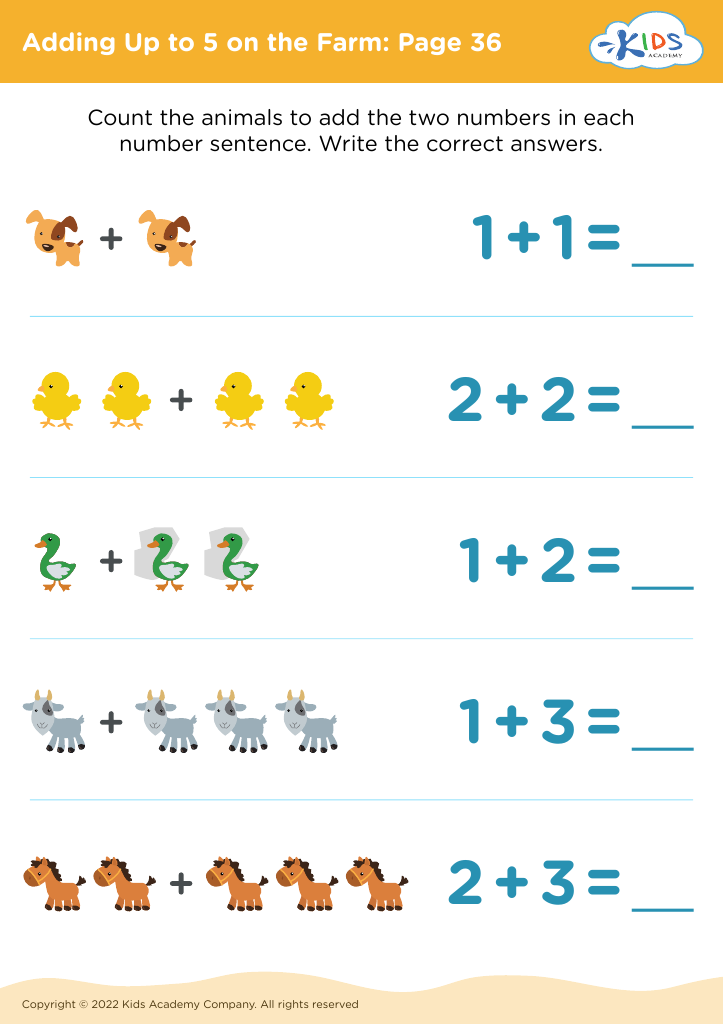
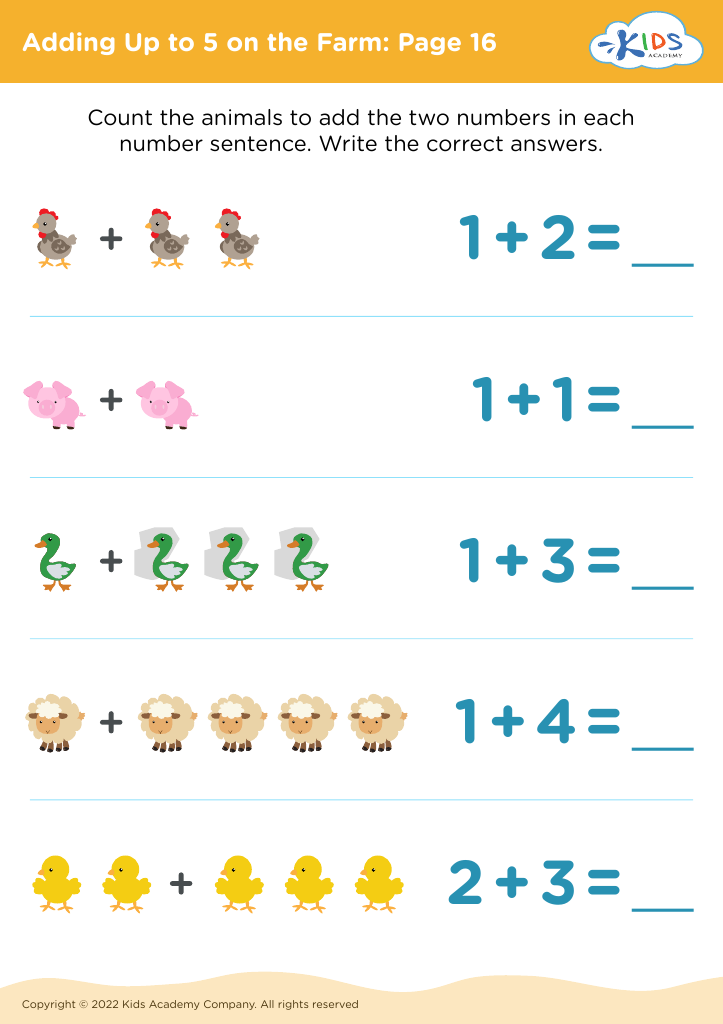
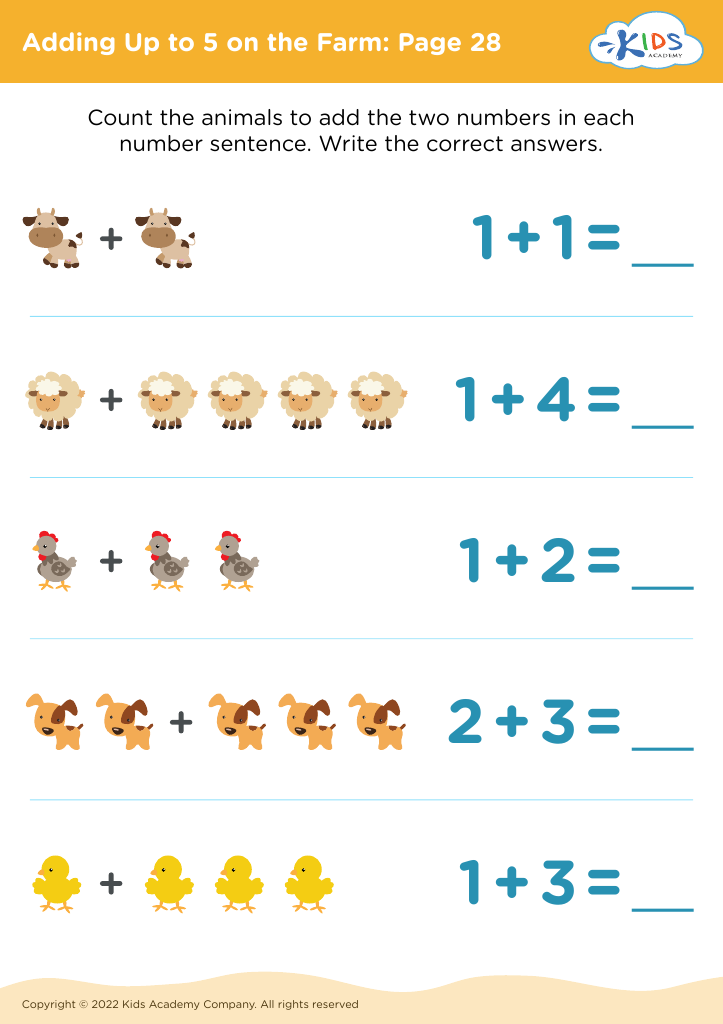
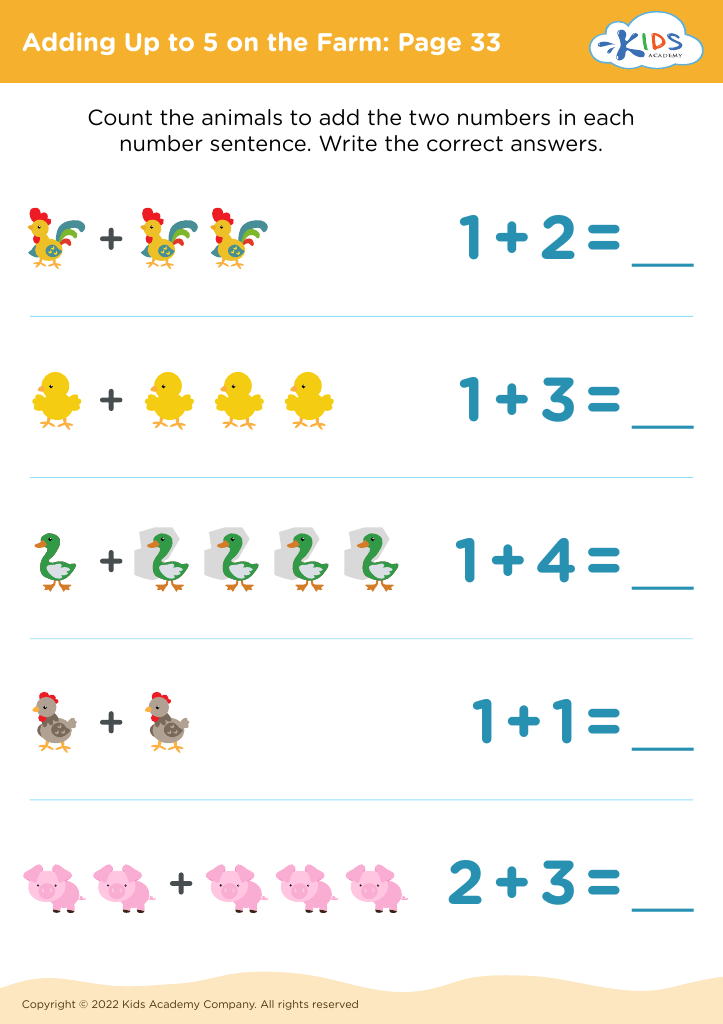
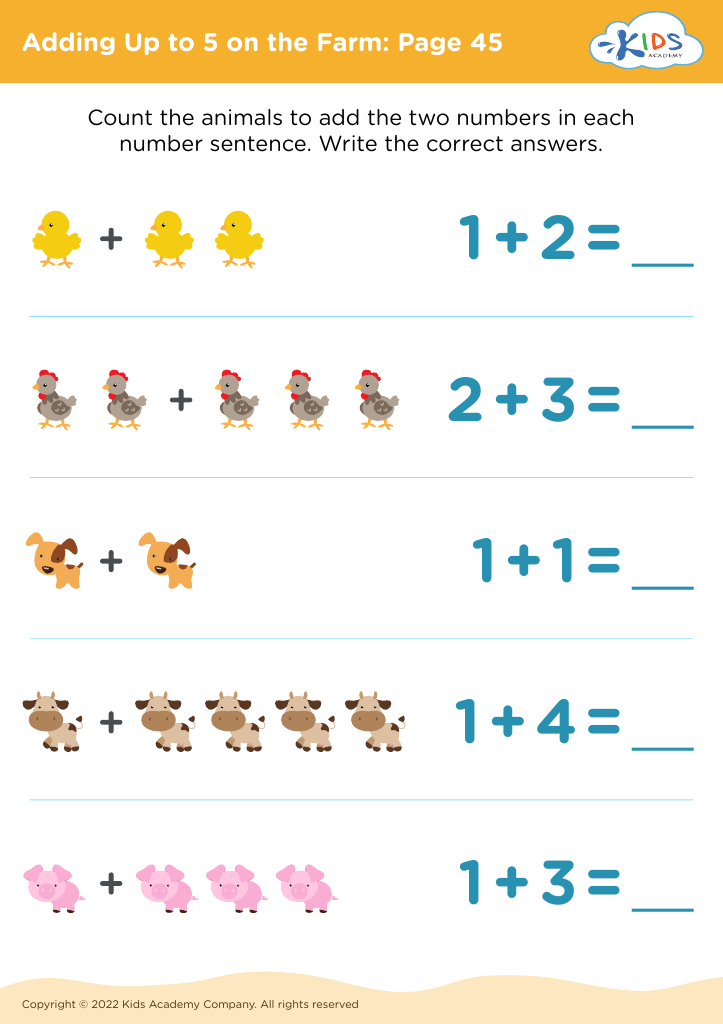



Problem-solving skills are essential for young children, particularly for 5-year-olds who are developing their cognitive and social abilities. When parents and teachers focus on fostering these skills through engaging activities, like "Adding on the Farm," they provide children with enjoyable opportunities to explore key concepts in a real-world context.
By incorporating relatable settings, children learn to identify problems, evaluate possible solutions, and implement strategies to achieve goals. For instance, in the context of a farm, children can count animals, calculate how many more are needed for a sustainable farm, or solve logistical issues regarding feeding schedules. Such activities not only teach basic math skills but also hone critical thinking and reasoning abilities.
Moreover, problem-solving fosters resilience—children learn that mistakes are part of the learning process. This early exposure helps them develop perseverance and adaptability, traits that will serve them throughout their academic journey and beyond.
Ultimately, teaching problem-solving skills helps establish a foundation for confident, independent thinkers. Parents and teachers should be proactive in integrating these fun, contextual activities into daily interactions to nurture children’s problem-solving abilities, ensuring they thrive both in and out of the classroom.