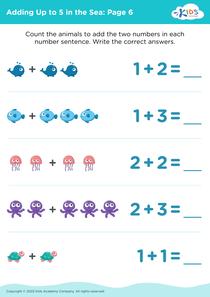
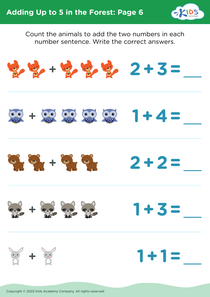
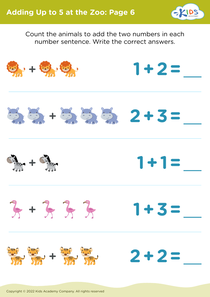
Understanding Quantities Adding on the Farm Worksheets for 5-Year-Olds
9 filtered results
-
From - To
Explore our "Understanding Quantities Adding on the Farm Worksheets" designed especially for 5-year-olds! These engaging worksheets introduce young learners to basic math concepts through the fun and relatable theme of farm animals and activities. Children will practice counting, adding, and comparing quantities in a delightful farm setting that captures their imagination. With vibrant illustrations and easy-to-follow exercises, kids will develop essential math skills while enjoying hands-on learning. Perfect for home or classroom use, these worksheets make learning addition a joyful experience. Start your child's math adventure today and watch them thrive as they master the art of understanding quantities!
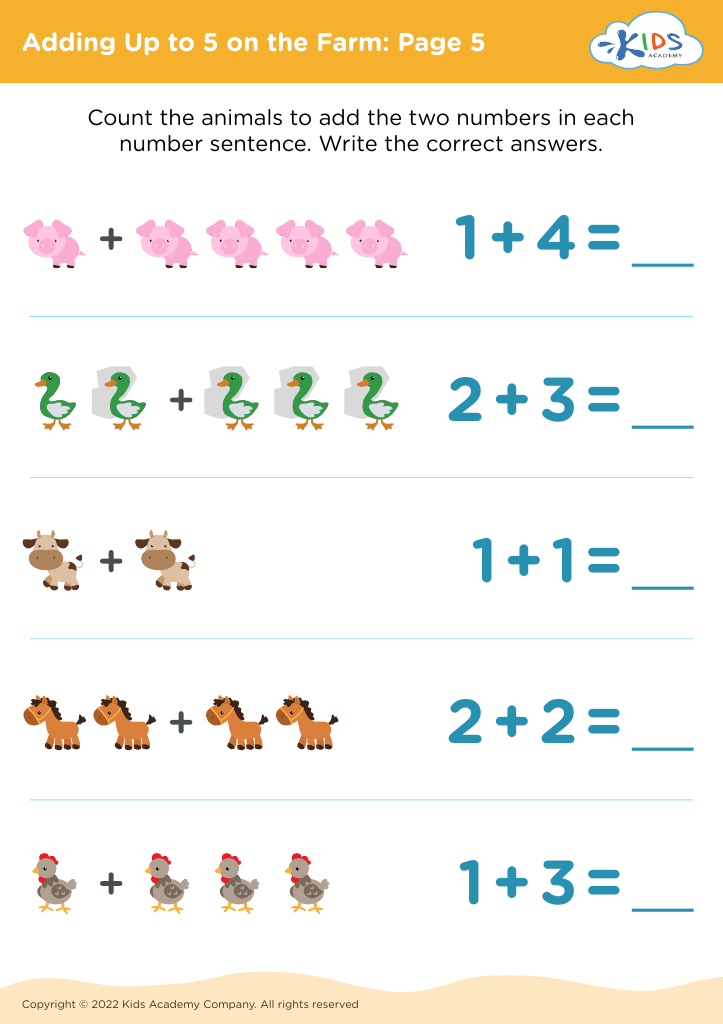
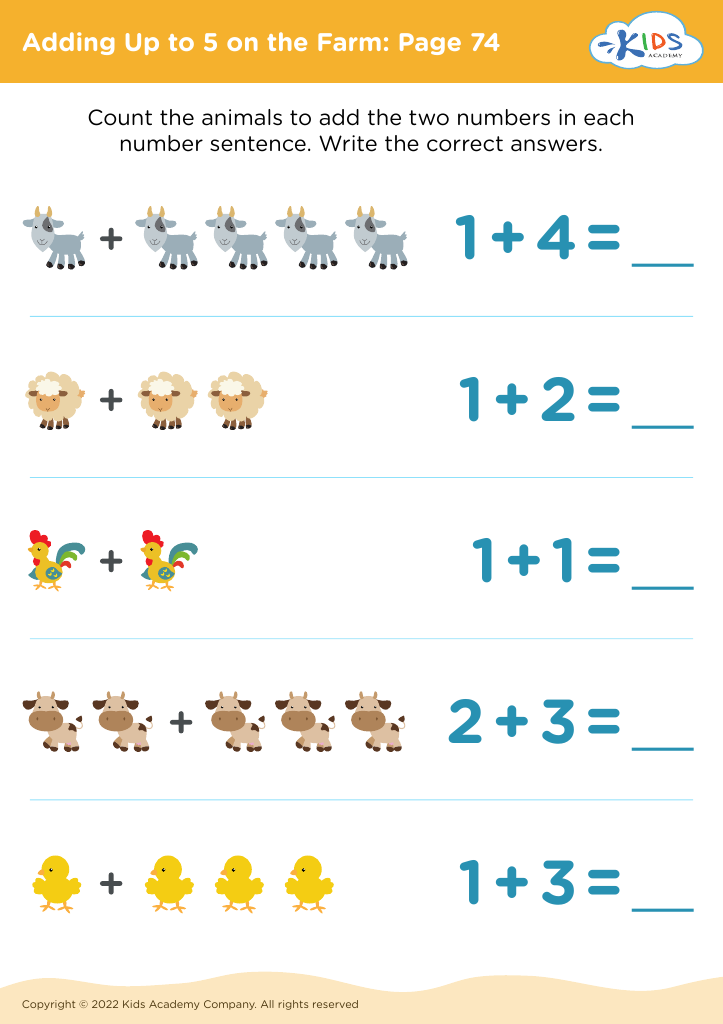
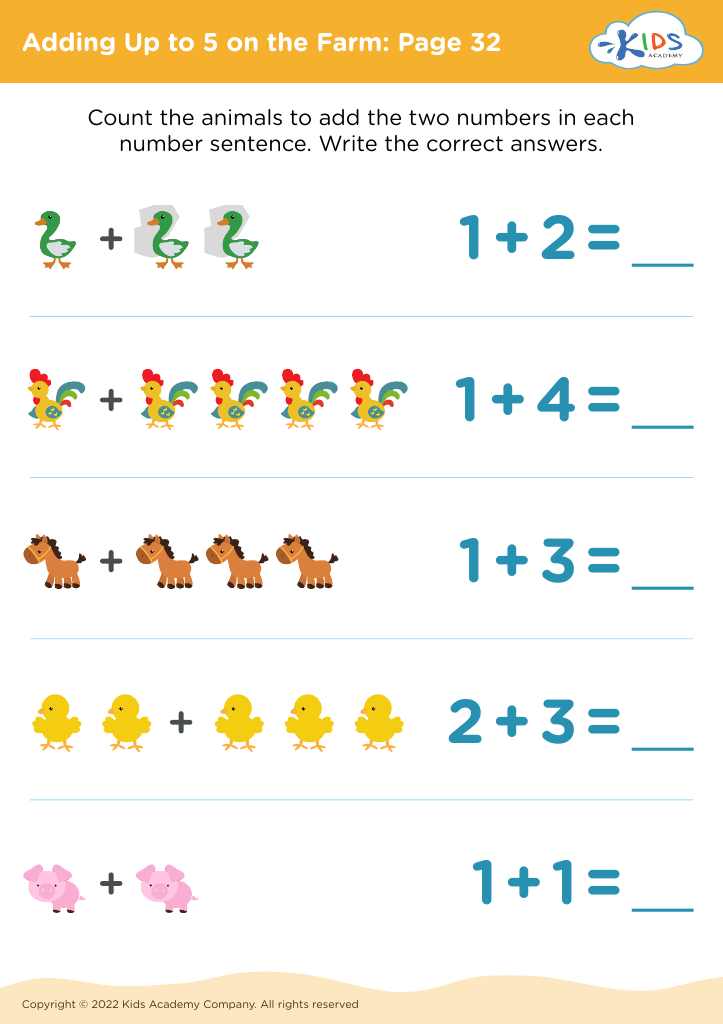
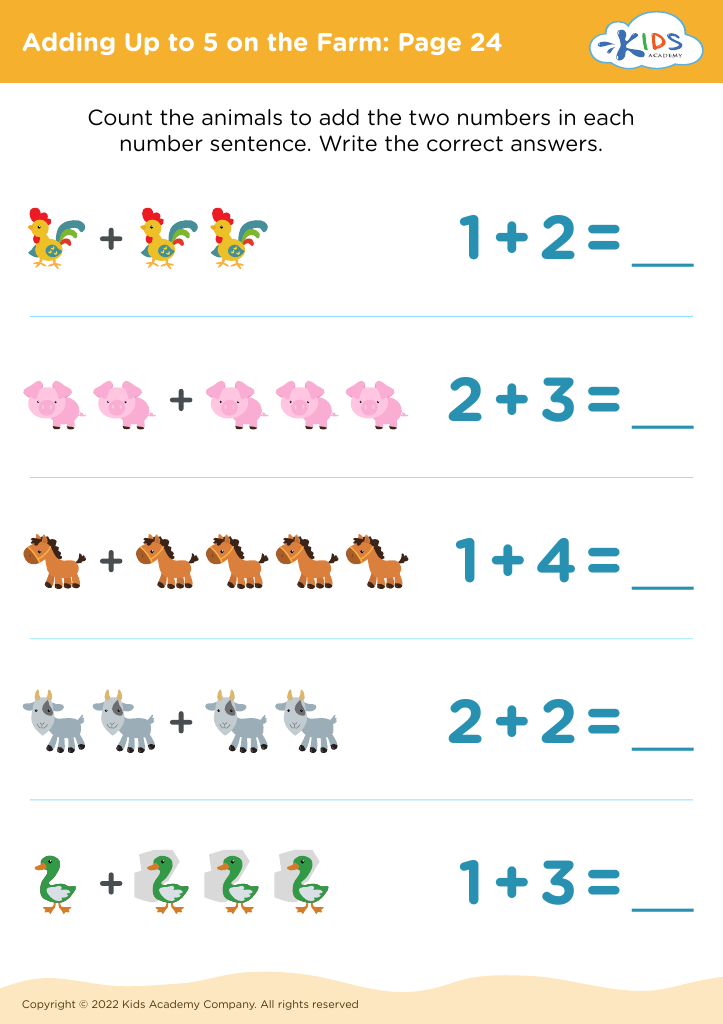
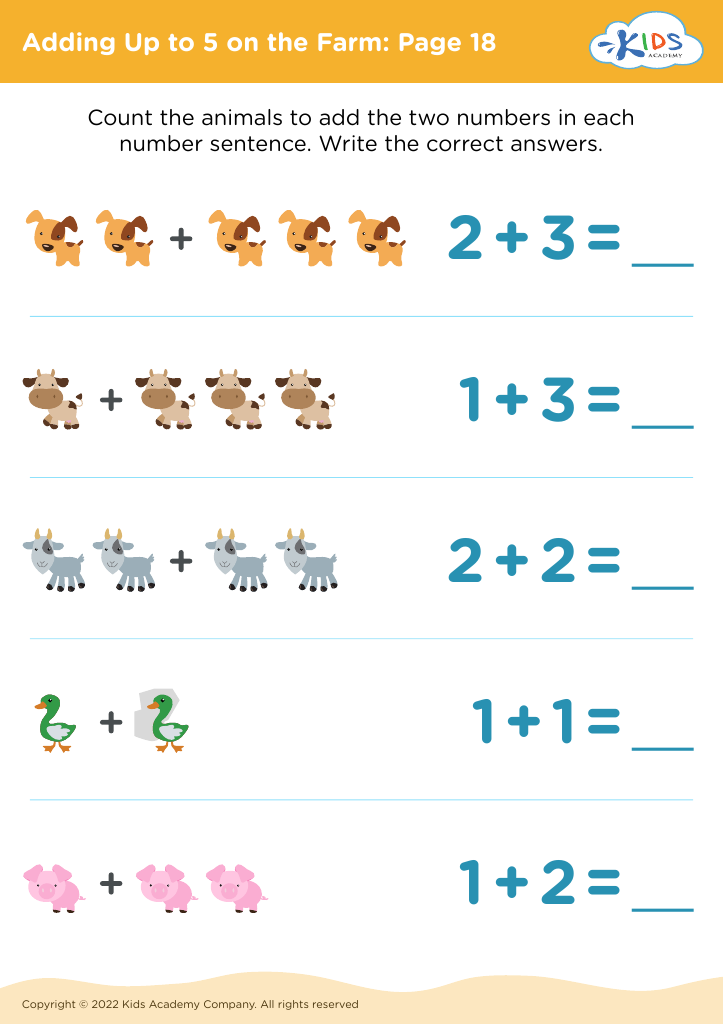
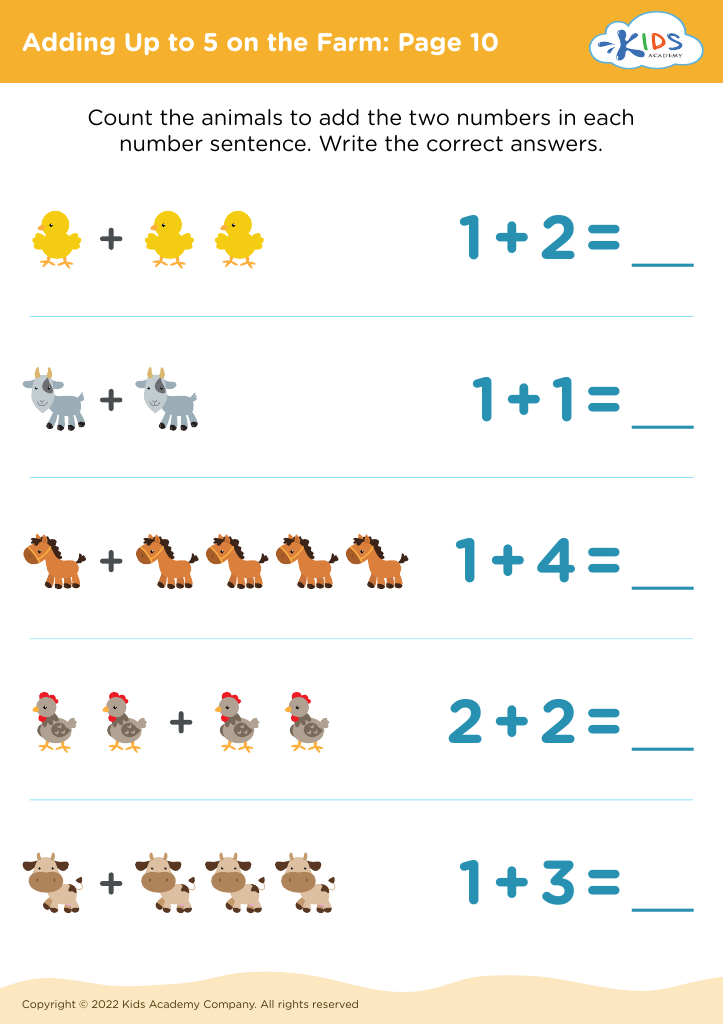
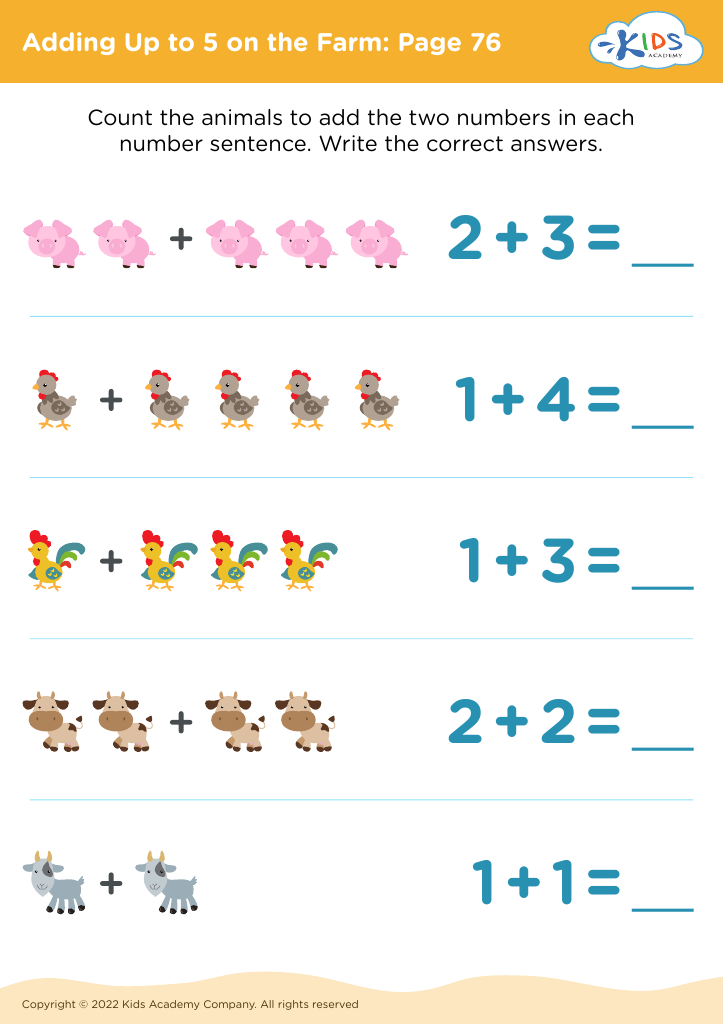
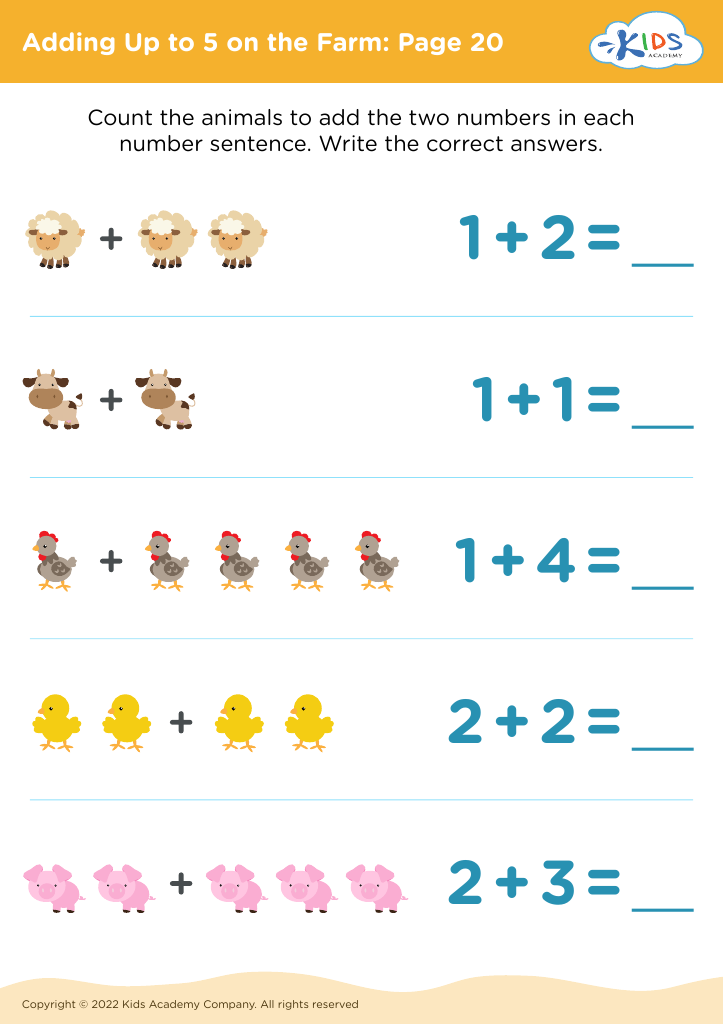
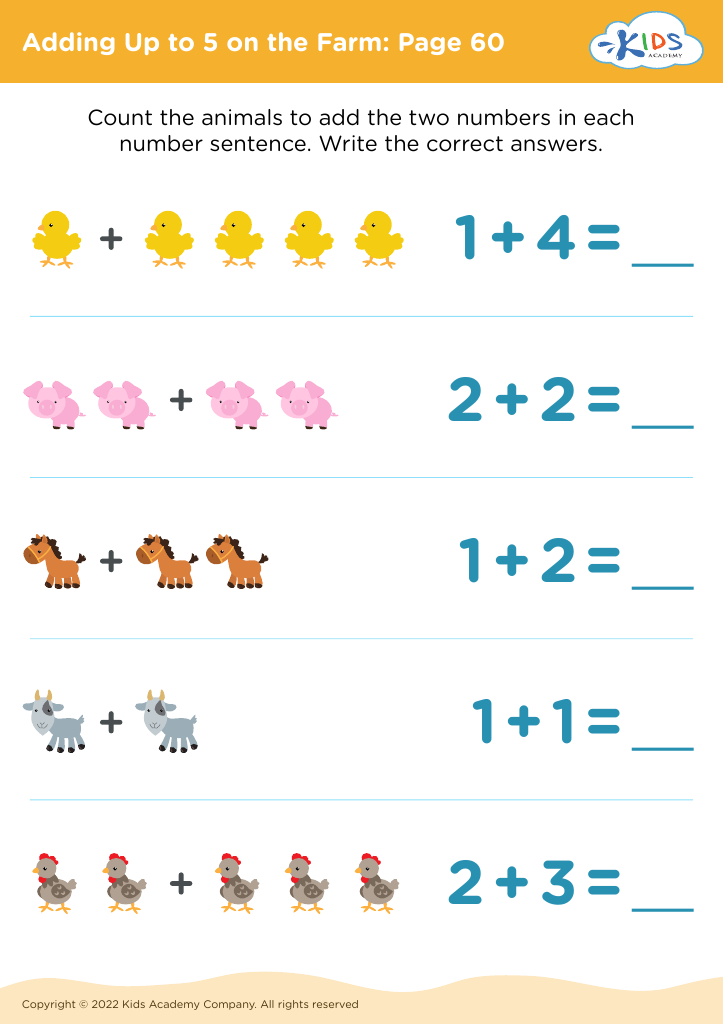



Understanding quantities and basic addition is crucial for 5-year-olds, especially when it comes to themes like "Adding on the Farm." This engaging context not only captures children's imaginations but also grounds abstract mathematical concepts in real-life situations. By using farm imagery, children can relate to familiar animals, crops, and daily activities, making learning more relatable and practical.
Parents and teachers should care about this foundational understanding for several reasons. First, it develops critical thinking skills; when children explore quantities—like counting chickens or apples—they engage in problem-solving. Secondly, it nurtures numeracy skills, laying the groundwork for more complex mathematics in the future. Early exposure to math concepts from contexts they can visualize enhances retention and enjoyment of learning.
Additionally, understanding quantities reinforces language skills through vocabulary related to math and farming. It fosters cooperative play and communication among peers, promoting social skills as they share their insights and reasoning. Ultimately, this kind of experiential learning not only prepares children for academic success but also helps them see math as a valuable tool in their everyday lives, instilling a positive attitude toward learning that can last a lifetime.