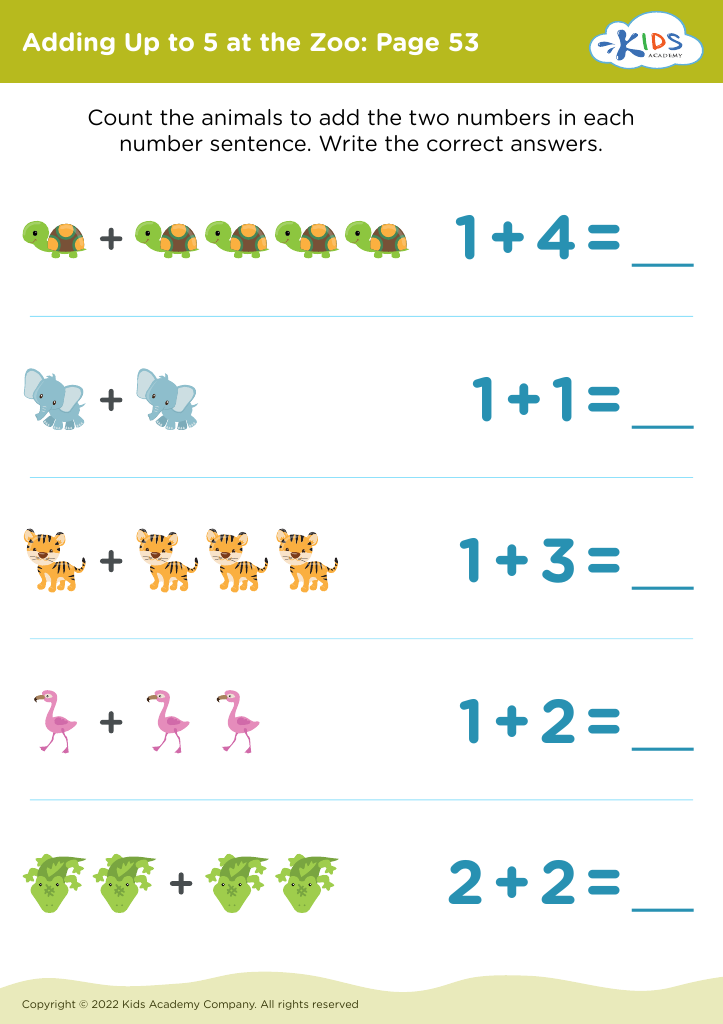
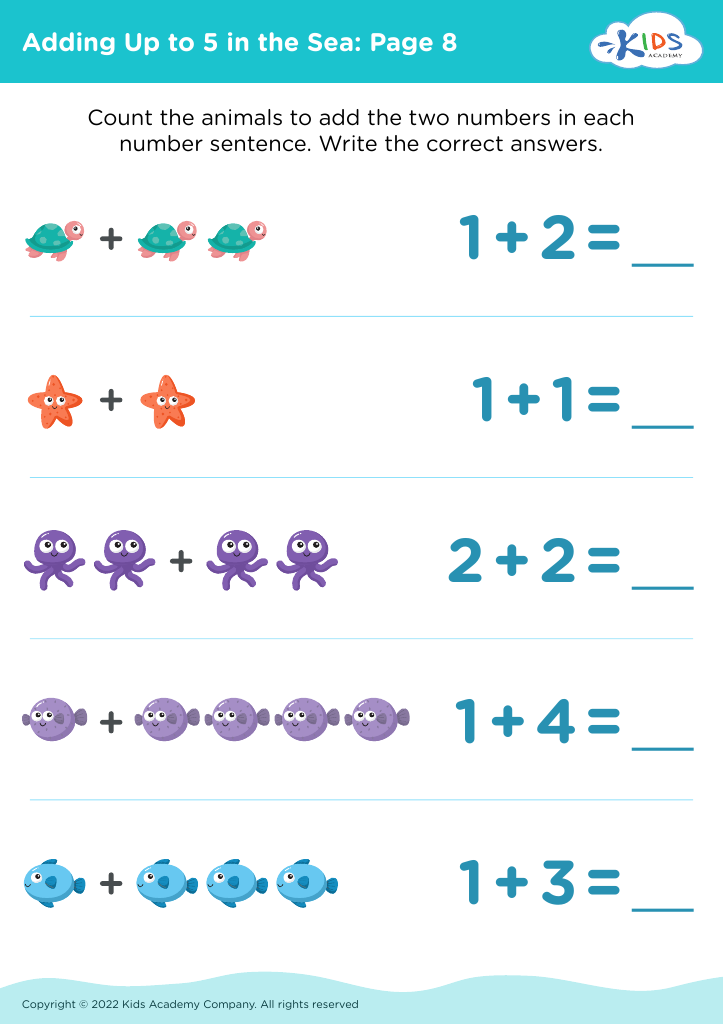
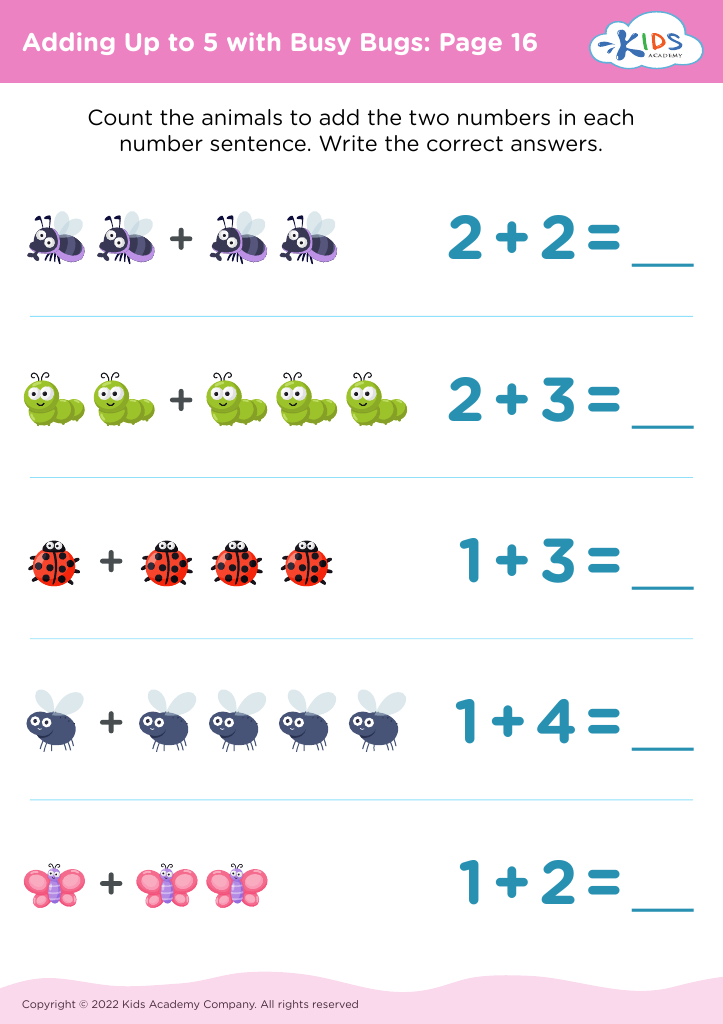
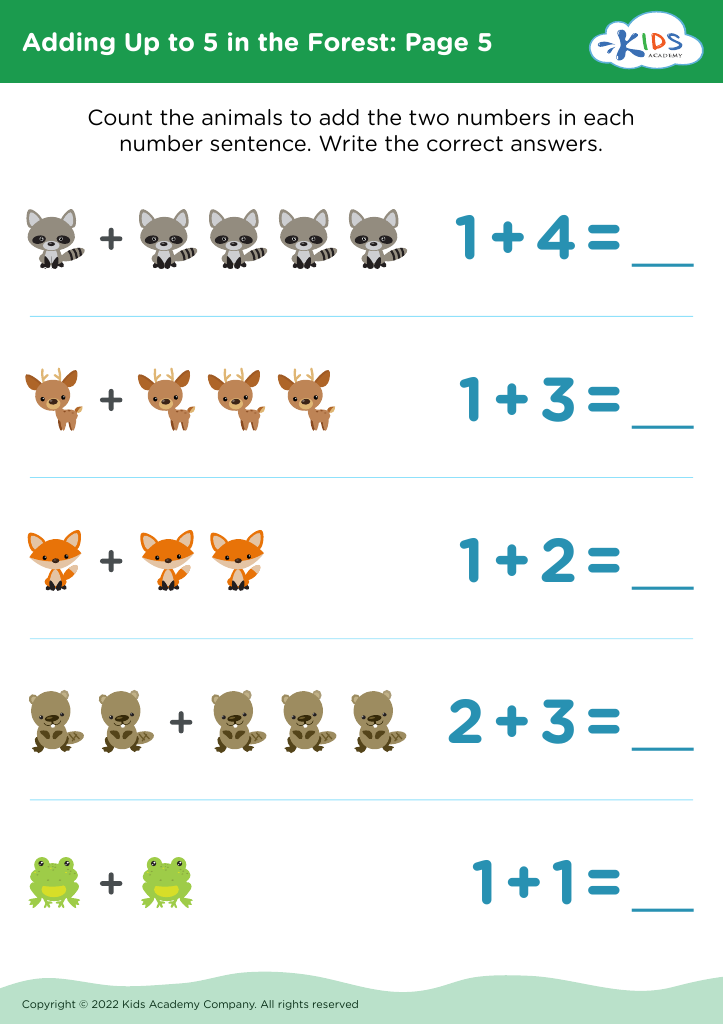
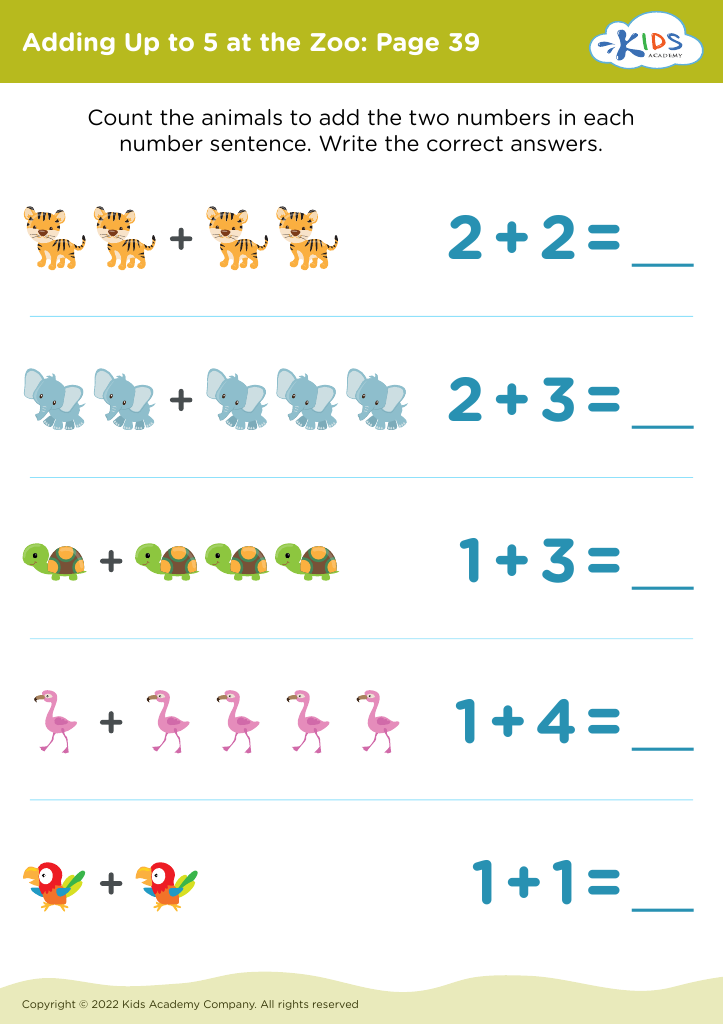
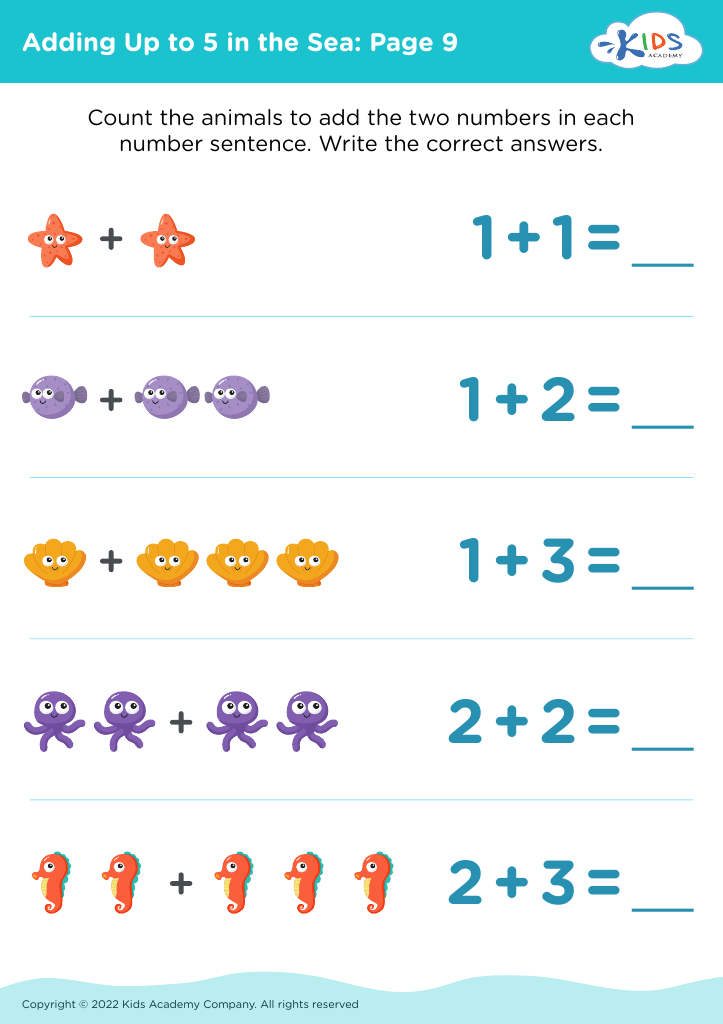







Addition skills, particularly the ability to add up to 5, are foundational for young learners, which is why parents and teachers should prioritize them. At the age of 5, children are in a critical developmental stage where they begin to form their understanding of numbers and basic math concepts. Mastering addition up to 5 supports cognitive growth and enhances problem-solving abilities, laying the groundwork for more complex mathematical operations.
Furthermore, these skills foster confidence in young learners. When children can successfully add small numbers, it encourages a positive attitude towards math, reducing anxiety and building a strong sense of accomplishment. Such confidence is instrumental as they progress in their education.
Addition skills are also practical; they help children relate maths to everyday situations, such as counting toys or snacks, enabling contextual learning. Engaging parents in this process ensures consistency between home and school, creating a supportive environment for learning.
Moreover, early mastery of addition skills correlates with future academic success. The foundation laid in these early stages can lead to improved performance in math throughout schooling, making it imperative for adults to invest time and energy into helping children strengthen their addition abilities.








