Animal identification Adding Up to 5 Worksheets for 5-Year-Olds - Page 2
27 filtered results
-
From - To







%20(1).jpg)
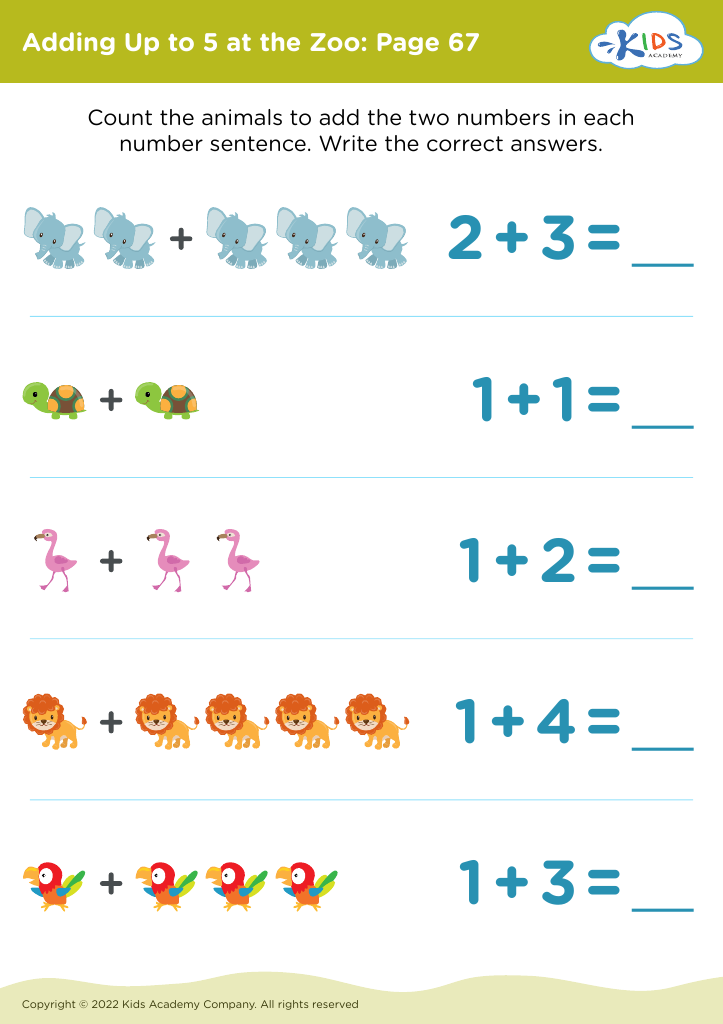
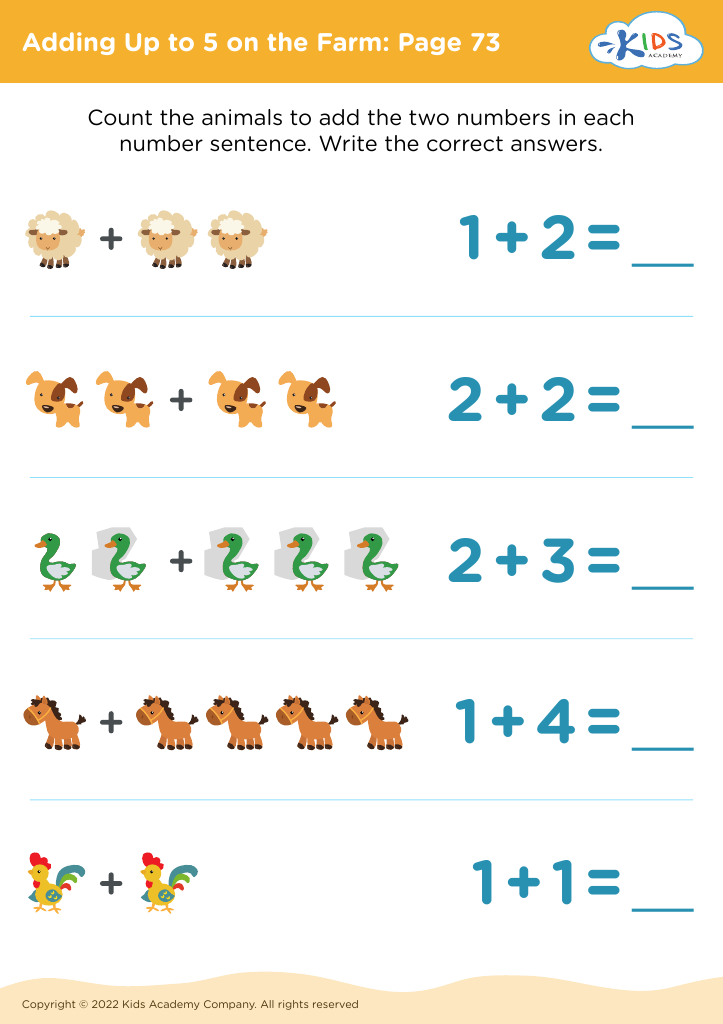
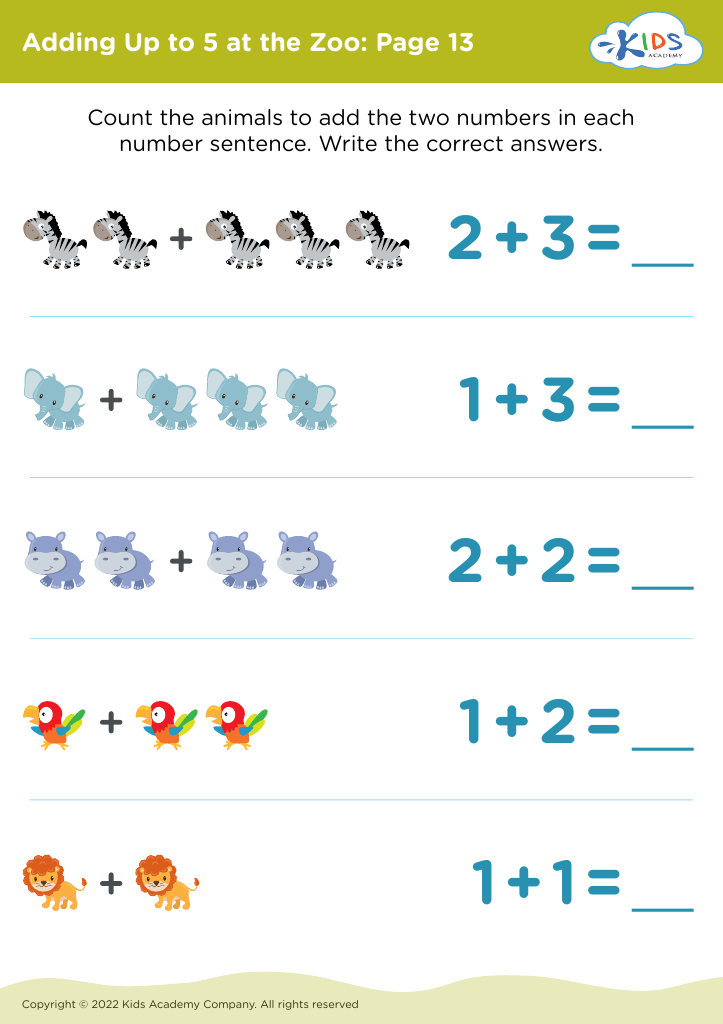
Animal identification helps young children connect math with the world around them. Teaching 5-year-olds about different animals not only expands their knowledge of nature but also provides engaging contexts for learning basic math skills, including "adding up to 5."
When children learn to identify various animals, it creates opportunities for hands-on activities where they can count and categorize animals, enhancing their understanding of numbers. For example, if a child sees 2 cats and 3 dogs, they can practice adding these groups together to make a total of 5, all while engaging with animals they love.
Moreover, learning about animals fosters curiosity and comprehension of biological concepts. It encourages discussions about habitats, physical characteristics, and behaviors, alongside mathematical concepts. This integrated learning approach makes lessons more meaningful and memorable for children.
Parents and teachers should care about animal identification as it holds the potential to cultivate a love for learning. By incorporating math into relatable and fun themes like animals, they can motivate children to be curious, engaged, and enthusiastic learners—essential qualities in early education. Ultimately, knowledge of animals and math will help lay a strong foundation for future learning experiences.








