Check out this FREE Trial Lesson on Adding Up to 5 for age 5!

Z

Favorites
With answer key
Interactive
  • 5
  • Basic Addition Skills
  • Adding Up to 5
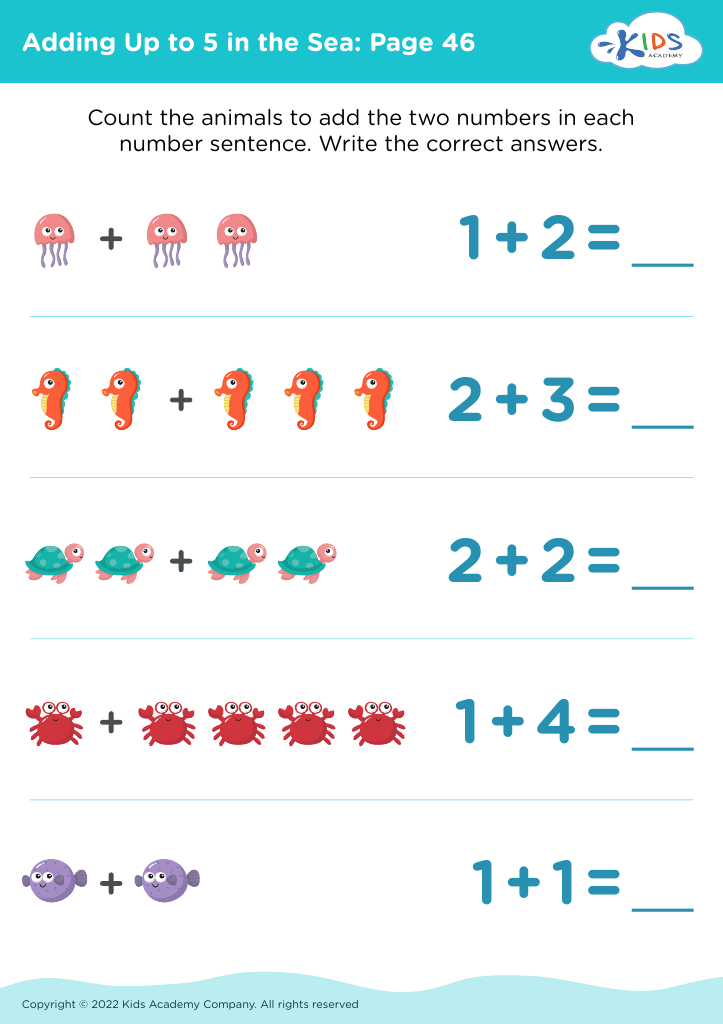
Adding Up to 5 in the Sea: Page 46
Worksheet
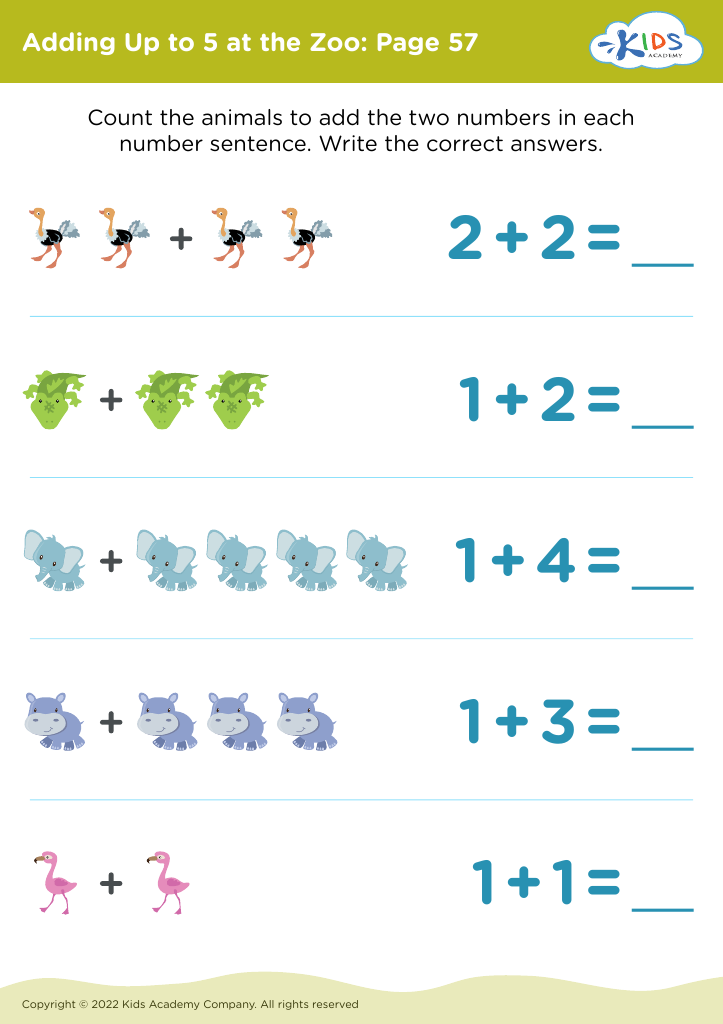
Adding Up to 5 at the Zoo: Page 57
Worksheet
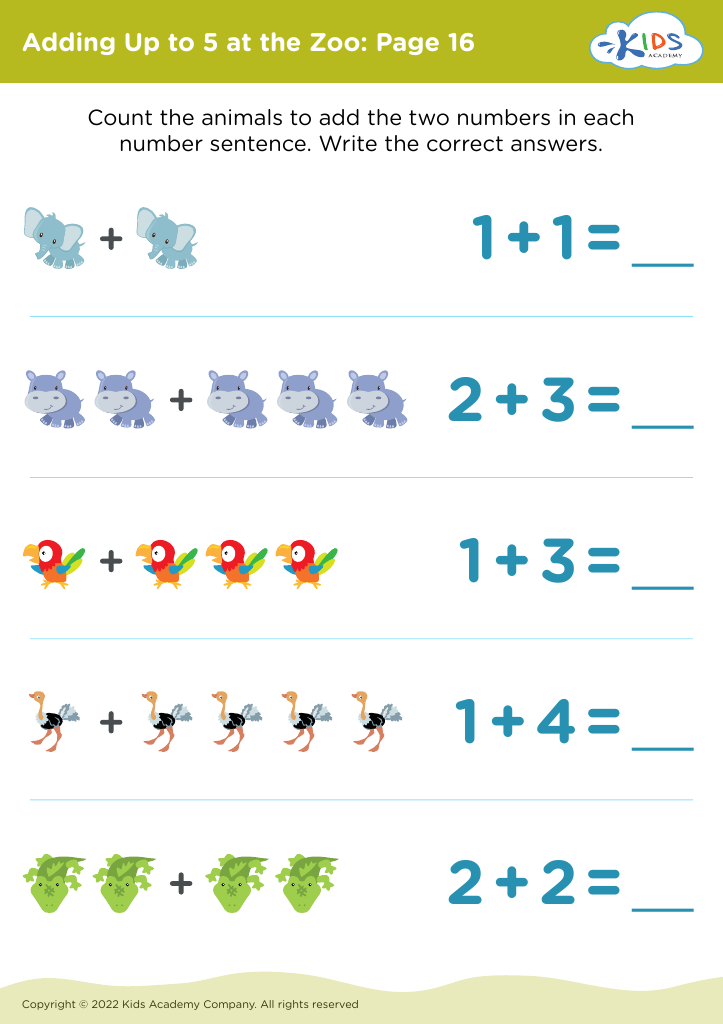
Adding Up to 5 at the Zoo: Page 16
Worksheet
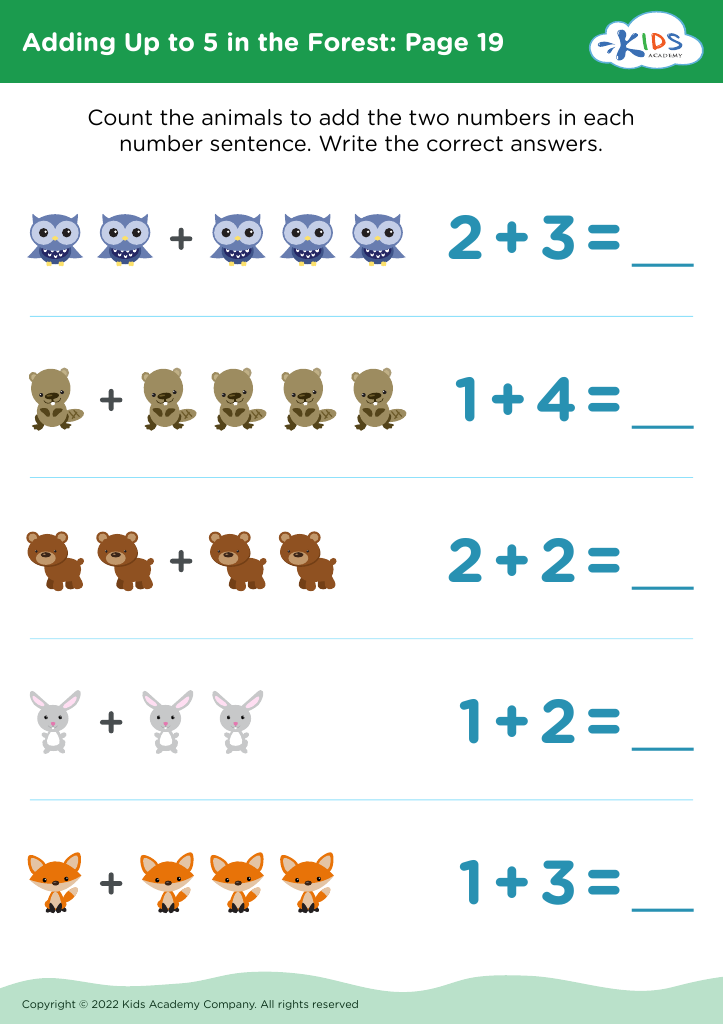
Adding Up to 5 in the Forest: Page 19
Worksheet
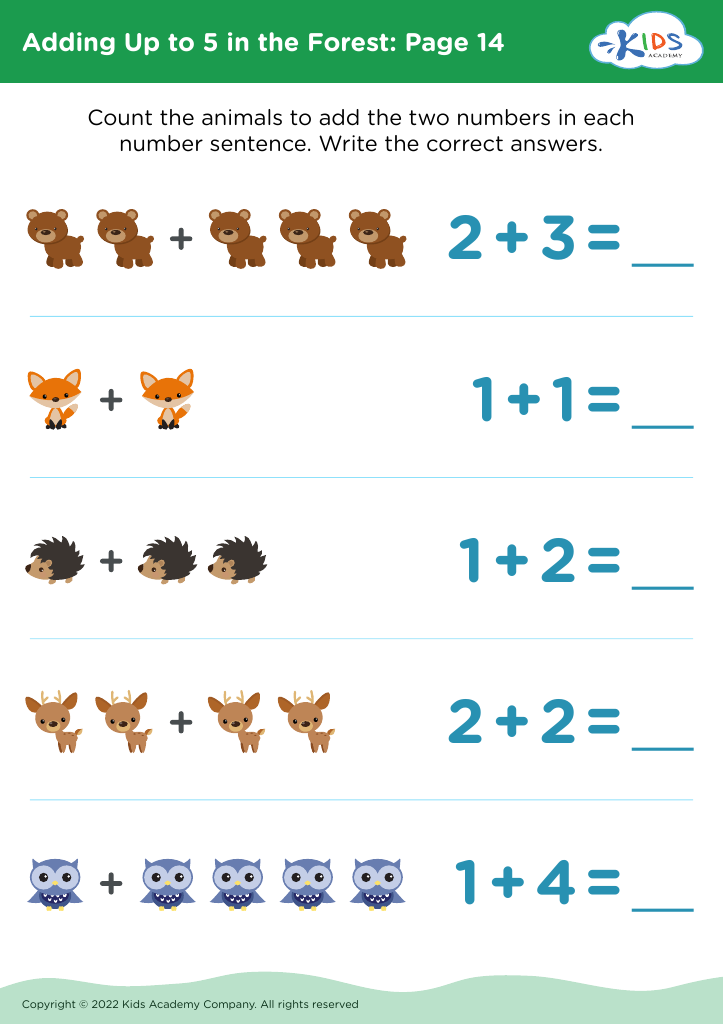
Adding Up to 5 in the Forest: Page 14
Worksheet
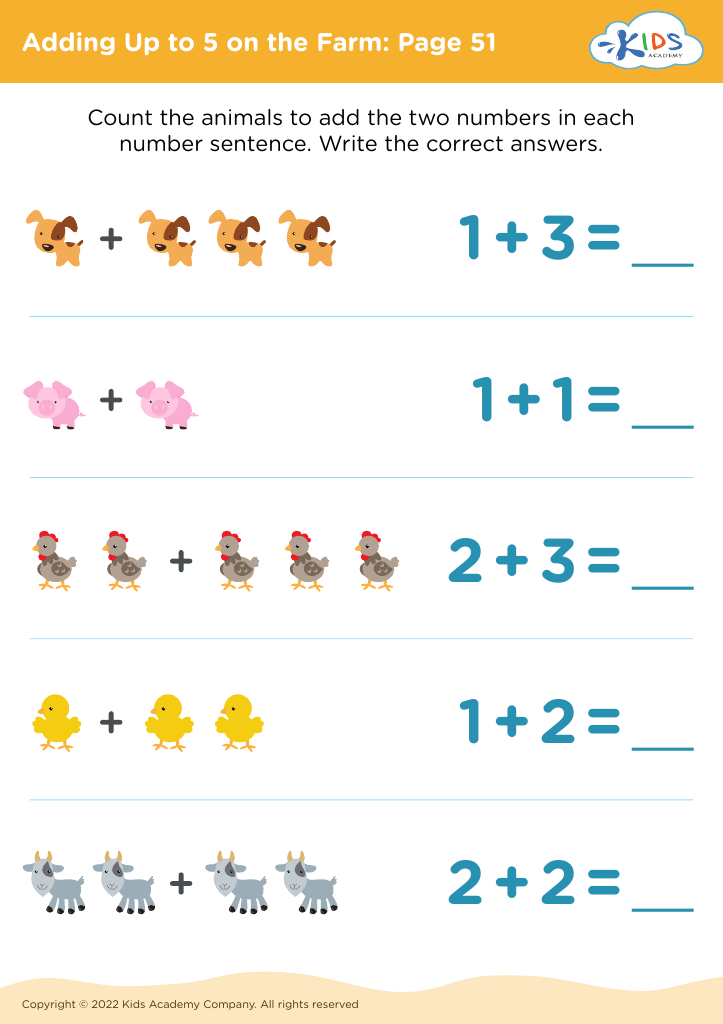
Adding Up to 5 on the Farm: Page 51
Worksheet
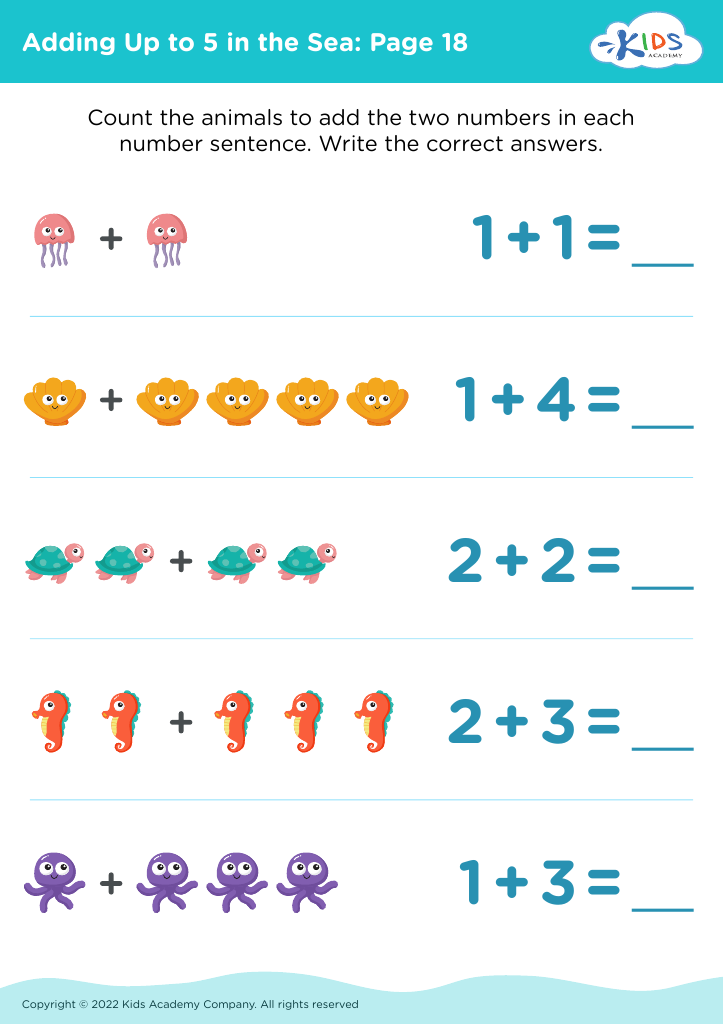
Adding Up to 5 in the Sea: Page 18
Worksheet
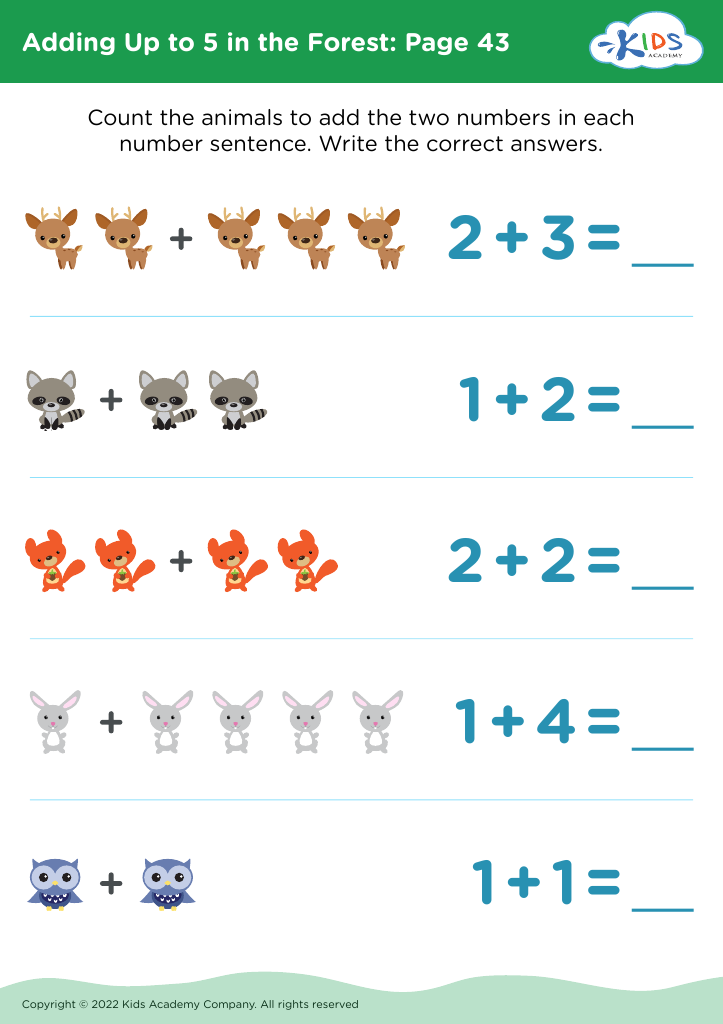
Adding Up to 5 in the Forest: Page 43
Worksheet
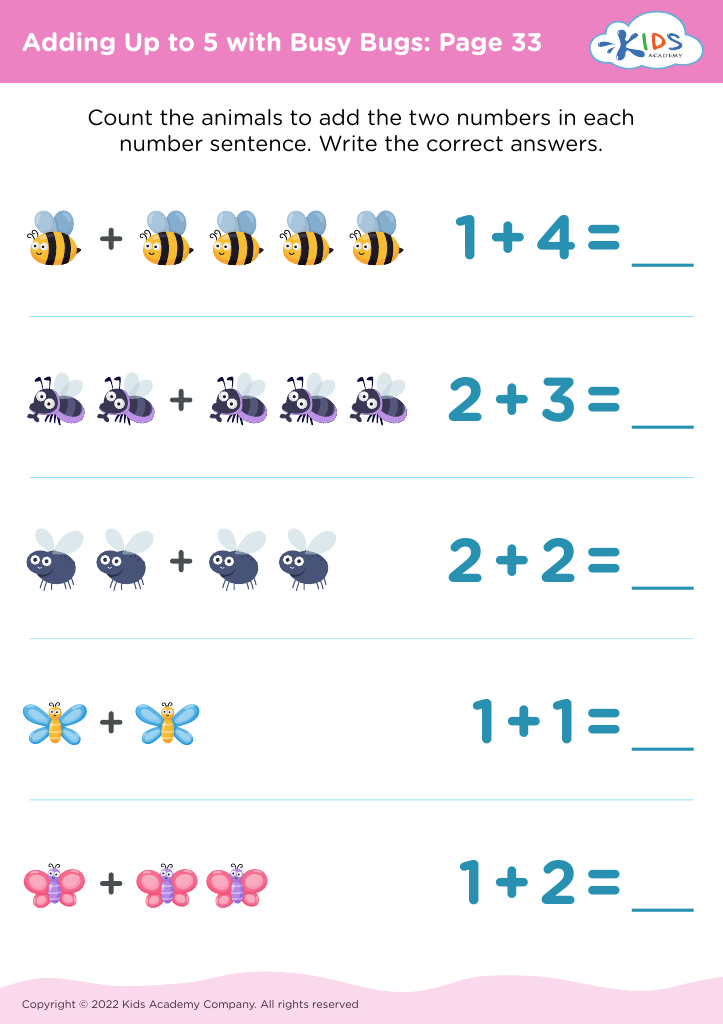
Adding Up to 5 with Busy Bugs: Page 33
Worksheet
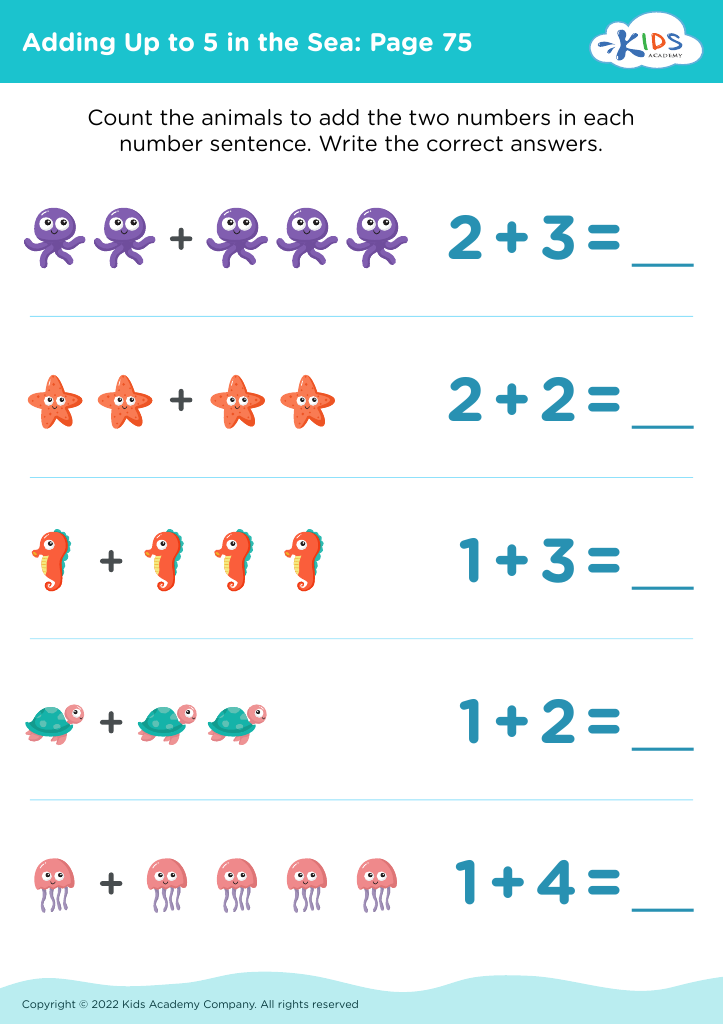
Adding Up to 5 in the Sea: Page 75
Worksheet
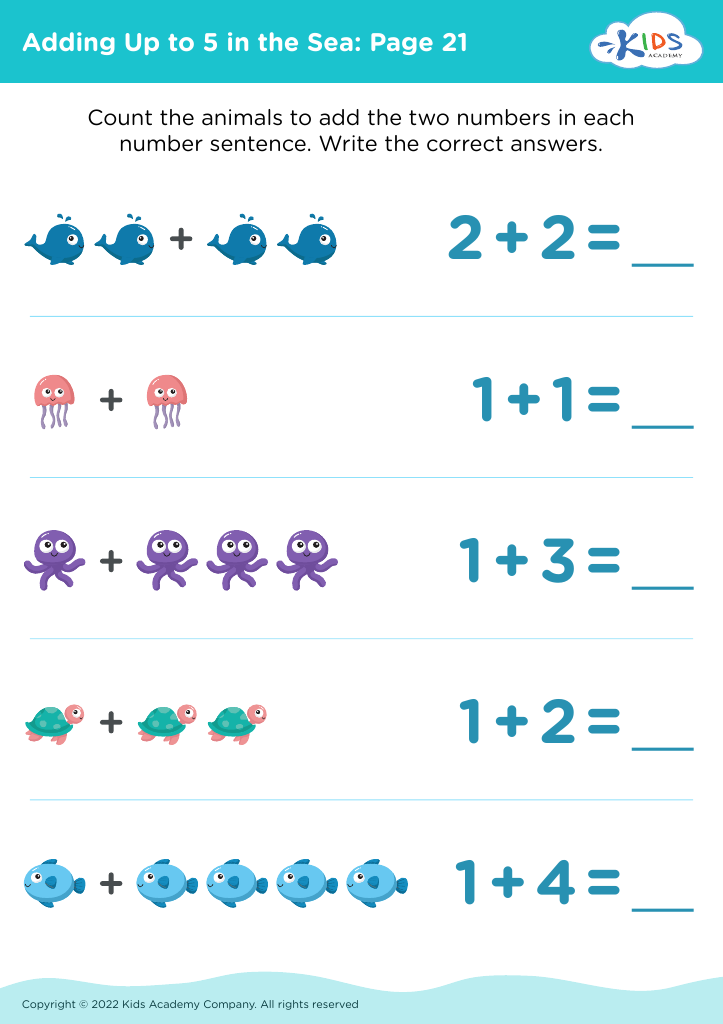
Adding Up to 5 in the Sea: Page 21
Worksheet
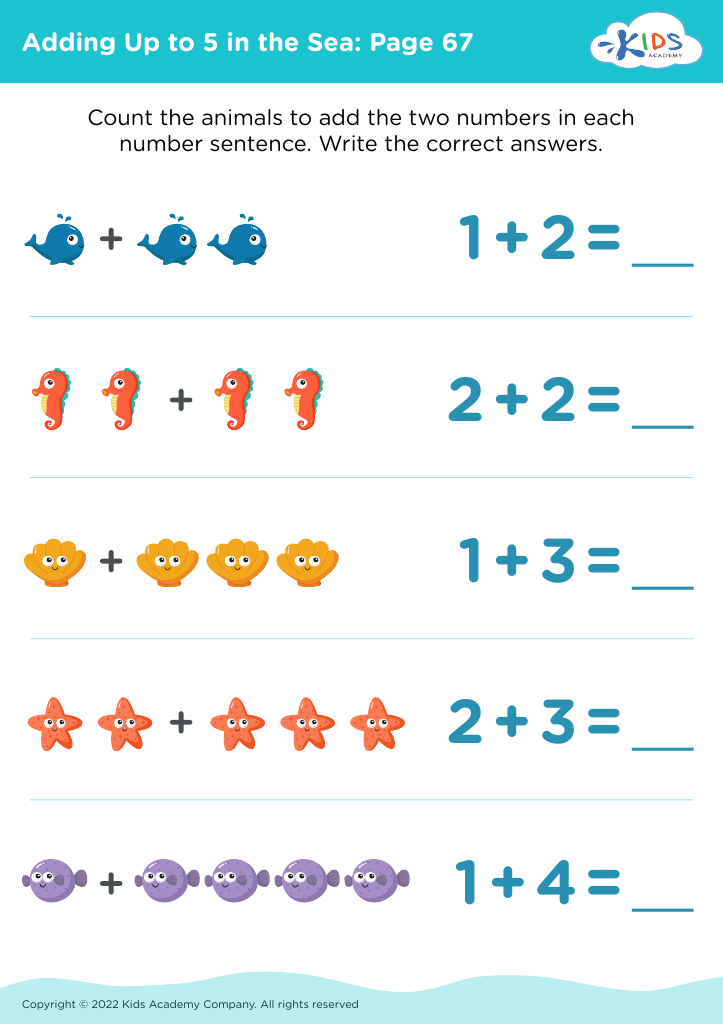
Adding Up to 5 in the Sea: Page 67
Worksheet
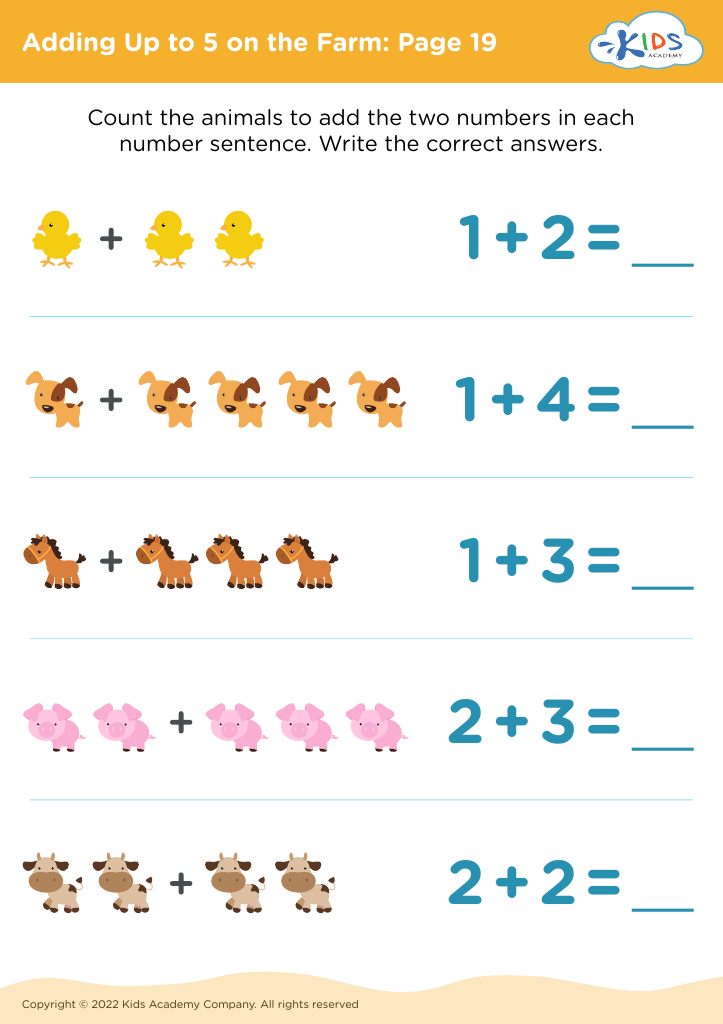
Adding Up to 5 on the Farm: Page 19
Worksheet
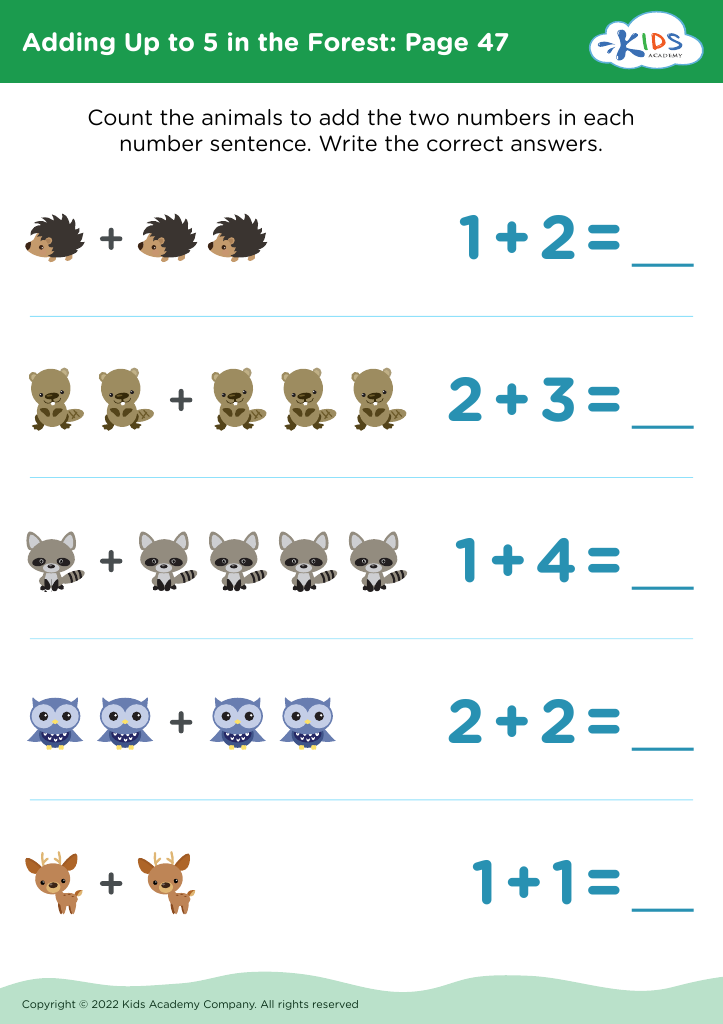
Adding Up to 5 in the Forest: Page 47
Worksheet
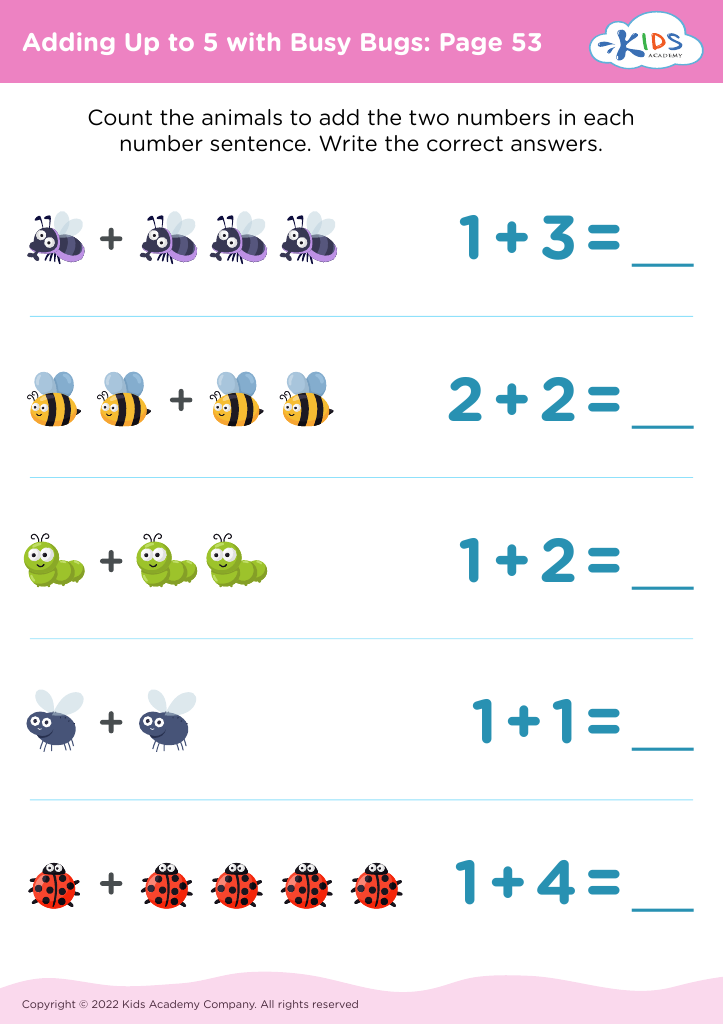
Adding Up to 5 with Busy Bugs: Page 53
Worksheet
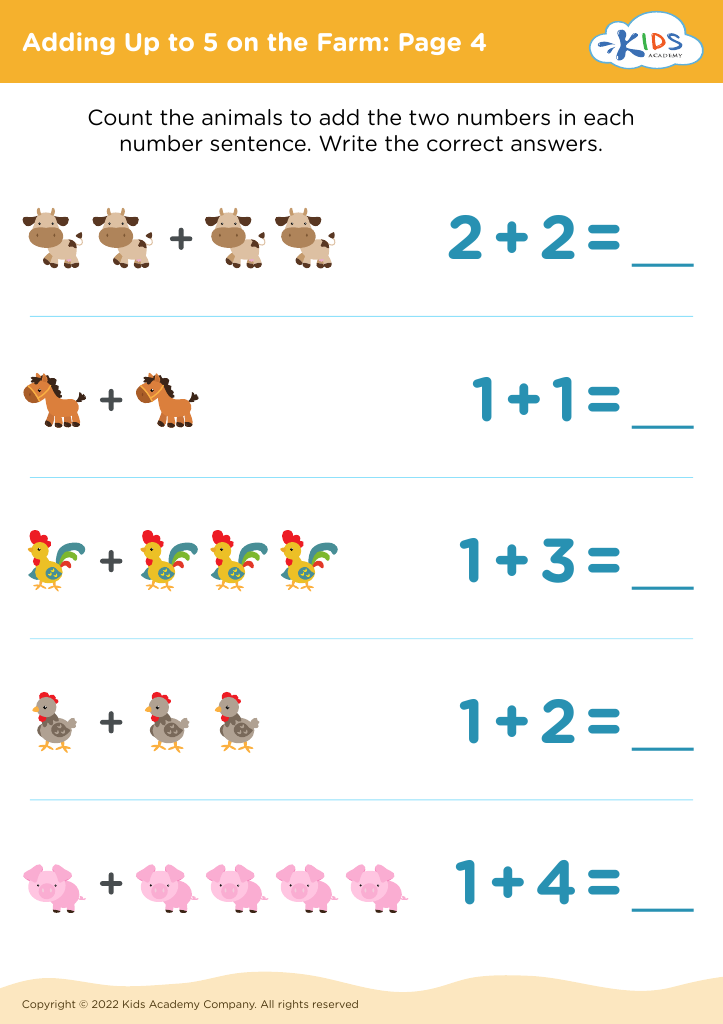
Adding Up to 5 on the Farm: Page 4
Worksheet
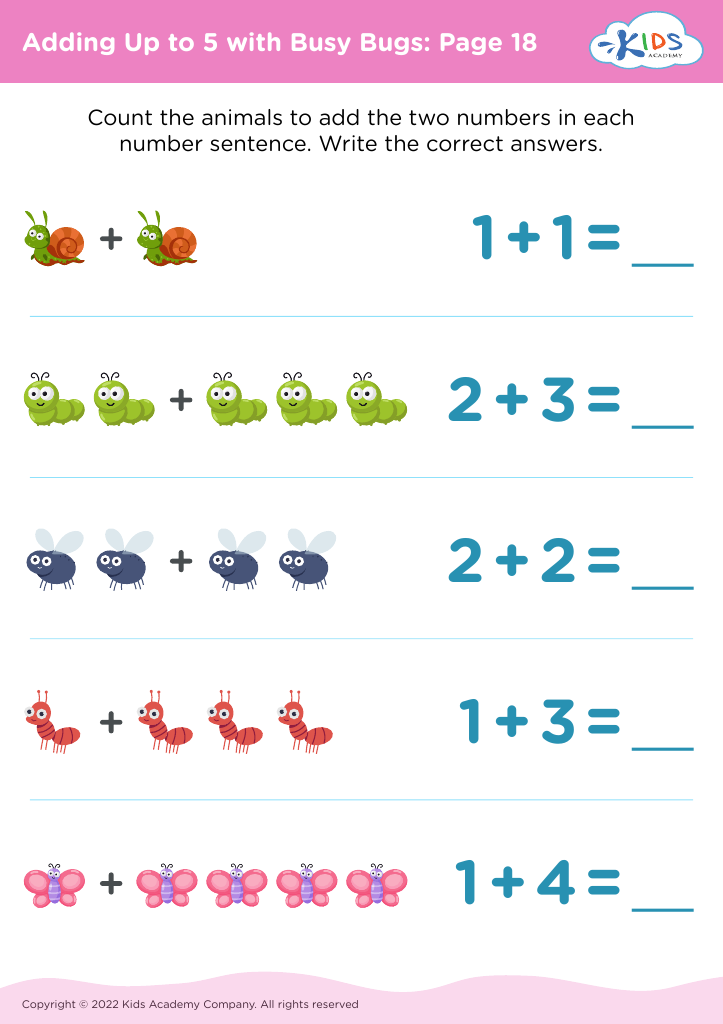
Adding Up to 5 with Busy Bugs: Page 18
Worksheet
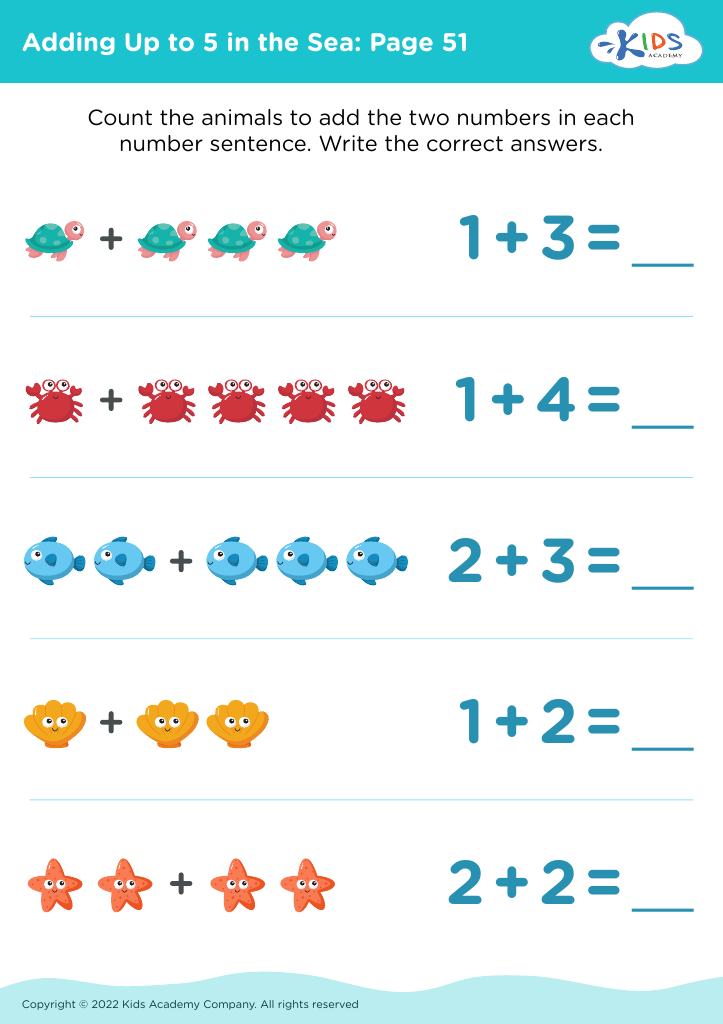
Adding Up to 5 in the Sea: Page 51
Worksheet
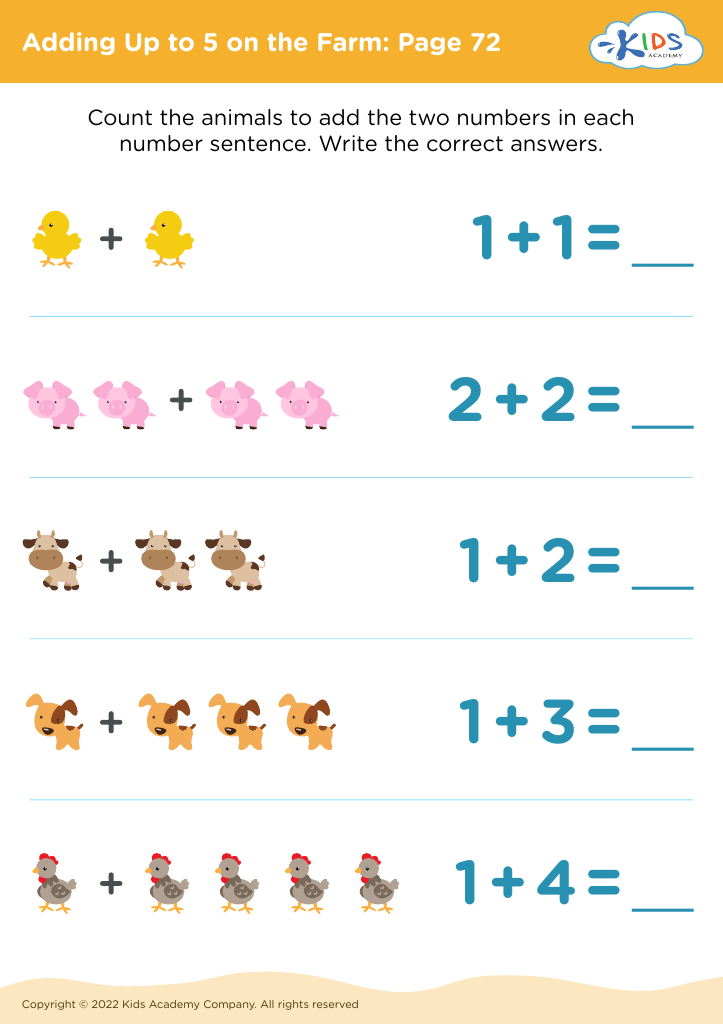
Adding Up to 5 on the Farm: Page 72
Worksheet
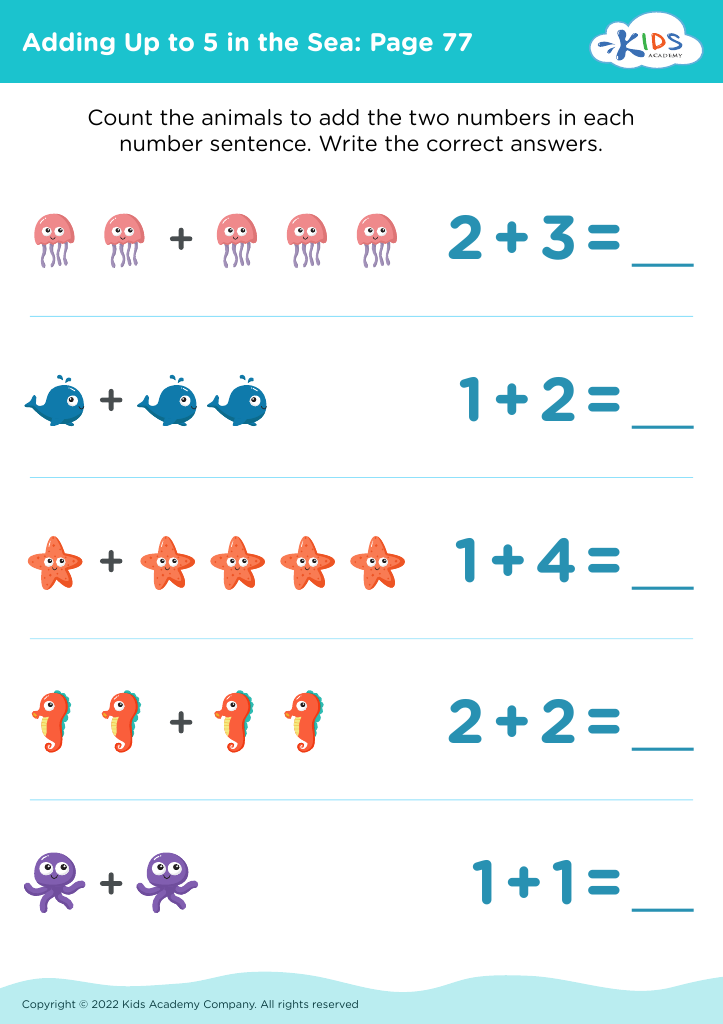
Adding Up to 5 in the Sea: Page 77
Worksheet
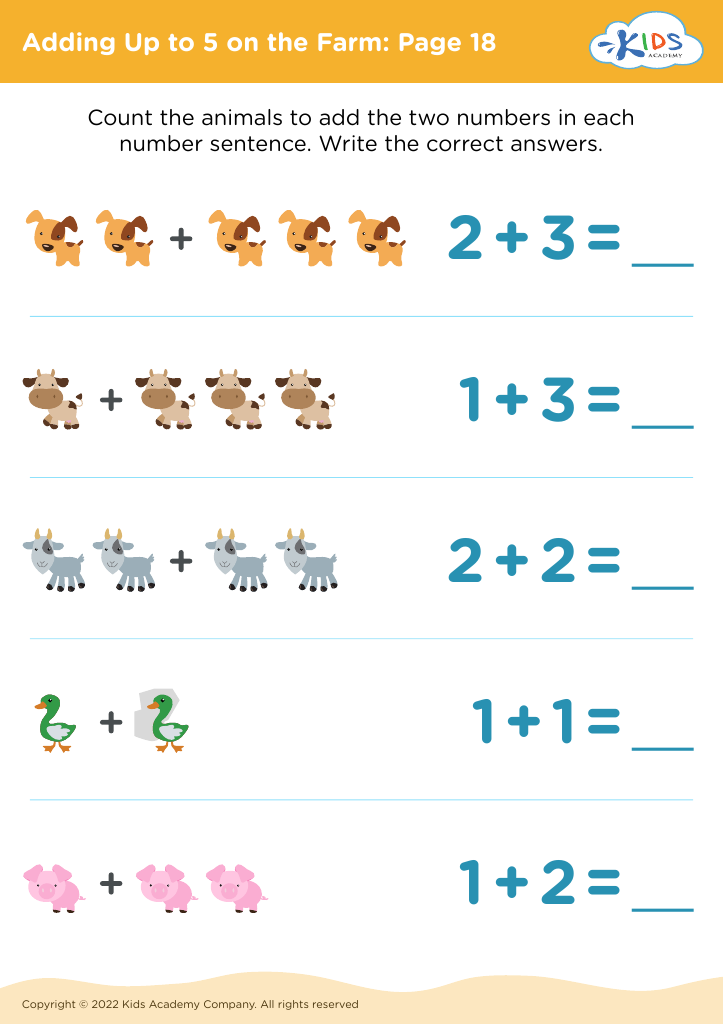
Adding Up to 5 on the Farm: Page 18
Worksheet
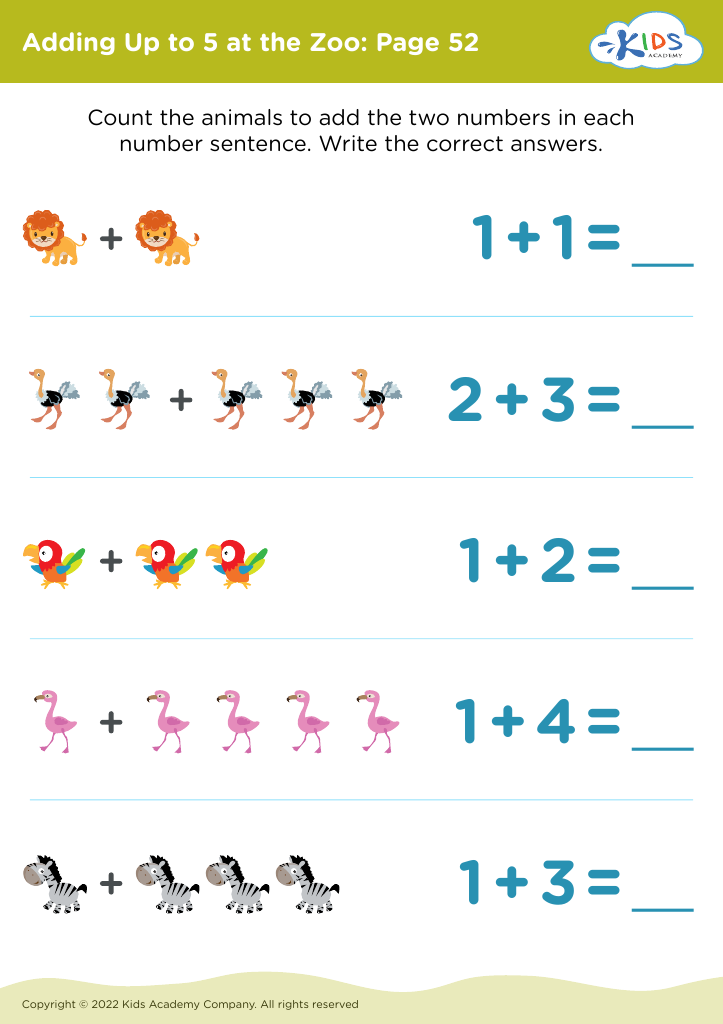
Adding Up to 5 at the Zoo: Page 52
Worksheet
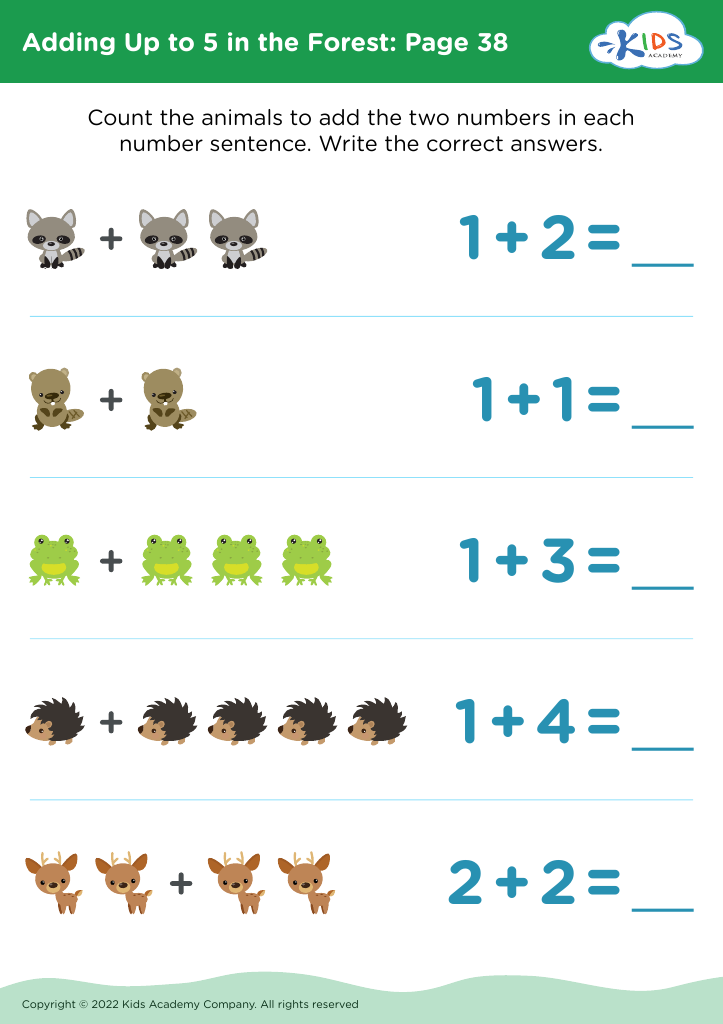
Adding Up to 5 in the Forest: Page 38
Worksheet
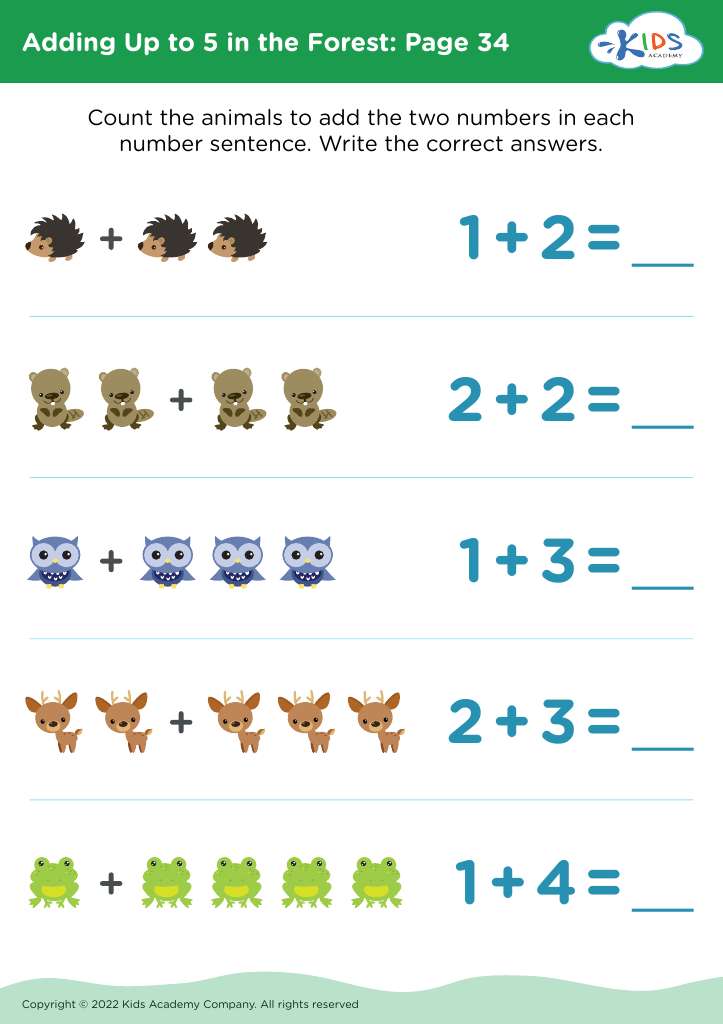
Adding Up to 5 in the Forest: Page 34
Worksheet


Basic addition skills, especially adding up to 5, are fundamental for 5-year-olds as they lay the groundwork for future mathematical understanding. At this age, children are developing critical thinking and cognitive skills, and mastering simple addition is an essential part of this process. Adding up to 5 introduces concepts of quantity and number recognition, enabling children to visualize and comprehend numbers in their environment.

First, acquiring basic addition skills fosters confidence in young learners, allowing them to engage with math in a non-threatening way. Success with small numbers creates a positive reinforcement cycle where children feel encouraged to explore more complex concepts. Furthermore, these skills promote problem-solving abilities and logical reasoning; children learn to think systematically as they combine quantities.

Beyond mathematics, these skills are also vital for everyday life activities. Recognizing how to add objects can help children understand sequences, measure, and relate numbers to physical concepts like time and money. This promotes a sense of independence and responsibility. Ultimately, teaching basic addition skills serves not only as an academic milestone but also as a foundational experience shaping their attitude towards learning and future success in school and beyond.