Filters

102 filtered results

Clear all filters
Favorites
With answer key
Interactive

102 filtered results

Difficulty Level

Grade


Check out this FREE Trial Lesson on Adding Up to 5 for age 5!

T

Favorites
With answer key
Interactive
  • 5
  • Counting skills
  • Adding Up to 5
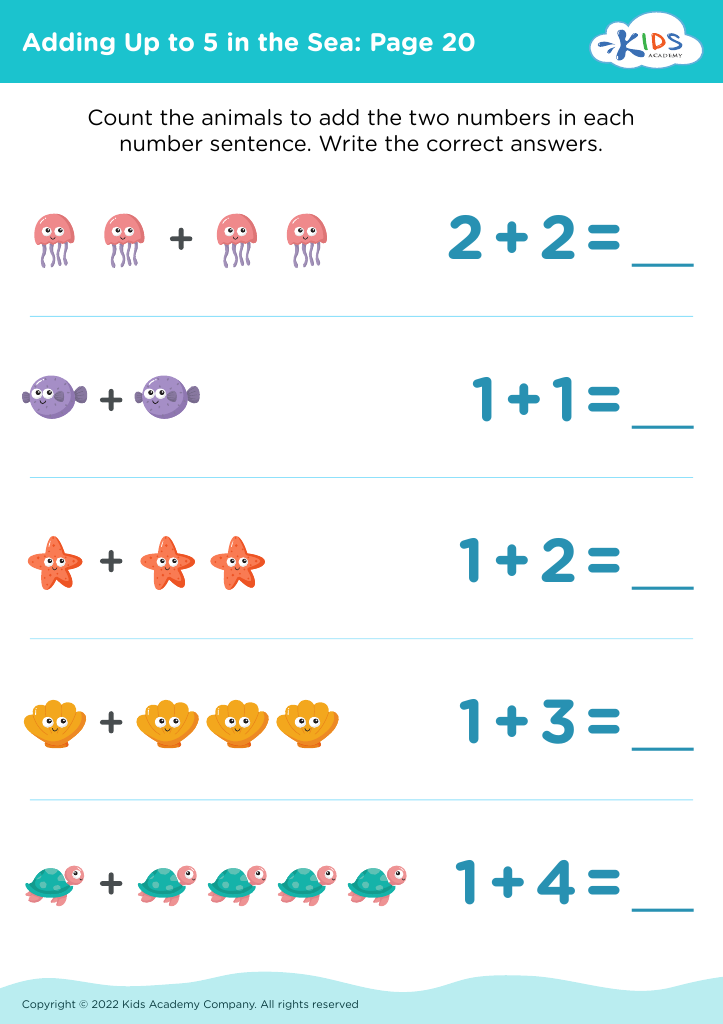
Adding Up to 5 in the Sea: Page 20
Worksheet
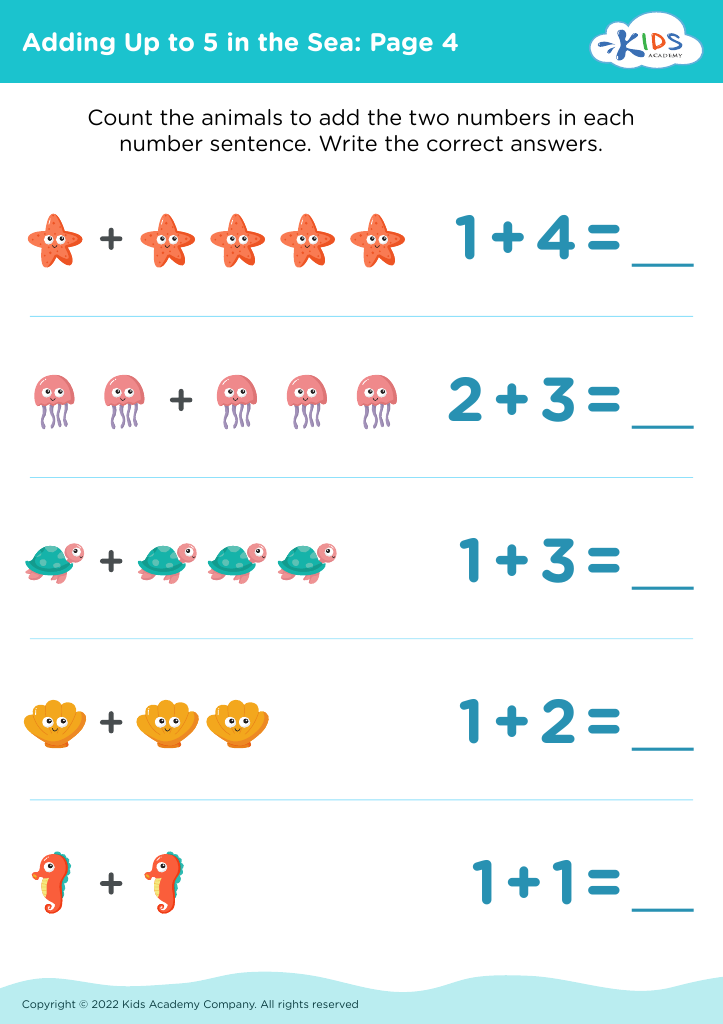
Adding Up to 5 in the Sea: Page 4

Adding Up to 5 in the Sea: Page 4

Adding Up to 5 in the Sea: Page 4
Worksheet
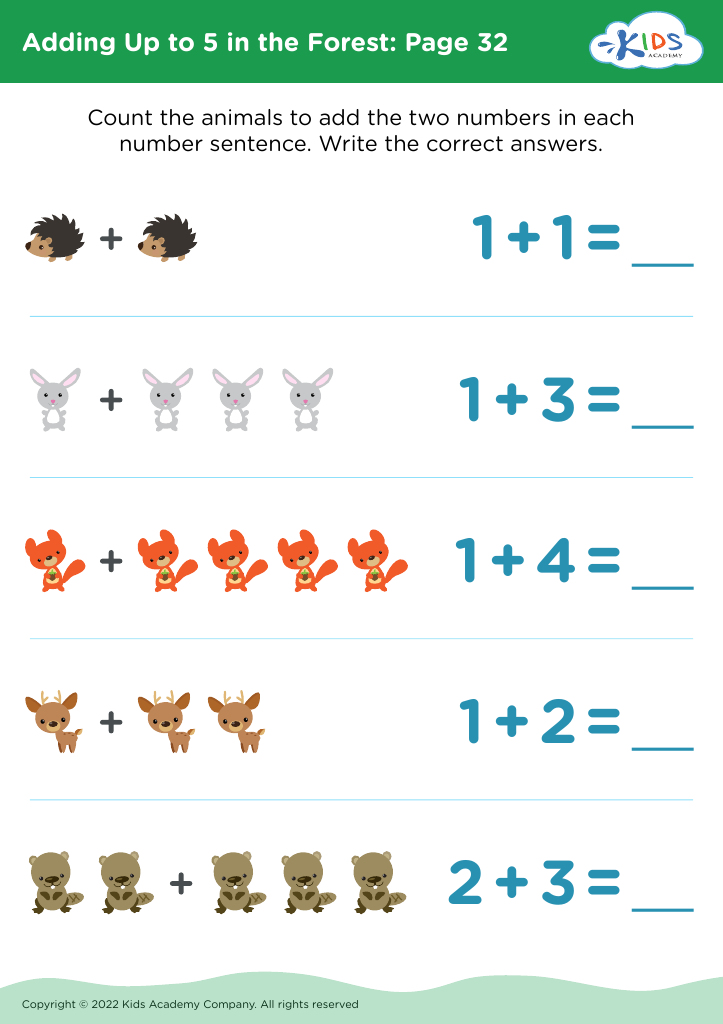
Adding Up to 5 in the Forest: Page 32
Worksheet
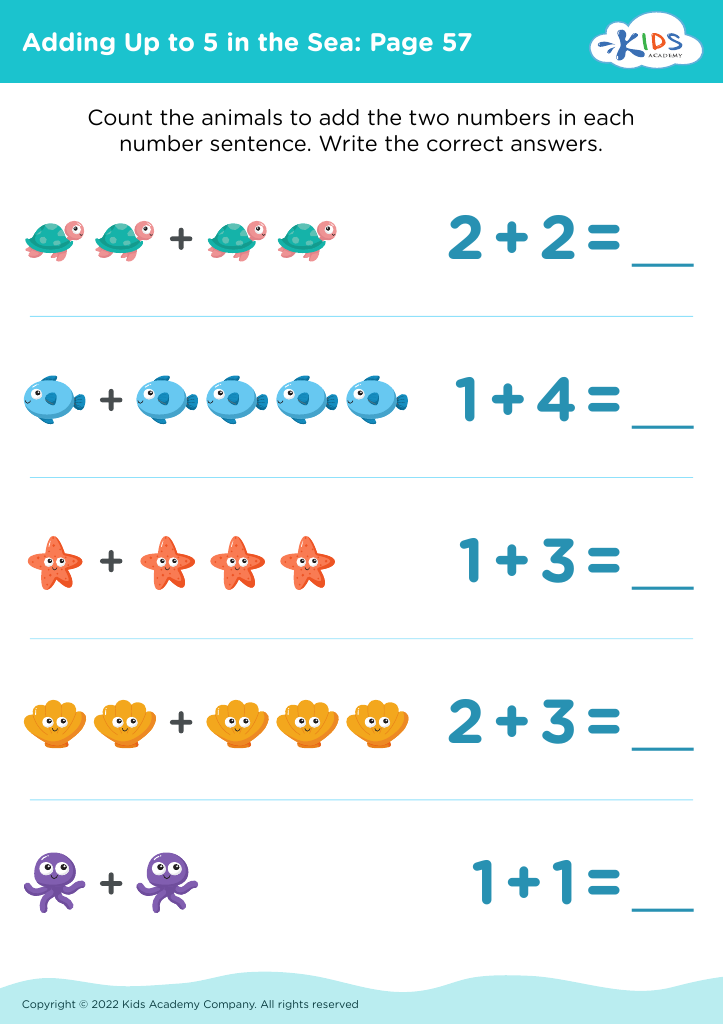
Adding Up to 5 in the Sea: Page 57
Worksheet
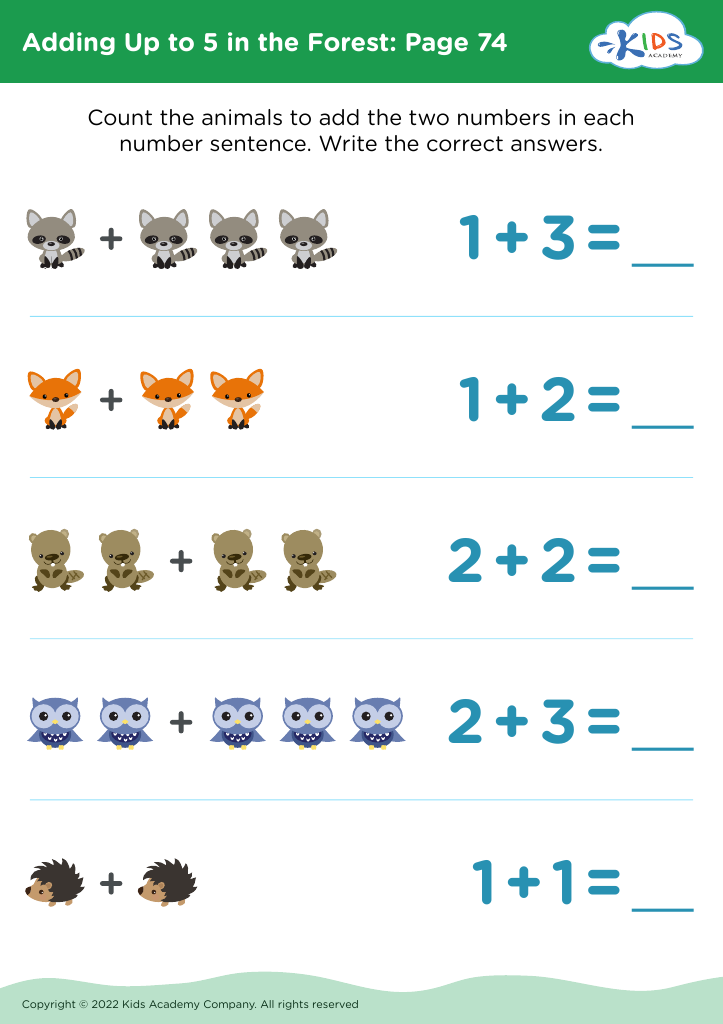
Adding Up to 5 in the Forest: Page 74
Worksheet
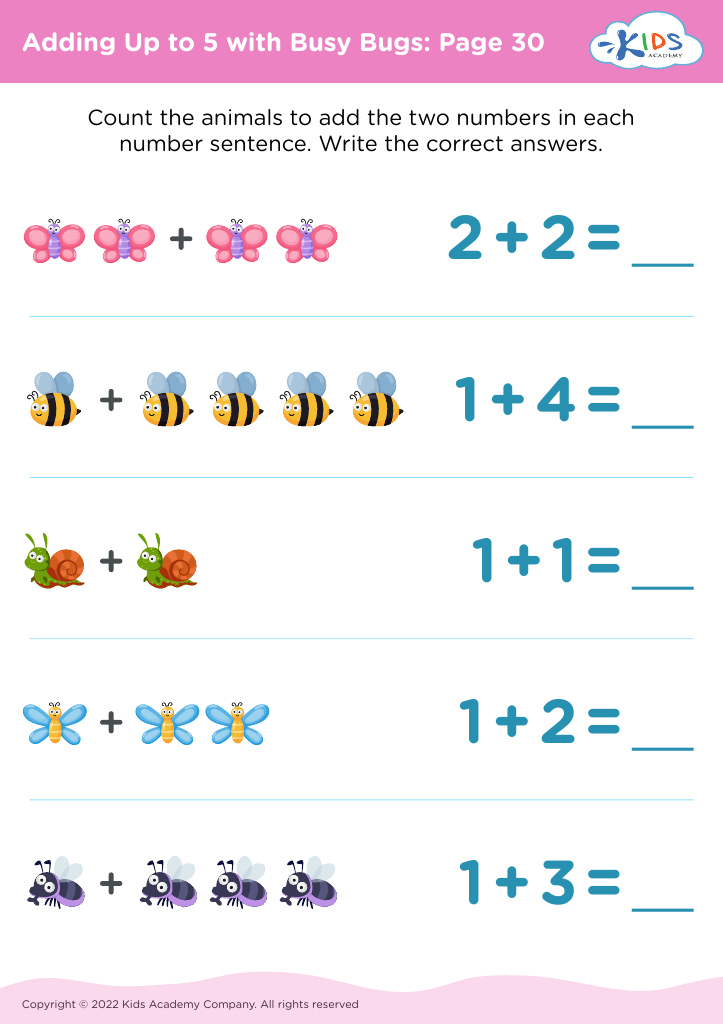
Adding Up to 5 with Busy Bugs: Page 30
Worksheet
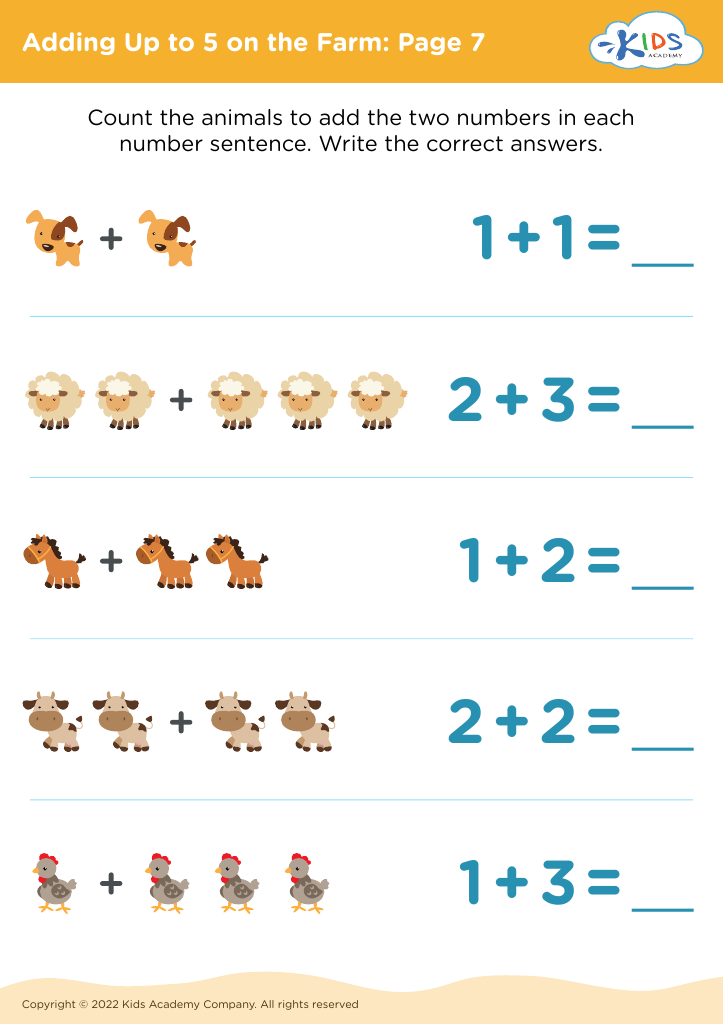
Adding Up to 5 on the Farm: Page 7
Worksheet
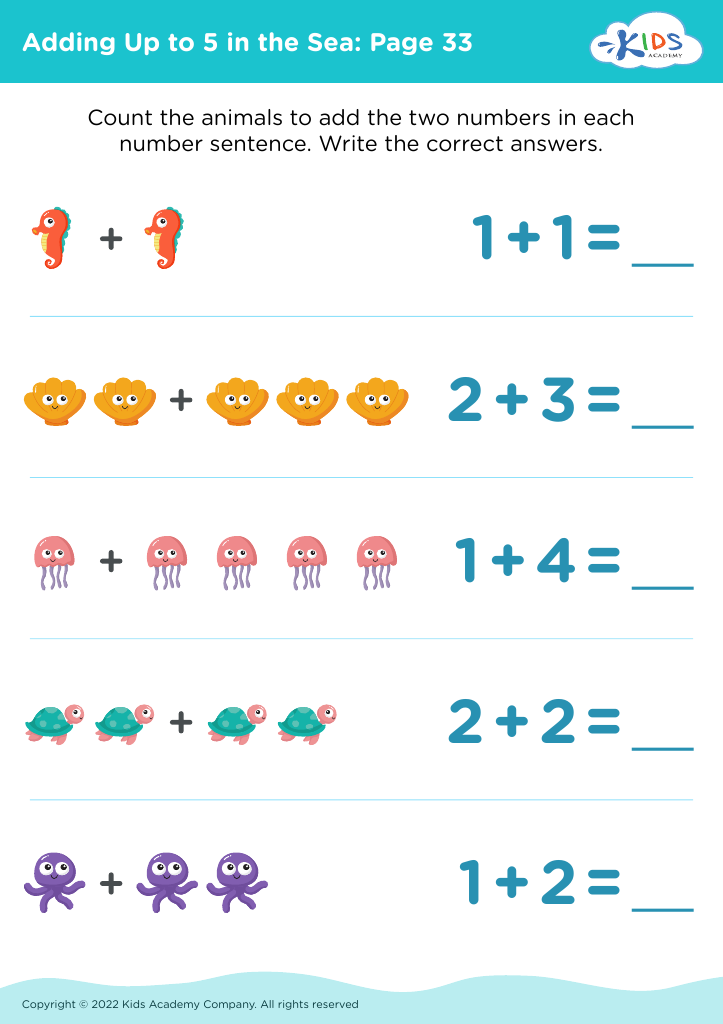
Adding Up to 5 in the Sea: Page 33
Worksheet
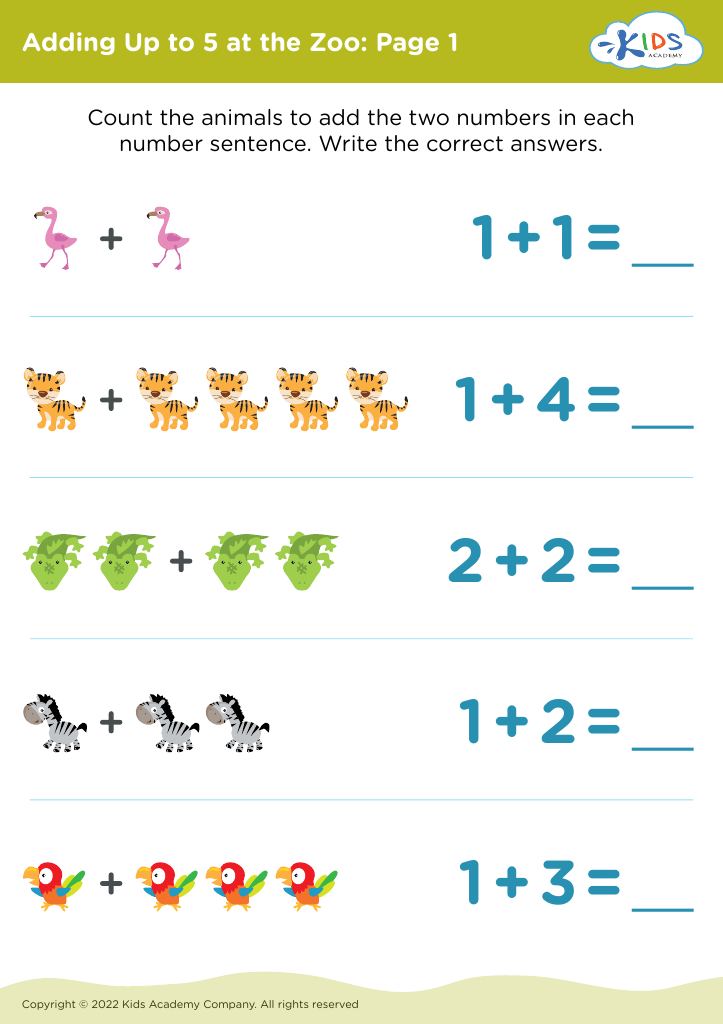
Adding Up to 5 at the Zoo: Page 1

Adding Up to 5 at the Zoo: Page 1

Adding Up to 5 at the Zoo: Page 1
Worksheet
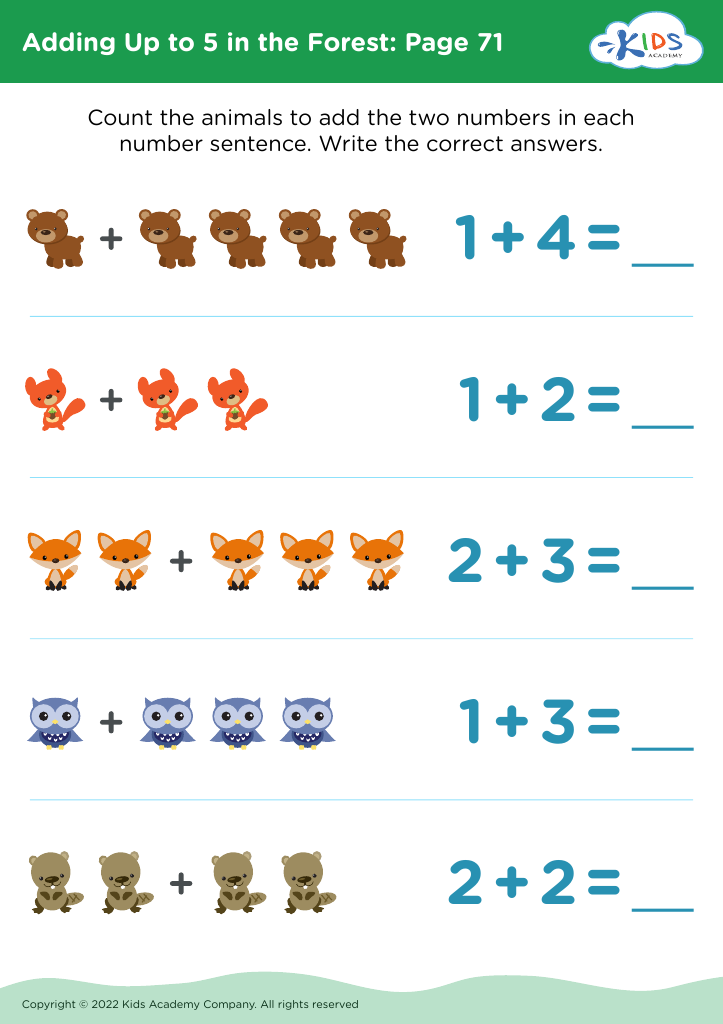
Adding Up to 5 in the Forest: Page 71
Worksheet
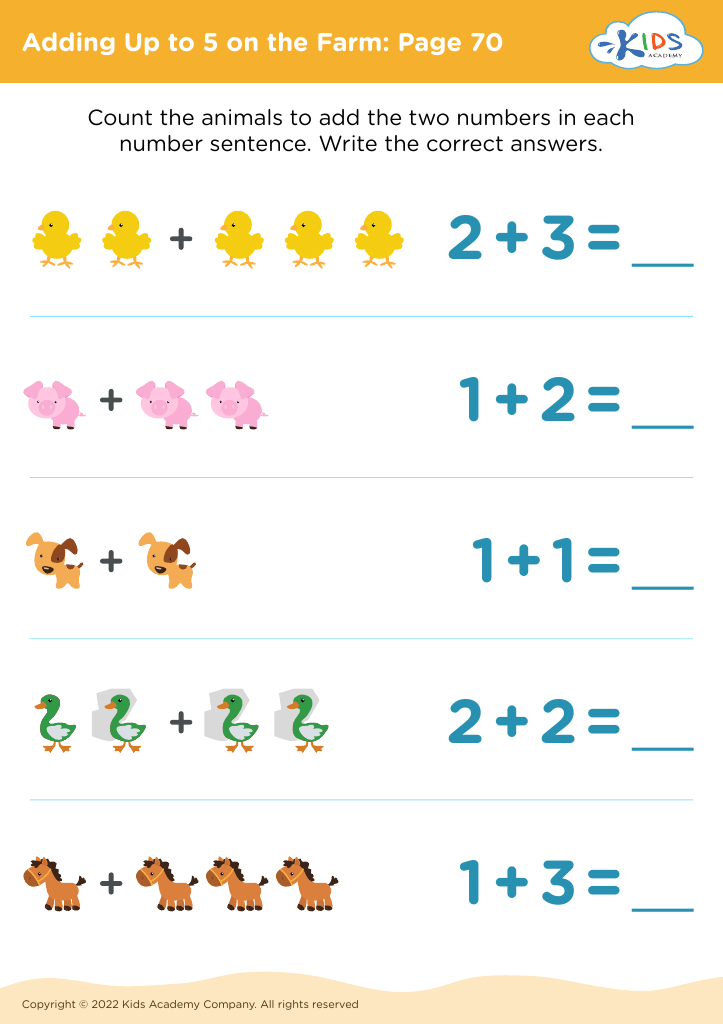
Adding Up to 5 on the Farm: Page 70
Worksheet
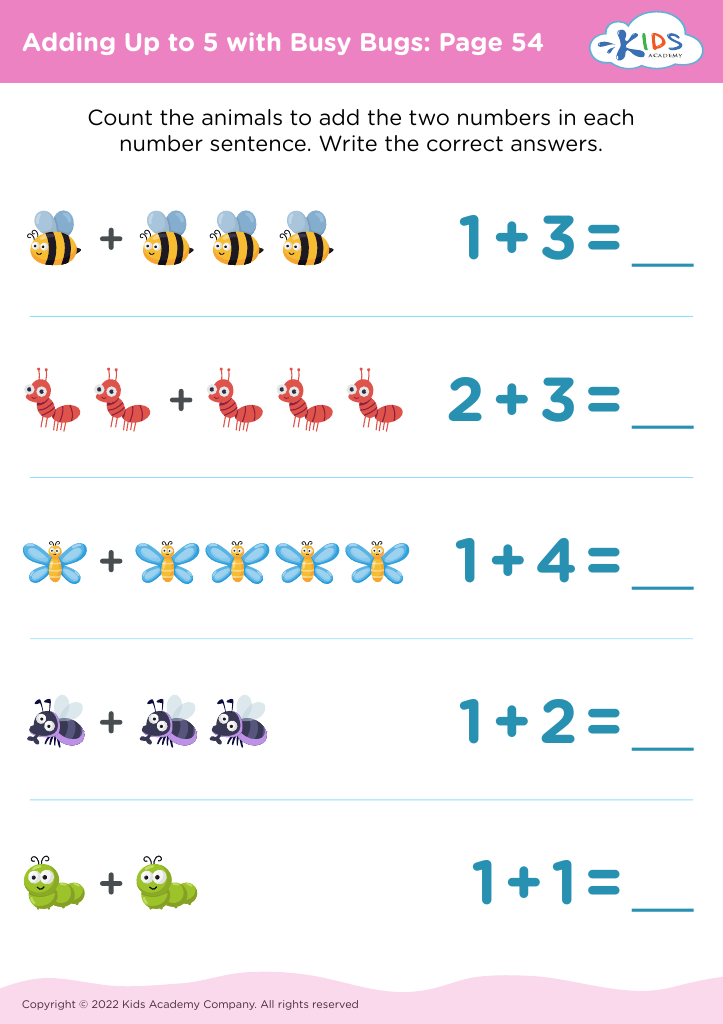
Adding Up to 5 with Busy Bugs: Page 54
Worksheet
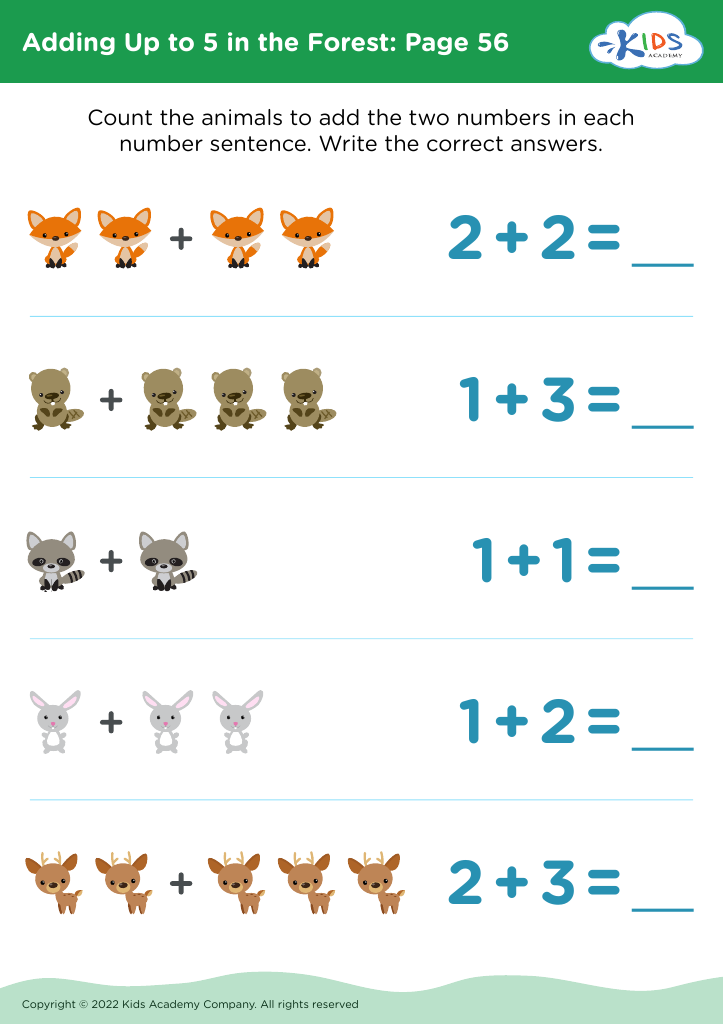
Adding Up to 5 in the Forest: Page 56
Worksheet
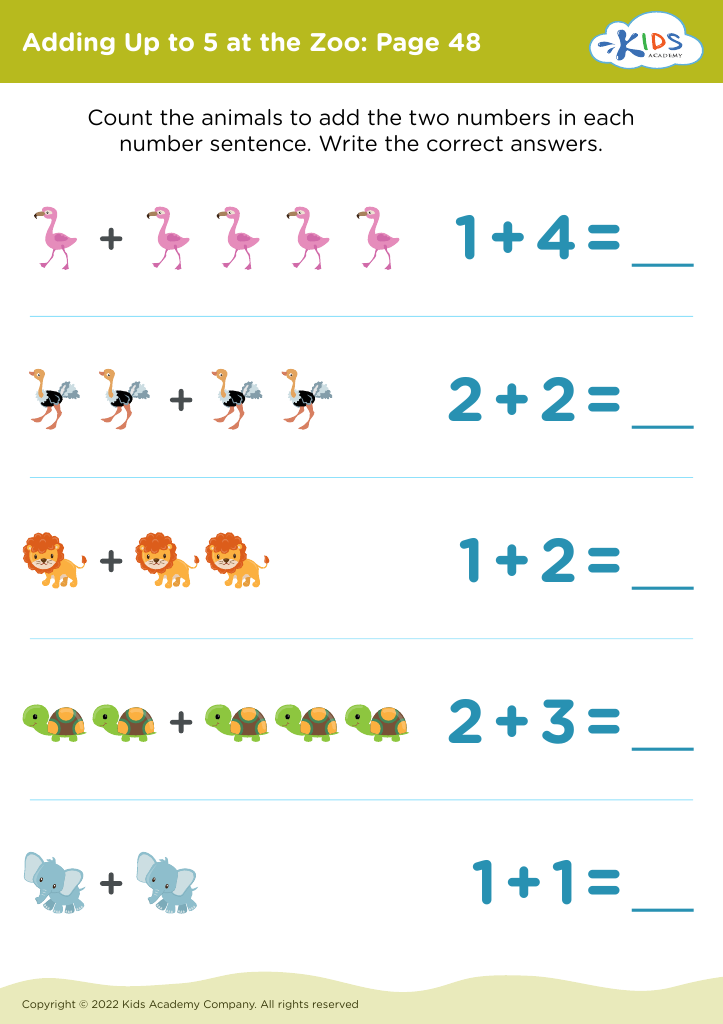
Adding Up to 5 at the Zoo: Page 48
Worksheet
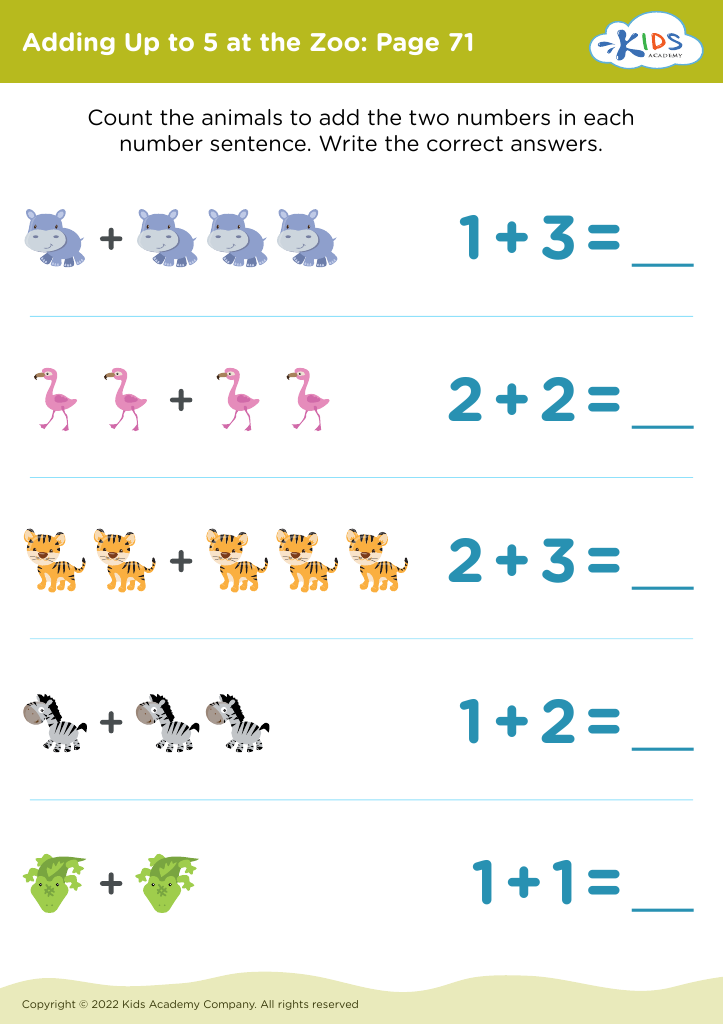
Adding Up to 5 at the Zoo: Page 71
Worksheet
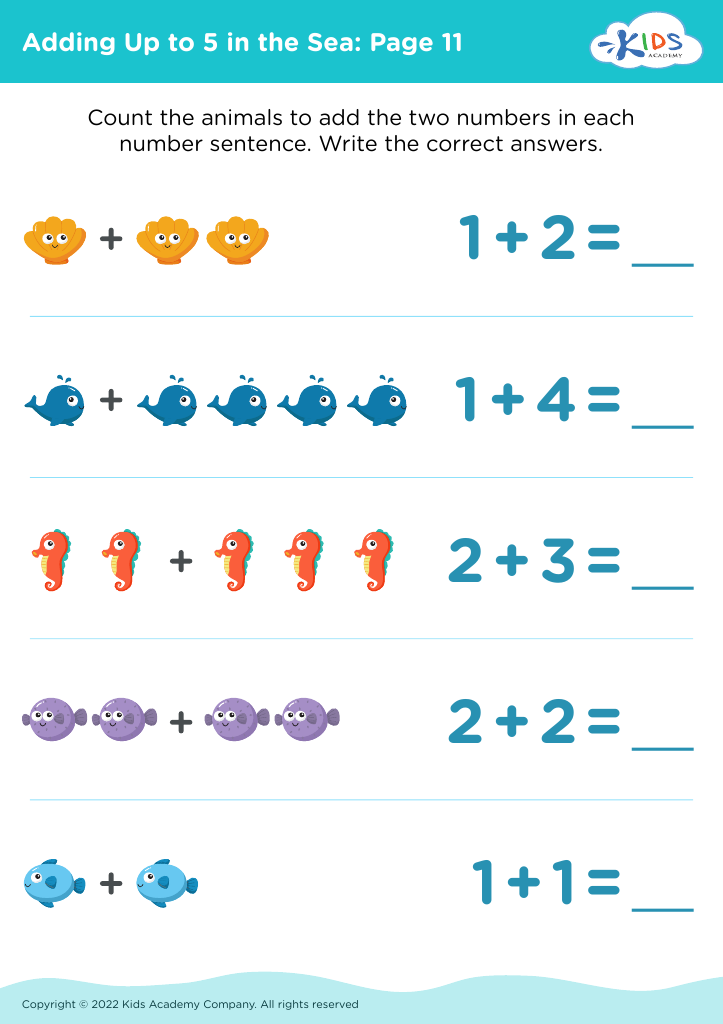
Adding Up to 5 in the Sea: Page 11
Worksheet
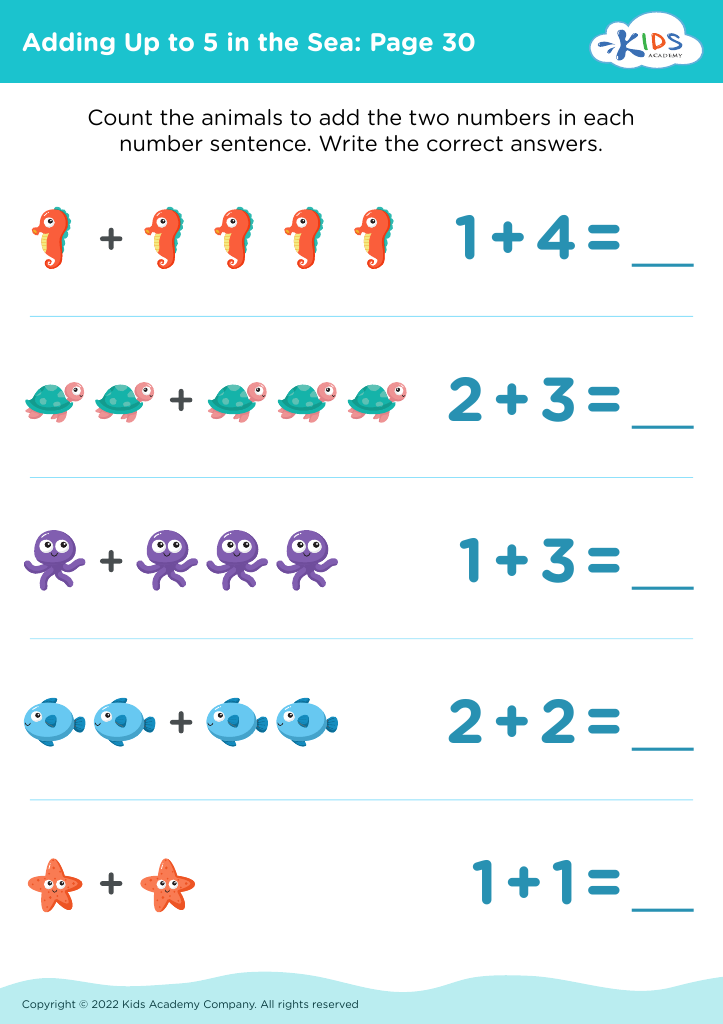
Adding Up to 5 in the Sea: Page 30
Worksheet
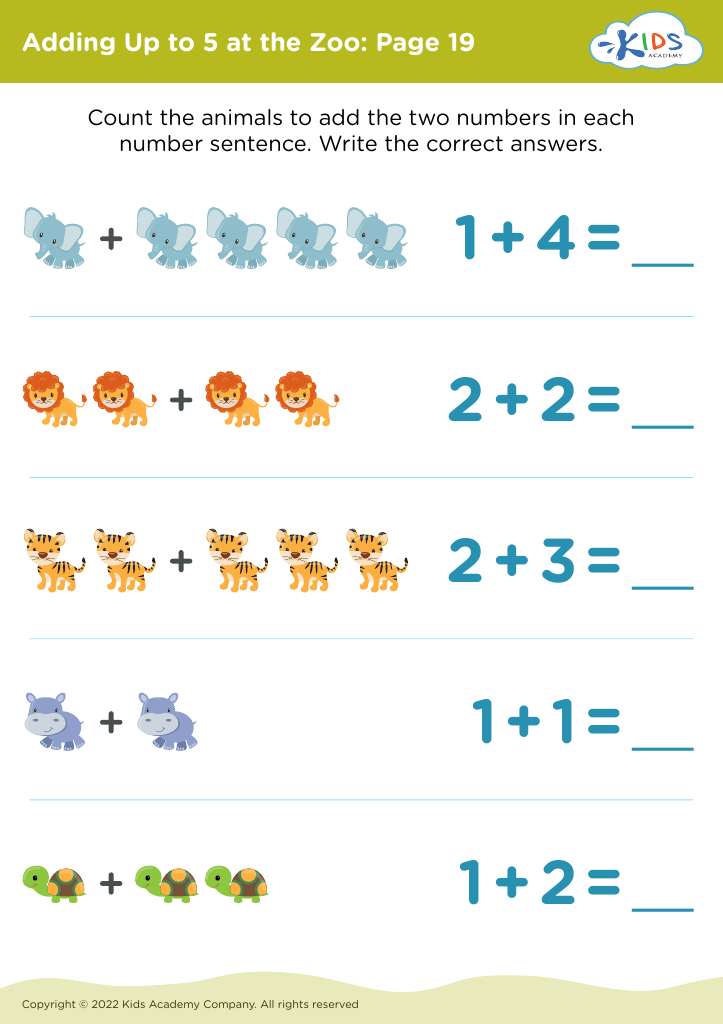
Adding Up to 5 at the Zoo: Page 19
Worksheet
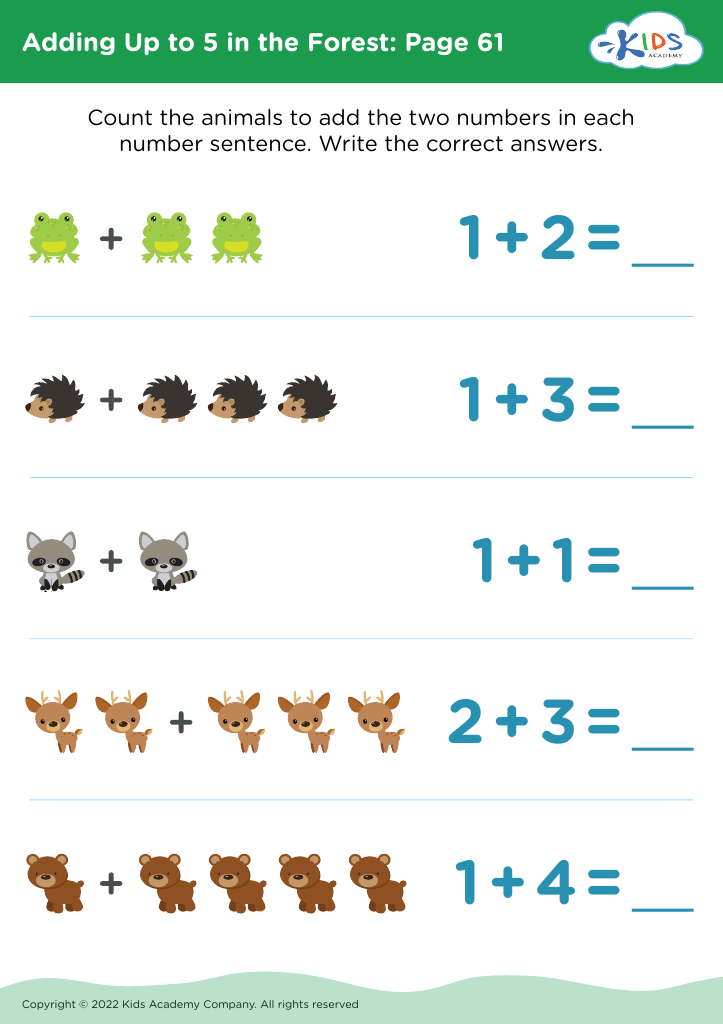
Adding Up to 5 in the Forest: Page 61
Worksheet
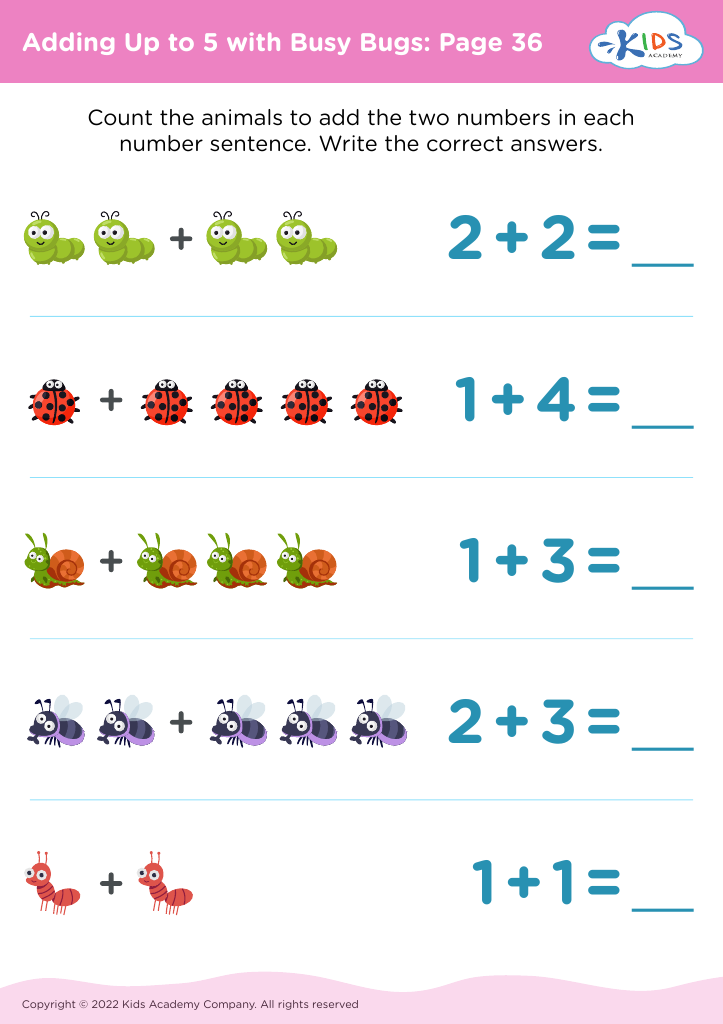
Adding Up to 5 with Busy Bugs: Page 36
Worksheet
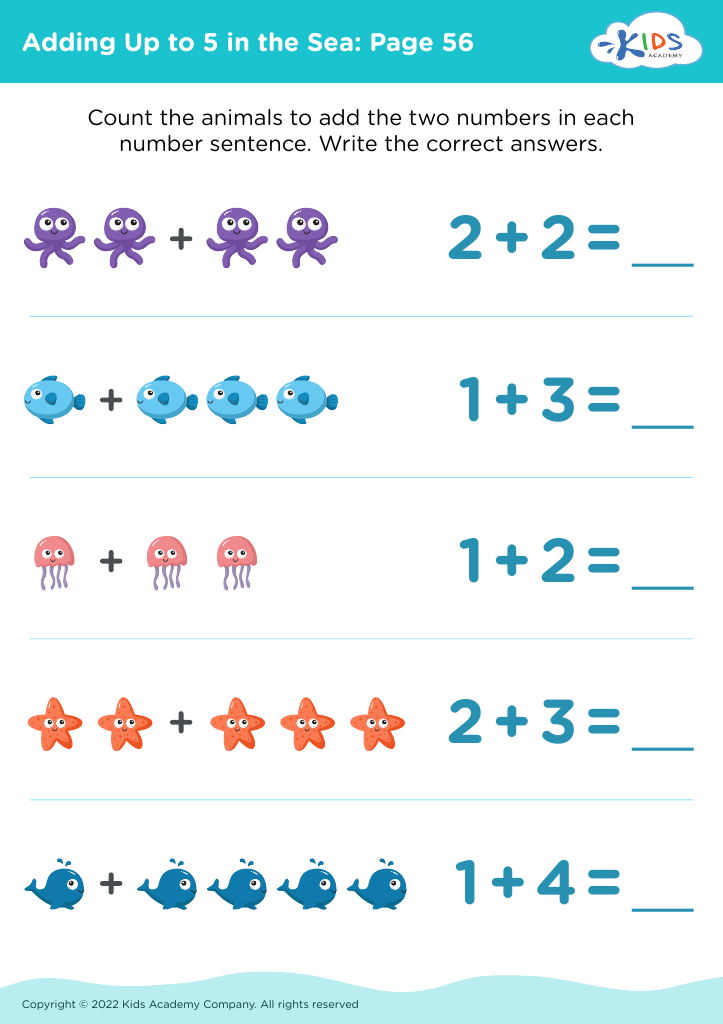
Adding Up to 5 in the Sea: Page 56
Worksheet
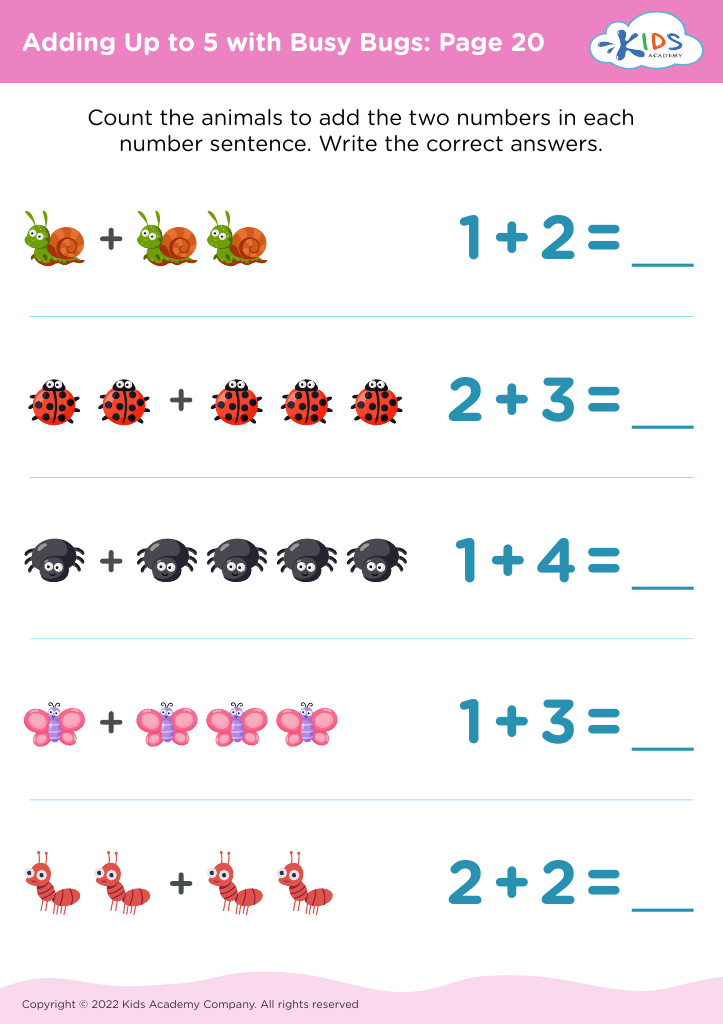
Adding Up to 5 with Busy Bugs: Page 20
Worksheet
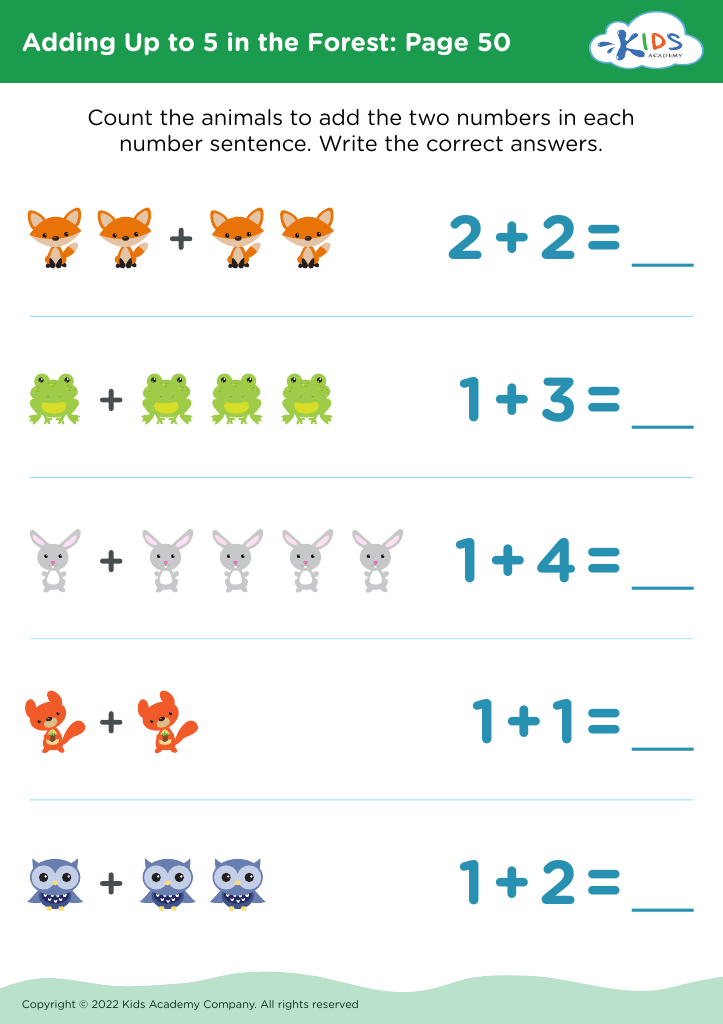
Adding Up to 5 in the Forest: Page 50
Worksheet
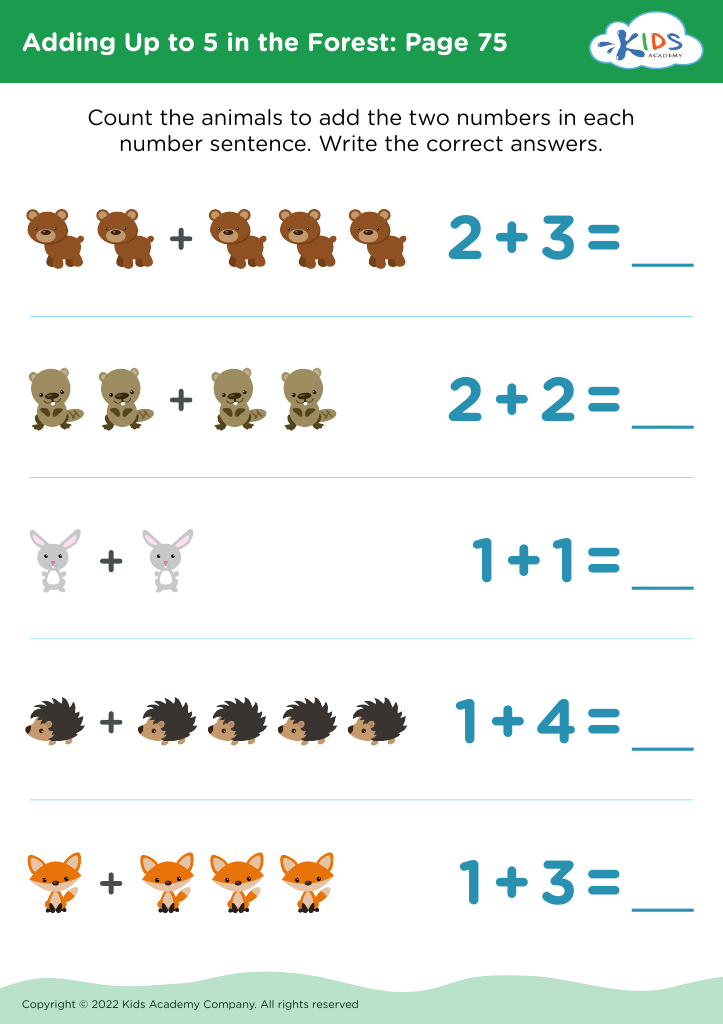
Adding Up to 5 in the Forest: Page 75
Worksheet


Counting skills, particularly addition up to 5 for 5-year-olds, form the cornerstone of early mathematical development, which parents and teachers should prioritize. At this age, children are developing foundational numeracy skills that will significantly impact their future academic success. Mastering basic addition helps children understand number relationships, patterns, and the concept of quantity, which are essential for more complex mathematical operations in the future.

Moreover, early counting skills foster a child’s cognitive development by promoting logical thinking and problem-solving abilities. It’s not just about numbers; it’s about nurturing the child’s overall brain development. Counting and simple addition reinforce memory, attention to detail, and the ability to follow sequential steps—all critical skills for their educational journey.

From a social and emotional perspective, successfully learning to add up to 5 instills confidence and a sense of achievement in children. This positive experience can foster a love for learning and reduce math anxiety later in life. Additionally, engaging in counting activities can be a bonding experience for parents and children, nurturing communication and collaboration skills.

Ultimately, focusing on this fundamental skill creates a strong mathematical foundation, equipping children with the tools they need for future learning and everyday problem-solving. Parents and teachers play an essential role in shepherding this vital developmental stage.