Enhances concentration Adding Up to 5 Worksheets for 5-Year-Olds
4 filtered results
-
From - To
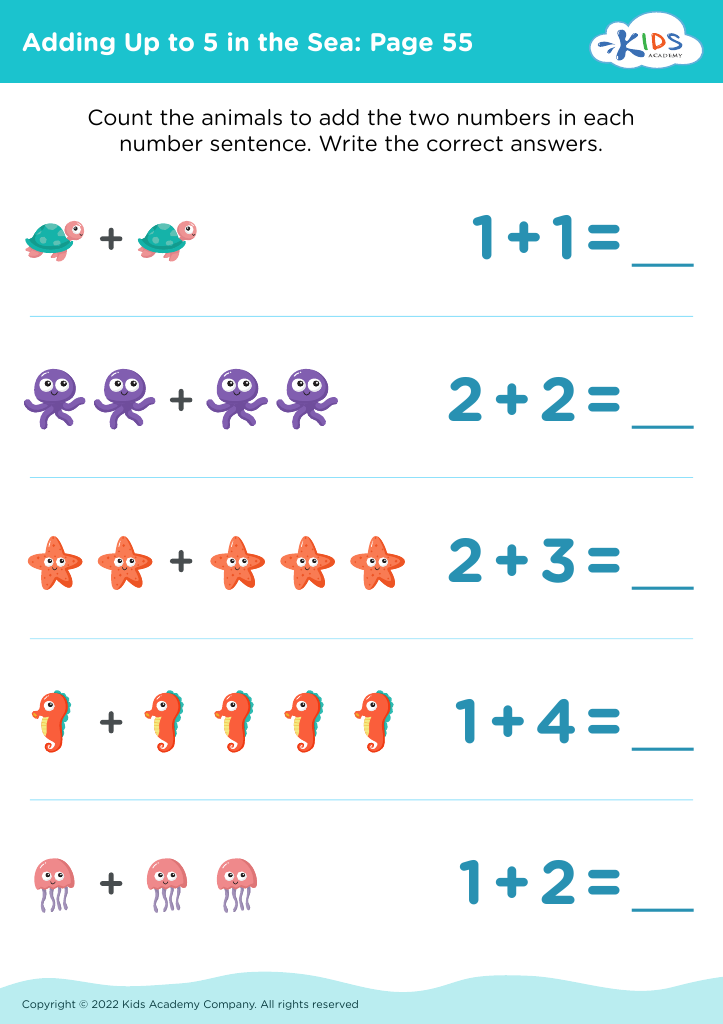
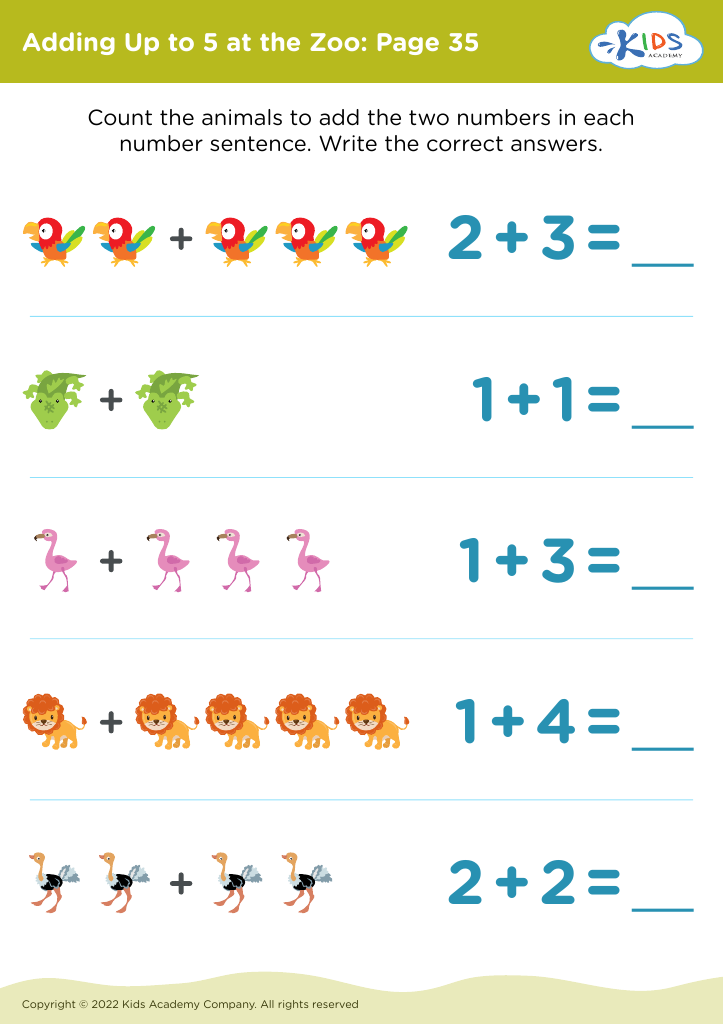
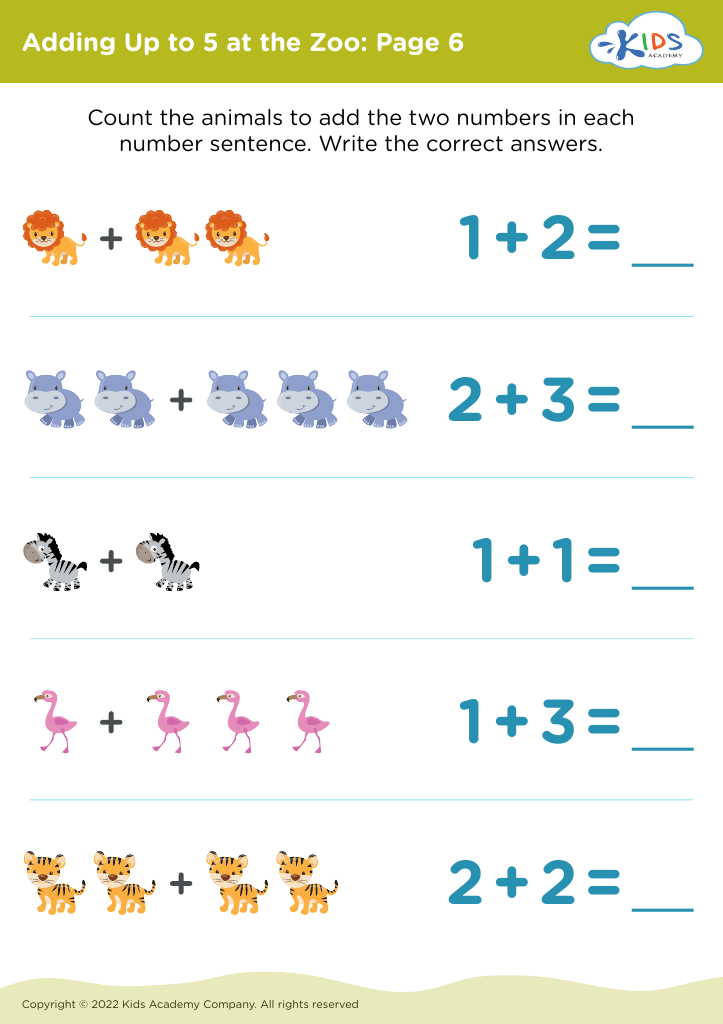
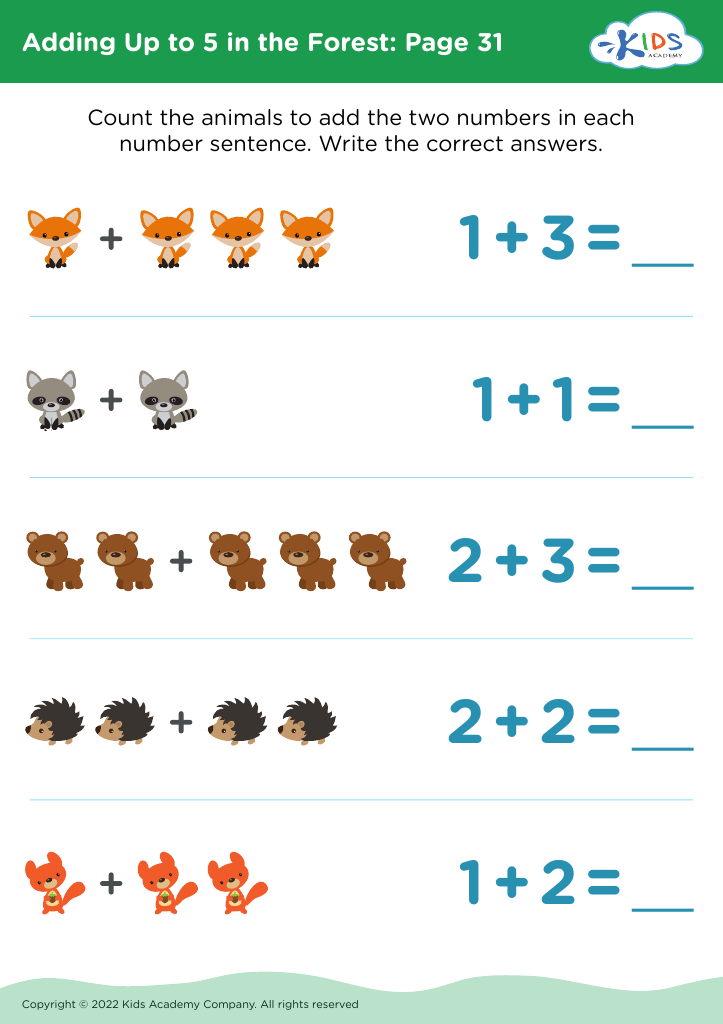
Enhance your child's concentration with our "Adding Up to 5" worksheets designed specifically for 5-year-olds! These engaging activities encourage children to focus as they practice fundamental addition skills. Through vibrant illustrations and fun exercises, kids will learn to count and combine numbers up to five, all while developing critical thinking and problem-solving abilities. Each worksheet is crafted to captivate young learners, keeping them actively involved in their mathematical journey. Ideal for homeschool settings or supplementing classroom learning, our worksheets provide a great way to improve attention spans and promote a positive learning experience. Download now to make math fun!








Enhancing concentration while learning to add up to 5 is crucial for 5-year-olds as it lays a solid foundation for future mathematical skills. Concentration is a key cognitive skill that enables children to focus on tasks, process information, and complete activities effectively, which are essential for academic success. By honing their concentration during early math lessons, children develop the ability to engage with numbers confidently, paving the way for understanding more complex concepts later on.
Moreover, engaging children with focused activities, like adding small numbers, helps improve their problem-solving abilities and enhances their cognitive flexibility. This focus not only aids in mathematical tasks but also transfers to literacy and other learning areas. When parents or teachers actively cultivate an environment that promotes concentration, they foster a love for learning, encouraging curiosity and persistence.
Additionally, early math skills contribute to a child's overall self-esteem and social development. Children who grasp basic addition are more likely to participate in class, enjoy collaborative activities, and build positive relationships with peers. Overall, supporting concentration in early math learning equips children with essential skills that extend beyond math and significantly impact their broader educational journey.








