Fine motor skills (drawing lines) Adding Up to 5 Worksheets for 5-Year-Olds
3 filtered results
-
From - To
Enhance your child's fine motor skills with our engaging "Fine Motor Skills (Drawing Lines) Adding Up to 5 Worksheets" designed specifically for 5-year-olds. These fun and interactive worksheets combine the joy of drawing with early math concepts, helping your child practice basic addition by connecting the dots and drawing lines. As they complete each activity, they will develop their hand-eye coordination and control, essential for writing and other everyday tasks. Perfect for preschool and kindergarten classrooms, our worksheets make learning exciting while laying a strong foundation for mathematical understanding. Download now to support your child’s growth in a playful and educational way!
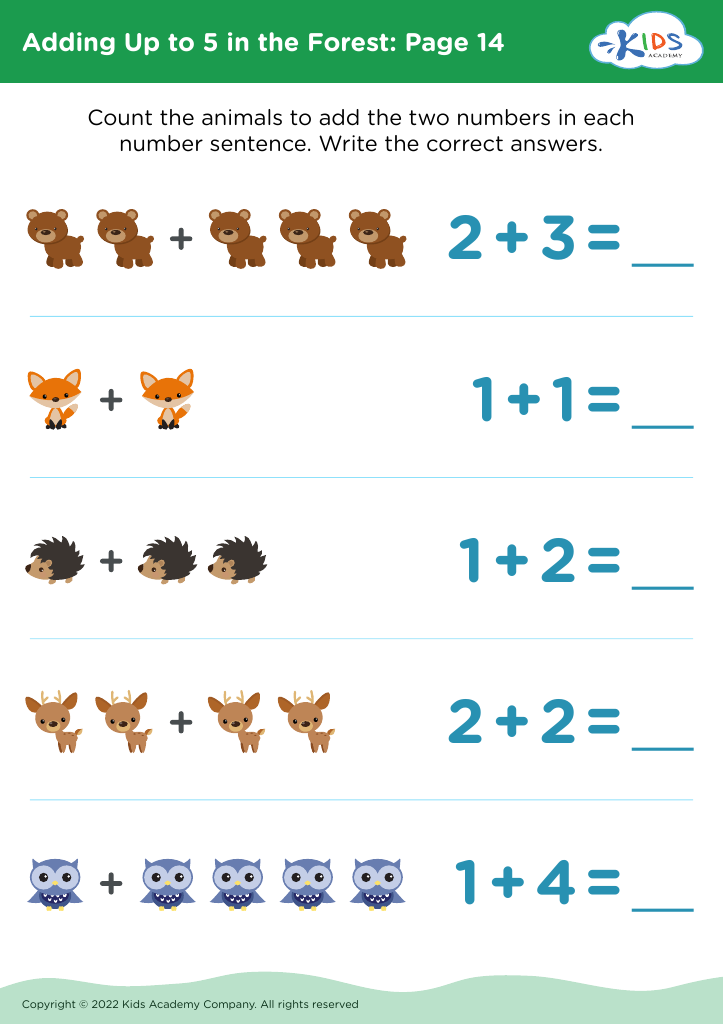
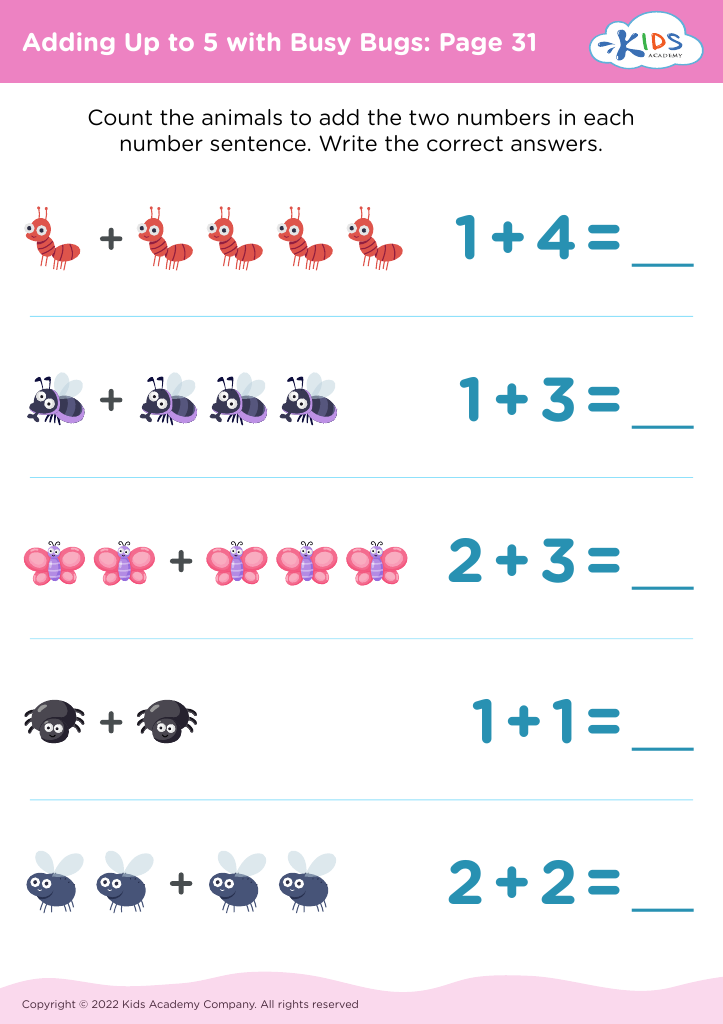
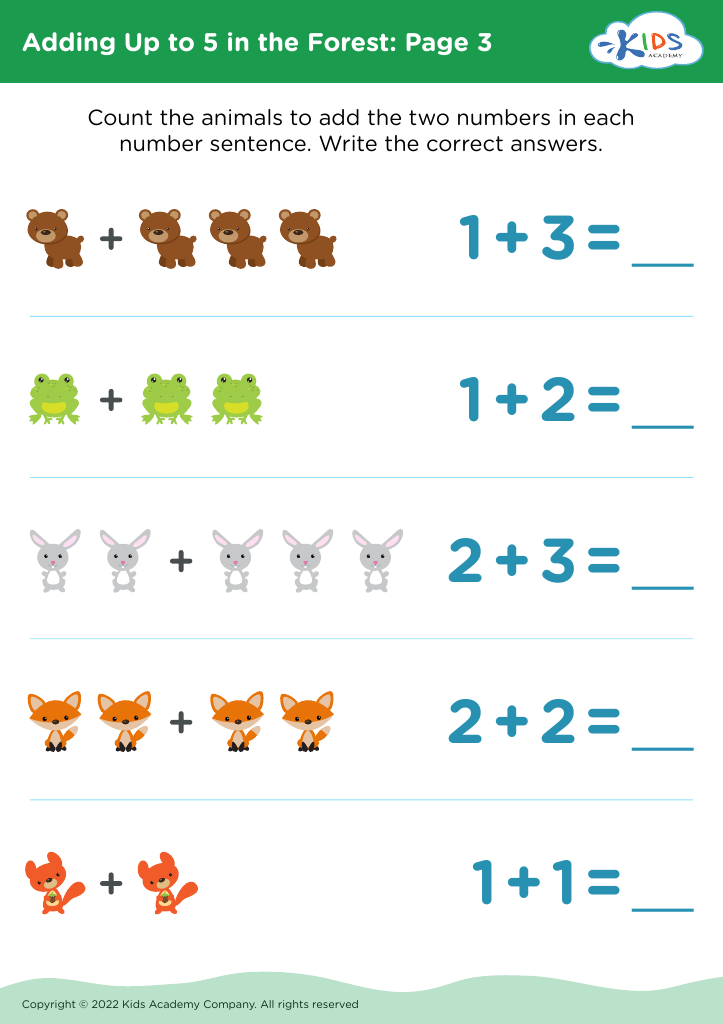








Fine motor skills are crucial for the overall development of 5-year-olds. They enable children to perform everyday tasks such as writing, drawing, and using utensils, which are essential for their independence and learning. Drawing lines, a fundamental activity in fine motor development, enhances hand-eye coordination, dexterity, and control, laying the groundwork for more complex skills like writing letters and numbers.
When children engage in activities like drawing lines, they not only improve their fine motor skills but also boost their cognitive abilities. Coloring within lines, for instance, encourages focus and mindfulness, allowing children to develop patience and problem-solving skills. These experiences are also foundational for understanding mathematical concepts, such as "Adding Up to 5." Learning to visually represent numbers and quantities prepares students for early math skills, promotes critical thinking, and fosters a love for learning.
Involving parents and teachers in cultivating these skills creates a supportive environment for children. By providing opportunities for practice and guidance, they can nurture confidence, creativity, and a sense of accomplishment in young learners. Investing in fine motor skills and basic math principles together equips children with essential tools needed for future academic success and personal growth.








