Nature appreciation Adding Up to 5 Worksheets for 5-Year-Olds
5 filtered results
-
From - To
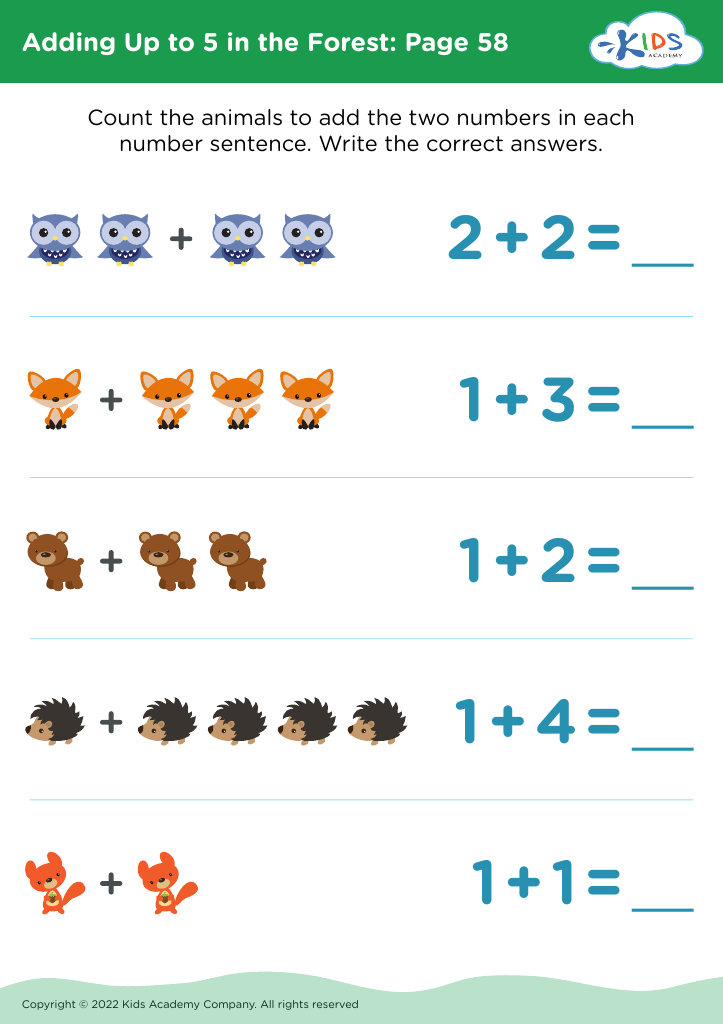
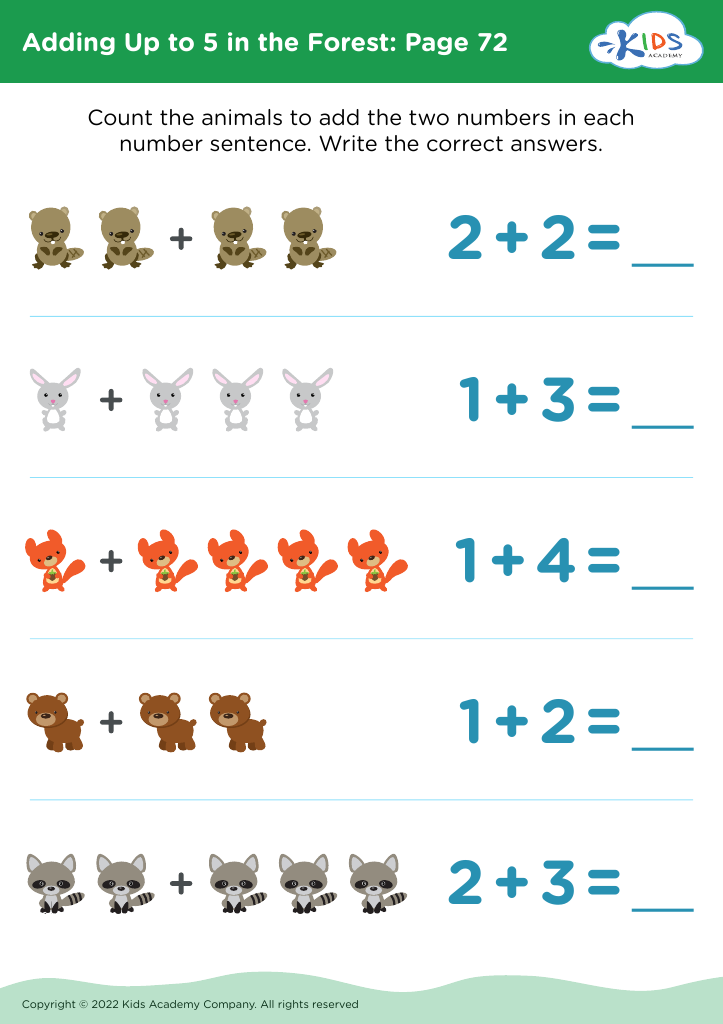
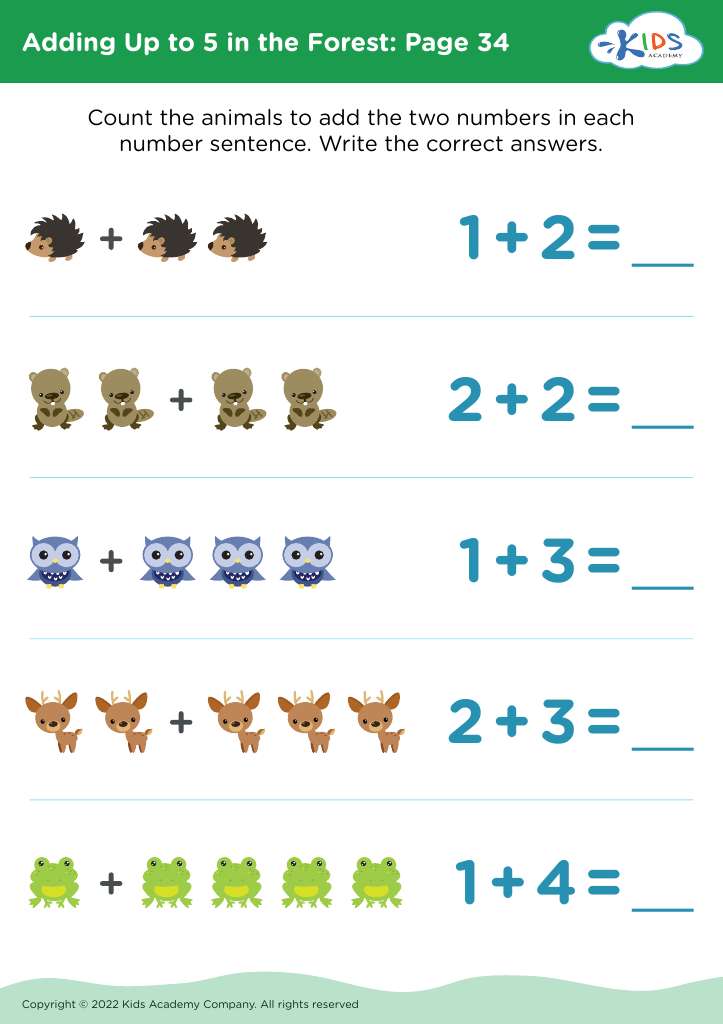
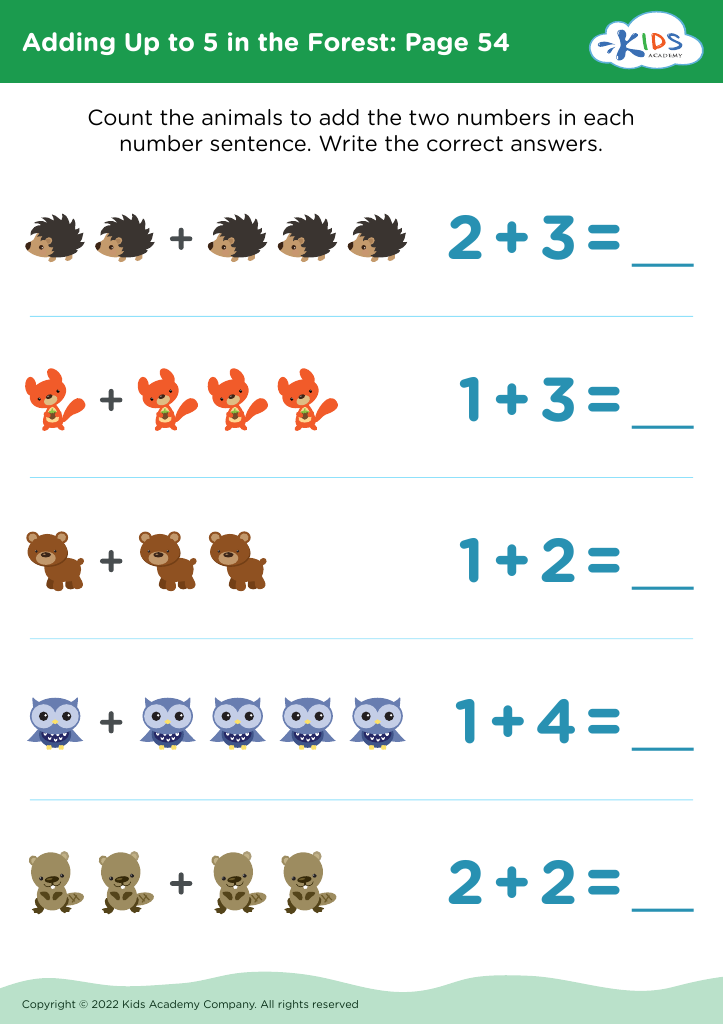
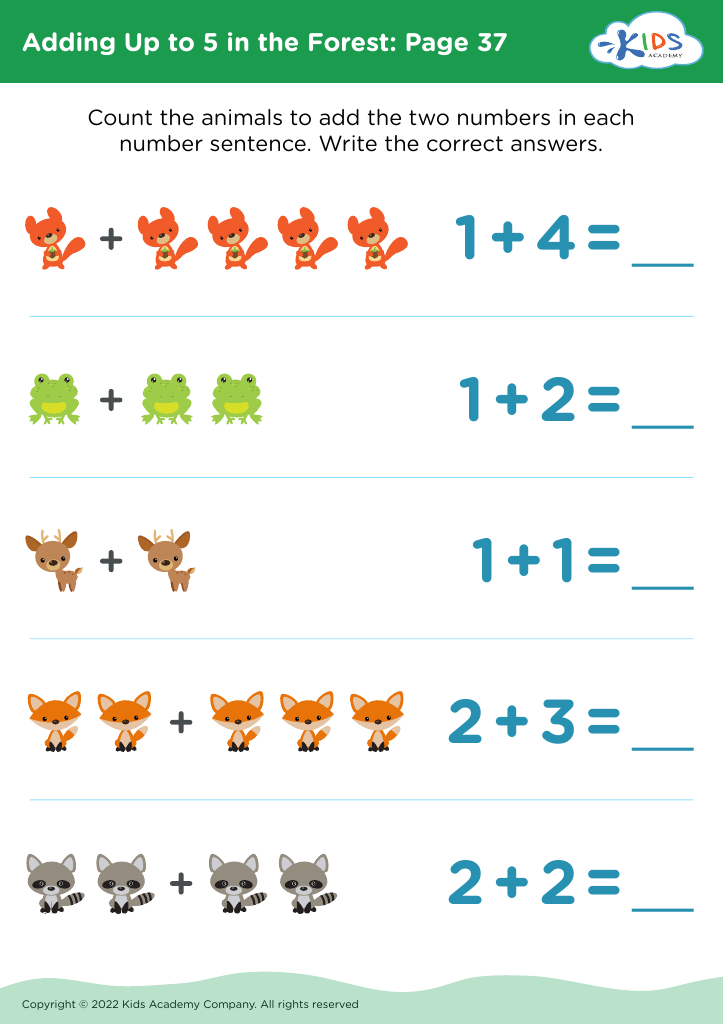
Foster a love for nature and math with our "Nature Appreciation Adding Up to 5 Worksheets for 5-Year-Olds." These engaging worksheets seamlessly blend basic addition problems with beautiful nature themes, captivating young minds. Designed for budding mathematicians, each worksheet features visually appealing images of flowers, animals, and natural landscapes, making learning fun and meaningful. Children practice adding up to 5 while developing an appreciation for the environment. Perfect for classroom or home use, these worksheets are ideal for making early math lessons both educational and enjoyable, nurturing both mathematical skills and a love for the natural world.


%20(1).jpg)



.jpg)

Nature appreciation holds remarkable benefits for the cognitive and emotional development of 5-year-olds, integrating perfectly with early education concepts such as "Adding Up to 5." At this tender age, children possess an innate curiosity that thrives in natural settings. Engaging with nature not only stimulates curiosity but also solidifies foundational arithmetic concepts, like counting and simple addition.
For parents and teachers, fostering an appreciation for nature can anchor these basic math skills in real-world contexts. Imagine a child collecting leaves and counting them, or observing groups of ants to practice addition. These practical experiences create meaningful learning, making abstract numbers tangible. Not only do children learn to add numbers to achieve a sum of five, but they also develop a sense of environmental stewardship and an understanding of biodiversity.
Furthermore, nature-based learning enhances physical health and emotional well-being. Outdoor activities require children to use motor skills, fostering physical development, while the serene environment of nature has been shown to reduce stress and increase focus. Therefore, encouraging activities like counting flowers, feathers, or stones doesn't just build mathematical competence—it also nourishes a child's overall growth and lays the groundwork for a lifelong love of learning and the natural world.








